The DJI shortlist is shorter than the catalogue, and most buyers pick the wrong end of it
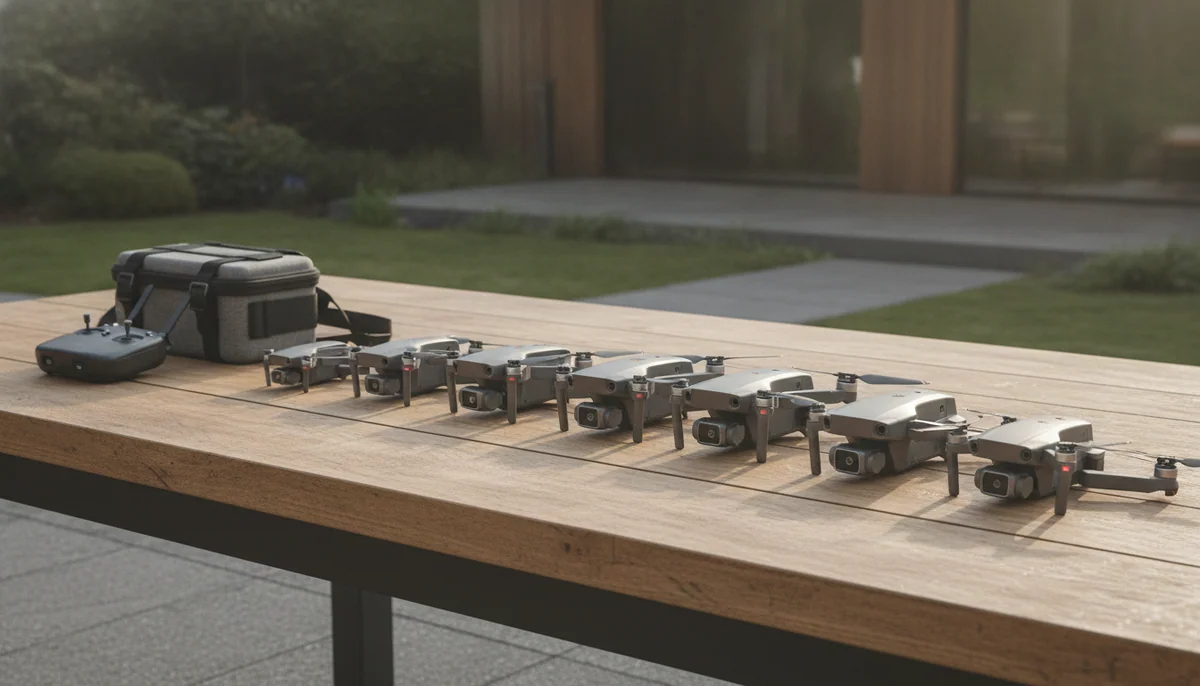
The problem with this range is not that any of it is bad, because none of it is. The problem is that the names stopped describing the products several generations ago. The Mini 4K is a 2020 airframe with a modern camera bolted to the front and no obstacle sensing whatsoever, and it gets confused constantly with a far dearer aircraft whose name differs by a single word. The Flip does not flip; the word describes propeller cages folding flat against the body. The Avata 360 wears a badge that has meant manual acrobatic flying for years and cannot fly manual at all. Two of the nine machines below are called Neo, and a full generation of obstacle sensing separates them.
So the sorting question is not what you can spend. It is three questions in order: how much weight you are willing to register, whether the thing you want to film holds still, and whether anybody is paying you for the result. Answer those honestly and the shortlist usually collapses to one aircraft. Everything else on this page is an argument about the answers.
Quadcopter Bench lands on the Air 3S because mass is the only specification you cannot add later. A better card, more batteries, a brighter controller and a set of filters are all purchases you can make next month. Composure in moving air is not: at 724 grams the aircraft holds a frame in gusts that leave a light drone visibly working, and owners describe a hover that simply stays where they left it while the picture stays clean. The 70mm second camera is the other half of it, and the pattern in the record is that people arrive sceptical about a second focal length and are converted by their first proper shoot with one.
- Buy the Air 3S if
- you want one aircraft that shoots properly, sees in every direction and ignores a stiff breeze, and you are content to register it and carry it in a shoulder bag rather than a pocket.
- Stay in the light class instead if
- you travel, hike or want to fly without registering anything, in which case the Mini 3 bundle is the buy and the Mini 4K is the cheapest honest way to find out whether you enjoy flying at all.
- Buy a follow-camera instead if
- the subject is you, moving, because neither Mini can lock onto a moving subject and the Neo 2 does that job better than anything else in this lineup.
- Buy none of these if
- somebody is paying you to fly in the United States and the model you are looking at does not broadcast Remote ID, which disqualifies the Flip and both Neos before image quality enters the conversation.
One piece of context sits underneath every recommendation here, and it is not about flying. An FCC action in December 2025 put new foreign-made drones on the covered list, which blocks the authorisation a product needs before it can be sold or imported; DJI sued in February 2026, and the published position has been that models approved before that line remain legal to buy and to fly. That is why a three-year-old Mini is still near the top of its category and why "just wait for the next one" has stopped being advice. It has also removed the safety net: DJI Care Refresh is no longer sold to US buyers, and owners of the flagship report reaching for third-party policies and being quoted repair queues in months. We keep the moving parts current in our standing piece on buying and flying a DJI in the US and in what is left of drone insurance now that Care Refresh has gone. Budget for the crash you have not had yet, because the manufacturer no longer will.
Quick Picks at a Glance
| Feature | Editor's Pick DJI Mini 4K | DJI Mini 3 Fly More Combo | DJI Neo 2 | DJI Neo | DJI Air 3S | DJI Avata 2 | DJI Flip | DJI Mavic 4 Pro | DJI Avata 360 |
|---|---|---|---|---|---|---|---|---|---|
| Price Range | $200–$500 | $500–$1,000 | $200–$500 | Under $200 | $1,000–$1,500 | $1,000–$1,500 | $500–$1,000 | Under $200 | $500–$1,000 |
| Finish | Gray | gray | Gary | gray | gray | Black | Gray | Gray | Black |
| Configuration | — | — | DJI Neo 2 Fly More Combo | — | Medium | Avata 2 Fly More Combo (3 Batteries) | DJI Flip Fly More Combo (RC 2) | 7.25 | — |
| Check Price on Amazon | Check Price on Amazon | Check Price on Amazon | Check Price on Amazon | Check Price on Amazon | Check Price on Amazon | Check Price on Amazon | Check Price on Amazon | Check Price on Amazon |
The nine, and who each one is actually for
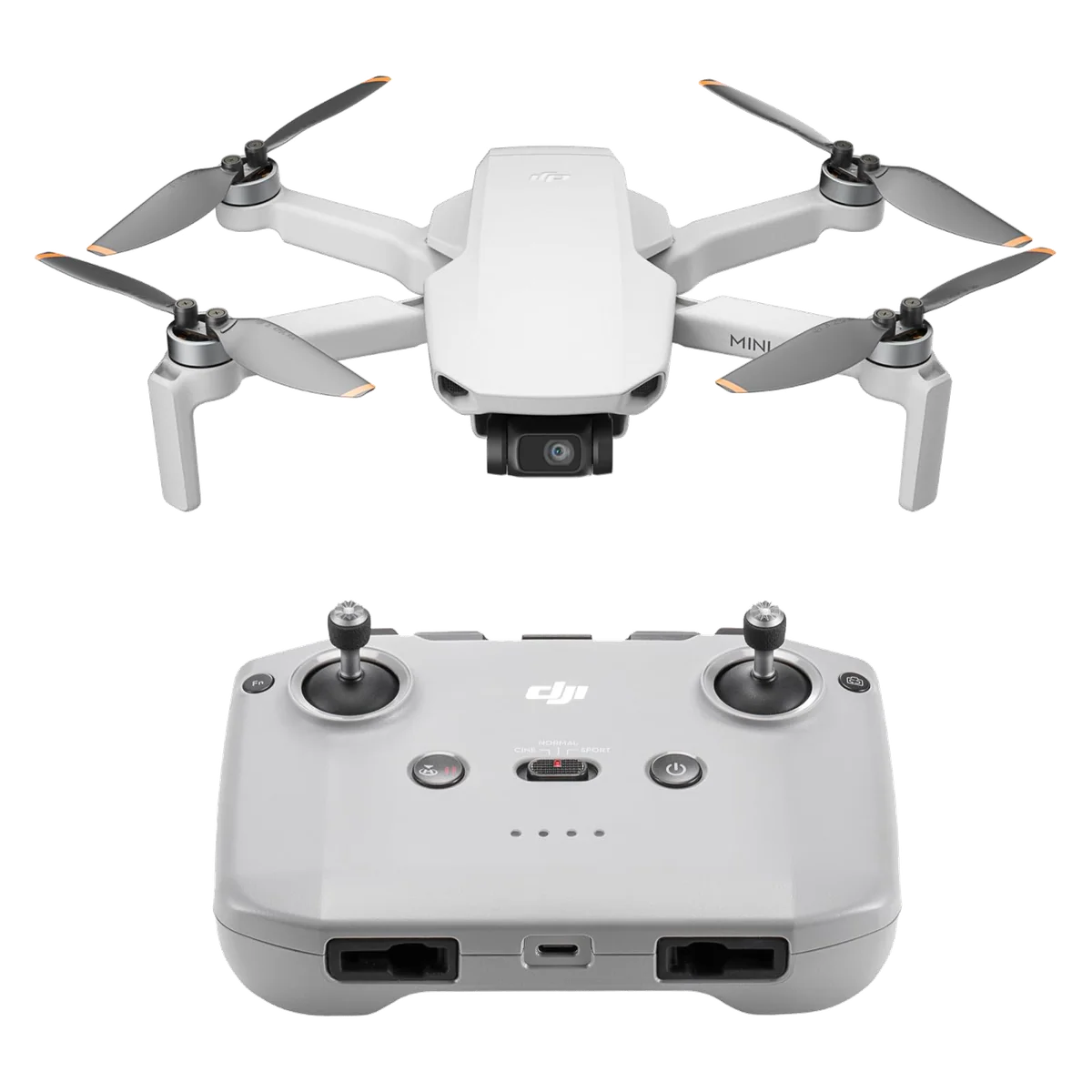
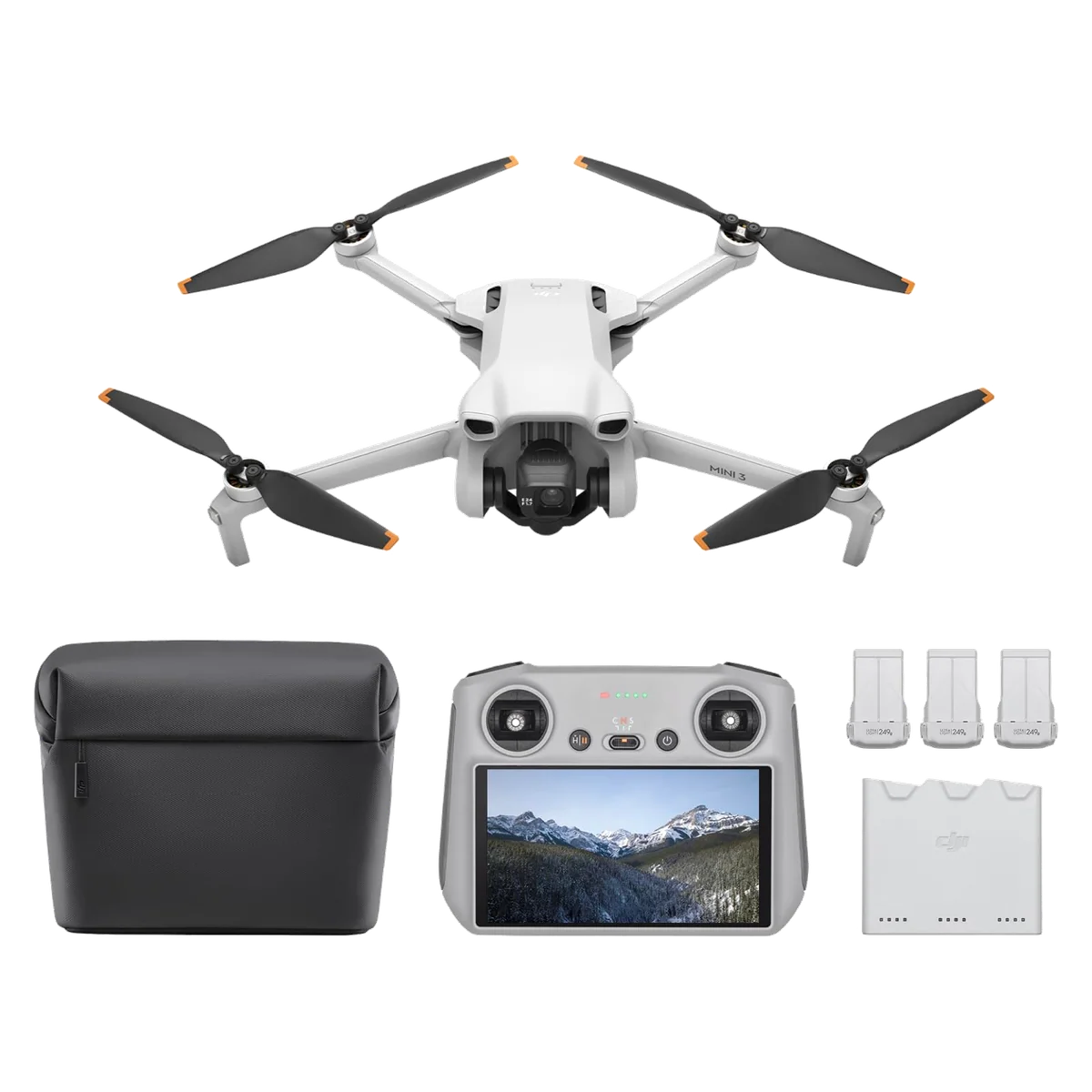
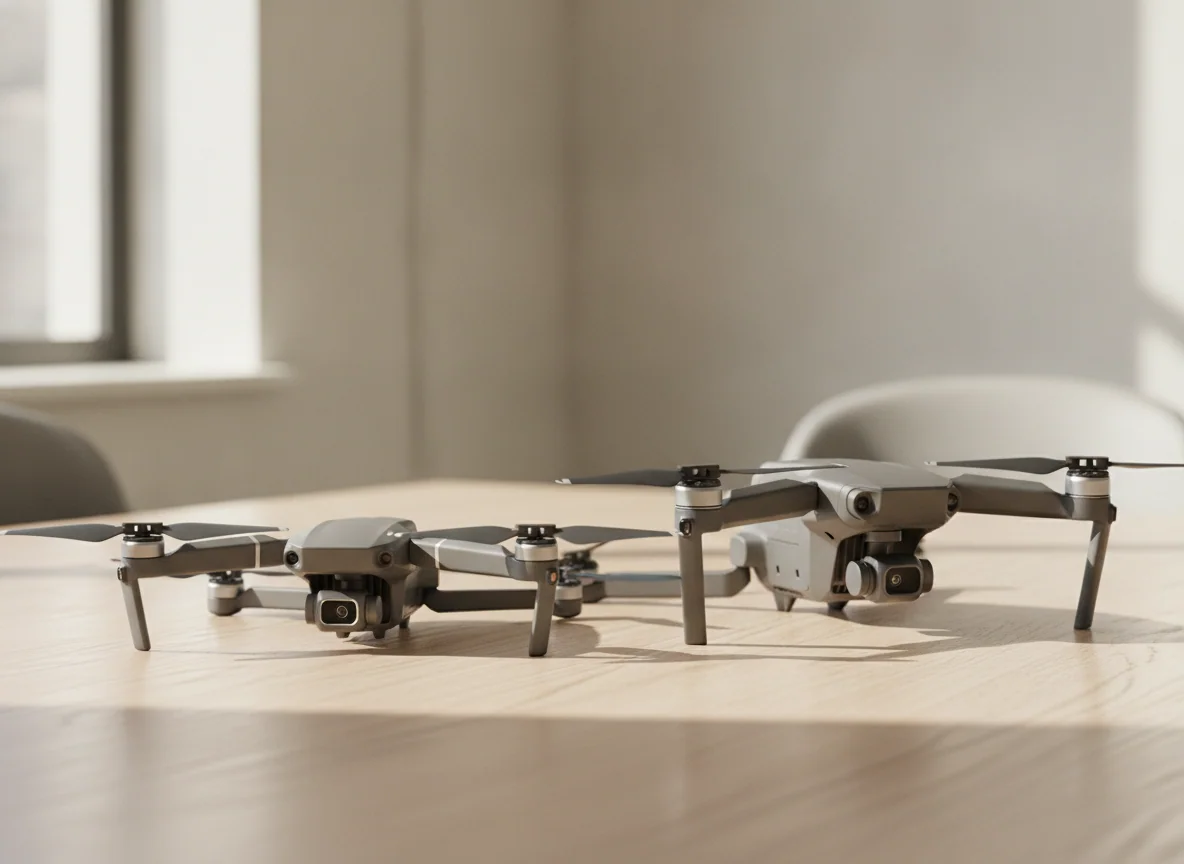
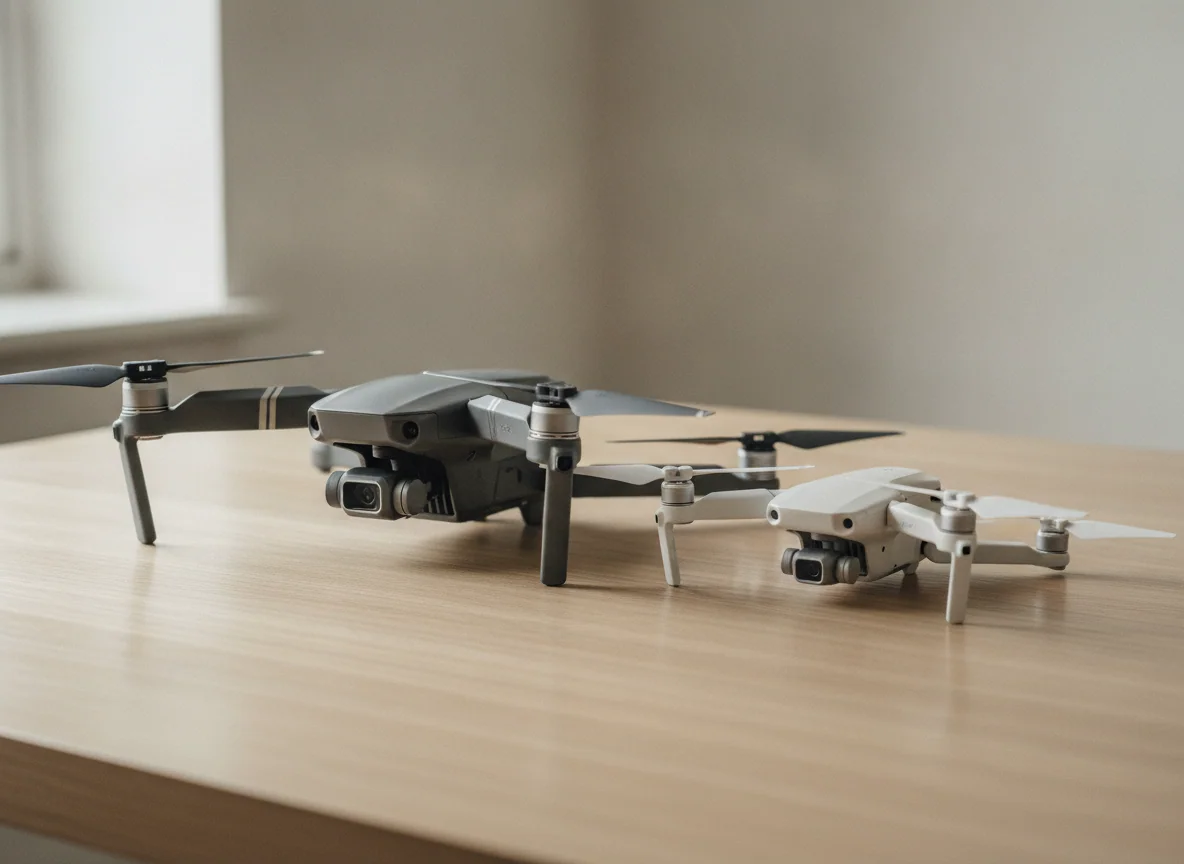
The two Minis are the same proposition at two price points: a mechanically gimballed camera on a well-proven airframe, under the weight threshold, with no obstacle sensors looking forward and no ability to track a moving subject. Both listings lead with the registration exemption, and both bury the flight-time conditions in a footnote that describes a windless laboratory rather than a flight. Neither omission is a scandal. Both are the reason these two are cheap, and for open ground they are not much of a loss.
The cheapest way to find out whether you actually enjoy flying
It takes off, sits still and comes home, which is exactly what a first drone should do, and the enormous Mini 2 parts bin behind it means the things you break are cheap and everywhere.
It cannot see a branch and it will not follow you, and no firmware update will ever change either of those facts.
The sensible sub-250 gram buy for anyone photographing things that hold still
The screen controller, three batteries and true vertical shooting that rotates the gimbal rather than cropping the frame still make this the best-value package in the light class.
There is no forward, backward or sideways obstacle sensing, and it cannot lock onto a moving subject at all, so filming anyone running or riding means hand-flying every second of it.
The gap between those two is narrower than the enthusiast forums claim, and it narrows further whenever the older model is discounted, so check both before you commit and read our head-to-head if the difference on the day looks small. The Mini 3 wins on sensor, endurance and an open SDK; the Mini 4K wins on nothing except what it costs, which for a first drone is a perfectly respectable thing to win on.
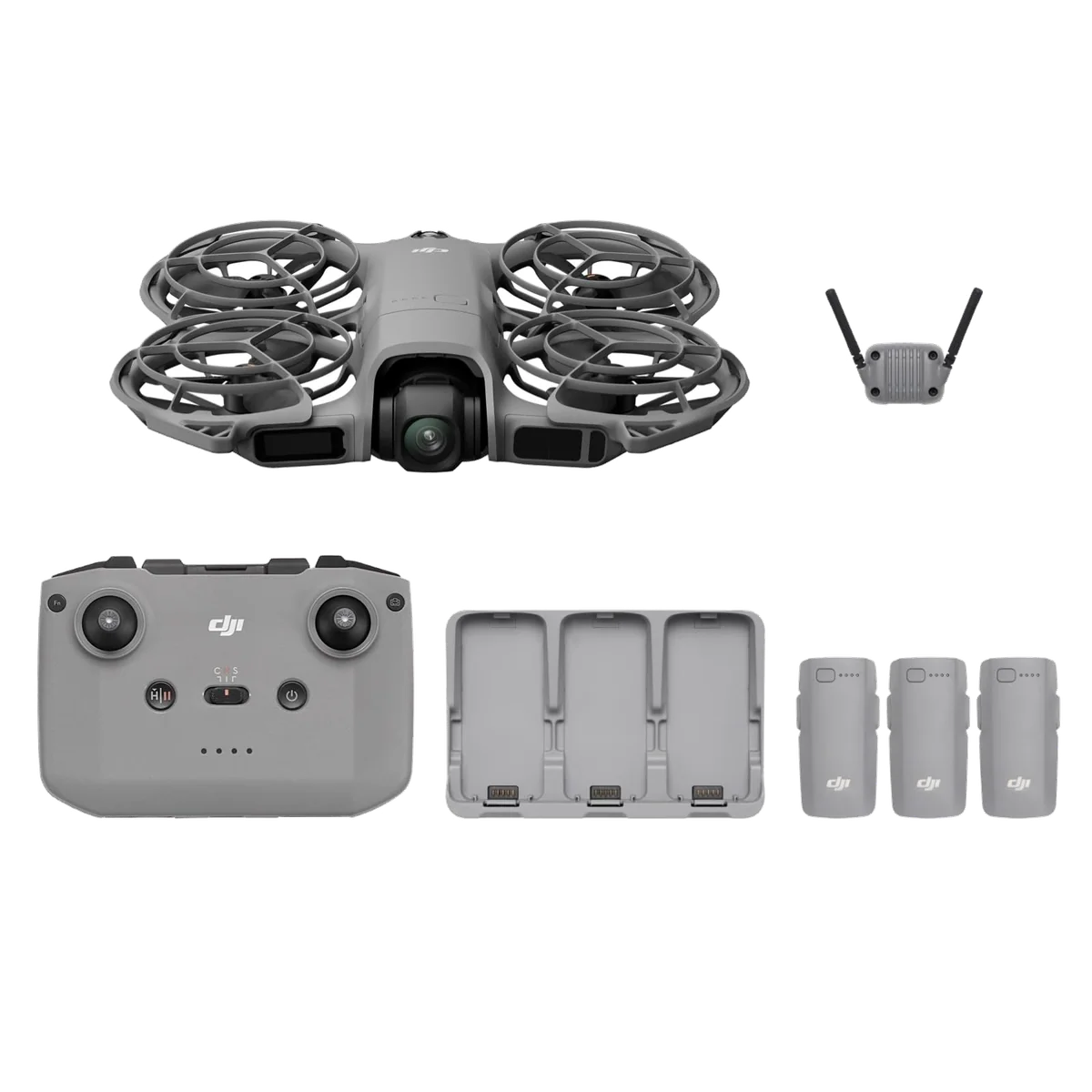
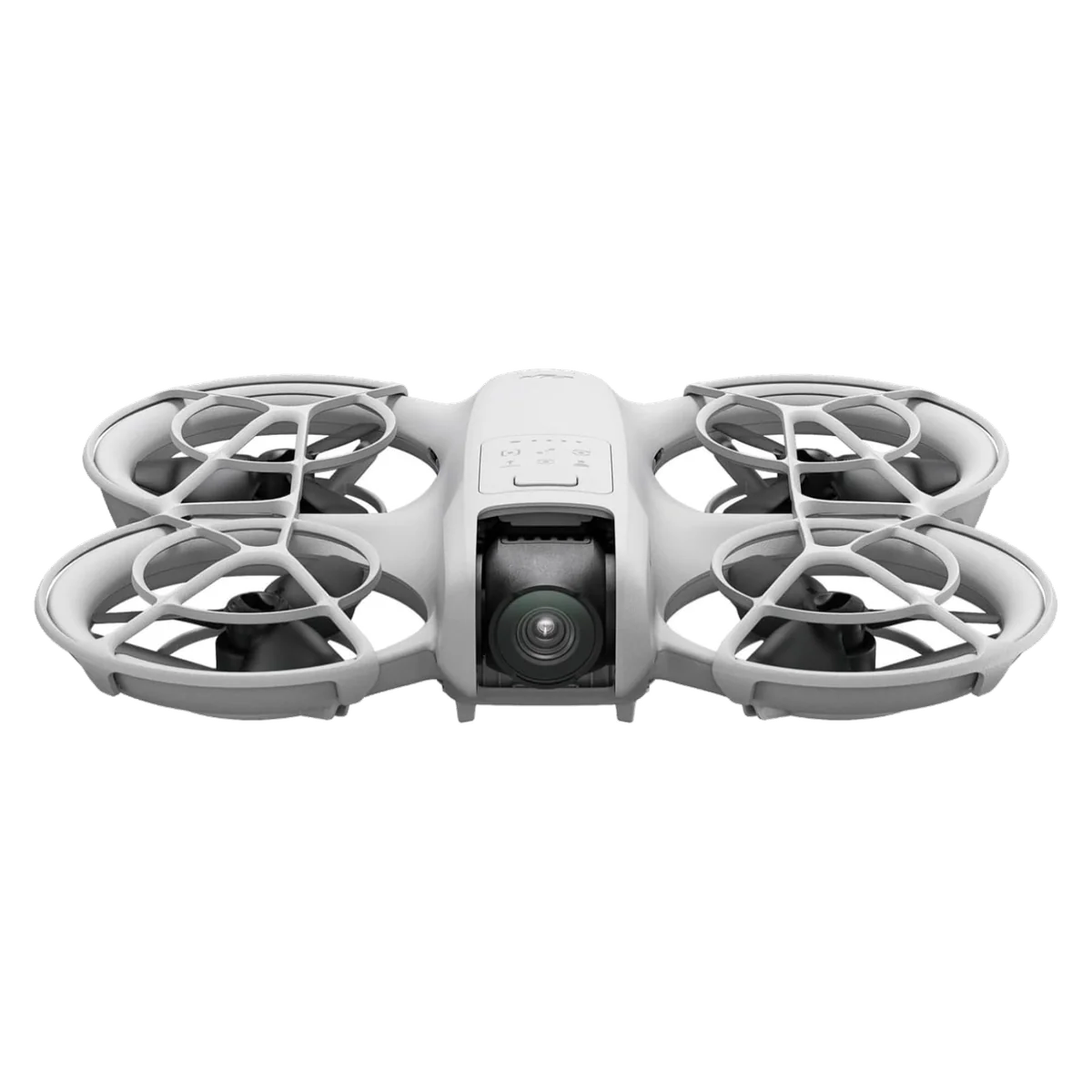
The two Neos invert the whole idea. These are cameras that fly themselves, launched off an open palm, and the reason to own one is that it is in your jacket on the day something worth filming happens. The newer one added omnidirectional sensing and a second gimbal axis to a design that previously had neither, which is a genuine generational change rather than a badge refresh. The older one is the cheapest ticket into any of this, and its listing promises you can dip and dive through tree branches without worry, which is a sentence the hardware cannot support. Cages protect the drone. They do not see the branch.
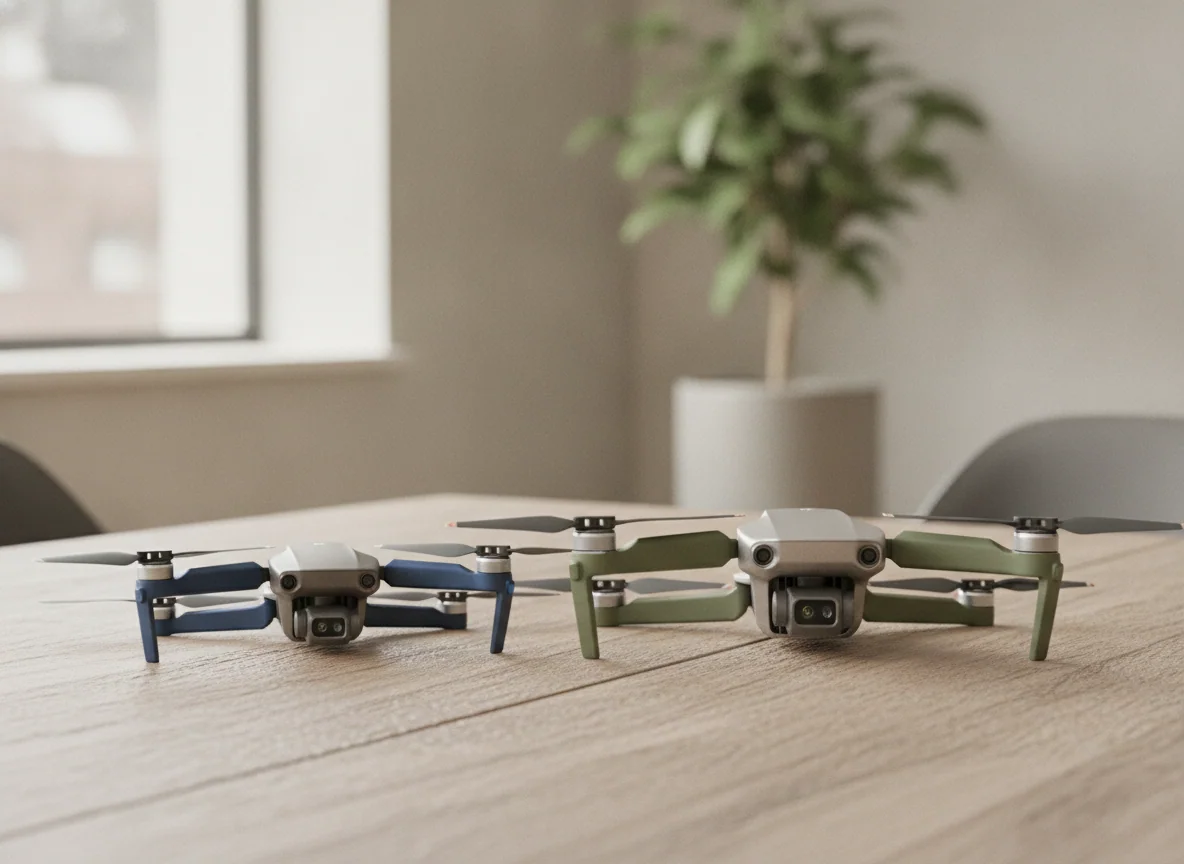
The one that leaves the house, because it launches off your palm and lands back on it
Tracking that holds a cyclist through trees, cages that turn a crash into an anecdote, and a hub that fills three packs in about an hour make this the best follow-camera in the range.
Plan on roughly twelve minutes a battery against the nineteen DJI rates it at, and accept that 151 grams cannot punch into a headwind at any throttle setting.
The cheapest ticket into flying, for somebody who mainly wants to be in the shot
Palm launch, a full propeller cage and 22GB of internal storage remove every excuse not to carry it, and four separate control paths let it grow from a phone toy into a goggles trainer.
There is no obstacle sensing of any kind, no vertical video mode on a drone sold for social clips, and no Remote ID broadcast, which rules it out of paid work in the US.
If the follow shot is the whole reason you are shopping, the newer of the two is worth the difference and the comparison spells out why, while the wider follow-me shortlist covers what else does this job. What neither Neo will do is produce a photograph you want to print, and owners who bought one for stills say so plainly.
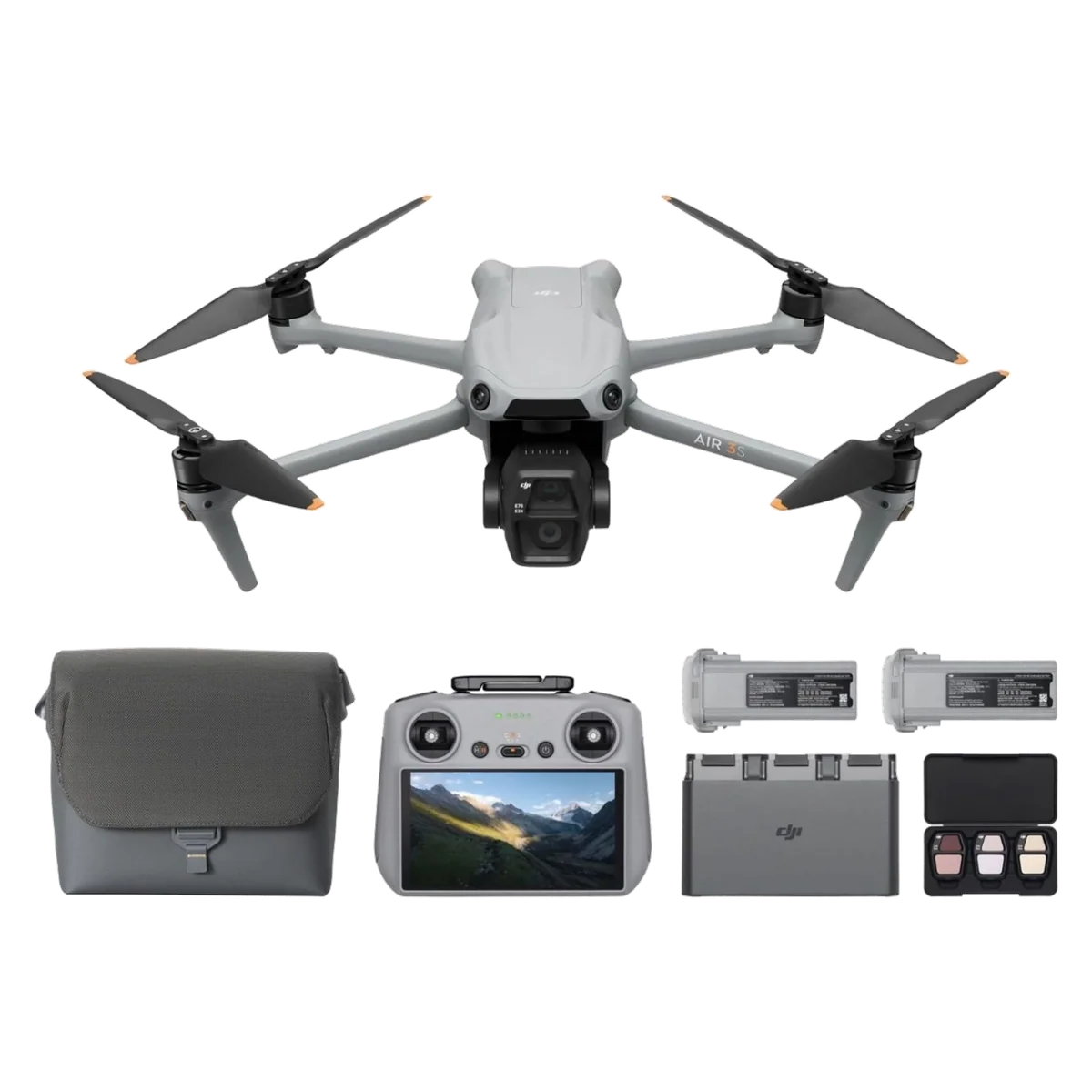
Then the recommendation. The Air 3S is the aircraft people buy after a smaller one has already cost them a shot, and its listing is unusually frank about what it leaves out, telling you in its own bullets that the battery charger is sold separately and recommending which one to go and buy.
The drone to buy if you are only going to buy one
A 1-inch main sensor, a real 70mm second camera and enough mass to hold a frame in wind that ruins light-drone footage add up to the most complete package here by a distance.
There is no wall charger in the box, the bundled filter set skips the two values reviewers actually reach for, and the obstacle sensing switches off entirely in Sport mode.
Against the flagship it gives up an adjustable aperture, a Four Thirds sensor and the codecs a demanding client will specify, and that comparison is where the decision belongs. Against the current light class the argument is live rather than settled, and we take it apart in the small-versus-large comparison. What is not in dispute is that a 249-gram aircraft gives up wind performance to get its exemption.
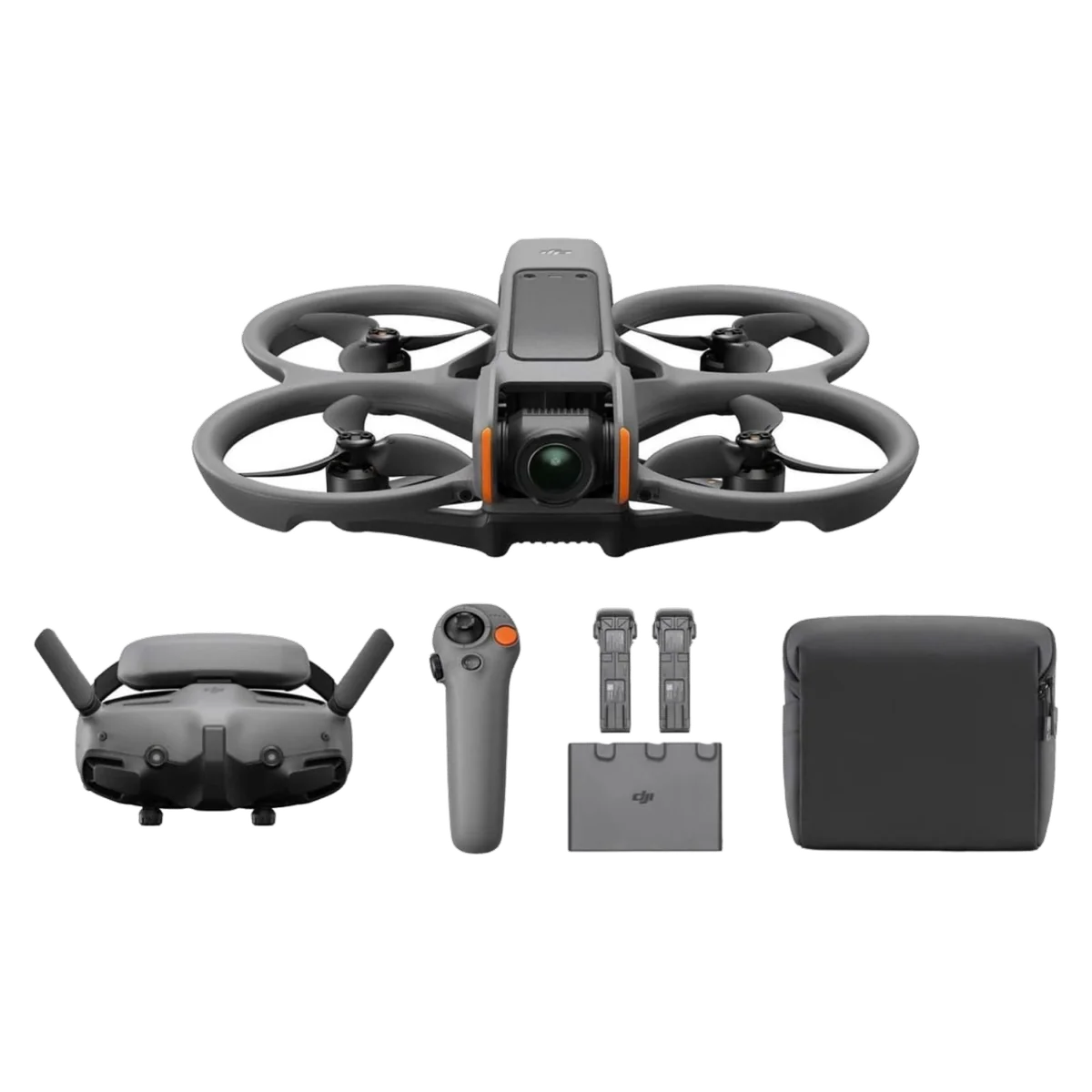
The Avata 2 is the only machine here bought for the sensation rather than the picture. Its footnote is worth reading before the bullets: the flight time is measured at a fixed cruise in a windless environment with the camera not recording, and the transmission figure describes a one-way, non-return flight. Read as a fifteen-minute cinewhoop with a repair fund attached, it is the gentlest way into goggles anyone has built, and the FPV shortlist puts it in context.
The gentlest way into goggles, for people who want the flying itself to be the reward
Ducted, crash-tolerant and learnable in an afternoon with the motion wand, with three batteries and a hub that turn a short-legged aircraft into a continuous session.
It has no forward obstacle avoidance on a drone designed to be flown close to solid objects, and return to home climbs vertically first, straight into whatever is above it.
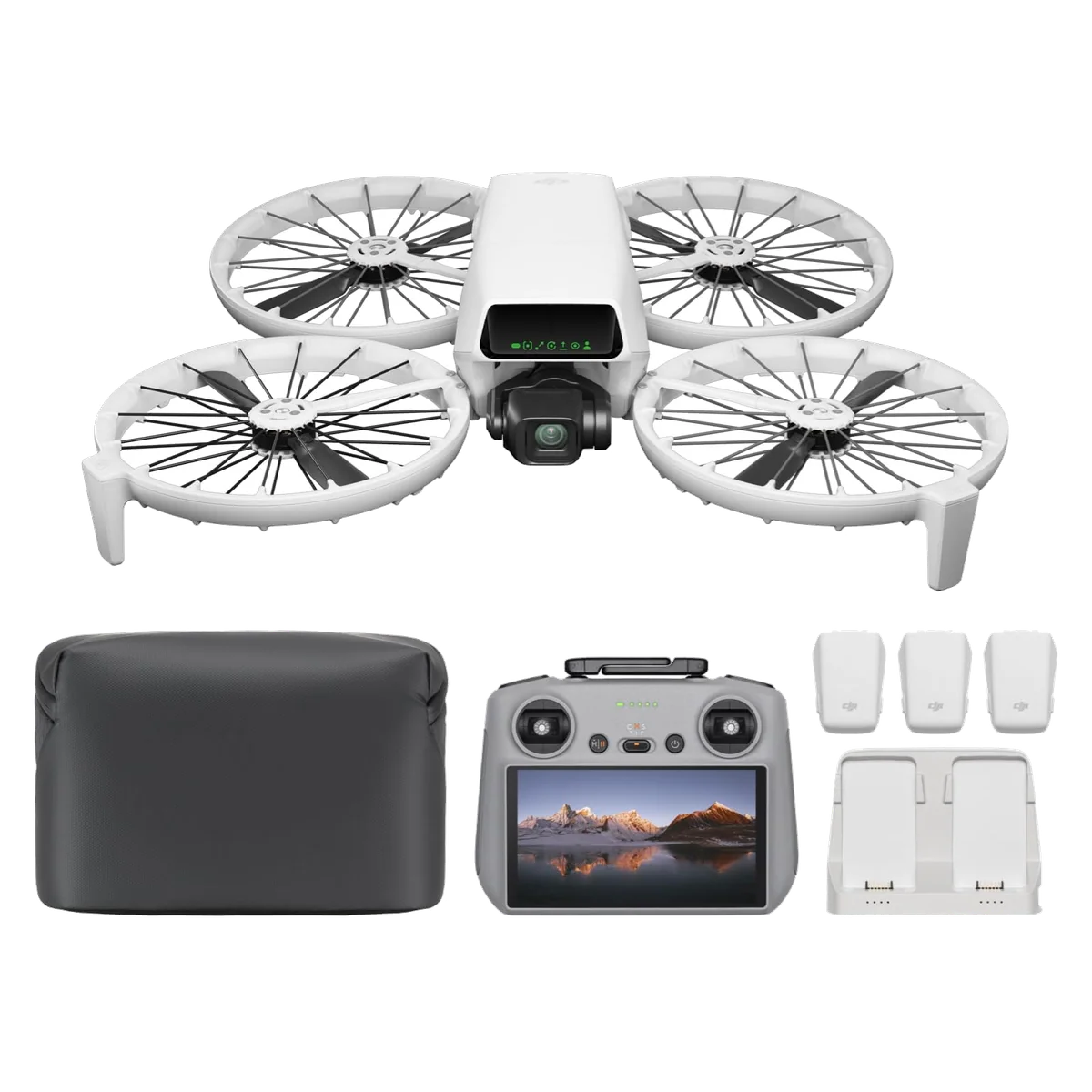
The Flip is the caged answer to the Neo question for anyone who wants a real camera on the front. Its title advertises 93 minutes of flight, which is a laboratory rating multiplied by three batteries rather than anything you will experience in one go, and its own description tells you the charger is a separate purchase. In roughly 20 mph of wind it will still hold station and will start refusing its cleverer modes and posting warnings about coming home, which means its behavioural ceiling sits noticeably below its published one.
A first camera drone you can launch from a palm with other people standing nearby
Folding carbon guards, a 1/1.3-inch sensor shooting 4K/60 HDR and the screen controller make this the most sensible cheap option for somebody learning to fly.
Those same guards behave like sails in wind, and the aircraft carries no Remote ID, so any paid flight in the US needs a bolt-on module before it is legal.
If you are choosing between this and the newer Neo, the direct comparison is the fastest route: take the Flip for the picture, take the Neo 2 for the tracking and the toughness. Both sit on our list of drones to learn on.
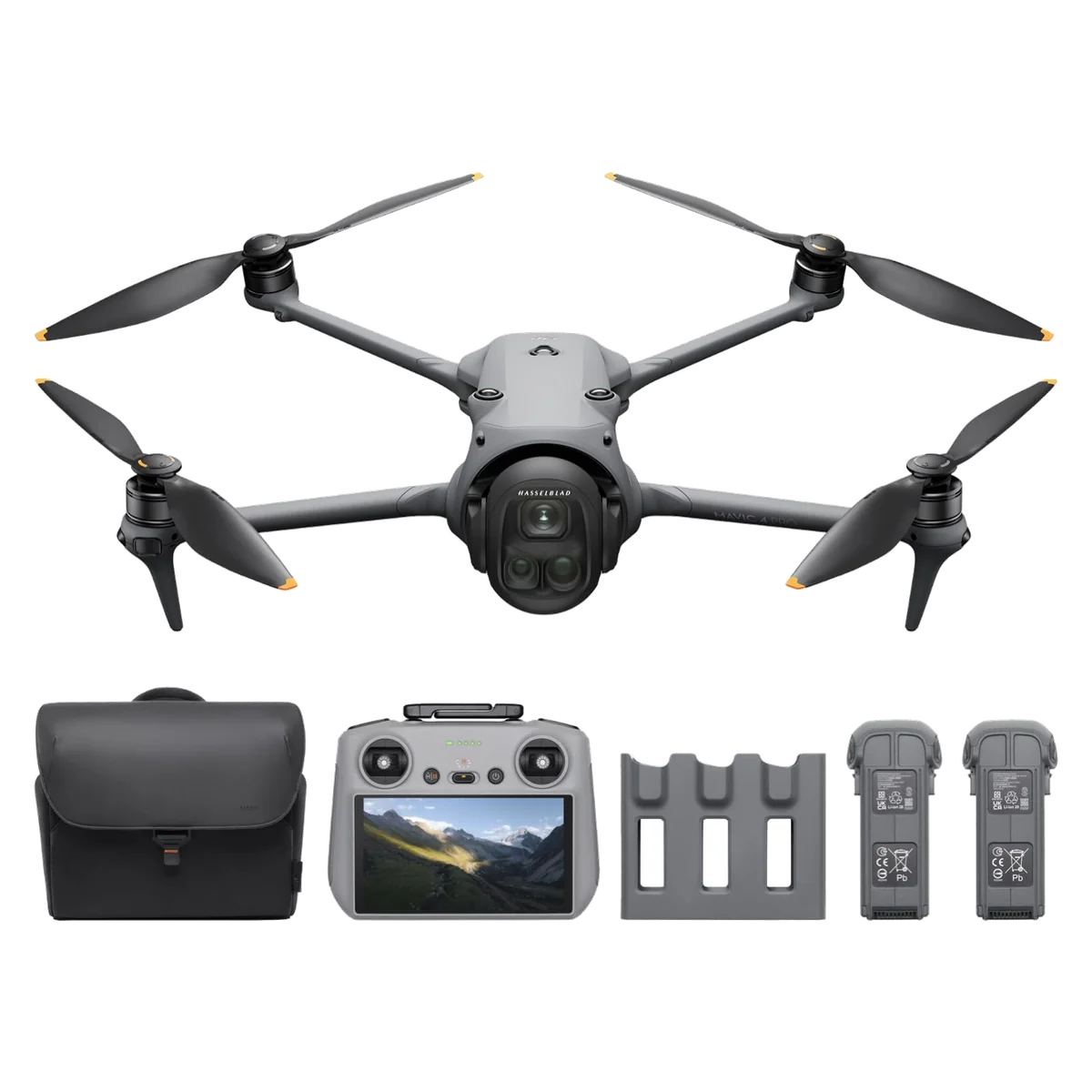
The flagship is the only aircraft on this page where the ownership risk outweighs anything about the hardware. Read its listing carefully before you order, because bullet seven describes a seven-inch rotating controller that belongs to a different bundle entirely, while bullet eight and the title both name the smaller 5.5-inch unit that is actually in this box.
The instrument to buy when the footage is paying for it
Nothing this size takes a better picture, and all three cameras finally share colour profiles, so a sequence that cuts between focal lengths is no longer a grading fight.
US owners cannot buy Care Refresh for it and owners report repair timelines quoted in months, which makes a hobby budget the wrong budget for it entirely.
If the drone is going on invoices, this is the strongest tool in its class and the risk is a business cost you price in; our list for paid work sets it against the field. If it lives in a cupboard between holidays, that risk is not a cost, it is just risk.
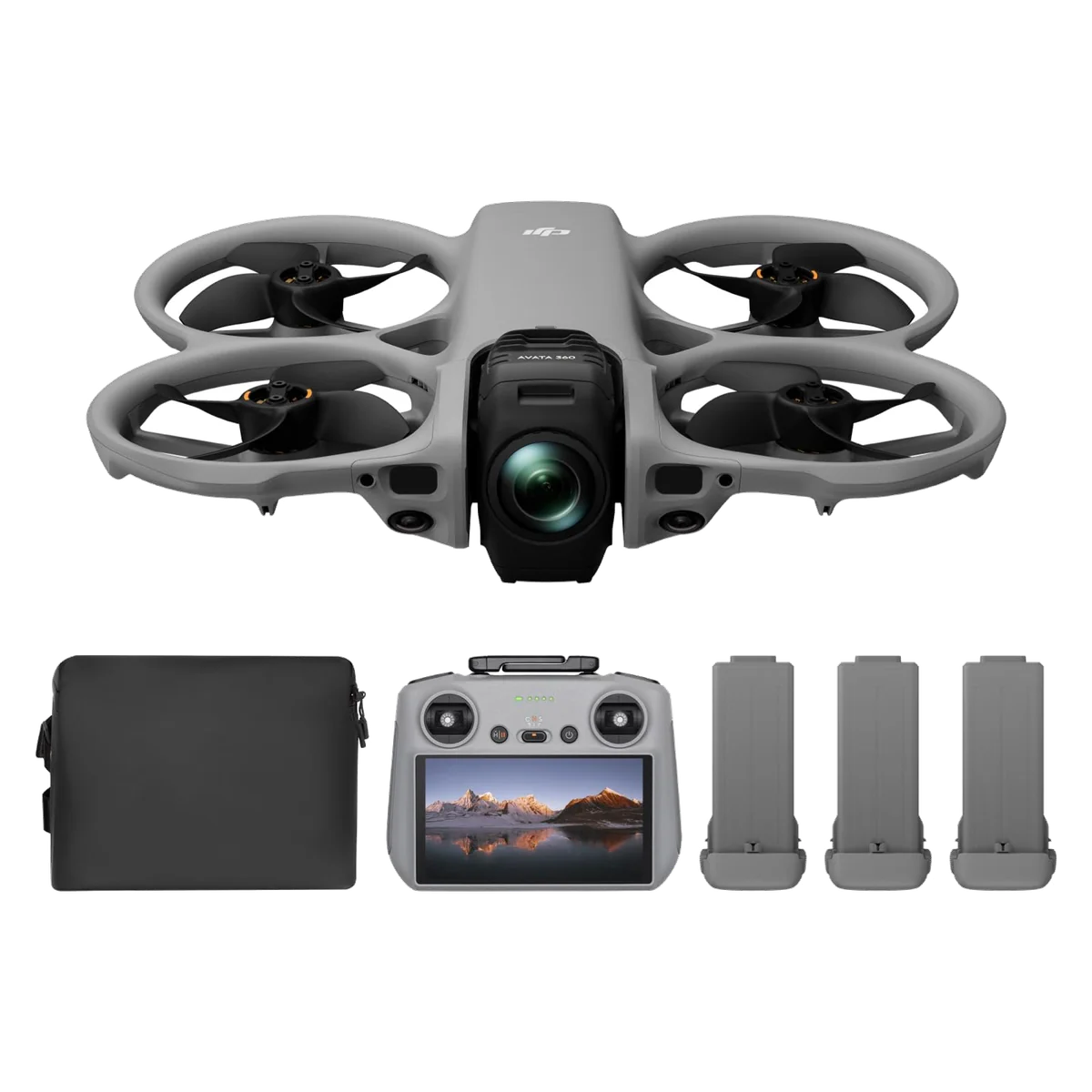
Which leaves the strangest thing here. The Avata 360 leads with 8K, and the number is true in the sense that the sphere it records is 7,680 pixels around, and misleading in the sense a buyer hears it, because a normal-looking crop out of that sphere covers roughly a third of it. Nobody who has flown one claims it beats a conventional camera drone on picture. What it does instead is remove the framing decision from the flight, and whether that trade suits you is its own question.
The drone that guarantees you got the shot, whichever way you happened to be pointing
Reframing after landing produces moving shots no single-lens aircraft can make, and the screen controller lets you fly it alone and line of sight rather than needing a spotter beside you.
Any normal-looking crop out of that sphere resolves nearer 2.5K, and every clip has to pass through DJI's own software before it becomes footage an editor can open.
It shares a name with the goggles drone above it and almost nothing else, which the comparison between the two covers properly. Whichever you are looking at, check who the seller of record is and what warranty support you would actually receive from them before you commit.
Where this ranking comes from
Quadcopter Bench has not flown any of these aircraft, and nothing on this page is a measurement we took. What we did was read each product's own record whole: the marketing bullets and the footnotes underneath them, the customer reviews retained against each listing, the published hands-on testing, the owner threads, and DJI's own comparison tables where a specification needed cross-checking between models. Where a figure is DJI's, we have said so and, where the footnote explains how it was obtained, we have said that too. Where a number came from somebody who flew the thing, it is in the right-hand column of the table above and nowhere else.
The ranking itself follows from our own reviews of these nine machines rather than from a scoring spreadsheet, which is why the flagship does not top it and the cheapest aircraft is not dismissed. Two limits are worth stating. The customer review sets we can read skew heavily positive on every one of these listings, which means the critical tail where faults usually live is largely invisible to us, and we have leaned on the small number of long, specific, testing-minded reviews rather than the volume of short praise. And published editorial buying guides tend to be written against a broader market than the one this page covers, so where a guide's verdict conflicts with an owner's account of living with the thing for months, we have generally sided with the owner.
Every aircraft here has its own review on this site, and each one goes further into the faults than a roundup can. If you are still weighing categories rather than models, the camera drone roundup, the sub-249 gram list and the travel picks approach the same field from different directions.
How to actually choose one
Start with weight, because it is the specification you cannot change later
Under 249 grams is the line that decides how much paperwork you own. Recreationally in the US it means no registration and no Remote ID, though the free knowledge test still applies, and most other countries register the operator rather than the aircraft. The trapdoor is that the exemption is easy to spend: propeller guards, a skin or an extended battery can all push a light drone over the threshold, and the Mini 3's larger pack is explicitly described as taking the aircraft past 249 grams. Our guide to registration and Remote ID below 250 grams is worth twenty minutes before your first flight.
The moment money changes hands, the rule inverts. Paid work in the US needs certification regardless of weight and needs a Remote ID broadcast, which the Flip and both Neos do not have, and which the Air 3S, the flagship and the 360 do. A cheap aircraft that cannot legally do the job is not a saving.
Then ask whether your subject moves
This is the split that catches more buyers than any other, because it does not track price. Neither Mini can lock onto a moving subject at any cost. The Neo 2 holds a rider through trees. The Flip tracks people but not vehicles. The Avata 2 has no subject tracking at all, which surprises people who assume every DJI does. If the shot in your head is you, from behind, on a trail, that requirement alone eliminates four of the nine.
The flight-time figures, and what people who fly them report
| Aircraft | Rated | What owners report |
|---|---|---|
| Mini 4K | 31 min | Roughly 20 to 28, falling in 4K or in wind |
| Mini 3 | 38 min | Low thirties, landing with a sensible reserve rather than flat |
| Neo 2 | 19 min | Ten to fifteen, with twelve as the planning number |
| Neo | 18 min | Fourteen to fifteen, nearer ten if you chain automated shots |
| Air 3S | 45 min | High thirties to about forty on mixed use |
| Avata 2 | 23 min | About fifteen from full to a twenty percent landing |
| Flip | 31 min | Twenty to twenty-five |
| Mavic 4 Pro | 51 min | No measured figure exists in the public record |
| Avata 360 | 23 min | Published testing came in a few minutes under, camera running |
Those right-hand figures come from people who flew the aircraft and said so. The rated column is DJI's own, cross-checked against its published comparison table. The shortfall is not dishonesty so much as a measurement nobody replicates: a constant cruise, in still air, camera idle, flown from full charge to empty. Independent testing of a small Pro model landed at about 79 percent of its own claim in a pure hover, which is the shape of the gap across the whole range rather than a defect in any one model. Plan sessions around three flights of what the right-hand column says, and read why the box figure and your flight are different numbers if that gap is new to you.
Transmission ranges deserve less sympathy still. Ten, thirteen or twenty kilometres describes a radio link in clean air, and on the Avata 2's own footnote it describes a one-way flight that does not come back. The binding constraint is the battery, then the law requiring you to keep the aircraft in sight, then the radio, in that order. The clearest demonstration of it in the record is a tester who turned a small Pro model around at 4,544 metres with four of five signal bars still showing, because the charge would not have brought it home.
Wind is where the light ones stop, and the picture will not warn you
Every drone here carries a wind rating and every rating means the same modest thing: the aircraft will stay up and come back. It does not mean your video is usable, and it does not mean the aircraft will still offer you its cleverer modes. Reviewers of the small Pro models describe the same behaviour repeatedly, with the airframe swaying visibly while the gimbal works hard enough to hide it, which is the genuinely dangerous combination because your feed looks calm while the aircraft is losing the argument. Cages make it worse rather than better, since a guard is a surface for air to push against. If you fly ridgelines or coast, read what a lightweight drone can actually take and then buy the heavier one.
Controllers and combos, where the money quietly goes
Two controller types run through this range: a screen controller that needs no phone, and a cradle that clamps yours in. Owners who paid the difference for the screen are close to unanimous about why, and it is rarely the screen quality itself. It is the absence of a ritual: no cable, no clamp, no phone battery draining, no incoming call landing on your live feed. The dissent worth respecting comes from people who fly somewhere new every weekend, because a screen controller has no connection of its own and its maps must be loaded in advance. We set out the general case in phone versus a real controller, and which aircraft the RC 2 will fly matters if your plan is to buy a controller once and change drones later.
On the bundles, the honest answer varies by aircraft rather than by brand policy. On the short-legged machines, the Neo 2 and the Avata 2 above all, three batteries and a hub are not an upsell, they are the minimum viable configuration, because one pack buys you a single short flight and a wait. On the longer-legged ones the calculation is closer, and what is missing from the box matters more than what is in it: several of these kits ship a hub and no wall charger, and the wattage you supply decides whether packs charge together or one after another. Our piece on the combos works through it, and the general rule is to price the memory card, the charger and the filters into the purchase rather than discovering them afterwards.
One shared piece of setup friction, on almost every listing here: the DJI Fly app has been pulled from Google Play, so Android owners download it from DJI's website and sideload it, and the aircraft cannot be activated until they do. Do that at home, not at the trailhead.
Where obstacle sensing helps and where it does not
The sensor coverage across this range is wildly uneven, and the pattern is not the one you would guess from price. Two of the cheapest machines have none at all. The cheapest tracking drone has omnidirectional coverage the middle of the range does not. The goggles drone, built specifically to be flown close to solid objects, looks down and backwards but not forwards. And on every aircraft that has it, the same two things defeat it: thin branches and wires it cannot resolve, and Sport mode, which switches the whole system off. What these systems catch and what they fly straight through is worth reading before you rely on any of it, on any drone.
The honest case for buying something else entirely
Two of these decisions have answers outside this brand. If you need Remote ID for paid work at the cheap end, the Potensic Atom 2 ships with the broadcast module built in, which is exactly the gap the Flip and the Neos leave open. We put the two families side by side in whether Potensic is as good as DJI and, model for model, in Atom 2 against the Mini 4K. If the requirement is a camera that follows you while you run or ride and nothing else, the HOVERAir X1 was built for that single job. And if the point of the purchase is to learn on something you would not mourn, the Holy Stone HS175D is the cheap practice option, with more on that approach in learning to fly without wrecking it.
Frequently Asked Questions
Which one should I buy if I only want a single answer?
Buy the Air 3S, because it is the only aircraft here that is not obviously compromised on picture, endurance, sensing or composure in wind.
Can Americans still buy and fly these?
Models authorised before new foreign-made drones went onto the FCC covered list in December 2025 remain legal to buy and fly on the published position, while newer hardware cannot get approved, and DJI's legal challenge means the situation is still moving.
Do these aircraft broadcast Remote ID?
The heavier ones do and the sub-250 gram models mostly do not, which matters only when you are being paid, since commercial flight in the US requires the broadcast regardless of weight.
Which is the best first drone?
The Flip if you want a real camera and cages that let you fly near people, and the Mini 4K if the point is to discover cheaply whether you enjoy this at all.
Is the Mini 4K the same thing as the Pro-badged Mini?
No, and confusing the two is the most expensive mistake in this corner of the market, because the Pro is a substantially dearer aircraft with obstacle sensors, subject tracking and a larger sensor.
Will any of these follow me down a trail?
The Neo 2 does it best, the Flip does it well for people but not vehicles, and neither Mini nor the goggles drone can do it at all.
Is the three-battery bundle worth the extra?
On the short-legged aircraft it is the minimum sensible configuration rather than an upsell, and on the longer-legged ones the deciding question is whether you can recharge where you fly.
Which aircraft work with the screen controller I already own?
Compatibility is model by model rather than range-wide, and the newer screen controller does not simply carry forward from every older drone, so check before you assume your existing one is reusable.
Should I wait for the next model instead?
Waiting made sense when a successor arrived every eighteen months, and it makes much less sense now that new hardware cannot get US approval.
Is the flagship overkill for a hobby?
For most hobbyists yes, because the Air 3S delivers most of the picture for a fraction of the consequence when something goes wrong.
Our Top Pick
The DJI Mini 4K is our #1 recommendation — travel drones.
Check Price on Amazon: DJI Mini 4KSources (8)
- Amazon listings and customer reviews
- Pcmag — Article — www.pcmag.com
- Ca — Article — vancouverislanddrones.ca
- Fstoppers — Article — fstoppers.com
- DJI — Article — www.dji.com
- Firstquadcopter — Article — www.firstquadcopter.com
- Photo — Article — jvn.photo
- Digitalcameraworld — Article — www.digitalcameraworld.com