The DJI Neo is a mediocre camera bolted to a genuinely good idea
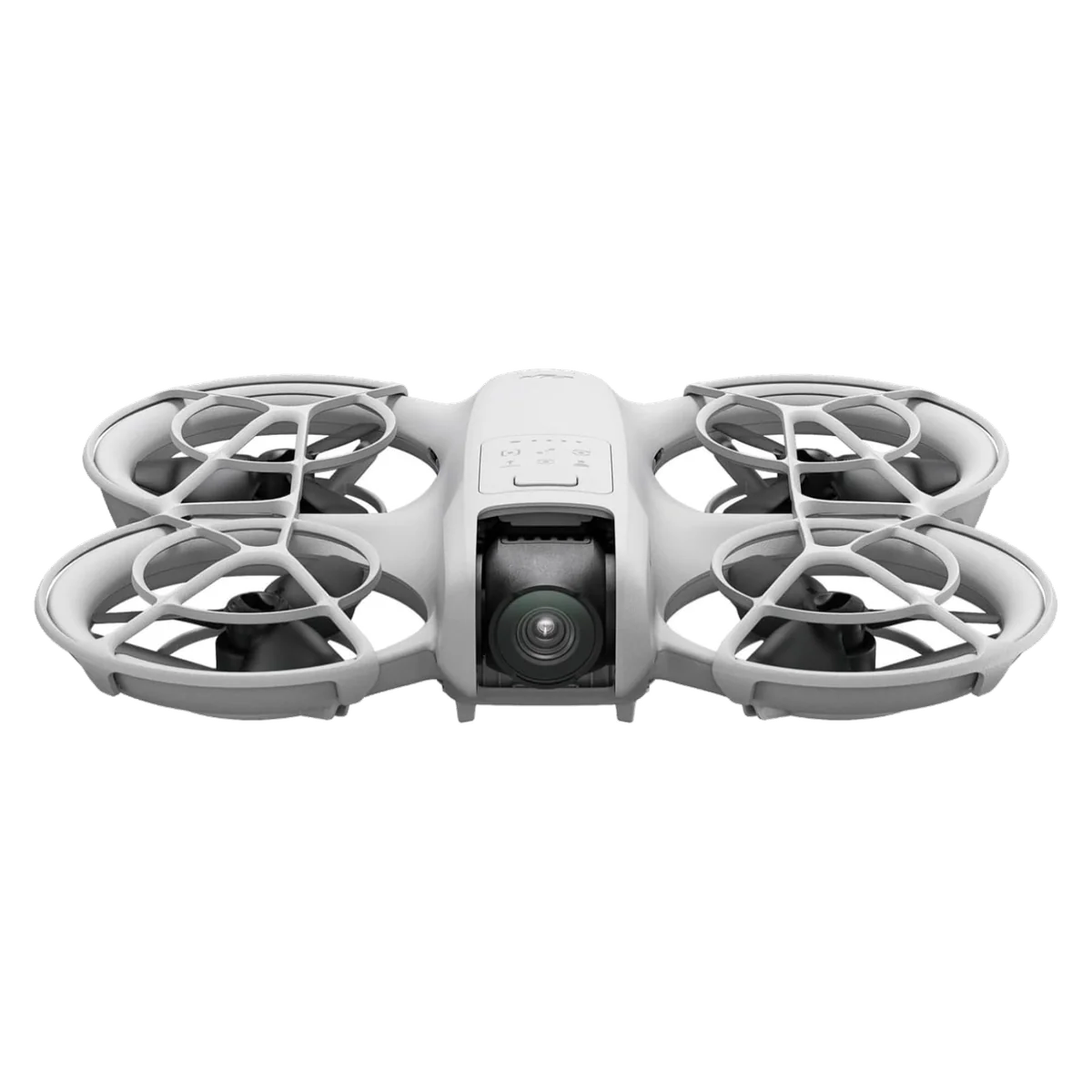
Buy it if you want to be in the shot and can live with 4K/30 from a tiny sensor, and walk away without a second thought if any of your footage is paid work, because the Neo carries no Remote ID and that alone puts it outside US Part 107 rules.
Based on 4300 owner ratings, 4 owner discussions and 7 other sources. We have not tested this machine ourselves.
We earn a commission if you buy through our links, which does not affect what we say.
Read how this site works →
So, buy it or not
Buy it. Not because it takes good pictures, because it does not take especially good pictures, but because the drone that gets used is the one that never asks you for a decision. Everything about the Neo is a subtraction: no case, no controller, no card, no pairing, no waiting. That is why owners of Minis and Mavics keep admitting, slightly sheepishly, that this is the one that leaves the house. The camera is the price of that, and it is a price worth paying if the footage is going to a phone screen and if you are in the frame.
The people it is wrong for are easy to name and we have named them: anyone who bills for footage, anyone whose ambition is landscapes, anyone flying in real wind, and anyone expecting the cage to do the job of sensors. If you are in the last group and you want the same trick with actual avoidance, the Neo 2 is the answer and it is a real generational jump rather than a refresh. If you want a first drone that will still satisfy you in a year, the Flip is the better long game and our beginner shortlist explains why. If none of that describes you, the Neo is the most fun per unit of effort in the entire category, and that is not nothing.
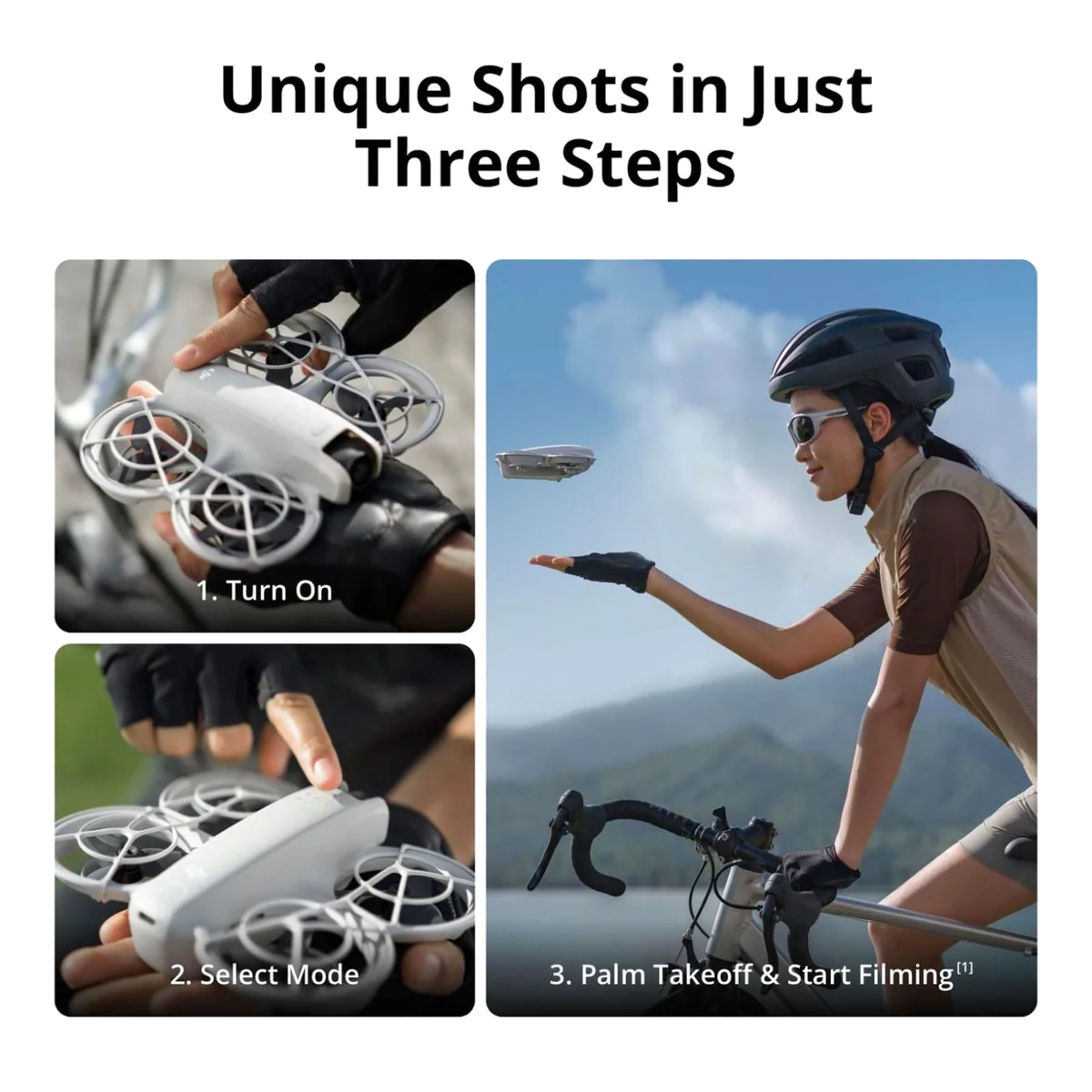
Most cheap drones are bad drones. The Neo is not one of them, and the confusion around it comes from reviewers grading it as a camera when it was designed as a way of removing friction. There is no controller to pair, no satellites to wait for, no case to unzip. You press a button, hold it flat on your palm, and it goes. Owners who already have better drones keep saying the same thing in different words: the Mini gets used for anything that matters, and the Neo is the one that actually comes out of the bag.
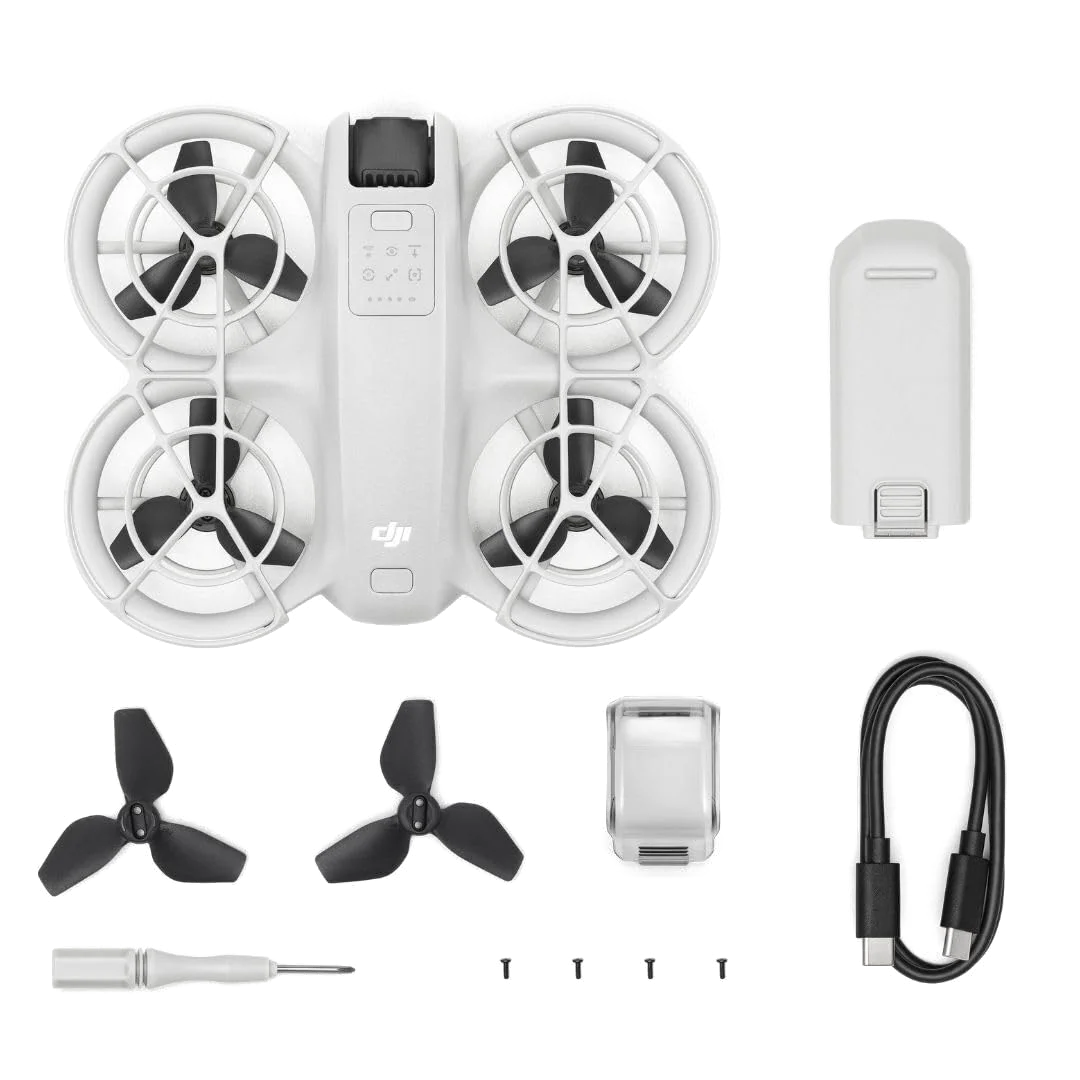
Now the part the listing will not tell you. The Neo has no obstacle avoidance whatsoever. The two sensors on its belly are downward vision positioning, the things that let it hover indoors without GPS, and they do nothing about what is in front of it. The product copy invites you to "dip and dive dynamically around your house and through tree branches without worry", which is a sentence the hardware cannot support. The full-coverage guards mean the drone survives the branch and your fingers survive the drone; they do not mean the drone sees the branch.
So there are three people who should close this page. If you monetise a channel, shoot property listings or invoice for a wedding, the missing Remote ID broadcast disqualifies the Neo before you even get to image quality, and you want something from our guide to drones for paid work instead. If you want sweeping landscapes, distance, or anything shot in a stiff breeze, a 135g airframe is the wrong tool and a DJI Flip or Mini 4K is the better spend. And if this is going to be your only drone forever, buy a Mini. Everyone else, read on, because the Neo is one of the few products where the compromises are honest and the payoff is real.
Key Specifications
Controller-free is a mode, not a description
The single most useful way to think about the Neo is that it is four drones wearing one shell. Flown with nothing at all, it does palm launch and a set of automated shots. Flown from the phone app, you get virtual sticks and a live feed. Flown with an RC-N3 or RC-N2, it behaves like a normal small drone with real range and real speed. Flown with Goggles and a motion controller, it is a slow, cage-protected FPV trainer, which is a genuinely cheap way to find out whether goggles are for you before you spend Avata money.
The catch is that those four drones are not equally good, and the box on this page is the cheapest of them. Without a controller you lose manual exposure, the flight speed modes, the dedicated return-to-home button, and the ability to draw a box around a subject to track it. You also lose most of the range. Published figures for controller flight run from 7km to 10km depending on who is counting, but phone-only numbers are all over the place: one review puts it at roughly 100 feet, DJI's own accessory-free spec is quoted nearer 100 metres, and the most vivid description in the owner record is that you cannot get more than about a city block away even if you walk along with it.
This matters more than any spec on the page, and it explains why reviews of the Neo read like they are describing different products. The owners who report flying confidently across acreage, holding position in wind, and never worrying about the link are almost all holding a physical controller. The owners who report the link dropping at short range, the home point failing to set, and the drone simply landing where it stood were flying it the advertised way, from a phone. Quadcopter Bench's read is that the controller-free pitch is true as a feature and misleading as a value proposition: it is a mode you will use for QuickShots and selfies, not a way to avoid ever buying a controller. If you are weighing that up, our notes on flying with a phone versus a real controller and on whether the Fly More combo earns its price are the two things to read next, and which DJI controllers pair with which drone is its own small maze.
Strengths & Limitations
Strengths
- It is airborne in seconds from your palm with no controller to pair and no satellite lock to wait for.
- The full cage takes tree strikes and hard landings that would end a folding drone, and keeps fingers out of the propellers.
- 22GB of internal storage removes memory cards from your life entirely, and Wi-Fi transfer to the phone is fast and lossless.
- At 135g it clears every recreational weight threshold that matters by a margin no shipping tolerance can erase.
- Four separate control paths make it the cheapest honest route into both normal drone flying and goggles.
- Indoors and low down, the downward vision positioning holds a hover that embarrasses far more expensive drones.
Limitations
- There is no obstacle avoidance of any kind, so the guards protect the drone rather than prevent the collision.
- Follow tops out around 12 mph and drops the subject on sharp turns, which rules out bikes at speed and any vehicle.
- Real flight time lands nearer 14 or 15 minutes than the advertised 18, and closer to 10 if you chain QuickShots.
- The single-axis gimbal and heavy default sharpening give footage a processed look straight out of the drone.
- There is no vertical video mode on a drone sold explicitly for social clips.
- Flown from the phone as advertised, usable range collapses and owners report the link dropping at short distances.
- No Remote ID broadcast means it cannot lawfully be used for paid work in the US.
- The propeller whine is a specific carrying pitch that people around you will notice and dislike.
- Android owners must sideload the DJI Fly app from DJI's site, and nothing works until they do.

What it will follow, and what it will quietly lose
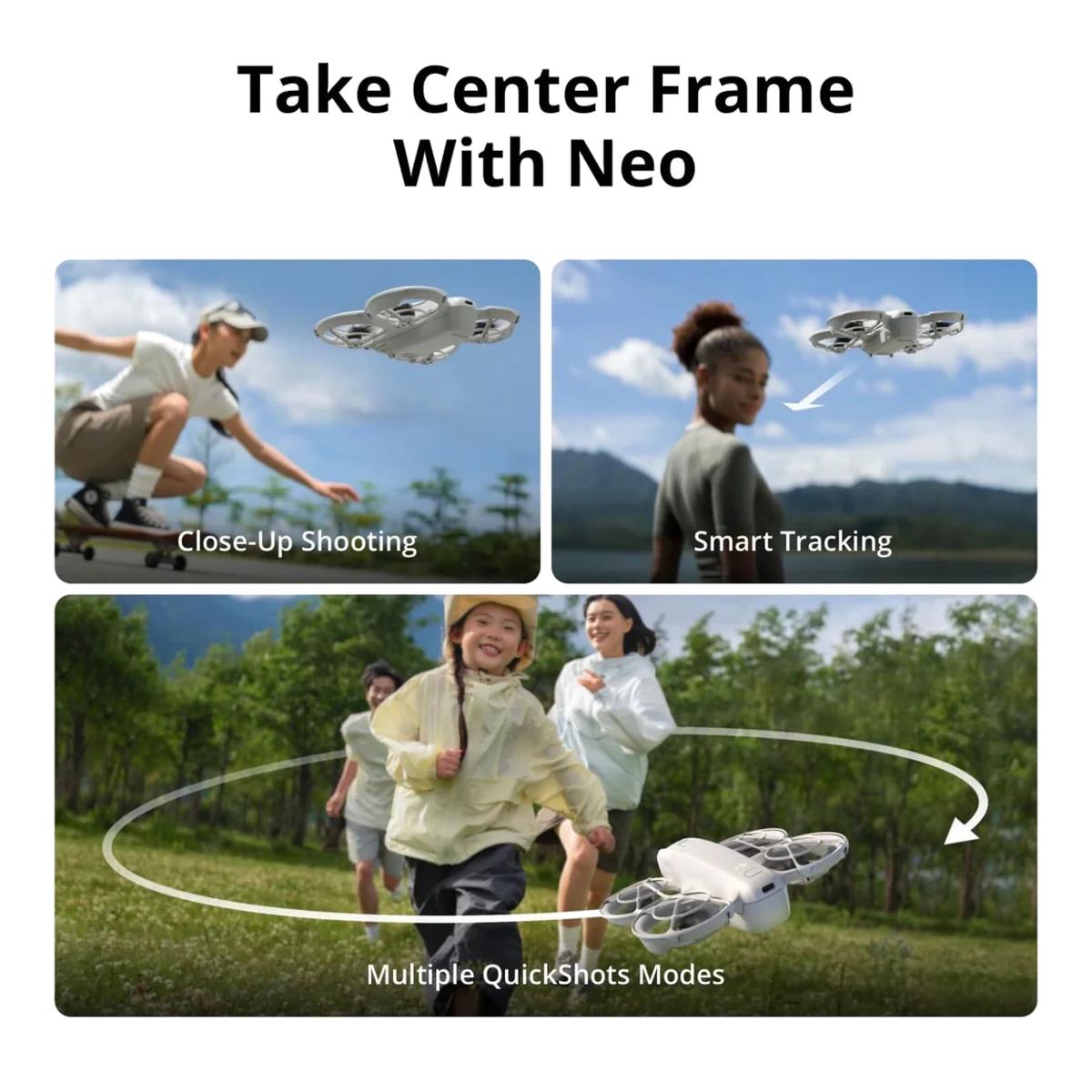
Out of the box the Neo gives you six modes on the drone body: Follow, Dronie, Circle, Rocket, Spotlight, and a Custom slot you assign in the app. The first thing worth knowing is that Follow only works from behind. Walk toward the drone and it will not back away from you. If you want the shot where the camera retreats ahead of you along a trail, that is Direction Track, and it lives inside the Custom slot where nobody finds it by accident. Set it before your first flight rather than discovering it three walks later.
The second thing is speed. Follow is rated at 12 mph, and that number does most of the work in explaining why the owner record on tracking looks contradictory. A runner posting to Instagram finds it tracks beautifully from ahead, behind or the side. A buyer who spent an afternoon with it found tracking lost him on any hard turn and gave up on anything past a light jog, and concluded it could not follow a bike or a scooter. Both accounts are accurate. Steady pace on an open path is inside the envelope; sharp direction changes and any real speed are outside it. Following a car or a slow utility vehicle is explicitly off the table when you are flying without a controller. And do not fly it over water, because the downward sensors have nothing to read and the failure mode is terminal.
Wind is the other hard limit, and it is the same fact as the weight, viewed from the other side. DJI claims level-4 resistance; PCMag calls it middling; owners split cleanly between "held position on a breezy day better than I expected" and "strong winds affect stability at altitude". Down low and indoors, the vision positioning is genuinely excellent and the Neo holds a hover that shames drones costing several times more. Up high with air moving, a 135g airframe wearing propeller cages behaves like what it is, which is a kite. If you regularly fly the coast, read what a lightweight drone can actually take before you commit.
| The listing says | What holds up |
|---|---|
| Self-flying drone that follows you | True at walking and running pace from behind, and not true on sharp turns, at speed, from the front by default, or behind a vehicle. |
| Level-4 wind resistance | Enough for a breezy park, not enough for altitude or open coast, and the cages make it worse rather than better. |
| Dip and dive through tree branches without worry | Does not survive contact with the spec sheet, because there are no forward, side or rear sensors at all. |
| Go controller-free | True, and it costs you range, altitude ceiling, manual exposure, speed modes and box-drawing subject tracking. |
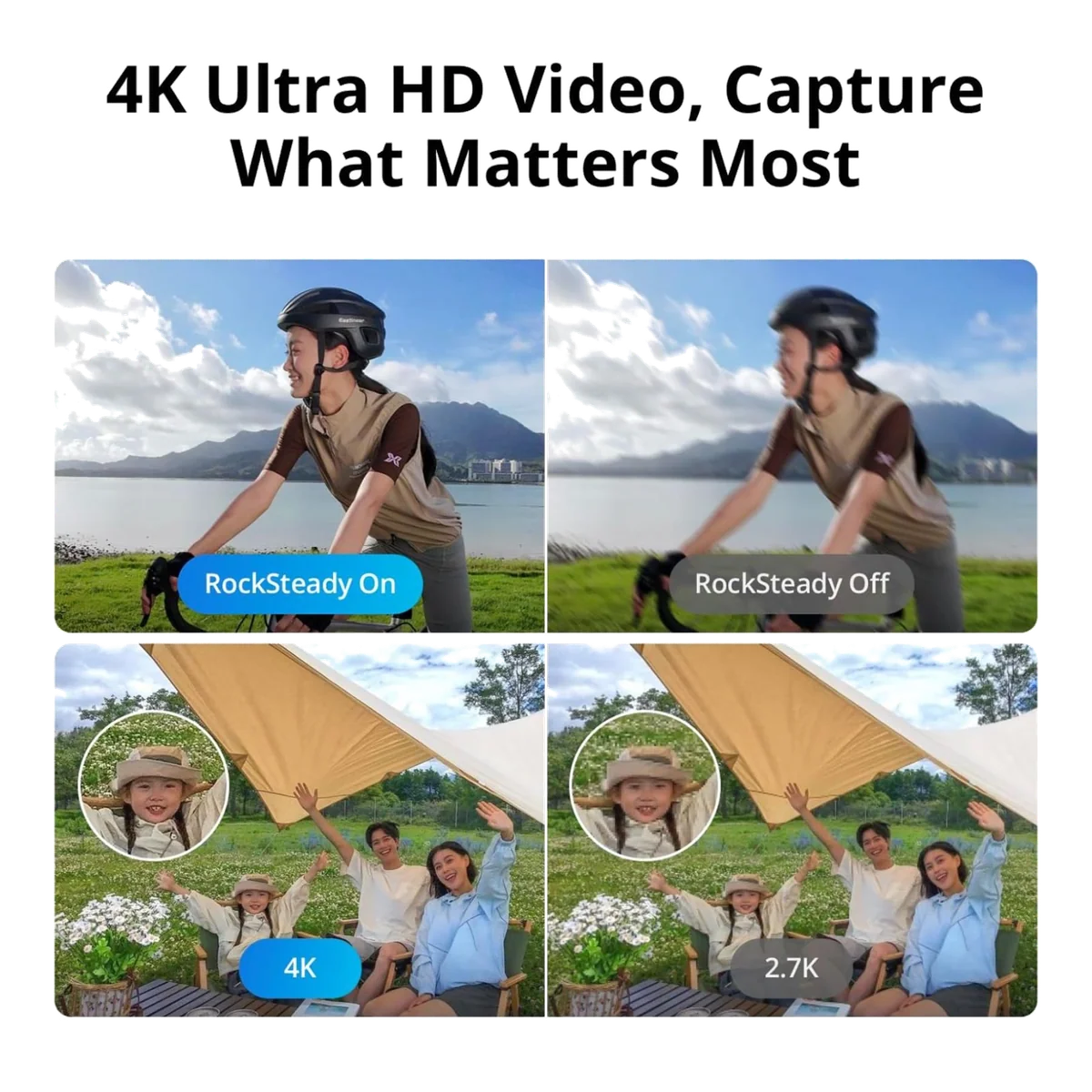
| 4K ultra-stabilized video | 4K/30 is real and the stabilisation works, on a single-axis gimbal doing the rest electronically. |
| Does not require FAA registration and Remote ID | Accurate for recreational flying, incomplete because the free TRUST test still applies, and a disqualifier the moment money changes hands. |
The camera is the compromise, and the argument about it is real
Here is the most useful disagreement in the entire record on this drone. PCMag, whose reviewer is Part 107 certified and has been through seventy-odd drones, lists "unattractive, overbaked video profile" as a con. The Drone Girl calls the footage surprisingly sharp and smooth for the money. They are describing the same 4K/30 file. The reconciliation is that one is grading it against DJI's larger drones and their 10-bit log profiles, and the other is grading it against its price and its destination, which is a phone screen. Both are right, and which one applies to you depends entirely on whether anything else is going to sit in the same timeline as this footage.
What is not in dispute: 4K caps at 30fps, stills are 12MP JPEG with no raw, there is no D-Log, there is no zoom, and the default sharpening is heavy enough that people who know what they are doing dial it down and pull exposure back a third of a stop to stop the sky blowing out. The single-axis mechanical gimbal plus electronic stabilisation is the same approach DJI uses on its FPV drones, which is a fair defence, but it is not a three-axis gimbal and it does not behave like one. If that distinction is new to you, gimbal versus electronic stabilisation is worth ten minutes.
The genuinely baffling omission is vertical video. There is none. A drone whose entire pitch is effortless social clips cannot shoot the aspect ratio social wants, so every upload costs you a crop from a 4K frame you already could not afford to throw pixels away from. Two independent owners flag it, one of them calls it a head-scratcher, and it is the clearest case on this product of the marketing and the engineering not being in the same room.
The thing nobody expected to like
22GB of internal storage, no card slot. On paper that reads as a limitation and it is filed under cons in half the reviews out there. In practice it is roughly forty minutes of 4K, which is more than you can shoot on any realistic number of batteries in a session, and it means no card, no reader, no adapter, and no discovering at the trailhead that the card is in your laptop. Transfer to the phone over the drone's own Wi-Fi is fast and lossless. For contrast, the considerably more expensive Flip ships with under 2GB onboard and expects you to buy a card. There is one trap: the transfer runs over the drone's Wi-Fi, so a phone clinging to a strong cellular signal can make it crawl until you force it onto the drone's network. There is also no format-all function, so housekeeping is manual.
Batteries, and the number on the box
DJI says 18 minutes. Owner accounts cluster at 14 to 15 minutes of ordinary flying, and one buyer who deliberately chained QuickShots burned 80 percent of a pack in six and a half minutes of recorded video, which extrapolates to roughly ten minutes if that is how you fly. That is not unusual behaviour for the category and it is not really a scandal, but it does mean the honest planning figure is a quarter of an hour, not the number on the listing. Two batteries makes the Neo pleasant; the cells are tiny and recharge quickly enough that some owners consider a three-pack overkill while others insist on it. Our page on why advertised flight times never match yours explains where the gap comes from. Owner reports also warn that the packs bleed charge in storage and are not managed the way larger DJI batteries are, so top them to around 60 percent if the drone is going in a drawer for a month.
What else the money buys
| Drone | Weight | Stabilisation | Claimed flight time | Obstacle sensors | Why you would pick it |
|---|---|---|---|---|---|
| DJI Neo | 135g | 1-axis plus electronic | 18 min | None | Palm launch, pocketable, 22GB onboard, cheapest way into DJI. |
| DJI Neo 2 | Around 145g | 2-axis | Similar | Omnidirectional | Faster tracking and actual avoidance, at a real step up in price. |
| DJI Flip | 249g | 3-axis | 31 min | Forward and downward | The best camera and endurance at the beginner end, in a bigger package. |
| DJI Mini 4K | Under 249g | 3-axis | 31 min | None | Longer legs, level-5 wind rating, a proper travel drone rather than a selfie drone. |
| HOVERAir X1 | 125g | Electronic only | Around 20 min | None | Same hand-launch concept, sharper footage, weaker in wind and no internal storage. |
Treat every flight time in that table as a manufacturer figure. The comparisons worth your time are laid out properly elsewhere on the site: Neo against the Flip is the one most buyers are really having, Neo 2 against the original answers whether the newer one is worth the jump, and the X1 against the Neo settles the only serious non-DJI contender. If tracking is the whole reason you are here, our follow-me shortlist is the honest starting point, and the sub-249g roundup covers everything that dodges registration.
Living with one
The Neo is close to indestructible in the ways that matter to a beginner. Owners describe flying it into tree branches with no lasting damage, and reviewers who crash it repeatedly report it looking no worse for wear. The cage spreads impact and the low mass means it does not hit hard. Two caveats: concrete and camera-first landings are the exceptions, and the gimbal is the delicate part. This is the one specific argument for the Neo over the Flip as a first drone, because the Flip's exposed gimbal is what people break in follow mode.
The noise deserves more attention than it gets. The Neo is not loud in absolute terms, but the pitch is unpleasant and it carries. A reviewer who has flown dozens of models described the original Neo's whine as nails on chalkboard from 200 feet away and said neighbours would hear it. If you are picturing discreet flights over a quiet garden, adjust. Small does not mean quiet, and small propellers spinning fast are the worst offenders in the entire category.
Two practical gotchas. First, the DJI Fly app has been pulled from Google Play, so Android owners have to download it from DJI's website and clear the security prompts that come with sideloading, and the drone will not activate at all until that app is on a phone. That is stated on DJI's own listing and at least one owner nearly dropped a star over it. Second, this is not a drone you extend: there is no waypoint mode, no way to repeat a flight path, and no user-serviceable repair path worth the name.
Rules, paperwork and the American question
At 135g the Neo sits so far under the 250g line that the usual anxiety about whether a shipping unit tips over the threshold simply does not arise, and two owners in two different countries name that exemption as the reason they bought it. In the US it means no drone registration for recreational flight, but the free TRUST knowledge test still applies to every recreational pilot regardless of weight, and the listing does not mention it. The moment you fly commercially you need Part 107 and a Remote ID broadcast, and the Neo has no Remote ID. Our explainer on registration and Remote ID under 250g covers the detail.
On the DJI ban, the position at the time of writing is narrower than the panic suggests: new foreign-made drones cannot obtain FCC authorisation, while drones already approved remain legal to buy and fly in the US. The Neo being an older model is, perversely, the reason it is still a straightforward purchase there. Supply and support are the real risks rather than legality, and with DJI Care Refresh no longer offered in the US, crash cover now means third-party options. We track both in the US ban explainer and in insuring a drone without Care Refresh.
Frequently Asked Questions
Does the DJI Neo need FAA registration?
No, because at 135g it is far under the 250g recreational threshold, but every recreational pilot in the US still has to pass the free TRUST knowledge test regardless of what their drone weighs.
Can you actually fly it with nothing but your phone?
Yes, and it is the way most people will use it for QuickShots, but expect the usable range to be measured in a short walk rather than kilometres, and expect the link to be the first thing that fails.
Should you buy the Neo or the Neo 2?
The Neo 2 adds omnidirectional obstacle avoidance, a two-axis gimbal and meaningfully faster tracking, so pay the difference if you plan to fly it near trees or follow anything moving quickly, and save the money if it is going to circle you in open parks.
Is the Neo better than the DJI Mini 4K?
Only for selfies and tracking, because the Mini 4K has a three-axis gimbal, a much longer claimed flight time and a higher wind rating, while the Neo has palm launch, propeller cages and internal storage that the Mini does not.
Will it follow you on a bike?
Only at gentle speeds on a straight line, because Follow is rated at 12 mph and owners consistently report it losing the subject on hard turns or anything faster than a jog.
Does it shoot vertical video for Reels and TikTok?
No, it records horizontally only, so every vertical post costs you a crop out of the 4K frame in editing.
Can you still buy and fly a DJI drone in the US?
Drones already authorised by the FCC, which includes this one, remain legal to buy and fly, while newly released DJI models are the ones blocked from approval.
Sources (9)
- Amazon listings and customer reviews — Dji Neo
- Owner reports across r/DjiNeo, r/dji threads
- Owner and reviewer video, 4 channels
- Pcmag — Article — www.pcmag.com
- Photoshopcafe — Article — photoshopcafe.com
- Digitalcameraworld — Article — www.digitalcameraworld.com
- Thedronegirl — Article — www.thedronegirl.com
- DJI — Article — www.dji.com
- Ca — Article — vancouverislanddrones.ca