Under 249 grams there are flying cameras and there are camera drones, and buying the wrong one is the mistake almost everybody makes
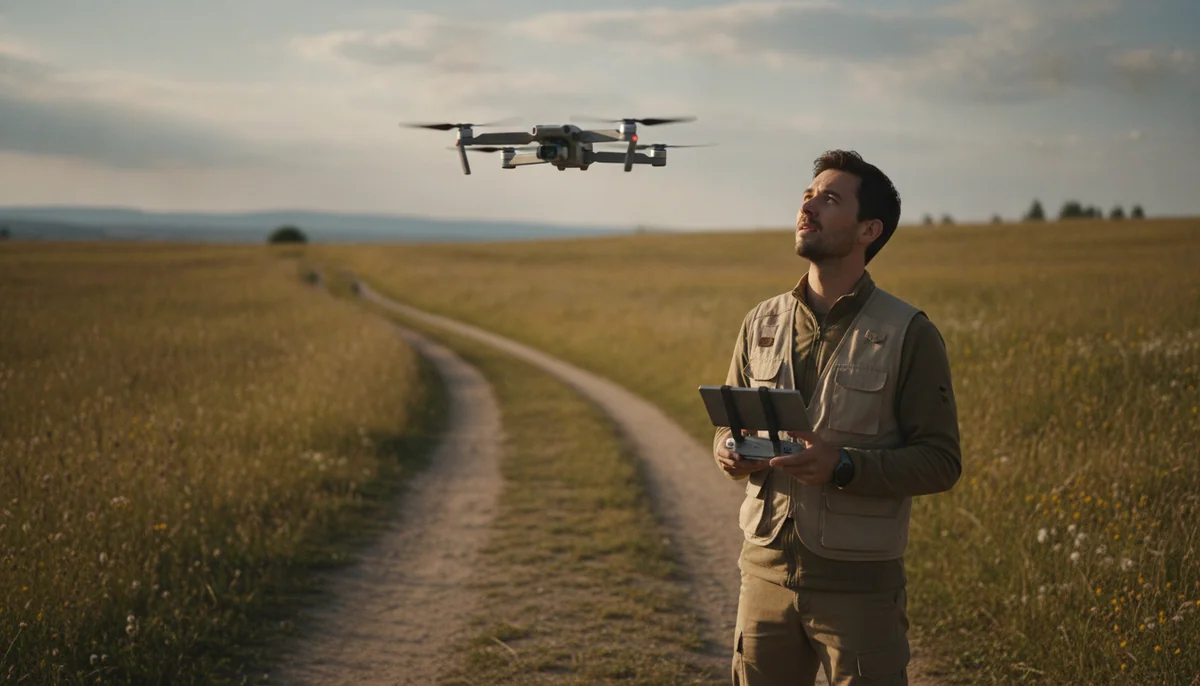
The weight limit is the reason this category exists and it is the least interesting thing about it. Stay under 249 grams and, flying recreationally in the United States, you skip drone registration and you skip Remote ID, which is why every listing on this page prints the number in bold. That exemption is real and it is narrower than the marketing implies. The free TRUST knowledge test still applies to recreational pilots regardless of what the aircraft weighs. Anything you are paid for needs certification, and in the US it needs a Remote ID broadcast that several of these drones cannot produce. UK and European operators register themselves anyway once a camera is involved. Our standing explainer on registration and Remote ID under 250 grams works through what applies where.
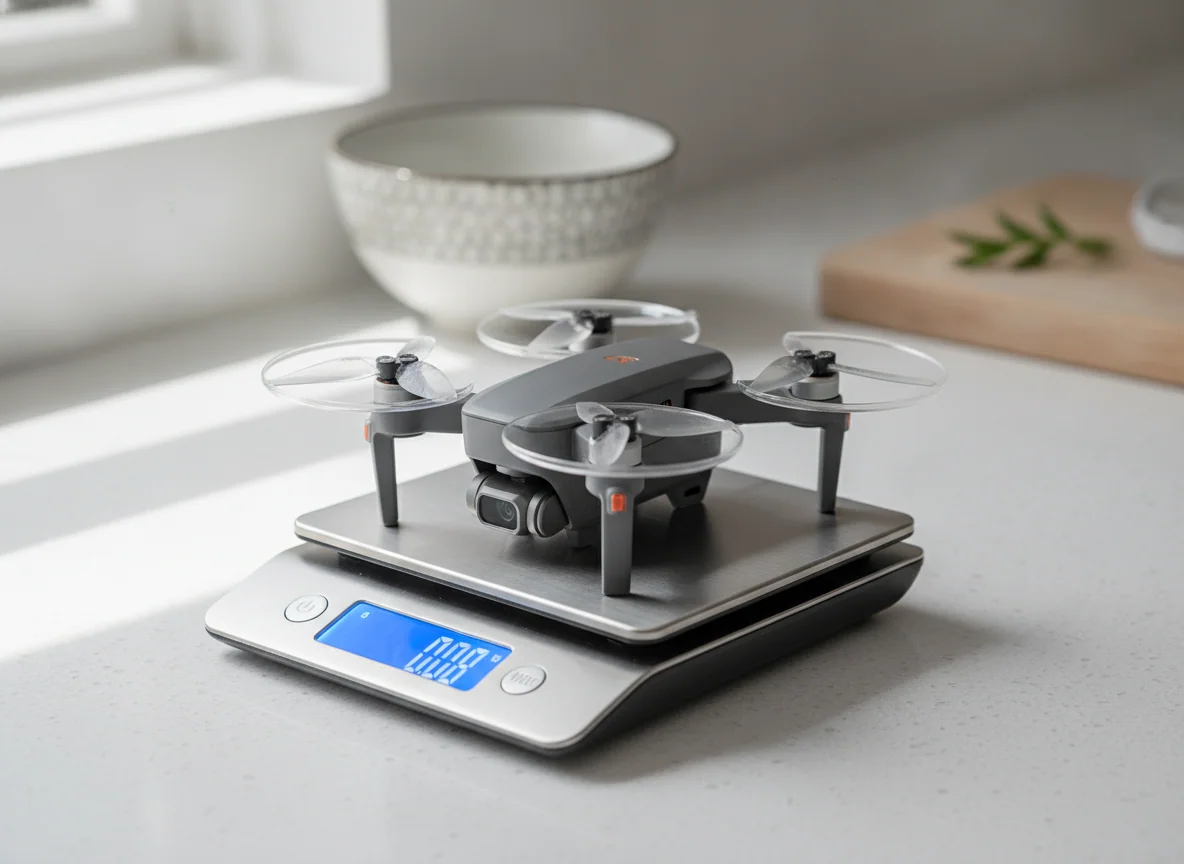
There is also a trapdoor in the number itself, and it catches people who did everything right. DJI's own footnote says the standard weight includes the battery, the propellers and a memory card, and that actual weight varies between production batches. Add propeller guards to a drone that has none, or fit an extended battery, and you can spend that margin without noticing: one Mini 3 owner bought guards as a substitute for the obstacle sensors his drone lacked, went over the line, and had to register the aircraft after all. The DJI Neo, at 135 grams, is one of the few here with enough headroom that the question never comes up.
What the weight really buys you is a compromise. A sub-250g airframe is light enough to live in a jacket pocket and light enough to be shoved around by a breeze you would not notice on the ground. Every drone on this page is rated for wind it can survive rather than wind it can film in, and the ones wearing propeller cages are the worst offenders, because a cage is a surface for air to push against. If you fly ridgelines or coastline, read what a lightweight drone can actually take before you choose by camera specification.
So the sorting question is not budget. It is whether the thing you want to film is you.
- Buy a camera drone
- if you photograph coastlines, buildings, property, mountains, anything that stays where you put it, and you want to be the pilot: the Flip, the Mini 3, the Mini 4K and the Atom 2 are the four here that will still satisfy you in a year.
- Buy a flying camera
- if you hike, run or ride alone and currently have no record of it except selfies at arm's length: the Neo 2, the Neo and the HOVERAir X1 exist for exactly that and are frustrating at anything else.
- Buy a trainer
- if what you actually want is to discover whether you enjoy flying at all, and you would rather learn that on something a treeline can eat without ruining your month.
Quadcopter Bench has not flown any of these aircraft, and nothing below is a measurement we took. What follows is the published record for each one read against itself: the manufacturers' claims, the customer reviews the listings retain, independent reviews from people who did fly them, and the owner communities where the faults surface first.
Quick Picks at a Glance
| Feature | Editor's Pick HOVERAir X1 | DJI Mini 3 Fly More Combo | Potensic Atom SE | Holy Stone HS175D | DJI Neo 2 | DJI Flip | Potensic Atom 2 | DJI Mini 4K | DJI Neo |
|---|---|---|---|---|---|---|---|---|---|
| Price Range | $200–$500 | $500–$1,000 | $200–$500 | Under $200 | $200–$500 | $500–$1,000 | $500–$1,000 | $200–$500 | Under $200 |
| Finish | Black | gray | Gray | Black | Gary | Gray | Gray | Gray | gray |
| Configuration | Combo Plus | — | 11.81 x 9.64 x 2.28 inches | 10.83" x 8.27" x 2.48" | DJI Neo 2 Fly More Combo | DJI Flip Fly More Combo (RC 2) | ATOM 2 (RC with Three Batteries) | — | — |
| Check Price on Amazon | Check Price on Amazon | Check Price on Amazon | Check Price on Amazon | Check Price on Amazon | Check Price on Amazon | Check Price on Amazon | Check Price on Amazon | Check Price on Amazon |
The ten, and what each one is honestly for
The order below is the site's ranking, not a queue you have to read in sequence. Skip to the family you belong to.
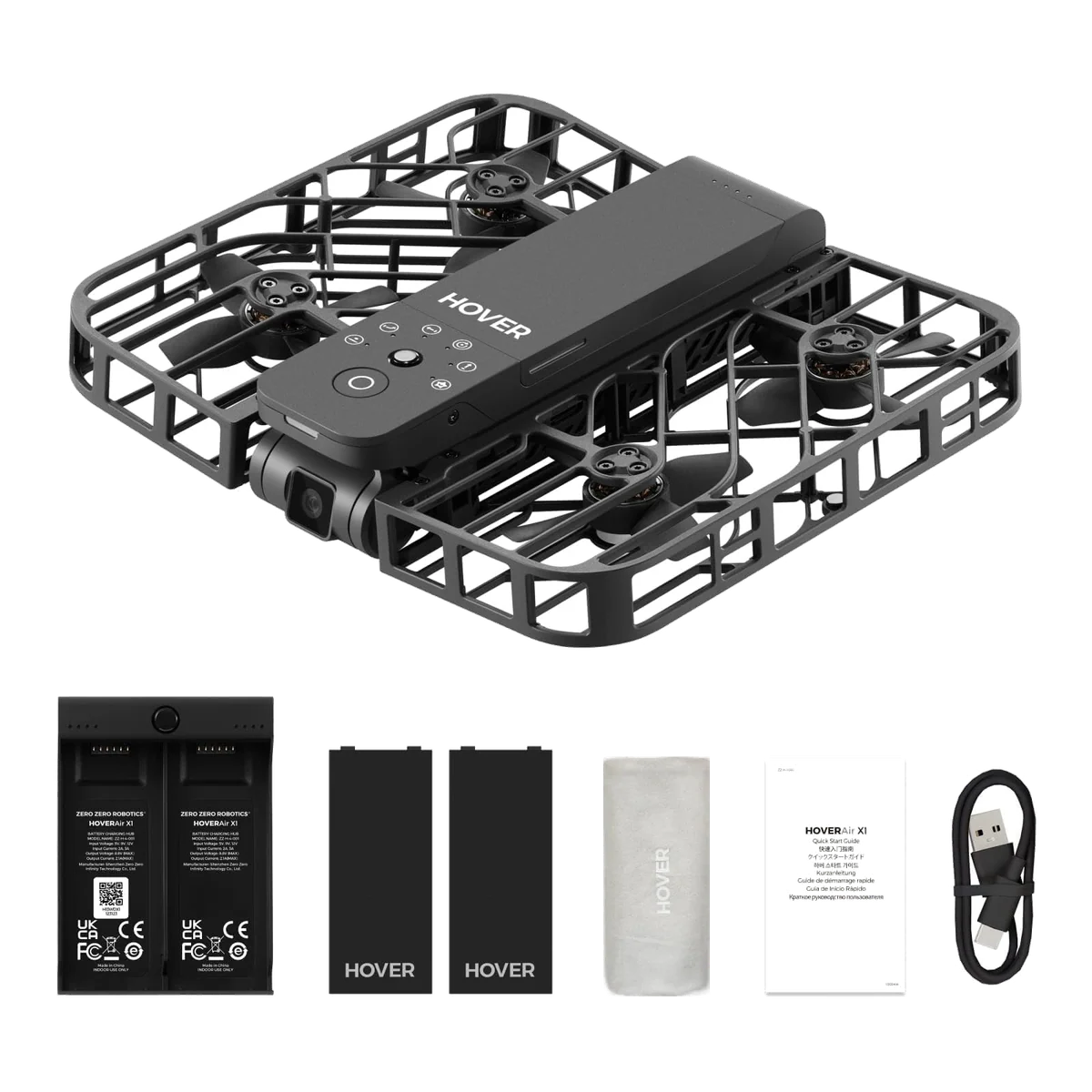
Start with the strangest thing here, because it is also the clearest about what it is. The HOVERAir X1 has no GPS and no return to home, and when it loses you, loses the light or meets wind it cannot beat, it does not come back; it lands, immediately, wherever it happens to be. HoverAir's own FAQ says the aircraft is not designed to fly over water, over cliffs, or above terrain with indistinct ground texture. Read those two facts together and you have the deciding question for anyone whose hobby happens near a lake or a drop. Against that, one owner drowned theirs by ignoring the warning, sent it in, and was refunded most of the purchase price on a fault that was entirely their own. Our full X1 review goes through where the tracking holds and exactly where it lets go, and the head to head against the DJI Neo is the comparison most buyers are really having.
The one to carry when you are the subject and there is nobody to hold the camera
It is airborne off your palm in about five seconds with no phone and no flying skill required, and the behind-you follow mode holds its lock through wooded trail because it retraces the route you flew rather than flying a straight line at you.
The batteries are not smart packs and swell if you leave them stored at a high charge, which cost one owner three of them in two years against a one-year battery warranty.
One caution on the footage, because it is the thing people misread. TechGearLab found a single stabilised axis behind the listing's talk of a triple stabilisation system, scored image quality 4.5 out of 10, and placed the X1 eighth of eleven drones tested. That score is fair against general-purpose camera drones and it is the wrong yardstick, because nobody cross-shops this against a Mini. Judge it against the phone in your pocket, which is the shot you would otherwise have taken.
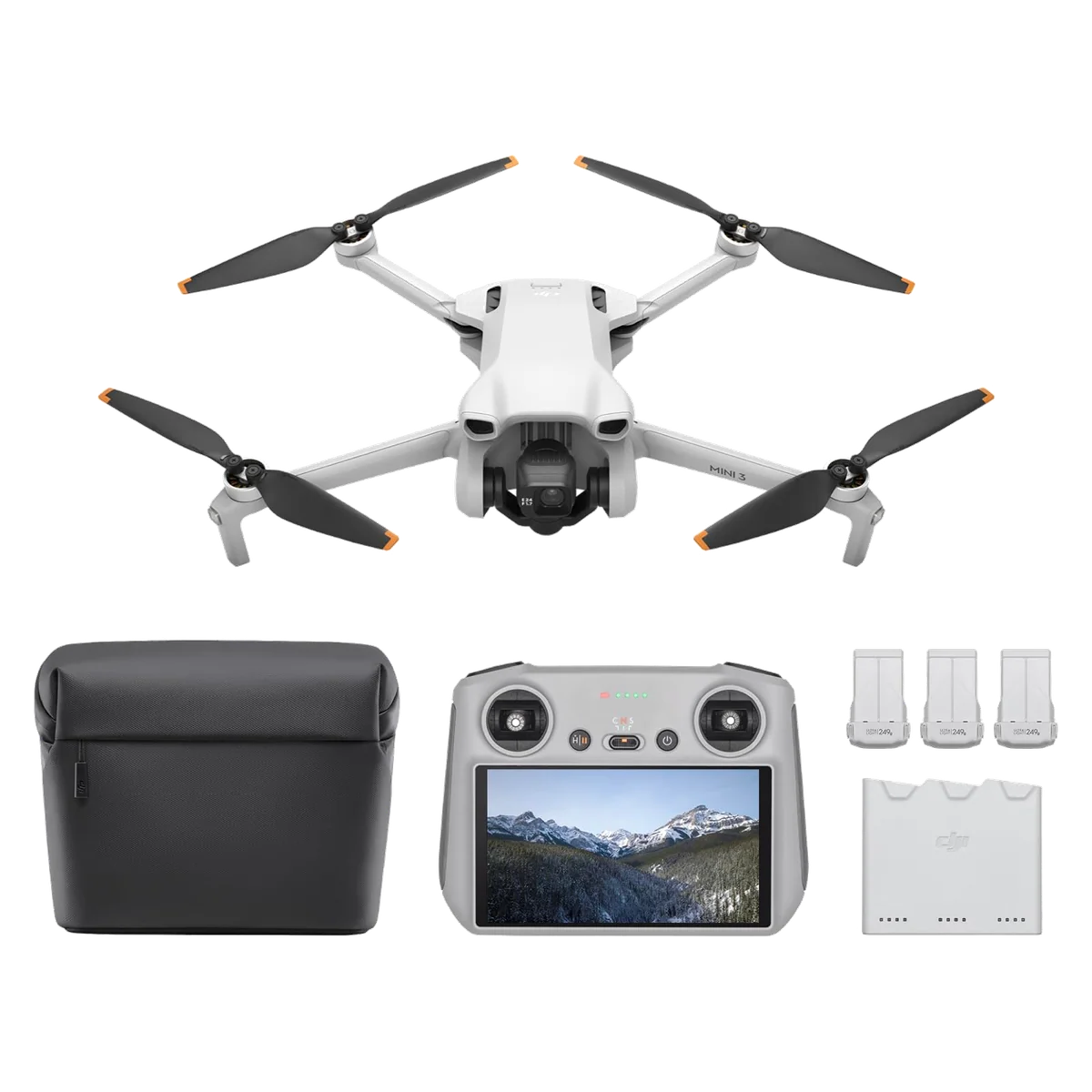
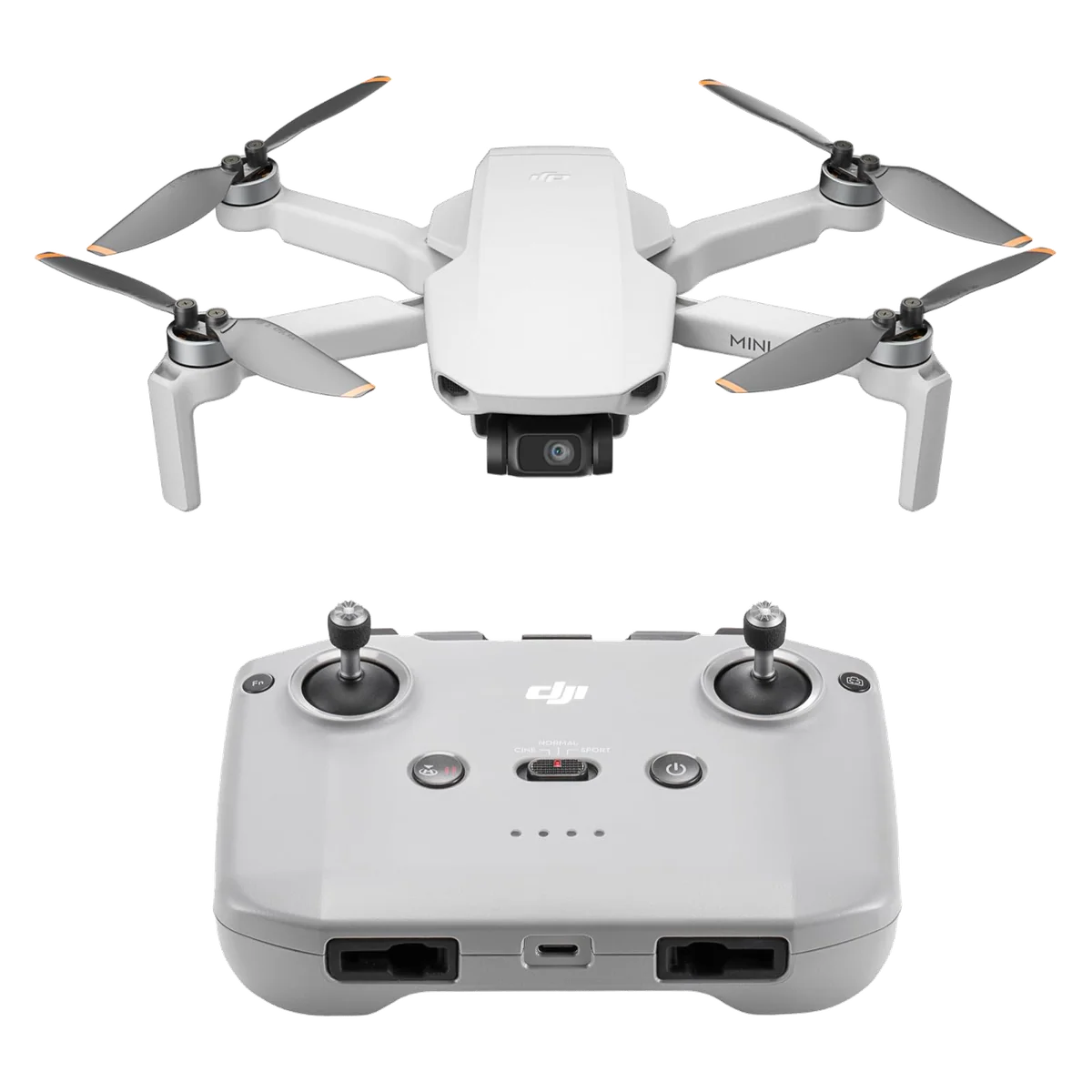
The Mini 3 is the opposite proposition and, three years after launch, still one of the most sensible things in the class. The bundle's DJI RC has its own bright screen, and the converts are the loudest voices in its review record: one owner was certain a screen controller was a waste of money and says he could not have been more wrong, another gave up on his phone entirely because he could not read it in sunlight with the brightness maxed. The full review covers where its camera stops, and the Mini 4K comparison covers when the cheaper one is enough.
The long-legged choice for anyone photographing things that stay where you put them
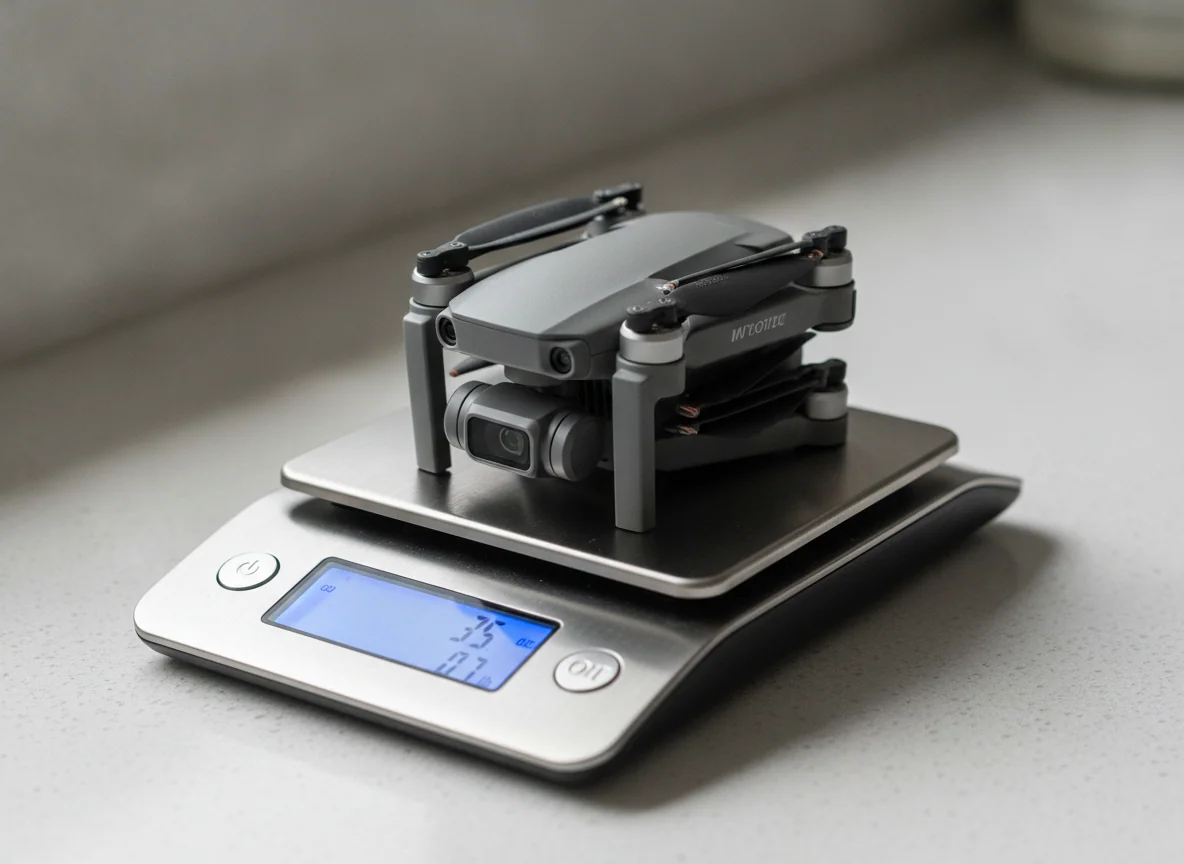
Three batteries, a screen controller that is legible in direct sun and real-world flights in the low thirties of minutes make this the most usable travel camera here, and true vertical shooting rotates the gimbal instead of cropping a landscape frame.
It cannot lock onto a moving subject in any mode, so every second of footage of somebody running, riding or surfing has to be hand-flown.
Next, the two cheap GPS trainers, which are the most misunderstood products on this page. The Potensic ATOM SE stabilises with one mechanical axis and electronic image stabilisation, and Digital Camera World, reviewing it, called the result easily the best image it had seen from a drone relying on electronic stabilisation while being equally clear about the failure: without a gimbal that can counter-rotate as the airframe leans into wind, the horizon goes flat and shifts. If that distinction is new to you, gimbals versus electronic stabilisation explains why cheap drone video still looks wrong even when it looks steady. The flying, though, is genuinely good: owners describe steady hovers on two dozen satellites in a real breeze and return-to-home landings eighteen inches from the pad.
The cheapest honest way to find out whether you like flying at all
GPS hold is solid enough to steer through a doorway, return to home lands within a foot or two of the launch point on command and on low battery alike, and the airframe is cheap enough that a treeline is an inconvenience rather than a disaster.
One mechanical axis is doing the work of three, and there is no zoom of any kind to rescue a frame, so the only lens control you have is flying the aircraft closer.
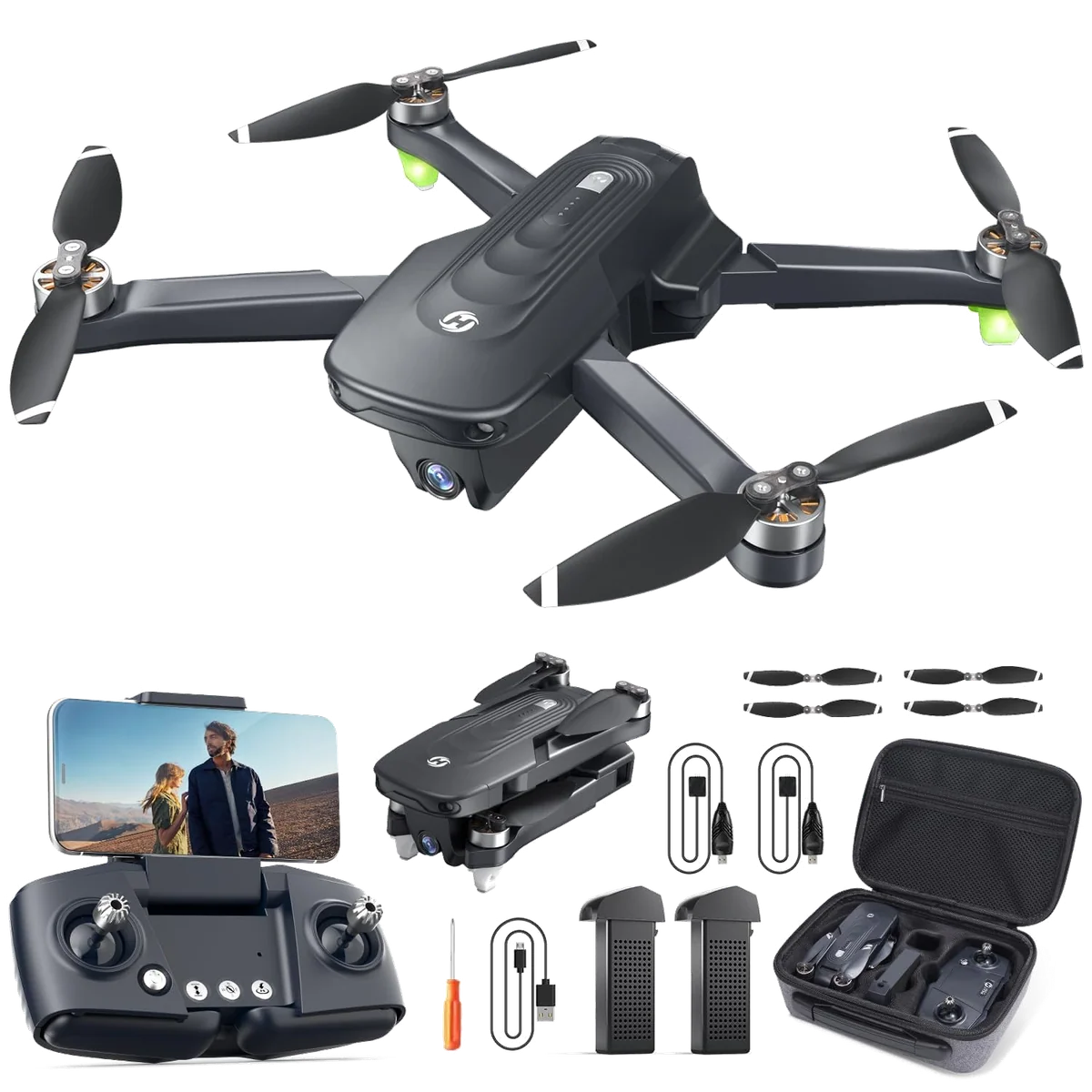
The Holy Stone HS175D is the same argument with a weaker camera and a shorter leash. Its video link is ordinary Wi-Fi, which explains the whole cluster of complaints around it: one owner lost camera transmission at 210 metres while the app cheerfully allowed a 500 metre maximum distance to be set. Setup, not flying, is where new owners lose their afternoons, and the pairing and calibration sequence is worth reading before the box is open. On whether the brand is worth buying into at all, we have a longer answer, and the head to head with the ATOM SE settles the cross-shop.
A forgiving GPS trainer you can afford to break
It locks into a hover, comes home accurately when the compass has been freshly calibrated, and arrives with two batteries, a hard case, spare propellers and the screwdriver to fit them, which is more than most rivals include.
Nothing damps the camera against the airframe, so every stick input and every gust goes straight into the video.
The karuisrc is the one product here with a light record, and this page will not pretend otherwise. It has no review of its own on this site, and what exists is the listing plus the customer reviews the listing retains. Those reviews are mostly warm, and they cluster on the same feature: a controller with its own 4.5-inch display, which the listing pairs with a claimed 400 metre control distance. They also carry the sharpest single failure account on the page, from a buyer who says the connection gave out at half the advertised range and the aircraft flew itself into a tree on the way home.
A screen on the controller for the least anybody here is asking
Owners describe an easy first drone that hovers steadily, follows, flies a set path and lands itself at the take-off point, with the controller's own display removing the phone and its cable from the whole business.
Documentation is the weak point and the radio link is the other, with one buyer returning it as too complicated to fly and another losing his to a tree after an early automatic return at half the advertised range.
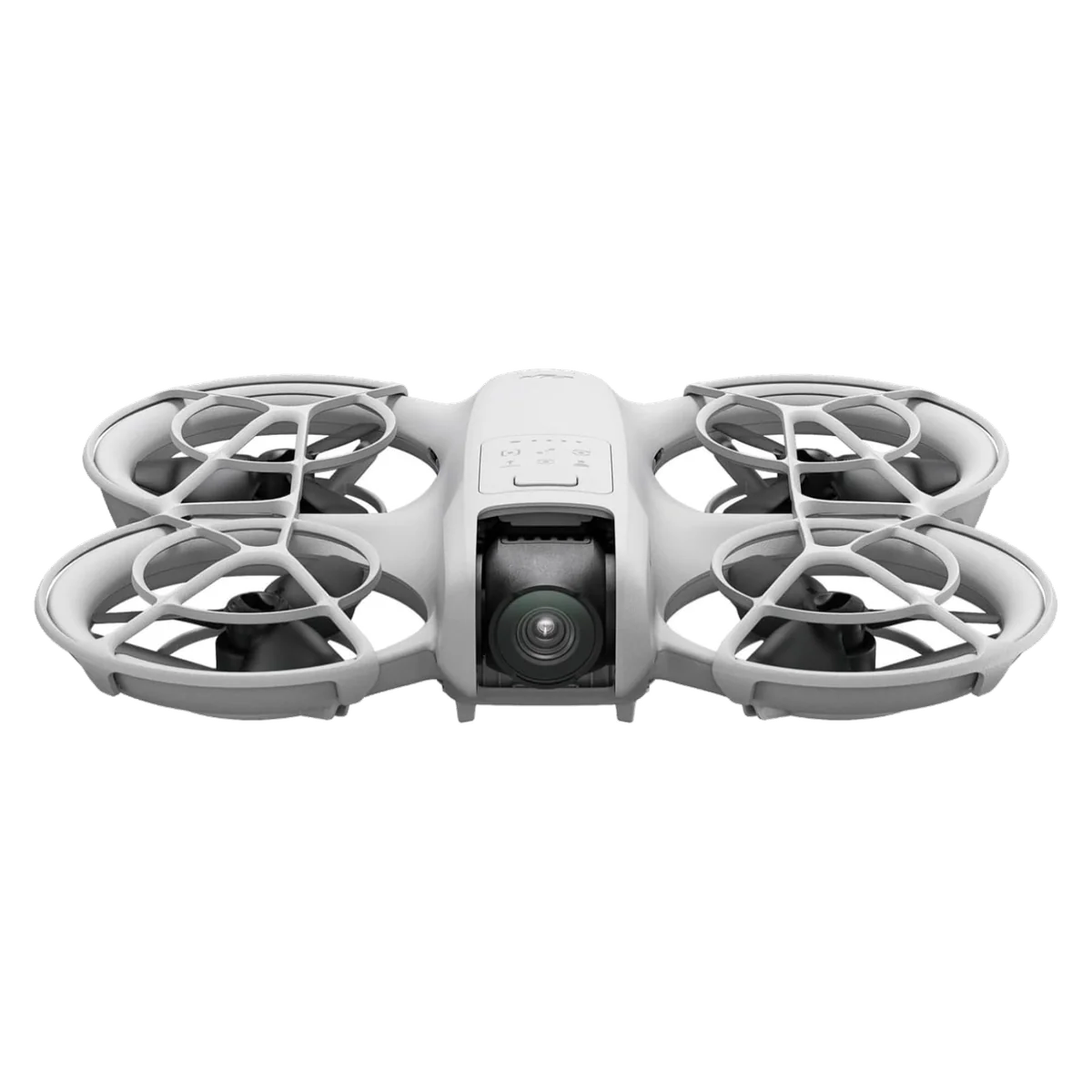
Now the interesting half of the shelf. The DJI Neo 2 is the first drone in this weight class where the safety net is real: the original Neo had no obstacle avoidance whatsoever, and this one carries omnidirectional sensing at 151 grams. It is not a guarantee, and the owner record is admirably blunt about that, including a cyclist whose drone clipped a stop sign and, on another day, hit a parked car. Treat it as a backup rather than a promise, which is the distinction we draw out in what avoidance actually catches. The full review explains why the three-battery box with the RC-N3 is the only configuration worth owning, and the comparison against the first Neo shows how much of a generational jump this really is.
The follow camera that finally has something watching where it is going
Palm launch, gesture control and tracking that holds a mountain biker at speed through trees, wrapped in fixed cages that survive the crashes that confidence produces.
DJI's nineteen minutes does not survive contact with real flying, and the planning figure owners actually report is closer to twelve.
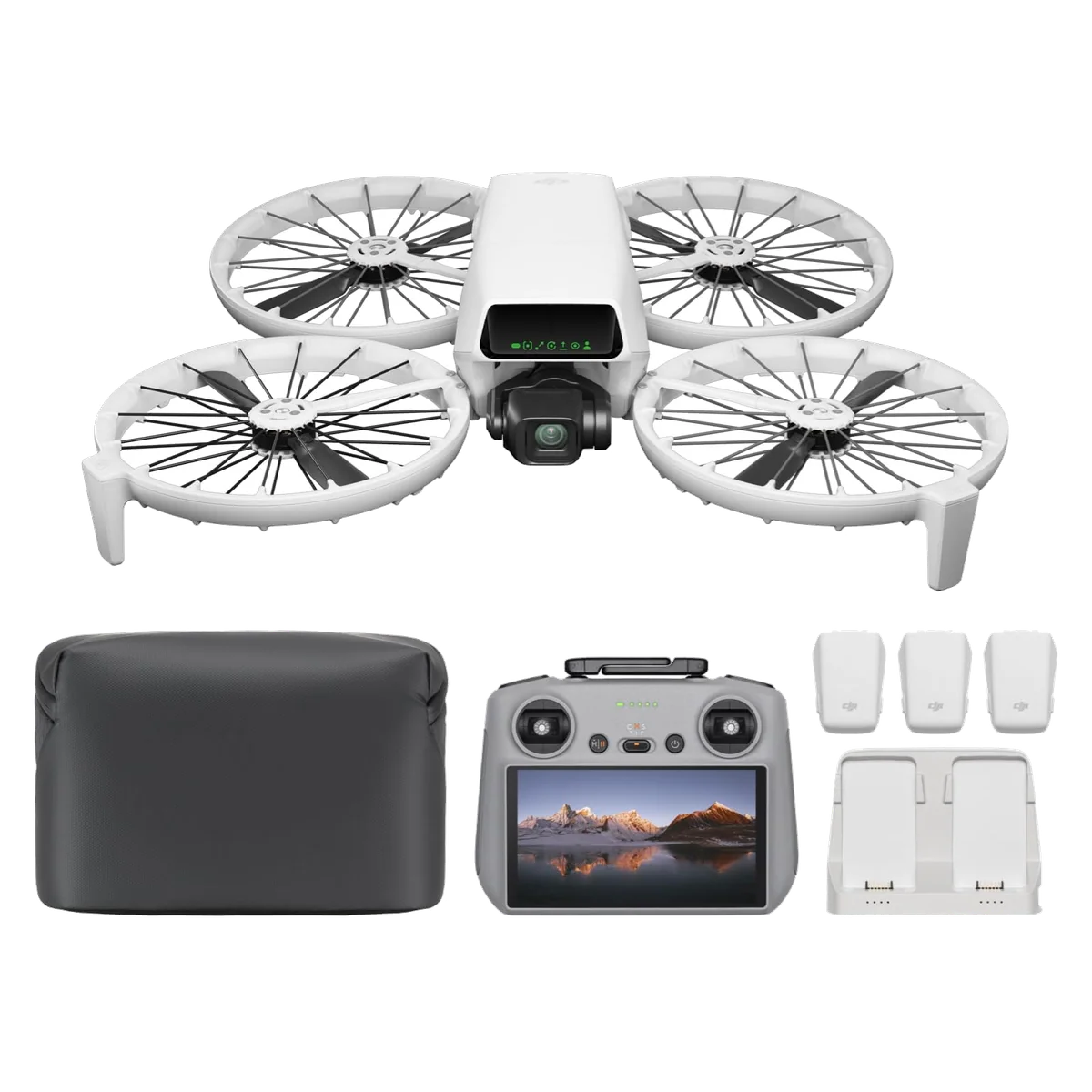
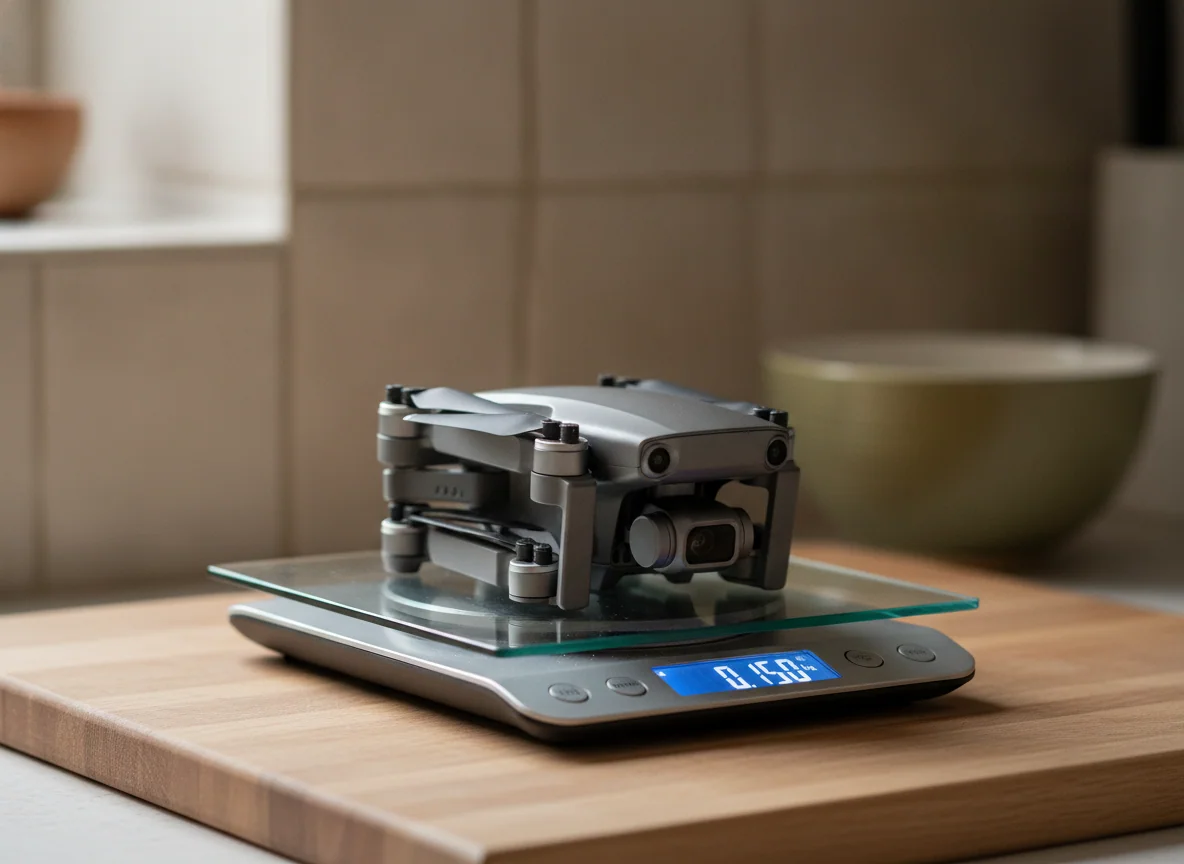
The Flip is our pick for the person buying one drone, and the reasoning is unglamorous. It is the only aircraft here that pairs a 1/1.3-inch sensor and a three-axis gimbal with propeller guards you can palm-launch from, and owners report bumping walls, clipping branches and outright crashing it with the drone coming back intact. The one disqualifier is legal rather than technical and it is absolute: no Remote ID broadcast means no paid flying in the US without bolting a module on, which is why anyone invoicing for footage should start at our guide to drones for paid work instead. The full review has the rest, and Flip against Neo 2 is the fork most buyers face.
The best first camera drone here, provided nobody is ever paying you for the footage
A 1/1.3-inch sensor and a three-axis gimbal behind folding carbon propeller cages, with the RC 2's own bright screen removing the phone, the cable and the clamp from every single takeoff.
It broadcasts no Remote ID, which puts it outside the rules for any commercial flight in the United States.
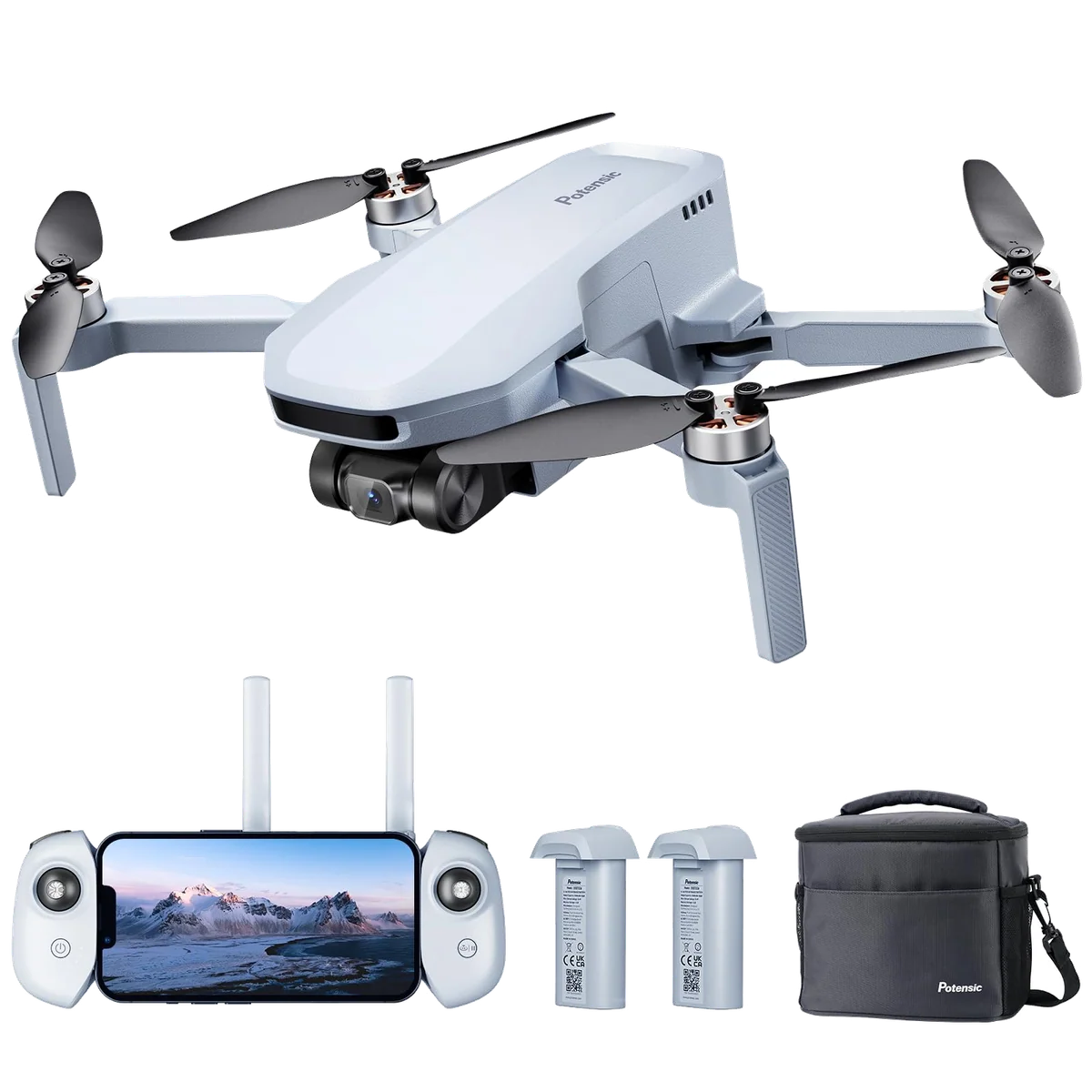
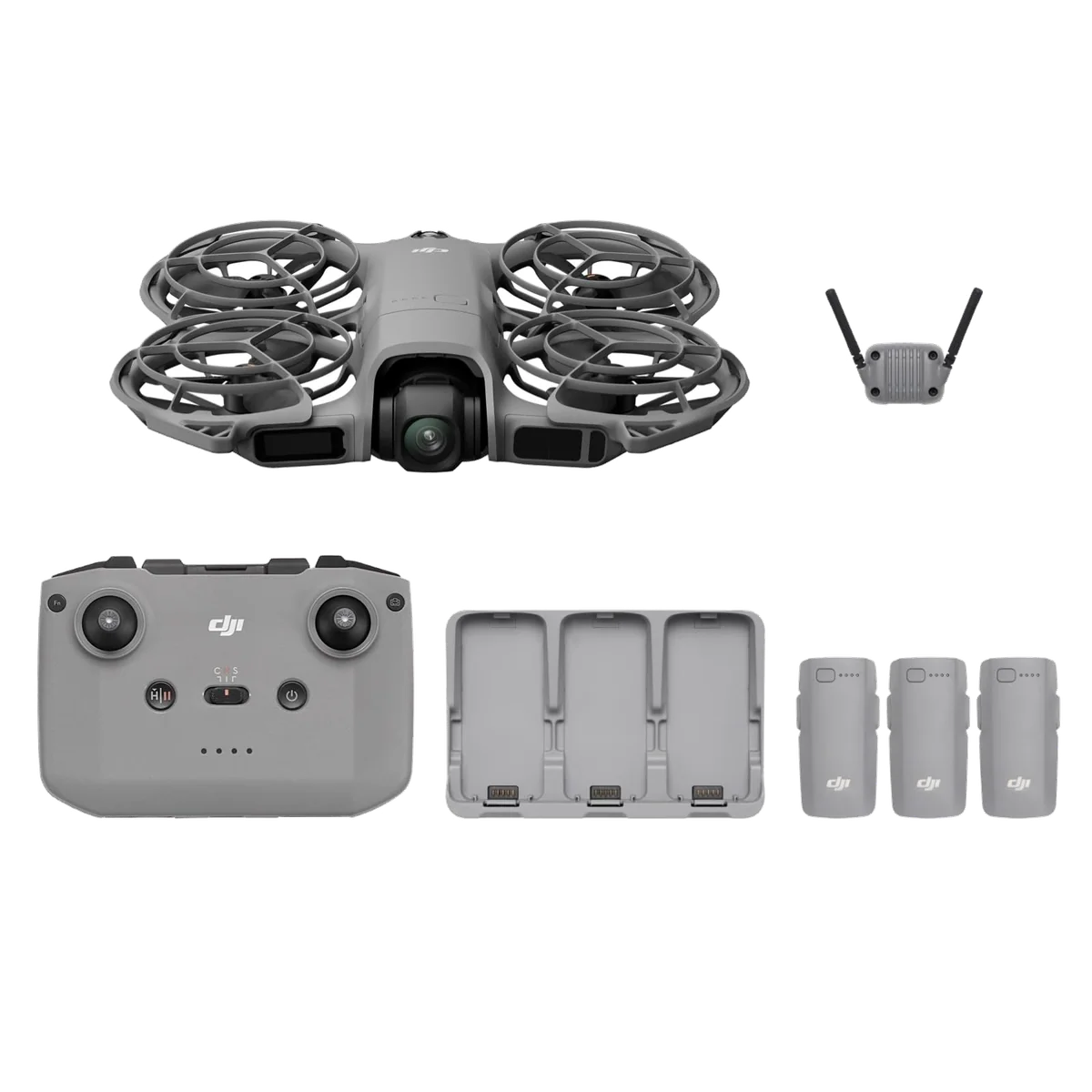
The Potensic Atom 2 with the PTD 1 screen controller is the most feature-dense thing on this page and the one whose case rests entirely on what you pay for it. The flying earns its reputation: one owner on the coast reports holding signal five miles out over open water with return to home putting the aircraft back within inches. The gap is what it cannot see, and the listing does not lead with it. Worth knowing before you treat the controller as an investment: Potensic states that the PTD 1 works with the Atom 2 and with nothing else, including its own successor. Our full review, the Atom 3 comparison and the shortlist of accessories it actually needs are the three things to read next.
The most capability per pound on this page, when the discount is deep
Visual subject tracking, vertical shooting, full manual exposure, bracketing and a flat log profile on a 249g airframe with a three-axis gimbal, driven from a controller carrying its own 5.5-inch screen.
There is no forward or side obstacle sensing at all, which is precisely the wrong pairing with tracking modes built to send the aircraft chasing a moving subject past trees.
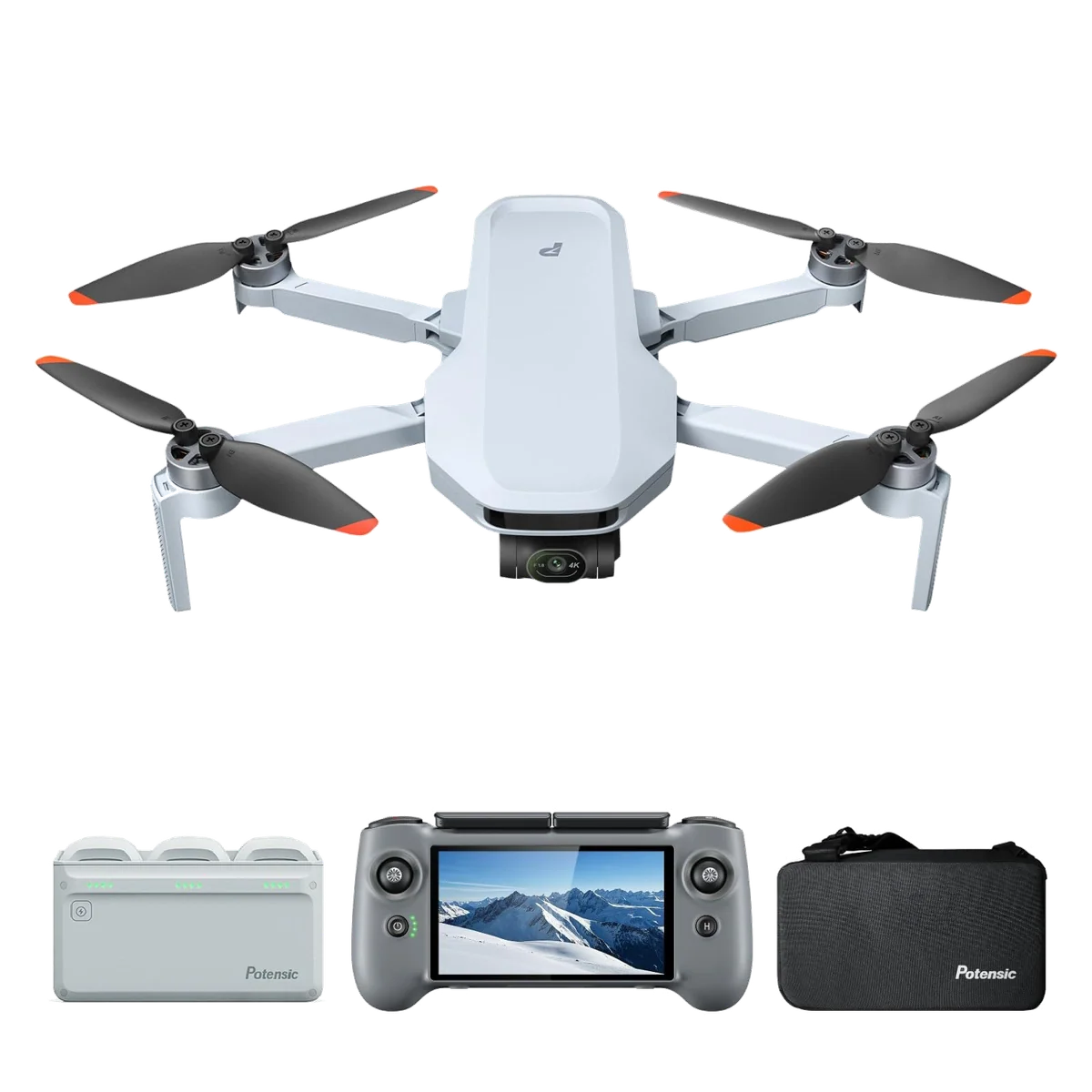
The Mini 4K is a 2020 airframe with a newer camera on the front, and that is the argument for it rather than against it. Beginners with no stick time describe first flights with no drift and no drama, and the one review below five stars in the retained set is entirely about getting the thing off the ground: DJI Fly has been pulled from Google Play, so Android buyers sideload it from DJI's own site and the drone cannot be activated until they do. Plan for that and the problem shrinks to an inconvenience. The full review covers where the sensor gives out, and Atom 2 against Mini 4K is the non-DJI cross-shop.
An old airframe with a new camera, and the cheapest route into real flying
It is a settled, thoroughly debugged design with a three-axis gimbal and accurate return to home, and its batteries, propellers and arms are shared with one of the largest spares pools DJI ever built.
There is no obstacle sensing and no subject tracking of any kind, and no firmware update will ever add either.
Last, the original Neo, which is the most fun per unit of effort in the entire category and the least impressive camera. Its 22GB of internal storage sounds like a limitation and works like a mercy: no card, no reader, no discovering at the trailhead that the card is on your desk. The thing to know before buying is that the controller-free pitch is a mode rather than a way of avoiding a controller, because flown from a phone the usable range collapses to roughly a city block. The full review makes the case properly, and Neo against Flip is where most of this page's readers end up.
The drone that actually leaves the house
No controller to pair, no card to forget and no satellites to wait for means it is in the air in seconds, which is why owners of considerably better drones keep admitting this is the one they use.
Follow tops out around 12 mph and drops you on any hard turn, and there is no vertical video mode on a drone sold explicitly for social clips.
What this page is built from, and what it is not
Nobody at Quadcopter Bench has flown these drones. There is no test flight behind this page, no stopwatch, no scale and no range test, and every figure quoted above belongs to somebody: a manufacturer, a published reviewer, or an owner describing their own flights. Where we say a claim does not survive contact, we mean it does not survive contact with the people who bought the thing.
The material is the same for each aircraft: the Amazon listing and the small print underneath it, every customer review the listing retains including the ones written in other languages, independent published reviews from testers who disclose how they tested, and the owner communities where the failures surface before they reach any review page. For nine of the ten we have already published a full review on this site, and this page does not contradict them. The drone we called a trainer there is a trainer here; the fault we named there is named here.
Two limits on the evidence are worth stating plainly. Retained customer reviews skew high, because the distribution you can see on a listing is not the distribution of people who bought and were disappointed, which is why a lone one-star account gets quoted at length above rather than mentioned in passing. And the karuisrc drone has a genuinely thin record: no independent review, a short listing, and a few hundred ratings. We have written what that record supports and stopped there rather than filling the gap with inference. More about how this site works is on the about page.
Three numbers on these boxes that are not what they look like
Every listing in this category is a set of laboratory measurements dressed as a promise. Three of them do most of the damage.
Flight time is addition, not endurance
The headline figure is almost never one flight. Holy Stone's 46 minutes is two batteries of a little over twenty each, and the description on its own listing concedes as much in a line most buyers will never scroll to. Potensic's 62 minutes on the ATOM SE is two claimed thirty-ones. The Flip's 93 is three claimed thirty-ones, measured in still air, in photo mode, flown to empty. The Atom 2's 96 is the same arithmetic with a different multiplier.
Then subtract the reserve. These aircraft start asking to come home well before the pack is empty, so usable flying is shorter than rated flying, and owners across every brand here land somewhere between two thirds and four fifths of the claim. The honest planning numbers from the owner record run roughly like this: low thirties of minutes for the Mini 3, mid twenties for the Flip and the Atom 2, low twenties for the two cheap trainers, mid teens for the Neo, and about twelve for the Neo 2. The mechanism behind the gap is the same everywhere, and it is not a scandal so much as a habit. What it does mean is that on the drones with the shortest legs, the multi-battery bundle is the minimum viable configuration rather than an upsell, which inverts the advice we normally give about whether combos earn their money.
Range describes a radio, not a flight
Ten kilometres, four kilometres, four hundred metres: these figures measure how far a signal carries in clean air with nothing in the way, quoted as a one-way distance for a flight that never comes back. In practice three things stop you before the radio does, in this order: the battery, the law requiring you to keep the aircraft in unaided sight, and whatever building or treeline you have put between yourself and the drone. An ATOM SE owner who bought specifically for distance concluded he was realistically seeing 1,200 to 1,500 feet with ordinary obstructions against an advertised 13,000. The best rule anybody in this record offered was simpler: do not fly further than you are willing to walk to retrieve a downed quadcopter.
"Sensors" does not mean the drone can see
The most expensive misunderstanding in this class is the difference between downward vision positioning, which lets a drone hover steadily without GPS, and obstacle avoidance, which watches where it is going. Most of this shelf has the former and calls it a vision system. Only two of the ten look forward at all.
| Drone | Stabilisation | Looks where it is going? | Tracks a moving subject? |
|---|---|---|---|
| HOVERAir X1 | One stabilised axis | Downward only | Yes, visually, to about 17 mph |
| DJI Mini 3 | Three-axis gimbal | Downward only | No |
| Potensic ATOM SE | One axis plus electronic | Downward only | Follows your controller by GPS |
| Holy Stone HS175D | A tilting mount, nothing damped | Nothing, in any direction | Follows your controller by GPS |
| karuisrc GPS drone | Electronic, per the listing | Not claimed | Follow, orbit and waypoint modes claimed |
| DJI Neo 2 | Two-axis gimbal | Omnidirectional | Yes, people but not vehicles |
| DJI Flip | Three-axis gimbal | Forward and downward | Yes, people but not vehicles |
| Potensic Atom 2 | Three-axis gimbal | Downward only | Yes, visually |
| DJI Mini 4K | Three-axis gimbal | Nothing, in any direction | No |
| DJI Neo | One axis plus electronic | Downward only | Yes, to about 12 mph |
Two rows in that table deserve a warning label. A drone that tracks a subject but cannot see forward is being asked to chase a person past obstacles with its eyes closed, which describes the Atom 2 and, in a gentler way, the X1. And a cage is not a sensor: the guards on the Neo, the Neo 2 and the Flip mean the aircraft survives the branch and your fingers survive the aircraft, not that anything noticed the branch.
Two more decisions worth making before you buy
The first is the controller. Half of this shelf ships with a cradle for your phone, and a few ship with a screen of their own. The owners who paid the difference are unusually consistent about why, and it is rarely the picture quality: it is that a screen controller has no cable to seat, no app to launch, no incoming call landing on top of the live feed and no phone battery to drain. If you are weighing that up, the fuller argument is here, and DJI buyers planning to keep a controller across two drones should read which aircraft the RC 2 actually flies before assuming anything carries forward.
The second is who made it. The Potensic and Holy Stone aircraft on this page are not the toys their brands were selling five years ago, and pretending otherwise is lazy; equally, DJI's app polish, spares availability and resale value are worth something real. We have gone through both questions properly in whether Potensic drones are as good as DJI, and the American supply picture, which now shapes what is even purchasable, in what you can still buy and fly in the US. One knock-on worth planning for: DJI Care Refresh is no longer sold to US buyers, so accidental damage cover means third-party options, which we cover in insuring a drone without Refresh.
If none of the ten fits, the next shelves up and along are the camera drone roundup, the travel picks and the drones built specifically to follow you. If your budget is tighter than everything here, the cheaper end is its own page, and if you have never flown anything, start with the drones to learn on and how to practise without wrecking one.
Frequently Asked Questions
Does a drone under 249 grams need registration or Remote ID?
Flying recreationally in the US it needs neither, though the free TRUST test still applies, and any paid flight needs certification and a Remote ID broadcast that several of these aircraft cannot produce.
Which of these will actually follow me while I ride or run?
The Neo 2, the Neo, the X1 and the Atom 2 track a subject visually, while the Mini 3 and Mini 4K cannot do it at all and the two cheap GPS trainers follow the controller in your hand rather than your body.
Does the Potensic Atom 2 have obstacle avoidance?
No, it has only a basic downward vision system with nothing watching forward or sideways, which is the single most important thing to know before you use its tracking modes.
Is a Potensic or a Holy Stone as good as a DJI?
For flying, learning and surviving crashes they are closer than the forums admit, and for app polish, spares and resale DJI is still ahead, which we work through in the full comparison .
Can the HOVERAir X1 fly over water?
No, and this is the one warning to take literally, because the aircraft has no return to home and responds to lost tracking by descending onto whatever happens to be below it.
Should I buy the Atom 2 or wait for the Atom 3?
The newer model improves the sensor, the frame rate and the controller, so the Atom 2's remaining case is what you pay for it and the weight exemption the Atom 3's larger battery option breaks, which the comparison sets out properly.
Why is my drone's flight time so much shorter than the box says?
Because the box figure is usually several laboratory flights added together, and each of those flights was flown at a constant speed in still air until the battery was flat, which is nothing like how you will fly it.
Can I still buy and fly a DJI drone in the United States?
Models already authorised before foreign-made drones were added to the FCC's Covered List remain legal to buy and fly while newer releases are blocked from approval, and we keep a running account of where that stands .
Is a screen controller worth paying extra for?
If you fly in bright sun or resent cables it usually is, because the gain is not picture quality but the removal of every step between switching on and taking off.
Our Top Pick
The HOVERAir X1 is our #1 recommendation — follow me drones.
Check Price on Amazon: HOVERAir X1