Obstacle avoidance stops the boring crashes, and never sees the one that ends the flight
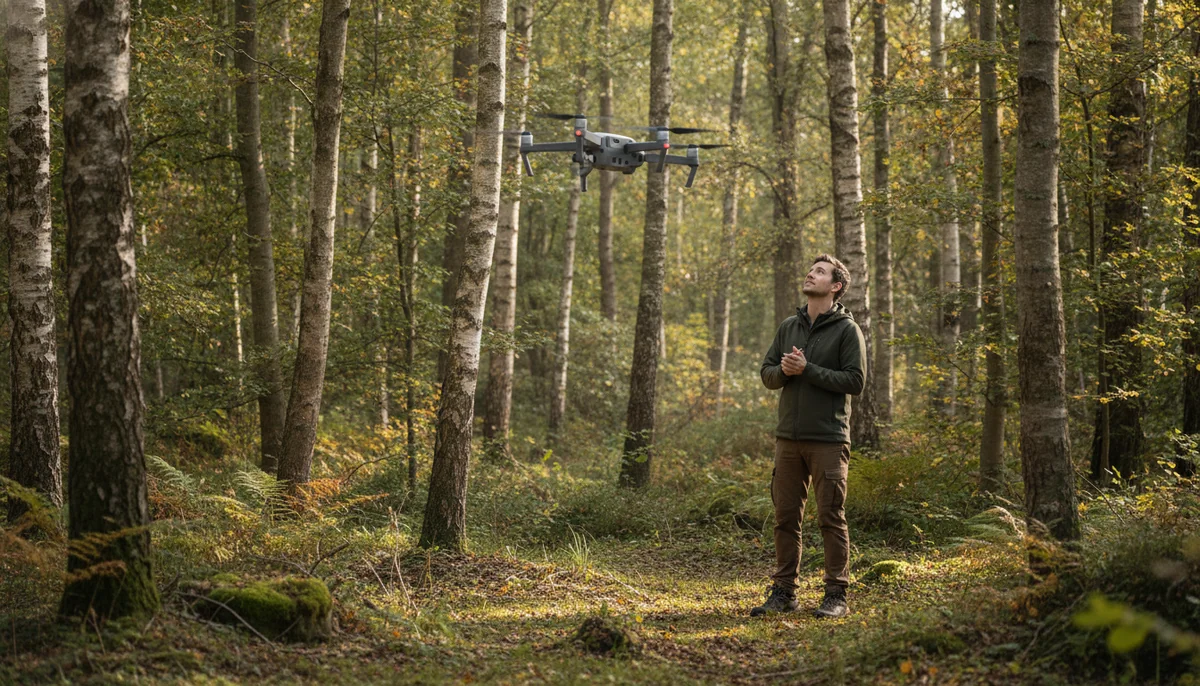
The most heavily sensed drone in this article is the Mavic 4 Pro. It carries omnidirectional vision, it carries LiDAR, and in its owner's first week of flying it in mountain terrain it hit a run of thin branches while tracking and came down from fifteen or twenty feet. Blades replaced, airborne again two minutes later, not a scratch on the airframe. That single incident is the whole subject of this page. Avoidance is not a force field, it is a set of sensors with a direction, a range, a minimum object size and a list of conditions under which they quietly stop working, and almost nobody buying a drone is told what those conditions are.
Here is the useful division. These systems reliably catch the crashes that beginners actually have: walls, tree trunks, the side of a building, a fence post, the ground coming up faster than expected. They reliably miss the crashes that lose drones: wires, twigs, water, glass, the dark, and anything at all behind you. The first list is why a nervous first-time pilot should buy sensing. The second list is why nobody who has flown for a season treats it as permission to stop looking.
So the segmentation follows the stance rather than replacing it. Buy sensing if you fly low, near obstacles, near people, or with the drone tracking you while your hands are busy doing something else. Skip it if you fly coastline, fields, lakes and hills, where the argument that a Mini 4K owner made about his own drone holds up exactly: stay clear of the trees, learn low and slow in a wide open area, and there is very little in the air for a sensor to find.
How these systems see, and what that rules out
Three technologies are doing the work, and each fails in its own way. Stereo vision compares two camera views to work out distance, so it needs light and it needs texture; a flat grey sky, a dark forest floor or a sheet of water gives it nothing to match. Infrared and time-of-flight sensors bounce a signal off a surface and time the return, so they need a surface large enough to send something back. LiDAR fires a narrow beam and reads what is in front of it, which is precise and which is also exactly as wide as the beam.
Underneath all three sits a constraint nobody advertises: the obstacle has to be detected far enough out that the aircraft can stop before reaching it, and stopping distance grows with speed. That is why the same sensor that halts a drone against a wall at walking pace flies it into a pole at twenty miles an hour, and why the failures below are not defects so much as the shape of the technology.
| What gets through | Why |
|---|---|
| Thin branches and twigs | They occupy too few pixels to register until the aircraft is already inside its braking distance, which is how a Mavic 4 Pro on autonomous tracking ended up in the undergrowth. |
| Power lines, phone lines and guy wires | Same failure at longer range and higher consequence, and no consumer drone sold today reliably sees them. |
| Water, glass and wet tarmac | Reflections confuse downward vision, and Avata 2 owners describe flying a few feet over a river and watching the aircraft roll into it. |
| Darkness and dappled forest light | Vision systems need contrast, and side-lit woodland gives them false edges rather than none. |
| Anything above or behind you | Not a sensor failure at all: on most drones under a thousand dollars there is simply no sensor pointing that way. |
Coverage is a direction, not a feature
The word on the box tells you almost nothing. Three of the drones Quadcopter Bench covers carry the word omnidirectional in their marketing, and they do not mean the same thing by it. What matters is which way the sensors point, how far they reach, and what happens to that coverage when you change flight mode.
| Drone | Sensing | The gap |
|---|---|---|
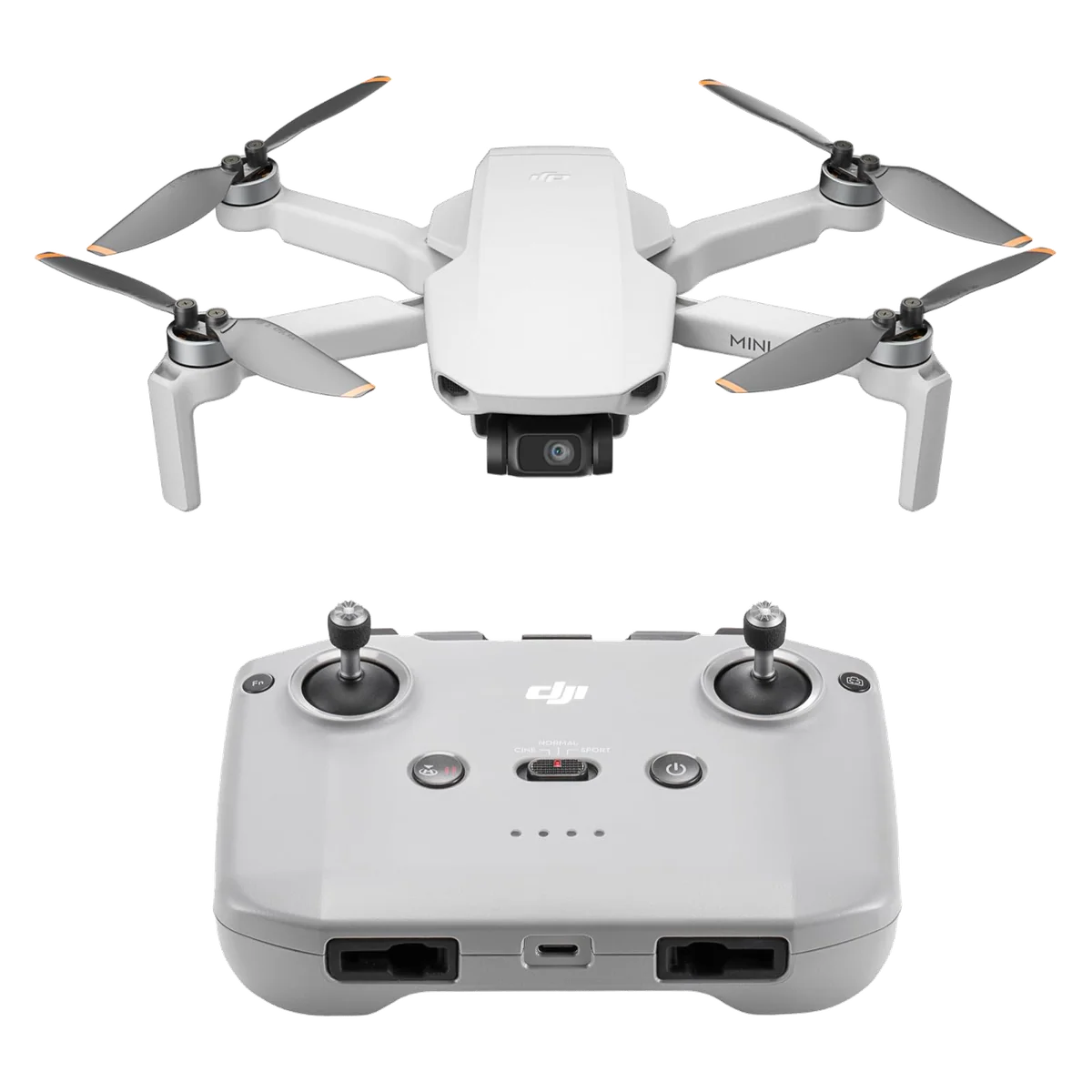
| DJI Mini 4K | None in any direction | The listing sells beginner safety on GPS, return to home and stable hovering, and never mentions sensing, because there is none to mention. |
| Potensic Atom 2 | Downward vision only, and nominal at that | The most careful published test of it could not see the downward system doing anything while flying low over uneven ground. |
| DJI Avata 2 | Downward and backward, for position holding rather than avoidance | No forward detection at all, on a drone built to be flown close to solid objects. |
| DJI Flip | Forward 3D infrared, roughly 0.3 to 8 metres, plus downward vision and infrared | Nothing to the sides, nothing behind, nothing above, because DJI reserves all-round detection for dearer models. |
| DJI Neo 2 | Omnidirectional sensing plus forward LiDAR | Genuinely the best coverage per pound here, and it has still hit a stop sign and a parked car in ordinary use. |
| DJI Avata 360 | Front vision with LiDAR and downward time-of-flight, with the all-round part derived from the two camera lenses | Less precise than a dedicated vision array, and it drops to front and down only the moment you switch to single-lens mode. |
| DJI Mavic 4 Pro | Omnidirectional vision with forward LiDAR rated down to 0.1 lux | The LiDAR that makes night flying viable looks forward only, so reversing in the dark is unprotected. |
Read that table next to the price of each aircraft and an uncomfortable pattern appears: the cheapest drone with real all-round coverage is the Neo 2, which DJI's own lineup page credits with omnidirectional detection while the pricier Flip makes do with a forward eye. Sensing is not a luxury tier any more. It is a design decision, and on the Flip the decision went the other way.
The modes that switch it off
Every one of these systems has an off switch, and most owners find it by accident. Sport mode disables the Neo 2's safety features outright, which is exactly the mode people reach for indoors when the sensing starts refusing to let them through a doorway. The Avata 360 does the same in Sport. Speed is its own switch: the faster the aircraft moves during tracking, the more the system trades safety margin for keeping up with you.
Then there is the direction you are travelling. The single most tempting shot a new pilot attempts is the reverse reveal, backing away from a subject while the ground opens up beneath. On a Flip that shot is flown completely blind, because the sensors are looking the way the camera is pointing and nothing is watching the trees you are reversing into. Forward-only coverage protects you during the least dangerous part of most flights.
Guards are the other thing people mistake for sensing, and the two are not substitutes. The Avata 2 is sold on integrated propeller guards described as super sturdy, and one enthusiastic owner review credits the aircraft with detecting and avoiding unexpected obstacles at full speed. That claim is simply wrong, contradicted by the aircraft's own sensor suite, and believing it costs drones. The cage is a real benefit and a narrow one: it survives grazes, not falls, and an FPV builder of more than a decade cracked a guard in his first week from a drop of a metre or two. The Flip earns its guards more honestly, since they are what makes palm launch and indoor flight reasonable rather than reckless.
What it genuinely earns its money doing
None of the above makes avoidance a gimmick, and the evidence for that is more interesting than the failures. A reviewer testing the Neo 2 repeatedly tried to fly it into bare winter branches, the classic case that defeats vision systems, and repeatedly failed, describing the fastest correction he had seen from any drone. Owners who deliberately fly low near trees and houses report the aircraft simply stopping, with a proximity display in the app showing what is around it.
What that buys you is margin in cluttered space, and margin is worth real money to a specific person: the beginner whose instinct in a panic is to push the stick further rather than let go. It also buys you the confidence to fly at all, which is not nothing, because the drone that stays in the cupboard takes no pictures. The right mental model is a seatbelt rather than a driverless car. It changes the outcome of the accident you were going to have anyway, and it does not license the accident.
Who should pay for it, and who is buying idle sensors
If this is a first camera drone and it will be flown near people, indoors, on holiday, or by somebody nervous, the Flip is still the most sensible package in DJI's cheap tier, and its forward sensing plus caged propellers cover the failure modes beginners actually produce. Its honest drawbacks are that it does not broadcast Remote ID, which rules out paid flying in the US without an add-on module, and that the guards behave like sails once the wind gets up.
If the drone's job is to follow you while you ride or run, the Neo 2 in its three-battery configuration is the buy, because tracking is precisely the case where you cannot watch the aircraft and its coverage is the most complete at this money. Its drawbacks are equally plain: the advertised nineteen minutes is really about twelve, and its sensing has a documented record of hitting a parked car and, on one occasion while tracking a child at a bike park, that child's helmet. If you are weighing the two, our Flip against Neo 2 comparison takes the argument further.
If you fly open ground and want the cheapest route into genuinely piloting an aircraft, the Mini 4K remains the drone Quadcopter Bench would hand a first-timer, precisely because the missing sensors cost you almost nothing over a field and the money went into a mechanical gimbal instead. Say the drawback out loud though: it will not follow you, it will not see the branch, and low light is where its small sensor gives out. The Potensic Atom 2 is the credible non-DJI alternative and is worth buying when it is discounted hard, but note what it is doing: selling AI tracking hard on the listing while carrying no forward, side or upward sensing whatsoever, which is the wrong combination to hand to somebody who has never flown. Owners have said so themselves, docking the drone a star for exactly that gap. Our longer take on the brand sits at whether Potensic drones match DJI.
Two aircraft here should be bought in full knowledge that avoidance is not part of the deal. The Avata 2 in its three-battery kit is still the gentlest way into FPV that anyone has built, and it has no forward detection, roughly fifteen usable minutes a battery, and a return to home that climbs vertically into whatever canopy is above it. The Avata 360 is the only drone that all but guarantees you came home with the shot, because you decide where the camera was pointing after you land, and the price of that is a crop that resolves nearer 2.5K than the 8K on the box, plus sensing that thins out the moment you leave the default mode. At the top, the Mavic 4 Pro is the strongest tool in its class if the footage pays for itself, and the ownership risk, not the sensor suite, is what should decide it: no DJI Care Refresh for US buyers, and owners reporting repair queues quoted in months.
It is not insurance, and the insurance has got harder
This matters more in 2026 than it did two years ago. DJI Care Refresh is no longer sold to buyers in the United States, so accidental damage cover now means a third-party policy or a homeowners rider, and those generally cover damage rather than a flyaway, which is the wrong way round for the failure this page describes. We have gone through the remaining options in insuring a drone now that Care Refresh is gone.
The cheap mitigation is the unglamorous one. Fly the first battery over open grass, close in, at walking pace. Learn where the aircraft stops itself and where it does not, deliberately, before you need to know. Treat any water below you as a hard no rather than a scenic opportunity, keep the aircraft in front of you, and assume the sky above it is unmonitored, because it is. Learning without wrecking it and knowing what the wind will do will save more drones between them than any sensor on this page. If you are still choosing, our shortlist of drones to learn on sets them side by side.
Frequently Asked Questions
Do you actually need obstacle avoidance on a drone?
You need it if you fly among trees, buildings and people or you let the drone track you, and you can happily do without it if your flying is open field, coastline and open sky.
Will it stop a drone hitting a tree branch?
It will stop the trunk and the thick limb, and thin branches routinely get through, which is how the best-sensed drone here came out of the sky in its owner's first week.
Does obstacle avoidance see power lines and wires?
No consumer drone sold today reliably detects thin wires, which is why they remain one of the most common ways to lose an aircraft outright.
Does the Potensic Atom 2 have obstacle avoidance?
It has a basic downward vision system and nothing watching forward, sideways or upward, which sits awkwardly beside the tracking modes it is sold on.
Does avoidance still work in sport mode?
Usually not, because sport mode switches the safety features off on several of these drones and speed erodes the margin even where they stay on.
Can it see at night?
Only if the drone carries LiDAR rather than plain stereo vision, and even then the beam typically looks forward only, so reversing in the dark is unprotected.
Which of these drones has the most complete coverage for the money?
The Neo 2, which carries omnidirectional sensing plus forward LiDAR at a price well under the drones that used to be the cheapest way to get it.
Do propeller guards do the same job as sensors?
No, guards change what a graze costs you while sensors change whether the graze happens, and a caged drone with no forward eye is still flying blind.
Sources (9)
- Amazon listings and customer reviews
- Owner reports across r/videography threads
- Owner and reviewer video, 1 channel
- Techradar — Article — www.techradar.com
- DJI — Article — www.dji.com
- Oscarliang — Article — oscarliang.com
- Fstoppers — Article — fstoppers.com
- Ca — Article — vancouverislanddrones.ca
- Pcmag — Article — www.pcmag.com