Potensic ATOM SE review: the drone to learn on, not the drone to film with
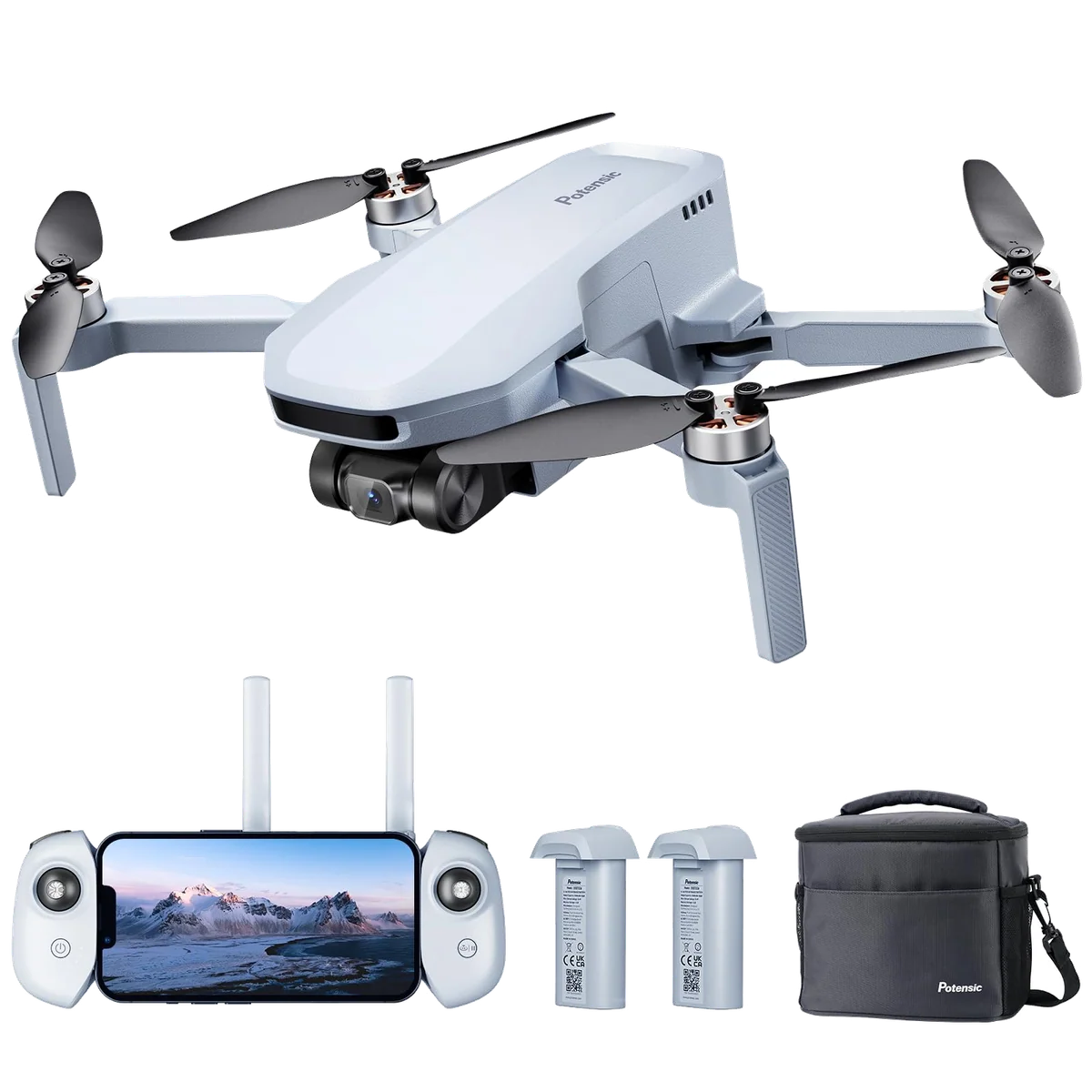
Buy the ATOM SE if you want a stable, forgiving, sub-250g GPS aircraft to learn on and not agonise over crashing, and walk away if you are buying it as a camera, because electronic stabilisation cannot hold a level horizon while the airframe leans into wind and there is no zoom of any kind, not even digital, to rescue a frame.
Based on 6700 owner ratings, 2 owner discussions and 7 other sources. We have not tested this machine ourselves.
We earn a commission if you buy through our links, which does not affect what we say.
Read how this site works →
Who should actually buy this
Buy it if you have never flown anything with GPS, if you expect to hit something, and if what you want out of the first year is confidence rather than footage. On that job it is very good, and the owner record is close to unanimous about it. Do not buy it as a camera. The stabilisation is the best of its type and it is still the wrong type, the field of view is fixed at the wide end with nothing to pull you back in, and the moment your ambitions outgrow that you will be shopping again. If you already know that footage is the point, skip a rung and stay in the same family, or look at the rest of the sub-250g field before you commit.
The ATOM SE arrived as the drone that made a cheap sub-250g quadcopter feel like an aircraft rather than a toy. Digital Camera World, reviewing it at the time, put the point plainly: before it, the budget end of the class meant padding and, at best, electronic stabilisation, with price rather than quality as the driving goal. The SE was the first one that could worry the market leader on everything except the camera.
That framing has aged in an interesting way. The SE is no longer the newest thing Potensic sells, or the second newest, or the third. It is the cheap old one at the bottom of a family that now includes a gimbal-equipped Atom, the Atom 2 with its larger sensor and AI tracking, and an Atom 3 that owners were still finding new ways to break within weeks of launch. Being old and known is not nothing. But it does mean the SE has to justify itself against its own siblings now, not against a 2023 market that no longer exists.
Quadcopter Bench thinks it still can, for exactly one buyer: the person who wants to learn to fly, who intends to hit a tree at some point, and who would rather that lesson cost as little as possible. Everyone else is being asked to accept a set of camera limitations that were forgivable when there was no alternative and are simply limitations now. What follows is the case for and against, built from the owner record rather than from Potensic's bullet points.
Key Specifications
The camera is a single-axis gimbal doing an impression of three
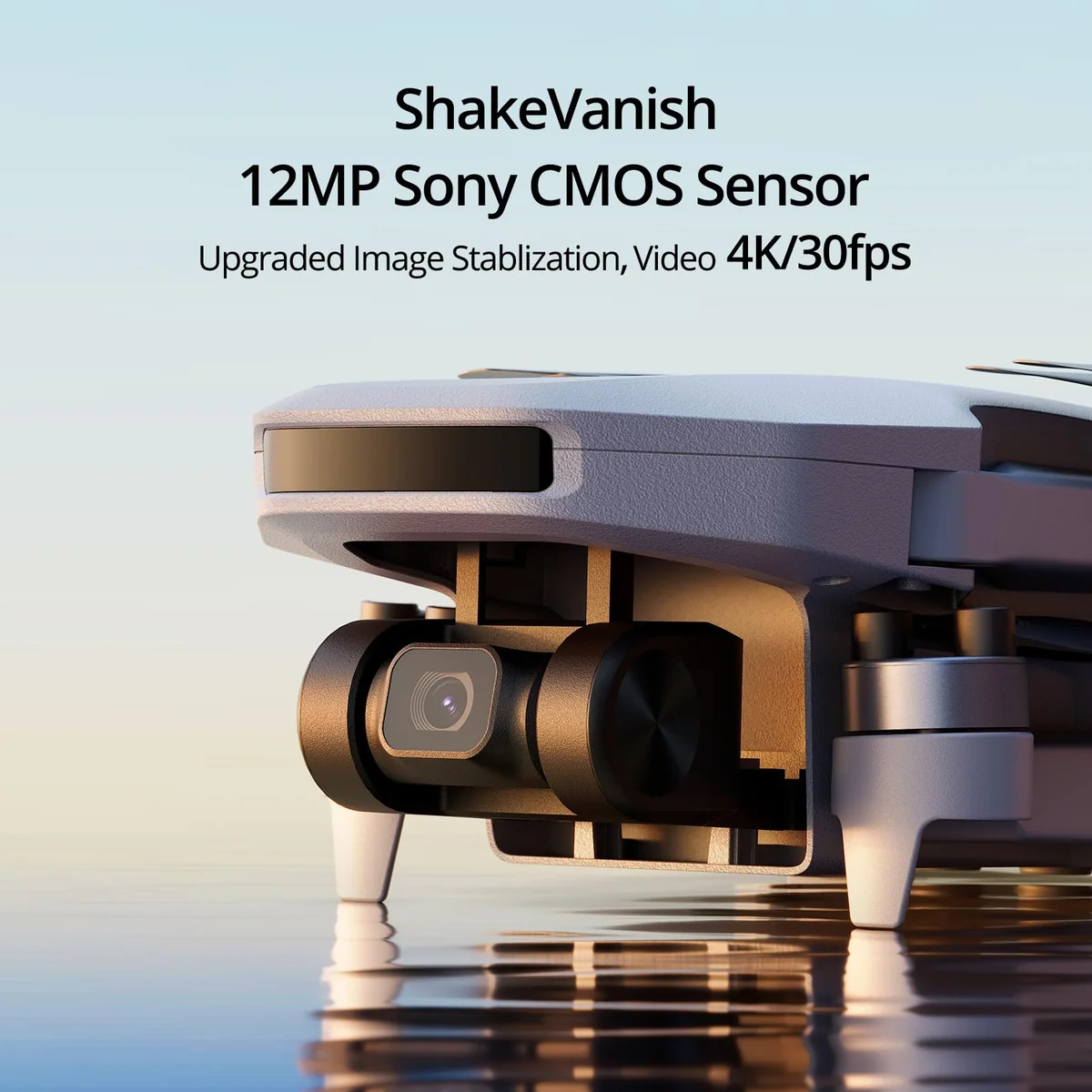
This is the whole product in one line. The SE stabilises with one mechanical axis plus electronic image stabilisation, which Potensic markets as ShakeVanish. It is not a three-axis gimbal, whatever a dozen spec-scraping comparison sites will tell you. If you want the underlying mechanics, our explainer on gimbals versus electronic stabilisation covers why cheap drone footage still looks wrong even when it looks steady.
The honest finding is that this is unusually good EIS. Digital Camera World called the image quality easily the best it had seen from a drone relying on electronic stabilisation, sharp with real contrast and depth, and thrashing other beginner drones outright. The same review is equally clear about where it breaks: without a gimbal that can rotate to compensate for the airframe leaning into wind, you get a flat horizon flying into and away from the wind, a bit like the FPV mode on some drones. The reviewer also caught the tell in Potensic's own naming, noting that calling the three speed settings Video, Normal and Sport might be an admission that the faster you go, the more the stabilisation suffers.
Owners find the same thing without the vocabulary for it. One asks in a review why the manufacturer did not fit a three-axis camera so the image would not shift when the drone turns. A video reviewer describes it as pitchy in motion and offers the workaround that actually helps: move slowly, and feed in a little counter-stick, which takes some of the pitch out while the drone is travelling.
Then there is the coupled limitation nobody advertises. The SE sees at 118 degrees, dramatically wider than the 78 degrees of the gimbal Atom, which independent reviewers listed as a drawback of that more expensive model. Wide is dramatic. Wide is also distorted, and it has no reach, and the SE has no zoom at all to compensate. Not two times, not digital, nothing. One owner put it in the flattest possible terms: one fixed distance, so if he wants detail he has to fly the drone lower. You get one framing, and the only lens control you have is the aircraft itself.
Two more absences worth knowing before you buy. Camera settings are automatic only, with no manual ISO, shutter or white balance, and there is no interval or timelapse shooting. There is no obstacle avoidance either, which for a first drone matters less than people expect and more than they hope, a distinction we unpick in what obstacle avoidance actually catches.
What it does have, and what genuinely separates it from the cheap tier below, is a real radio link to a controller that your phone plugs into by cable, rather than phone-to-drone Wi-Fi. Digital Camera World singled this out as the reason control feels dependable rather than laggy. It also shoots RAW as well as JPEG, though the same review raises a fair doubt about how much of the original pixel count survives whatever processing produces a stabilised 4K frame.
Strengths & Limitations
Strengths
- GPS hold is genuinely solid, with owners reporting steady hovers in 7 to 10mph wind and the drone stopping dead the instant the sticks are released.
- Return to home is accurate to a foot or two, on command and on low battery alike, which is better than some far newer drones manage.
- The controller is a real radio link with your phone attached by cable, not phone-to-drone Wi-Fi, and it feels like it.
- Electronic stabilisation this good is rare, and reviewers rate the daylight image the best they have seen from an EIS-only drone.
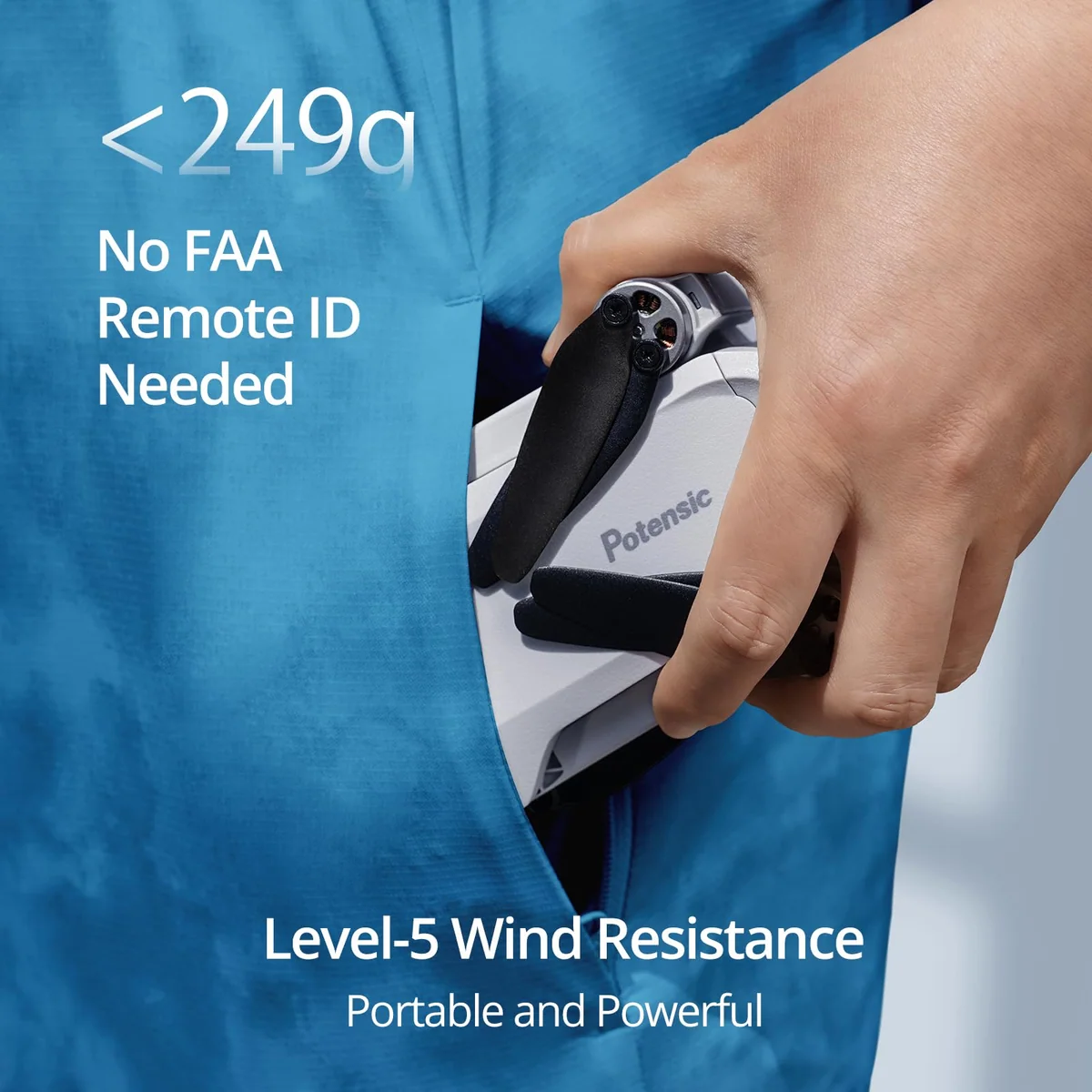
- It weighs 248g on a kitchen scale, keeping it inside the sub-250g recreational category without argument.
- Customer service answers within a day, and repeatedly replaced or discounted hardware that owners admit they broke themselves.
- The propellers swing loosely rather than sitting fixed, which owners rate as a meaningful safety improvement over rigid-blade rivals.
Limitations
- Without a gimbal to compensate for the airframe leaning, the horizon goes flat and shifts when you fly into wind or turn quickly.
- There is no zoom of any kind, not even digital, so the only way to get closer to a subject is to fly the drone closer.
- The camera is automatic only, with no manual ISO, shutter or white balance and no interval shooting.
- Real flight time is about 22 to 25 minutes per battery rather than the 31 claimed, and the 62-minute headline is simply two of those added together.
- Batteries lose meaningful charge sitting for a week and go flat over a couple of months, so this is not a grab-and-go aircraft.
- The advertised 4km range is unreachable in practice and unusable legally, with real owner distances an order of magnitude shorter.
- Follow Me tracks your controller by GPS rather than tracking you visually, which is a different and less impressive thing than it sounds.
- There is no obstacle avoidance, no camera cover in the box, and no telemetry or timestamp written into the footage.
- Satellite acquisition takes around thirty seconds, and Sport mode refuses to unlock until the battery is warm.
What the box claims, and what people actually get
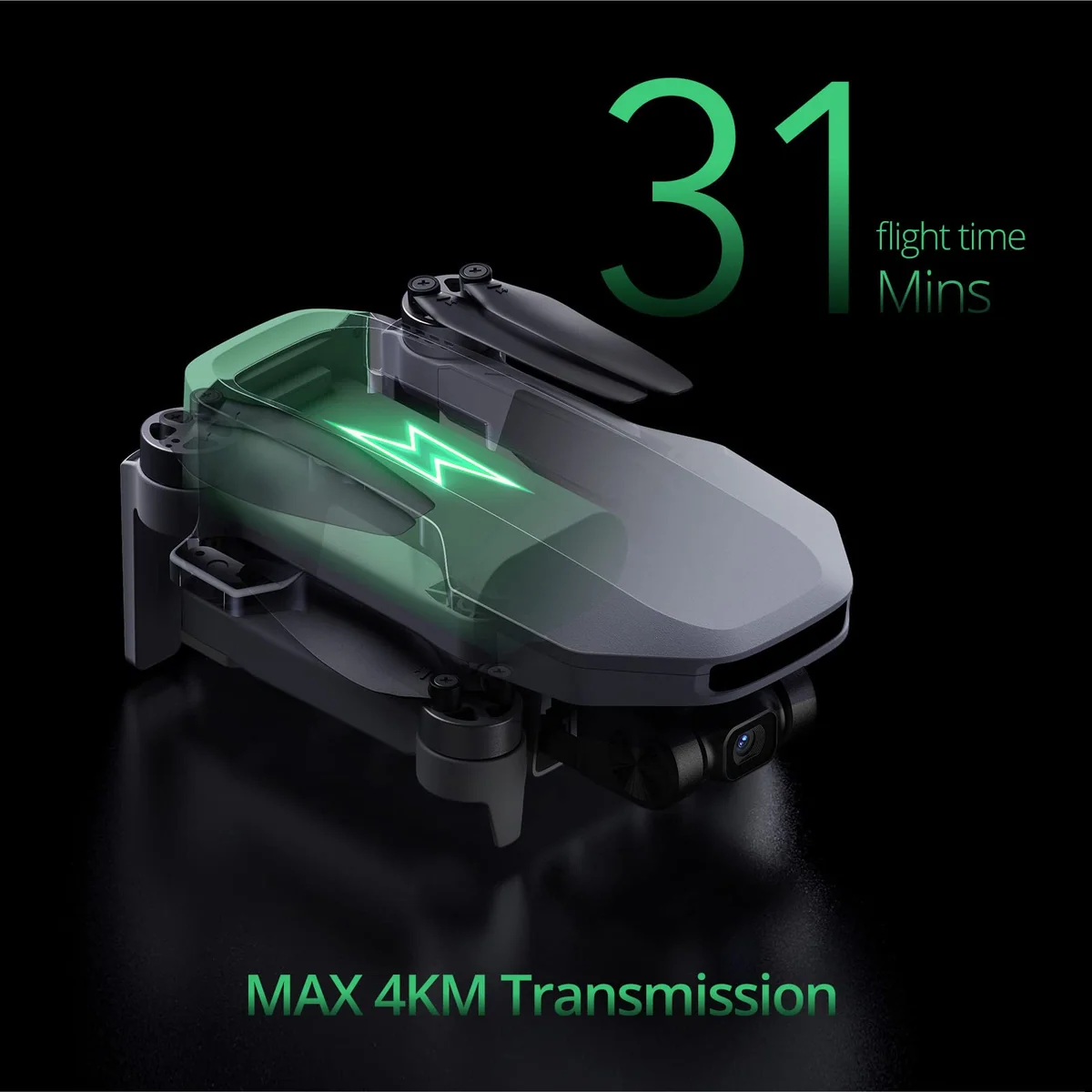
The Amazon listing leads with 62 minutes of flight and 4km of transmission. Neither number is a lie. Neither number is a thing you will experience.
| The claim | What the record shows |
|---|---|
| 62 minutes of flight | Two batteries of 31 claimed minutes added together; owners report roughly 22 to 25 minutes each in practice, dropping to around 15 when pushed |
| 4km transmission | Nobody in the record has been near it; reported real distances run from about 1,200ft with trees and buildings in the way to around 3,200ft in the clear |
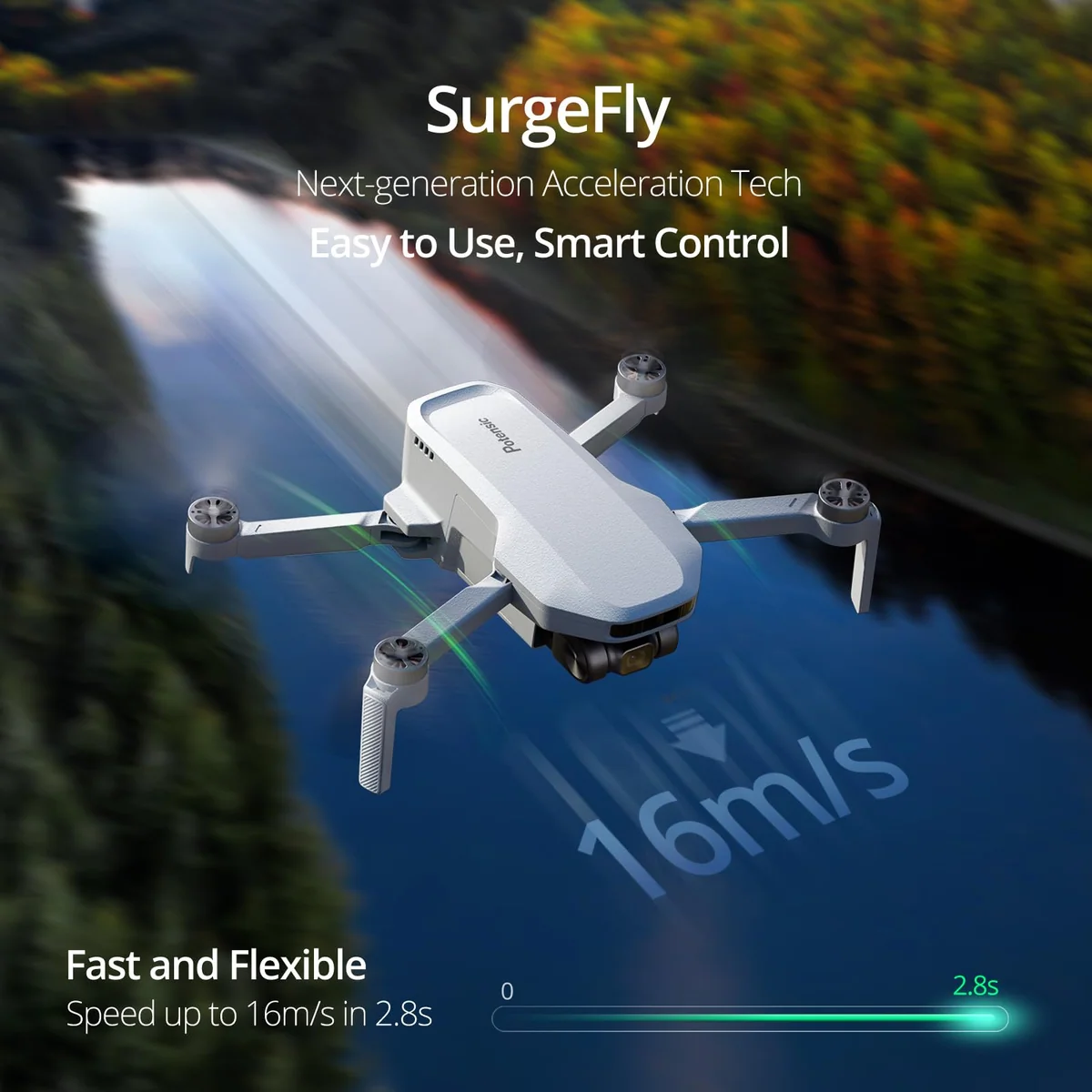
| Max speed 16m/s | Owners confirm about 35mph in Sport mode, but Sport will not unlock until the battery is warm enough |
| Under 249g | Confirmed on a kitchen scale at 248g with the battery fitted |
| Precise GPS auto return | Genuinely precise: reported landings 18 inches from the pad, and within a few feet on low-battery returns |
Take the range claim first, because it is the one that irritates people. The most useful review on the listing comes from a buyer who chose the SE specifically for distance and concluded that while the aircraft may be physically capable of the advertised figure, without amplifying the controller he was realistically seeing 1,200 to 1,500ft with average obstructions, and close to 2,000ft from a hotel balcony with nothing in the way. Another owner reached about 3,200ft at twilight, and freely admits he will never know the real limit because he has to keep the drone in sight the whole time. A video reviewer reached roughly half a mile and then made the argument that actually settles it: 4km is not within any rule that exists for a legal pilot, so the number is not something you can use. The mechanism is mundane. Put a building or a treeline between you and the aircraft and the link shortens; fly higher and it stretches.
Flight time follows the pattern our guide to advertised versus real endurance describes: the marketing figure is two flights added together, and each of those flights is a laboratory hover. Owner figures cluster consistently around 25 minutes, one reports an average of 15 to 25 depending on how hard he flies, and the high outlier of a genuine half hour comes from a reviewer flying gently. Plan for two flights of roughly 22 minutes with a battery swap in the middle, and you will never be disappointed.
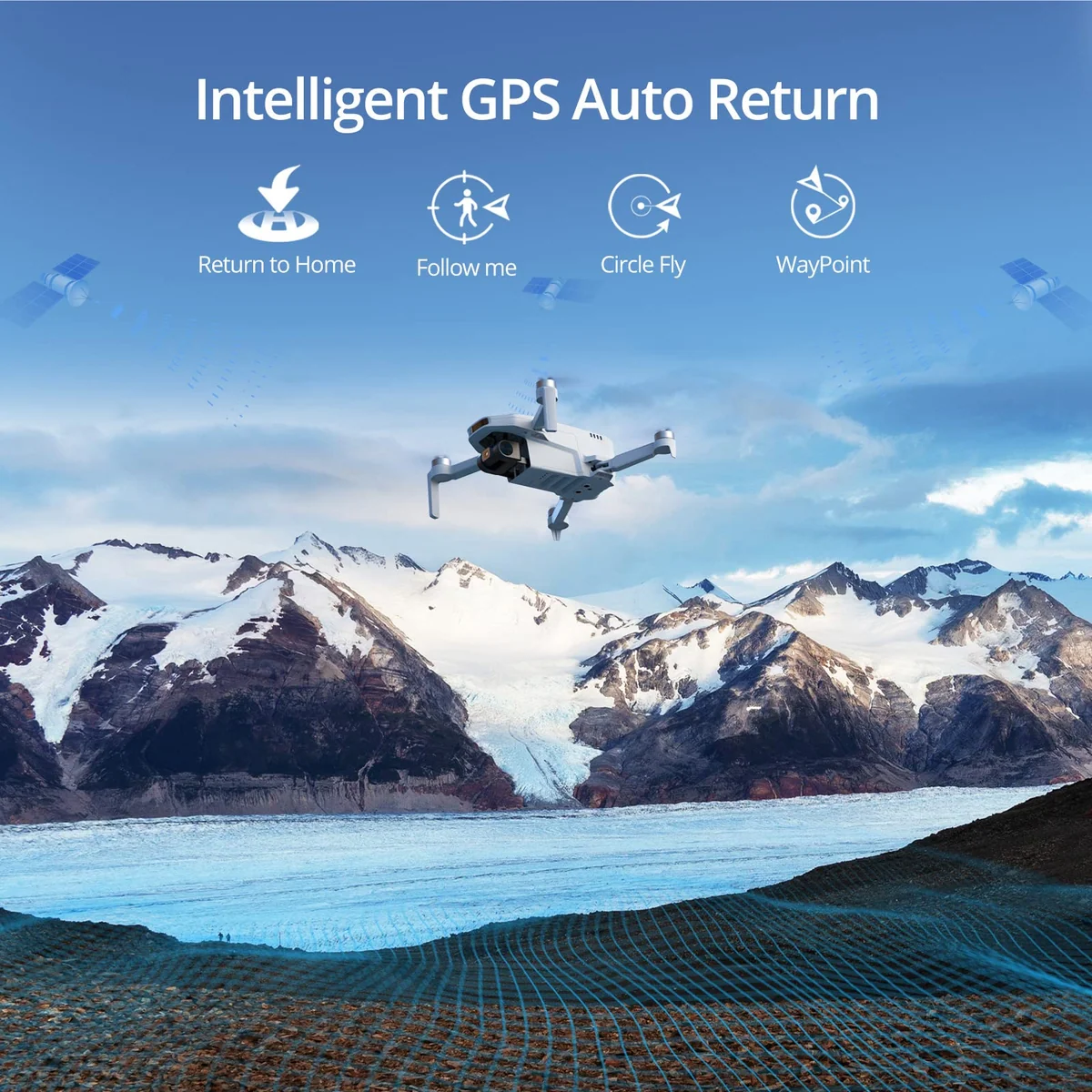
The flying itself is where the SE earns its reputation. Owners describe it hovering rock steady in 7 to 10mph wind on 24 satellites, holding position well enough to be steered through interior doorways, and stopping dead the moment the sticks are released, which one owner credits with saving him more than once. Return to home is not merely present but accurate, landing within a foot or two of the launch point on command and on low battery alike. That is worth stating precisely because it is not table stakes at this price: the far newer Atom 3 was missing its landing pad by a foot in first-flight testing.
Three practical findings the spec sheet will not give you. Satellite acquisition is slow, on the order of half a minute rather than a few seconds, which feels like an eternity when you are standing in a field. Sport mode is gated on battery temperature, so on a cold day you simply will not get it, a limitation one owner discovered only on the warmest day he had flown. And an iPhone in a nearby pocket can genuinely interfere with the link: one owner watched his drone enter a spiral descent and caught it two feet off the ground with an emergency stop, then flew for another fifteen minutes without trouble once the phone went into airplane mode. Independent testers of the same product line treat airplane mode as standard practice. Treat it as a pre-flight step, not a superstition.
On the intelligent modes: Follow Me, Waypoint, Circle Flight and Points of Interest all work, and owners report them working well. But the tracking is GPS-based, not visual. The drone is following your controller and phone, not your body, which is a completely different experience from visual tracking and the same limitation reviewers have flagged on Potensic's older aircraft. If following you down a trail is the actual job, this is not the aircraft for it and our follow-me picks exist for that reason.
The problem is not DJI, it is the rest of the shelf at Potensic
The usual framing for a drone like this is Potensic against DJI, and it is the wrong fight to stage here. The ordinary-owner consensus on that question is settled and not very exciting: DJI is still the market leader for a reason, Potensic makes genuinely good budget aircraft, and the people who own both tend to say so without much drama. We work through that properly in whether Potensic drones are as good as DJI, and the answer has become more complicated as DJI availability in the US has come under pressure. Popular Mechanics, reviewing a newer Potensic, still names the SE the best value among all the drones it recommends.
The harder question is internal. Every model above the SE in Potensic's own lineup has a real mechanical gimbal, and the gap between the SE and the next one up has narrowed to the point where it is no longer the reason to choose the SE. One owner said this himself, in a five-star review, and it is the most useful sentence on the listing: his only regret was not going to Potensic's own site first, where he would have found the gimbal model and bought that instead. Digital Camera World, reviewing that step-up model, described the SE's stabilisation as digital, better than equivalent systems, and limited, and observed that the SE suffix told everyone a version without it was coming.
So the SE wins on exactly one specification against its own family, the 118-degree field of view, and even that is a matter of taste rather than an advantage. Everything else is a step down. If the camera is the point of the purchase, the honest move is to read our SE against the Atom 2 comparison and spend the difference. If you want the DJI equivalent at this end of the market, the Mini 4K is the one to weigh it against, and the Holy Stone HS175D is the other budget GPS drone people cross-shop.
The SE's remaining case is a real one, though, and it is not about specifications. It is about dread. The reason people buy this drone is captured perfectly by a beginner in a drone group explaining that Potensic lets him learn without breaking the bank or being that nervous about crashing it. That is a legitimate reason to buy an aircraft, it is the reason we maintain a page on learning to fly without wrecking it, and the SE serves it about as well as anything in our beginner picks. You get GPS hold, accurate return to home, a proper cabled controller, no geofencing to argue with, and an airframe cheap enough that a treeline is an inconvenience rather than a disaster.
What breaks, what drains, and what Potensic does about it
The batteries do not hold charge well in storage. One owner found his packs at half charge after a single week sitting idle; another found them flat after a couple of months and noted, pointedly, that the controller was not. Some self-discharge is deliberate in intelligent lithium packs, but a week to half is fast, and it means the SE is not a drone you can grab and fly on impulse. Charging is slow too, a few hours per pack, which one reviewer accepted as good for cell longevity while still wishing it were quicker. Note also that the two-battery kit ships without the charging hub; that comes with the three-battery configuration. Each battery does have its own USB-C port, so you can charge from anything.
Durability reports split, and the split is instructive. On one side: multiple crashes into trees, bushes and poles with the aircraft still flying, and a backwards flight into a tree that required a ladder in a pickup bed to retrieve and broke nothing at all. On the other: a first-flight tree strike that killed the camera outright, a broken landing gear leg repaired at home with epoxy and an old credit card, a cracked controller antenna and a joystick that unscrewed itself, both apparently while the controller sat in a truck cab. The pattern is that the airframe takes impacts better than the accessories do. One owner also notes there is no cover to protect the camera in storage, unlike most drones in the class, and Potensic's own SE packing lists back him up.
Two faults appear once each in the record and are worth knowing without being worth panicking over. A Spanish-speaking owner reports that most of his recordings come back corrupt and could not be recovered even with file-repair tools, with no answer from anyone in the thread. Potensic specifies only a U1 or C10 card, which is arguably too low a bar for 4K, and slow cards are the known bottleneck across this whole product family. Buy a fast, name-brand card. Separately, the drone writes no telemetry or timestamp into its footage, so there is no date, altitude, heading or speed recorded with the picture, and one owner searched the manual for a way to enable it and came up empty.
Customer service is where the record gets genuinely interesting. The consistent finding is that Potensic answers, and answers within a day. One owner crashed on his first flight and received a replacement without argument. Another broke a landing gear leg, was quoted a repair price and offered a heavily discounted replacement, then fixed it himself and was sent free propellers anyway. A third had trouble finding the manual and got it sorted quickly.
Against that sits the single one-star review on the listing, and it deserves reading rather than dismissing. That owner reports a drone that would not hold a hover from new despite good satellite lock and successful calibration, and rejects Potensic's explanation that he was unfamiliar with the controls on the grounds that the point of a hover is that you do nothing. He reports a rear prop arm that bulged the fuselage and stopped locking securely on an aircraft he says has never been crashed and does not have so much as a grass stain. He reports being offered a set of propellers, and later a discount on a customer-returned drone. And his update notes that Potensic eventually offered a refund, in his reading because of the review rather than because of the customer. His summary line is the sharpest thing in the whole record: Potensic confuses customer service responsiveness with effectiveness.
That review also alleges that a headless mode he had paid for was removed by a firmware update shortly after his purchase, without notice. Quadcopter Bench cannot verify that from any other source in this record, and reports it as one owner's account rather than as established fact. What it does show, taken with the rest, is an asymmetry: the owners who caused their own damage got generosity, and the owner who says he did not got resistance. That is an odd way round, and worth knowing before you rely on the warranty.
Frequently Asked Questions
What is the difference between the ATOM SE and the ATOM without the suffix?
The SE stabilises electronically with a single mechanical axis and sees at 118 degrees with no zoom and automatic-only camera settings, while the gimbal model has a three-axis gimbal, a narrower 78-degree view, manual exposure control, digital zoom and visual rather than GPS tracking.
Does it really fly for 62 minutes?
No, that figure is two batteries of a claimed 31 minutes added together, and owners consistently report around 22 to 25 minutes from each pack in real flying.
Can it actually transmit 4km?
Nobody in the owner record has been close, with reported distances running from roughly 1,200ft through obstructions to around 3,200ft in the clear, and no legal pilot keeping the aircraft in sight will ever test the claim anyway.
Does the ATOM SE have obstacle avoidance?
It does not, so the downward vision system will help it hold position and land but nothing on the aircraft will stop it flying into a tree.
Do I need to register it if it weighs under 249g?
For recreational flying in the US the answer is no registration but yes to the TRUST test, any paid or commercial use requires FAA registration and a Part 107 certificate regardless of weight, and UK and EU pilots need to register as an operator because it carries a camera.
Does Follow Me track me or my phone?
Your phone, because the tracking is GPS-based rather than visual, so it is following the controller in your hand rather than recognising your body.
Is it any good in wind?
It holds position better than its price suggests and is rated to level 5 wind, but the footage is where you pay for it, because the camera cannot level the horizon while the drone is leaning into the gust.
What card should I put in it?
Buy a fast, name-brand microSD well above the U1 or C10 minimum Potensic specifies, because slow cards are the known bottleneck across this product family and at least one owner has lost most of his recordings to corrupt files.
Sources (9)
- Amazon listings and customer reviews — Potensic Atom Se
- Owner reports across r/Potensic threads
- Owner and reviewer video, 3 channels
- Digitalcameraworld — Article — www.digitalcameraworld.com
- Potensic — Article — store.potensic.com
- Firstquadcopter — Article — www.firstquadcopter.com
- Dronedj — Article — dronedj.com
- Facebook — Article — www.facebook.com
- Popularmechanics — Article — www.popularmechanics.com