The best drone for paid work is the Air 3S, and the Mavic 4 Pro is the one you buy when a client makes you
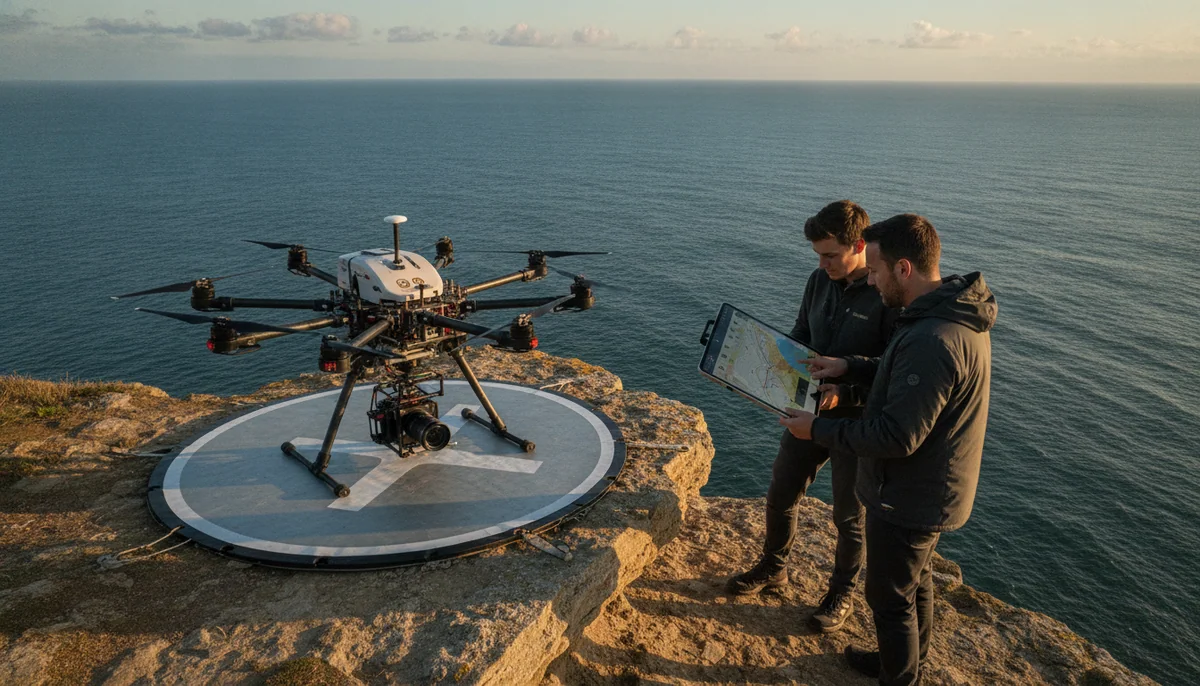
Every drone on this page can produce footage a paying client will accept. That is not the interesting question, and treating it as the interesting question is how working pilots end up with the wrong aircraft in the bag. The question that decides whether aerial work is profitable is what happens on the Tuesday something breaks: how long you are grounded, who pays for it, and whether you can still deliver the job you have already been booked for.
That is where the flagship stops being an obvious answer. Quadcopter Bench went through the ownership record behind the Mavic 4 Pro and the pattern is not about flying at all. US buyers cannot get DJI Care Refresh for it. One professional on this listing bought the aircraft precisely because his older drone needed repair, then found a sixty to ninety day wait before he could even send the old one in, and got nothing when he asked support for flexibility. Another owner, running a business on his fifth DJI, is already on his second Mavic 4 Pro after a gimbal fault at eighty-five days, and reports his insurer calling it the manufacturer's problem while a friend's claim was refused on the grounds that the flight had been commercial. For a hobbyist that is bad luck. For a business it is an unpriced liability sitting on top of the most expensive thing you own.
The Air 3S answers most briefs with far less exposure. A 1-inch main camera and a genuine 70mm second lens cover residential property, commercial exteriors, corporate B-roll and event coverage without asking you to fly at the subject to fill the frame, and the buying guides that have tested both still name it as the aircraft to take when you do not need the flagship consequence. Owners report about forty minutes on a battery in mixed use against DJI's forty-five, and a hover that holds inside a couple of inches in fifteen-mile-an-hour gusts, which is the specification that actually matters when a client is standing next to you watching the light go.
So the segmentation, in service of that stance rather than instead of it. Buy the Mavic 4 Pro if a deliverable names a codec, if you are cutting between focal lengths in the same sequence, or if the aircraft pays for itself inside a fortnight and you could absorb losing it. Buy the Air 3S if you shoot property, corporate or event work and want the drone earning rather than depreciating in a repair queue. Buy one of the two small aircraft further down only as a second body or a specific tool, never as the machine your reputation rides on.
The four things that decide whether the job pays
None of these are camera specifications, and all four of them cost more money than the gap between any two aircraft on this page.
The licence does not care what the drone weighs
The Atom 2 listing carries a bullet that says, in bold, that no FAA or Remote ID registration is required. That is true, and it is true only for recreational flying. Fly the identical 249g aircraft for a client, paid or unpaid, and you are operating under Part 107 in the United States: registration applies, and so does the certificate, regardless of how light the drone is. The sub-250g threshold is a hobby exemption that a commercial operator never gets to use, and buying a light drone to dodge it is the most common expensive misunderstanding in this market. We set out where the lines fall in what registration and Remote ID actually require. The heavier aircraft carry the same obligation plus the weight class consequences, and a UK owner of the Mavic names his own version of it, needing an A2 certificate to fly close to people and finding the thing hard to hike with.
The money you now cannot insure
DJI Care Refresh is gone for US buyers, and it is gone at exactly the point where the drones got expensive. One five-star reviewer of the Mavic recommends a third-party policy in its place; another describes the removal of the two-year option as the thing that ended his loyalty after he had already bought. A Neo 2 buyer reports that no Refresh option appeared at activation at all. What has disappeared is not the factory warranty, which still covers defects, but the cover for the thing that actually happens, which is that you fly into something or lose it over water. The alternatives are contested rather than solved, and the claim refused on the grounds of commercial use is the specific risk a working pilot carries that a hobbyist does not. Our standing piece on insuring a drone now that Refresh has gone walks what is left.
The practical consequence is a purchasing one. If you are choosing between the flagship alone and a mid-range aircraft plus a cheap backup, the second option keeps you delivering through a repair window that owners are being quoted in months. That is the honest reason the Atom 2 appears on a professional shortlist: not because it competes on picture, but because a booked shoot with no flyable aircraft is a refund and a lost client.
The turnaround, which is what actually ends a shooting day
Three batteries buy you a longer session, not a shorter one. Every kit here has a different bottleneck, and none of the four boxes is complete on its own.
| Aircraft | What comes with it | What runs out first |
|---|---|---|
| Mavic 4 Pro | Three batteries, a charging hub and a 100W adapter shared across two outputs, with no ND filters | Charging, until you buy the 240W adapter separately, because this kit fills the packs one after another |
| Air 3S | Three batteries, a hub, a shoulder bag, ten spare propellers and an ND set of 8, 32 and 128 | The wall charger, which is not in the box at all, and the ND16 and ND64 you will go out and buy |
| Atom 2 | Three batteries, a hub that fills all three in about an hour and twenty minutes, and the PTD 1 screen controller | The memory card, which is not supplied, and a slow one will refuse to record 4K at all |
| Neo 2 | Three batteries, a hub that fills them in around 68 minutes and doubles as a phone power bank, plus the RC-N3 | The batteries themselves, at ten to fifteen minutes each, and there is no mains adapter and no case |
Two smaller items in the same category. The Air 3S wants two memory cards, one in the aircraft and one in the controller, and its listing quietly recommends the 65W charger you have to source yourself. Every rated flight time on this page is a still-air hover with no reserve, which is why the realistic planning numbers above are lower than the cartons, and we take that apart in advertised flight time against real flight time. Whether the extra packs justify themselves at all is its own argument, and for commercial use it is not much of an argument: one battery is half a job.
The file the client asked for
This is where a spec sheet turns into a rejected delivery. ALL-I 4:2:2 encoding and the 512GB of internal storage are stated on DJI's own listing as Creator Combo items, so if a broadcaster or an agency names 4:2:2 in the brief, the Fly More box on this page is the wrong purchase and no accessory buys your way back. The counterweight, from an owner who has flown both kits, is that the image is identical between versions unless you are using the higher bitrate, which means most buyers are paying that difference for a screen and a file format rather than a picture.
Lower down the list the file question gets blunter. The Atom 2 gives you 8-bit log and JPEG-only stills at its headline resolution; the Neo 2 gives you one colour profile, no log at all and a shutter floor that makes night work impossible. Both are fine for social cutdowns and neither is a colour pipeline. If grading is central to what you sell, the choice on this page collapses to two aircraft.
One last thing that belongs to a business asset rather than a toy. The Air 3S listing warns in DJI's own words that failing to unbind your account before a return can lead to unauthorised access and to potential remote locking of the device, rendering it inoperable. That is the manufacturer telling you it can reach the aircraft. Buy used with that in mind, and unbind before anything goes back. On whether you can buy at all, PCMag has the FCC adding new foreign-made drones to its Covered List in December 2025 and DJI suing in February 2026, with previously approved models, the Mavic 4 Pro among them, still legal to buy and fly. That position keeps moving, so we keep a running answer. One piece of setup friction worth knowing before a client is watching: the DJI Fly app has been pulled from Google Play, and Android owners are directed to download it from DJI's own site.
The verdict has not moved. Buy the Air 3S, price the missing charger and filters into the purchase, keep a cheap second airframe so a fault is a nuisance rather than a refund, and step up to the Mavic 4 Pro when a brief, not a feeling, requires it. If you want to see how these four sit against the wider field, the camera drone roundup covers the rest.
The shortlist, in the order I would spend the money
Read these in the order they are listed, not in order of capability. The top of this page is the most aircraft; the middle is the most work per pound spent; the bottom two are tools with narrow jobs, and they are on the list because a working kit is usually more than one airframe.
The one to buy when the client is specifying the file rather than admiring the footage.
Nothing else here gives you three cameras that share a colour profile and shoot D-Log together, which is what turns a multi-focal-length edit from a grading fight into an afternoon.
This is the box without ALL-I 4:2:2 or the 512GB of internal storage, so a brief that specifies either of those needs the Creator Combo instead of this one.
The generational change on this aircraft is not the hundred megapixels. It is that D-Log and D-Log M are available on every sensor, which is the thing that stopped a reviewer using the previous generation's tele cameras at all. The counterweight comes from people who bought this exact combo for commercial jobs: one says he has not used the tele lenses anywhere near as much as he expected to, and describes viewing the whole purchase as an expense, saying he would order a replacement the day it crashed because it is worth the cost if you are getting paid. Both of those are true at once, and they are the honest case for buying it.
Two things about this specific box will annoy you in the first month. There are no ND filters in it, on a drone built around controlling exposure, and the 100W adapter that comes with it fills the three batteries one after another, because the 240W parallel adapter belongs to the other combo. An owner who chose this bundle flew it for months before working that out, bought the bigger brick secondhand, and now charges two packs while flying the third. Budget for both before the first paid day, and if you are still choosing between the two kits, we set them against each other in the Fly More against Creator Combo comparison.
One correction to the listing itself, because it decides returns. The seventh bullet describes a seven-inch rotatable RC Pro 2. This box contains the 5.5-inch DJI RC 2, which the eighth bullet and the title both say plainly. What else that controller will talk to is covered in our guide to the RC 2.
The drone most people invoicing for aerial work should actually buy.
A 1-inch main sensor and a real 70mm second camera cover the overwhelming majority of property and corporate briefs, on an airframe you can afford to lose without losing the month.
There is no wall charger in the box at all, DJI's own listing tells you to buy a 65W one, and the bundled ND8, ND32 and ND128 skip the two filter values working pilots reach for most.
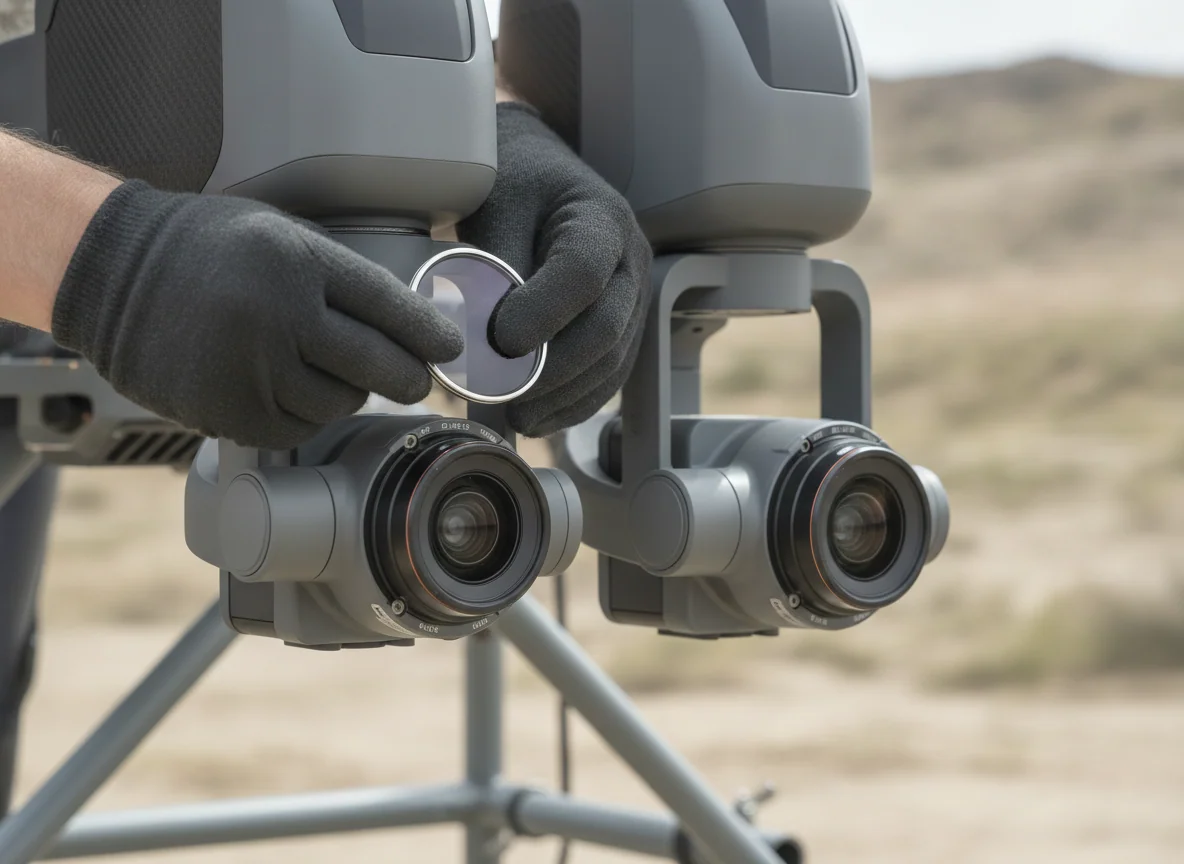
The second lens is what converts sceptics on this aircraft, and it does something specific for paid work: it lets you frame a distant subject without flying at it, which is the difference between a compliant shot of a commercial roof and an argument with the site manager. Owners who arrived expecting to dismiss it changed their minds, and the same owners will tell you the honest part, which is that the 3x beyond that lens is a crop rather than glass. Both cameras have a fixed aperture, so filters are not an accessory here, they are working equipment, and the ones in the case are the wrong values often enough to notice.
Know the ceiling before you quote a job on it. Video tops out at 4K, the maximum bitrate went backwards from the Air 3, and there is no SDK, so the mapping and survey packages that trade depends on will not run against it. If the deliverable is a model or an orthomosaic rather than pictures, this is the wrong aircraft entirely and no amount of sensor helps. Obstacle sensing also switches off completely in Sport mode, which owners flag as the thing nobody warns you about, and our piece on what these systems catch and what they fly through covers the rest of that gap. The full case is in our Air 3S review, and the head to head with the flagship lives at Mavic 4 Pro against Air 3S.
The cheap second airframe, not the one your reputation rides on.
It hovers without drift, films cleanly in good light and costs little enough that keeping one in the car as the backup for a booked shoot is a rational business decision rather than an indulgence.
There is no forward or side obstacle sensing on it at all, which is exactly the wrong specification for flying close to a building somebody is paying you to photograph.
Take the listing's headline numbers apart before you plan a day around them. The 8K photo is a 48MP JPEG with heavy sharpening applied, and the raw file you would actually want to hand a retoucher only exists at 12MP. Video is 4K at 30fps with no 60fps option anywhere. The measured flight time is around twenty-two minutes to the low-battery prompt rather than the thirty-two the 96-minute figure is built from, and there is no live histogram, which a manual shooter will feel on every flight. The log profile is 8-bit, which is thin material to grade, and the listing does not tell you that.
What it does well is genuine. It holds position, it is quiet, the gimbal tilts slightly above the horizon, and one owner on the coast reports it coming back to the take-off point with the signal intact after a long run over open water. The awkward part for paid work is the sport-mode behaviour: below thirty per cent it drops back to normal and caps you near seventeen miles an hour, which is a slow walk home if you have pushed out. Our full assessment is in the Atom 2 review, and the wider brand argument is at are Potensic drones as good as DJI.
The follow camera for the promo, not the camera for the deliverable.
Palm launch, fixed cages and tracking that holds a moving subject make it the fastest way to get a rider, a crew or a presenter on camera from the air without stopping the shoot to unfold anything.
Owners report ten to fifteen minutes a battery against a claimed nineteen, and the picture is a good phone in good light rather than something to hand a client as the main angle.
The reason this aircraft is on a professional list at all is that it goes places a bigger drone cannot go on a working day: near people, indoors, between takes, in your jacket while you carry the real kit. At 151 grams with cages, a mistake is an anecdote rather than a claim. Treat the obstacle sensing as a backup and not a guarantee, because one owner filming himself cycling had it clip a stop sign and, on another occasion, hit a parked car, and the safety features switch off entirely in sport mode. Tracking will not lock onto a vehicle at any speed, which quietly rules out a whole category of client request.
Two honest cautions. Its internal storage fills quickly at 4K, and a minority of owners describe erratic control, firmware updates on nearly every power-on and a mid-air stall, against a listing that otherwise runs strongly positive. Fly a new one over grass and close in before it goes anywhere near a paid shoot. The longer version is in the Neo 2 review.
Frequently Asked Questions
Do I need a Part 107 certificate if the drone is under 250 grams?
Yes, because the sub-250g exemption is a recreational one, and any flight you are compensated for puts you under Part 107 with registration attached regardless of what the aircraft weighs.
Does the Mavic 4 Pro Fly More Combo shoot ALL-I 4:2:2?
No, that codec and the 512GB of internal storage are stated on the listing as Creator Combo items, so a client specifying 4:2:2 means buying the other box.
Does this Mavic box include the seven-inch controller the listing describes?
No, it ships the 5.5-inch DJI RC 2, and the seven-inch RC Pro 2 in that bullet belongs to the Creator Combo.
Which one should a real estate photographer buy?
The Air 3S, because the 1-inch main camera and the 70mm second lens cover interiors-adjacent exteriors, elevation shots and neighbourhood context without the flagship's replacement cost hanging over every flight.
Is the Potensic Atom 2 good enough to invoice with?
As a second body for straightforward exterior work in good light it is defensible, but with no forward or side obstacle sensing, 4K locked to 30fps and an 8-bit log profile it is a poor choice as your only professional aircraft.
Can the Neo 2 produce a client deliverable?
Only as B-roll and follow footage in good light, since ten to fifteen minutes a battery and a phone-grade picture rule it out as the main angle on a paid job.
Will the Air 3S work with mapping or survey software?
No, because there is no SDK, which is the one concrete reason to call it a creative rather than a technical aircraft.
Can I insure a drone for commercial work now that Care Refresh has gone in the US?
Third-party policies exist and owners use them, but the record includes a claim refused on the grounds that the flight was commercial, so read the exclusions before you rely on one.
How many batteries do I need for a full day of paid work?
Three is the working minimum on every aircraft here, and on the two DJI flagships the real constraint is the charger you supply rather than the number of packs.
What happens if a professional drone needs repair?
Owners on this listing report waits quoted in months, which is why the strongest argument on this page is for a cheaper aircraft plus a backup rather than one expensive one.
Our Top Recommendation
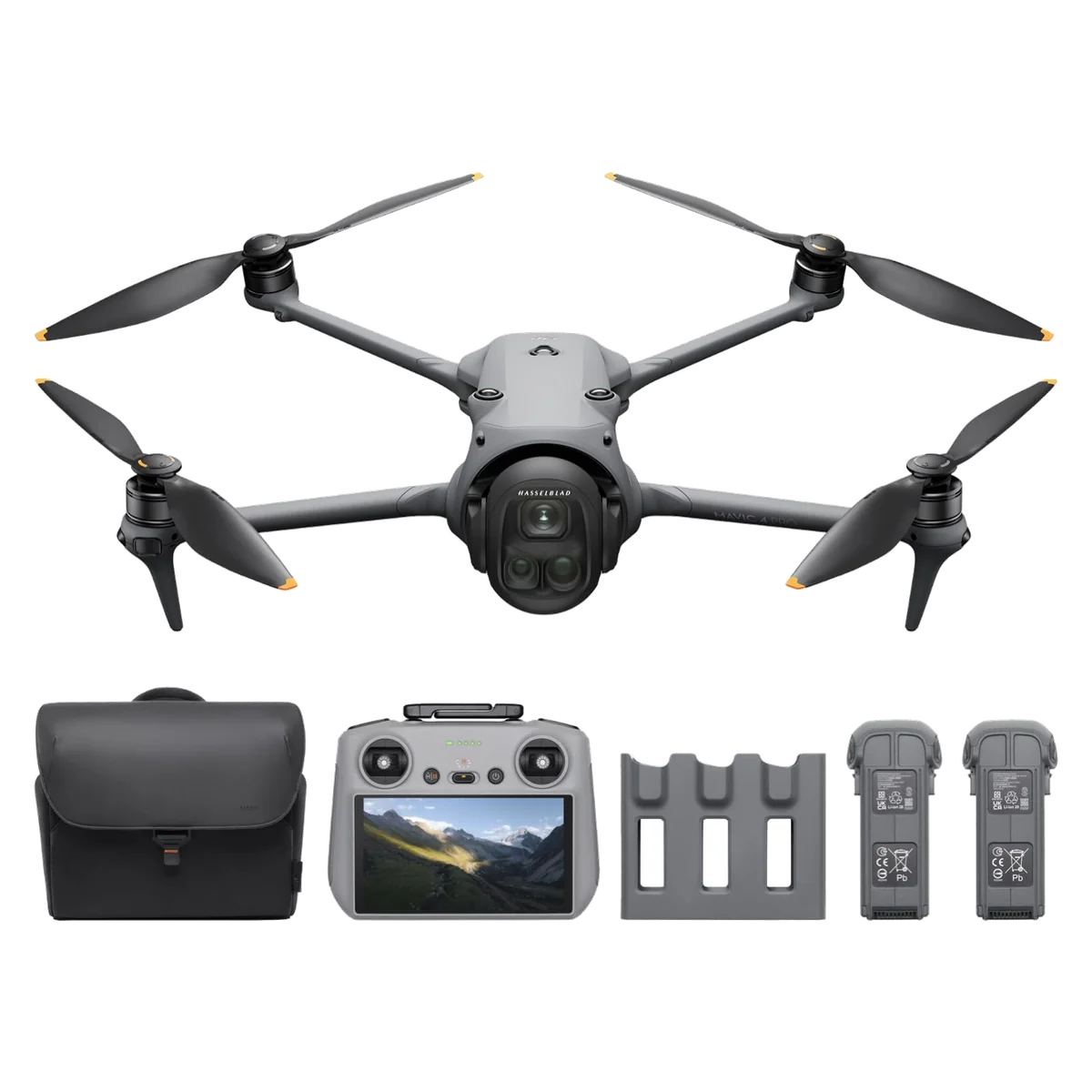
Based on our research, the DJI Mavic 4 Pro is our top pick — drone for professional video work.
Sources (6)
- Amazon listings and customer reviews
- Owner reports across r/dji threads
- Owner and reviewer video, 3 channels
- Digitalcameraworld — Article — www.digitalcameraworld.com
- Techradar — Article — www.techradar.com
- Pcmag — Article — www.pcmag.com