Buy the cheaper Mavic 4 Pro combo and add one charger, unless a contract asks for 4:2:2
Buy the Fly More Combo and put the difference towards the 240W adapter yourself, because the only thing in the Creator Combo you cannot add later is the 512GB aircraft and its ALL-I 4:2:2 codec, which is exactly why a filmmaker with that codec in a delivery spec should ignore this advice and buy the Creator box.
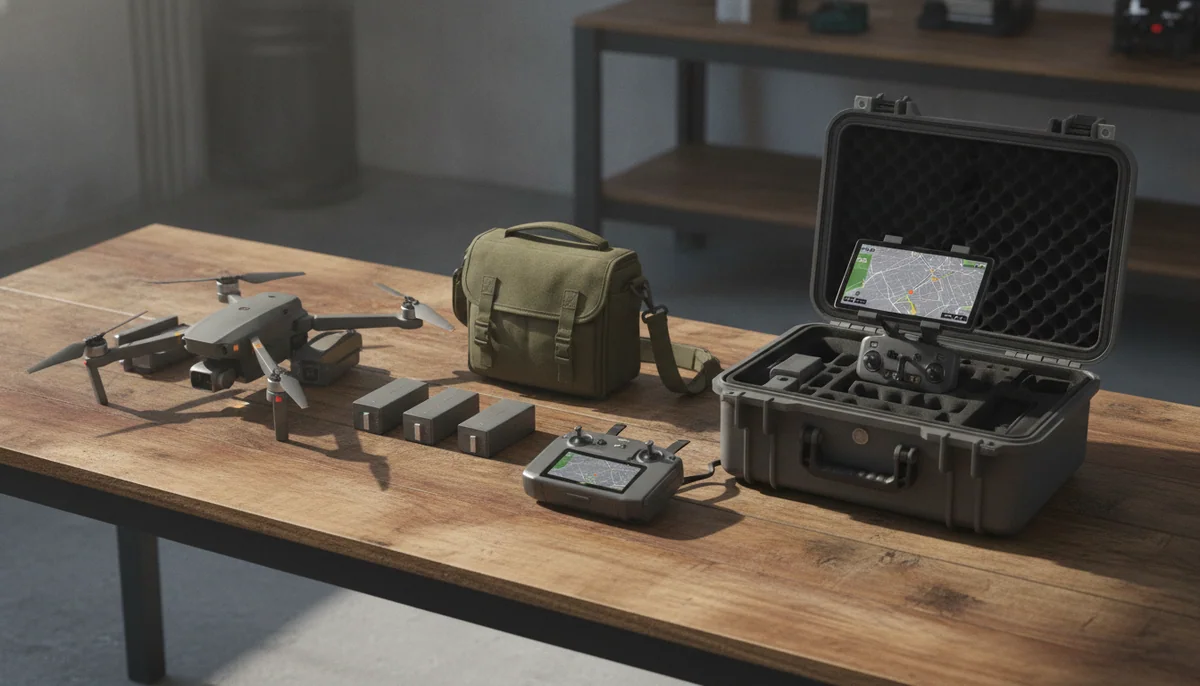
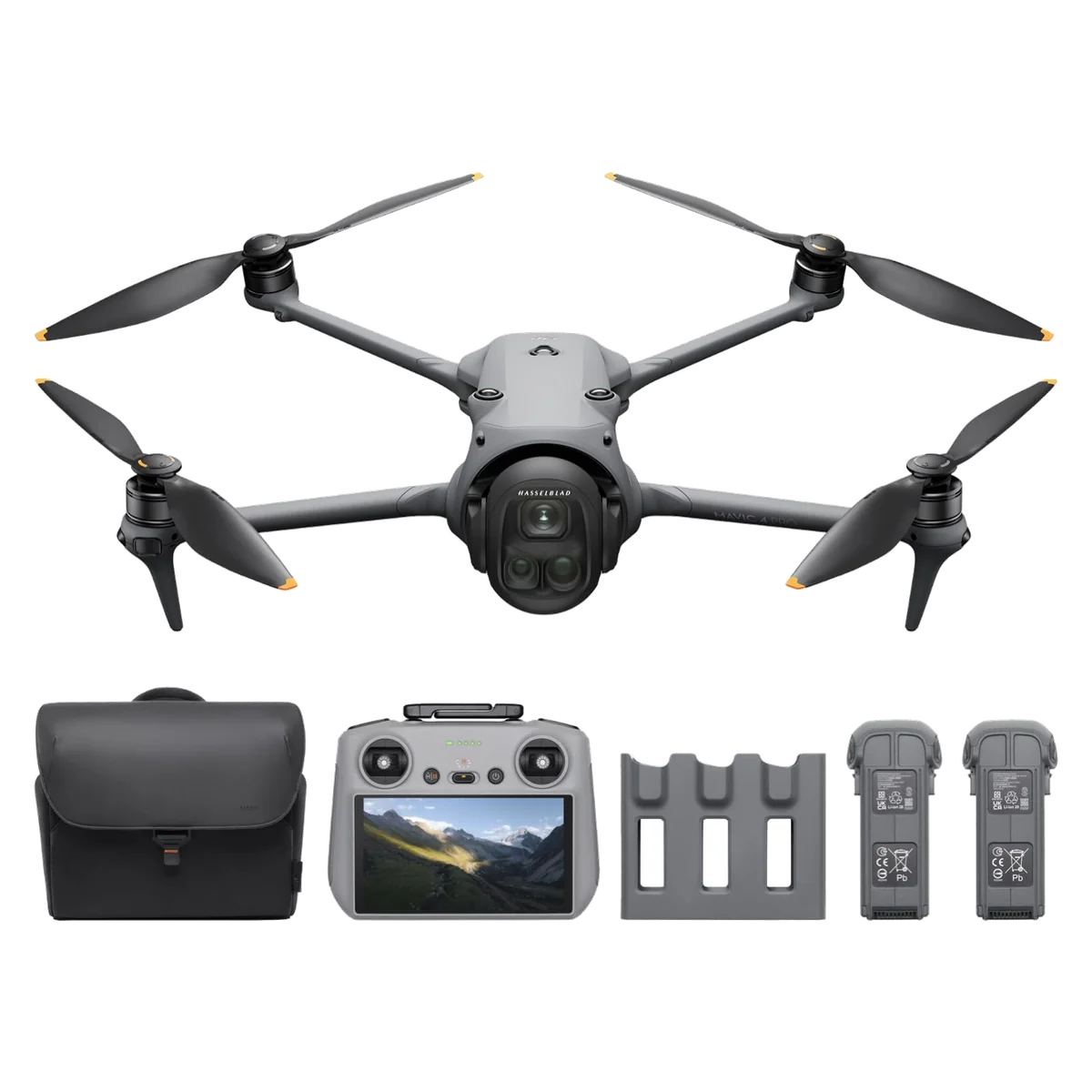
DJI Mavic 4 Pro
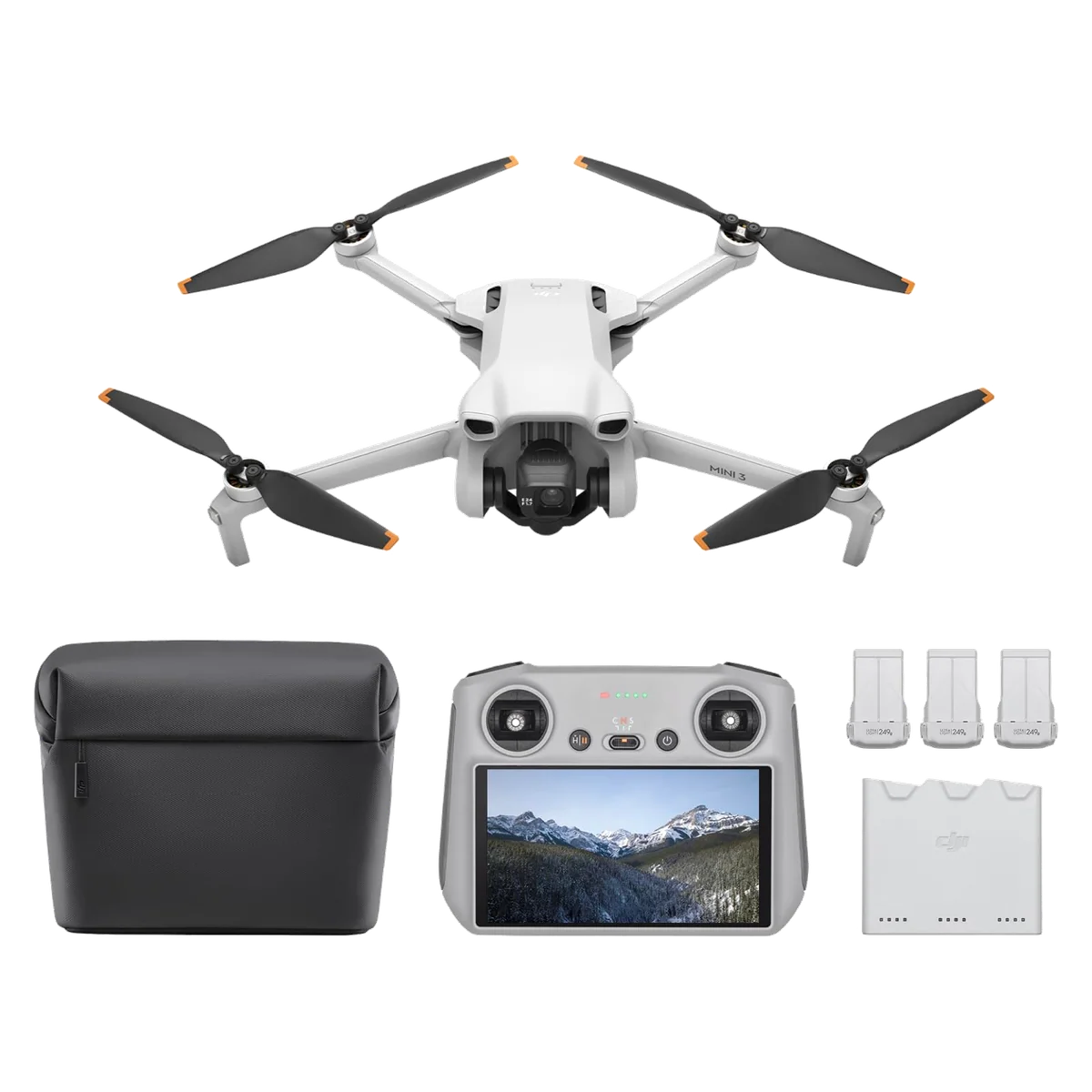
DJI Mini 3 Fly More Combo
DJI sells the Mavic 4 Pro in three boxes, and the clearest statement of what separates them is in its own listing description rather than in any of its bullets. The base kit is one battery, a 100W adapter and the RC 2. The Fly More Combo adds two more batteries and a charging hub. The 512GB Creator Combo swaps in the RC Pro 2, adds a 240W adapter and a parallel charging hub, and, critically, uses a different aircraft: one with 512GB inside it that supports ALL-I 4:2:2 encoding. So the step up from Fly More to Creator is four things sold as one decision, and they are not four things of equal weight.
The reason this comparison confuses people at all is the Fly More listing itself. Its seventh bullet sells a seven-inch rotatable high-brightness RC Pro 2 that collapses for carry, and its eighth bullet, along with its own title, says the box contains a DJI RC 2. Quadcopter Bench reads that as one bullet block pasted across all three variants with the wrong controller left standing in it, and the practical consequence is that anyone who builds their expectations from the feature list unboxes a controller they did not think they were buying. Our full review of the Fly More Combo goes through the rest of that listing's claims.
Before any of the differences, the concession that should frame the whole purchase. The owner who has produced the most thorough account of what the Creator Combo gives you opens it by saying the image quality is identical between versions unless you use the higher bitrate. For most buyers, both boxes produce the same footage. You are choosing the screen you look at it on, the speed you refill batteries at, and the file it lands in.
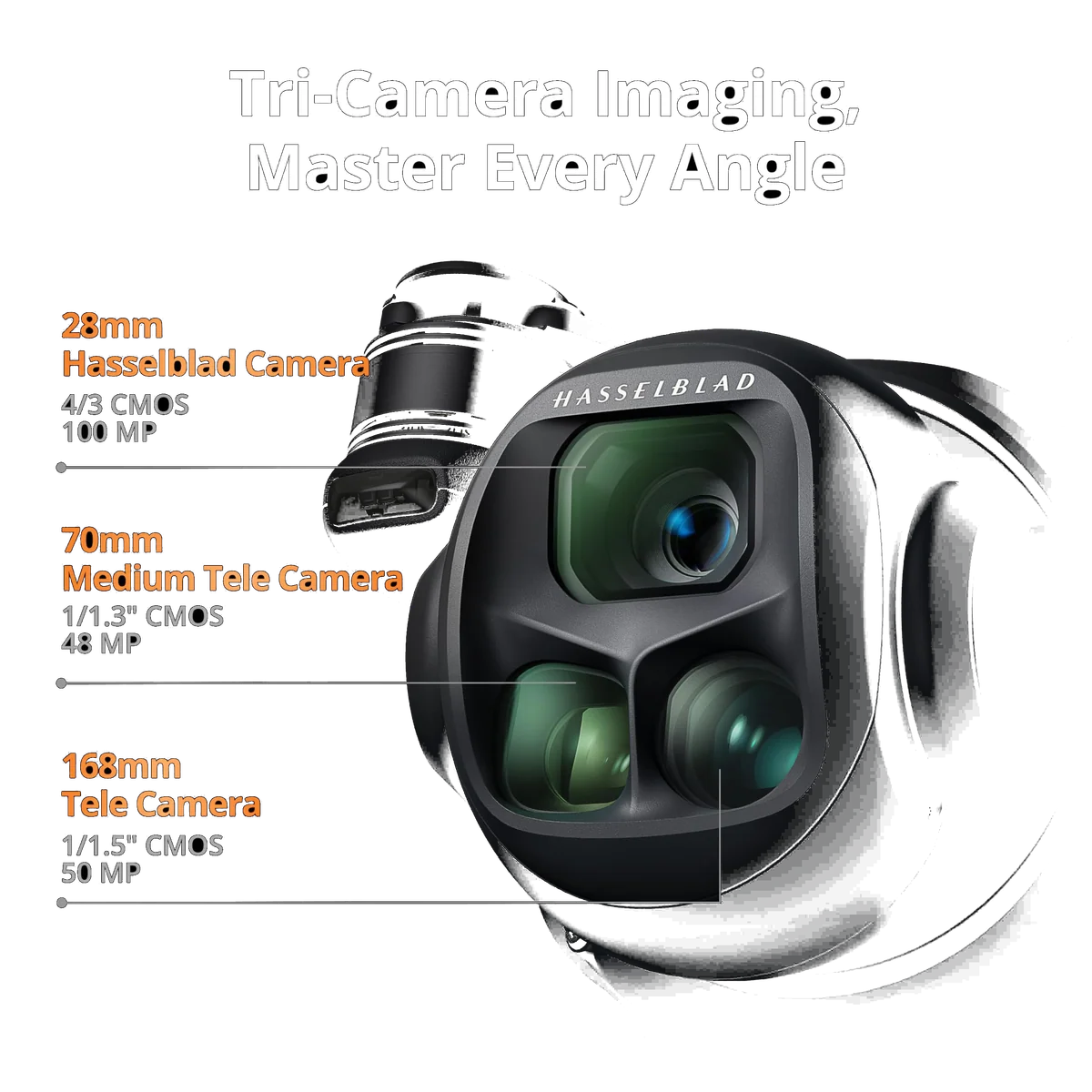
DJI Mavic 4 Pro
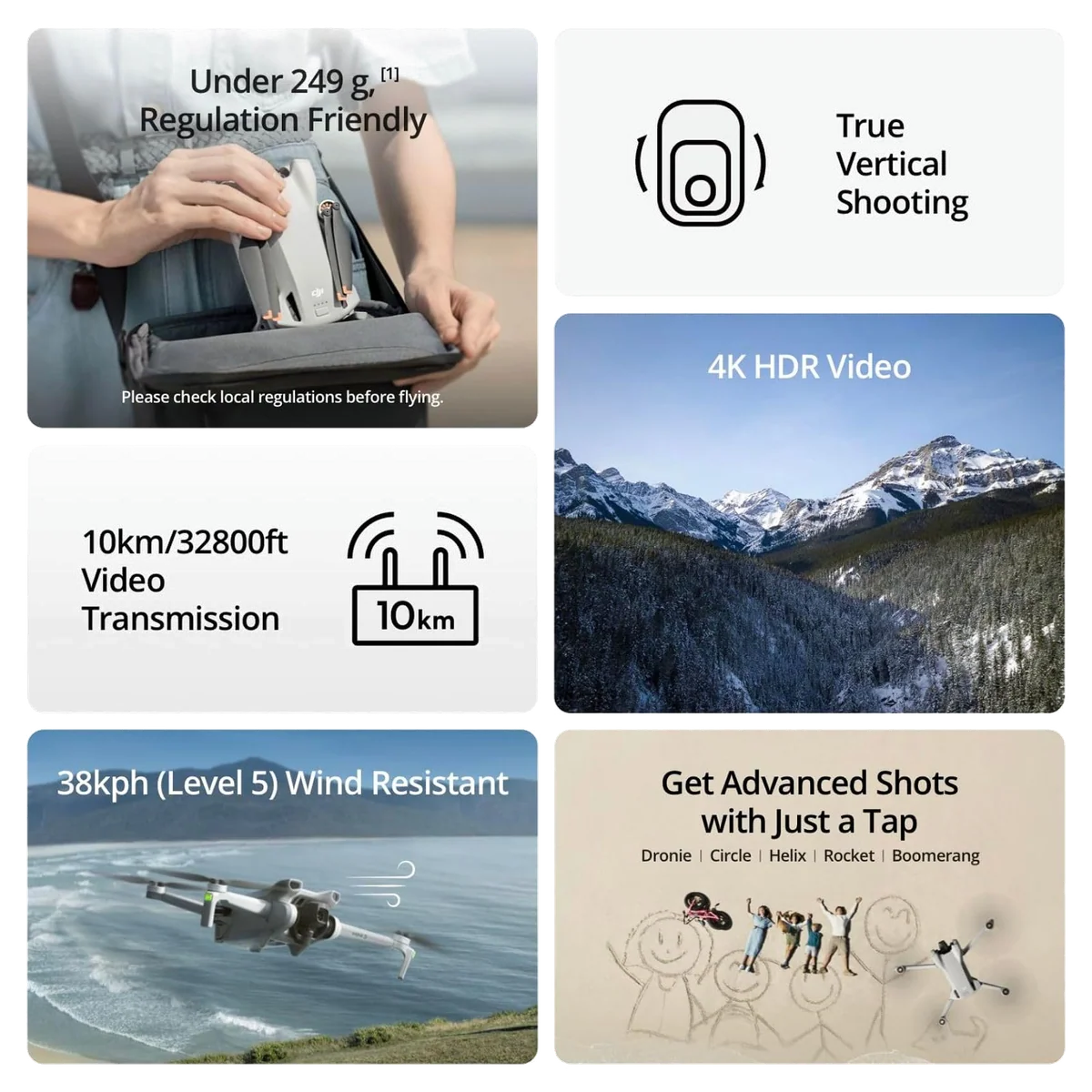
DJI Mini 3 Fly More Combo
At a Glance
| Feature | DJI Mavic 4 Pro | Editor's Pick DJI Mini 3 Fly More Combo |
|---|---|---|
| Price Range | Under $200 | $500–$1,000 |
| Finish | Gray | gray |
| Configuration | 7.25 | — |
| Check Price on Amazon | Check Price on Amazon |
Four differences, and only one of them is permanent
| What you get | Fly More Combo | 512GB Creator Combo | Add it later? |
|---|---|---|---|
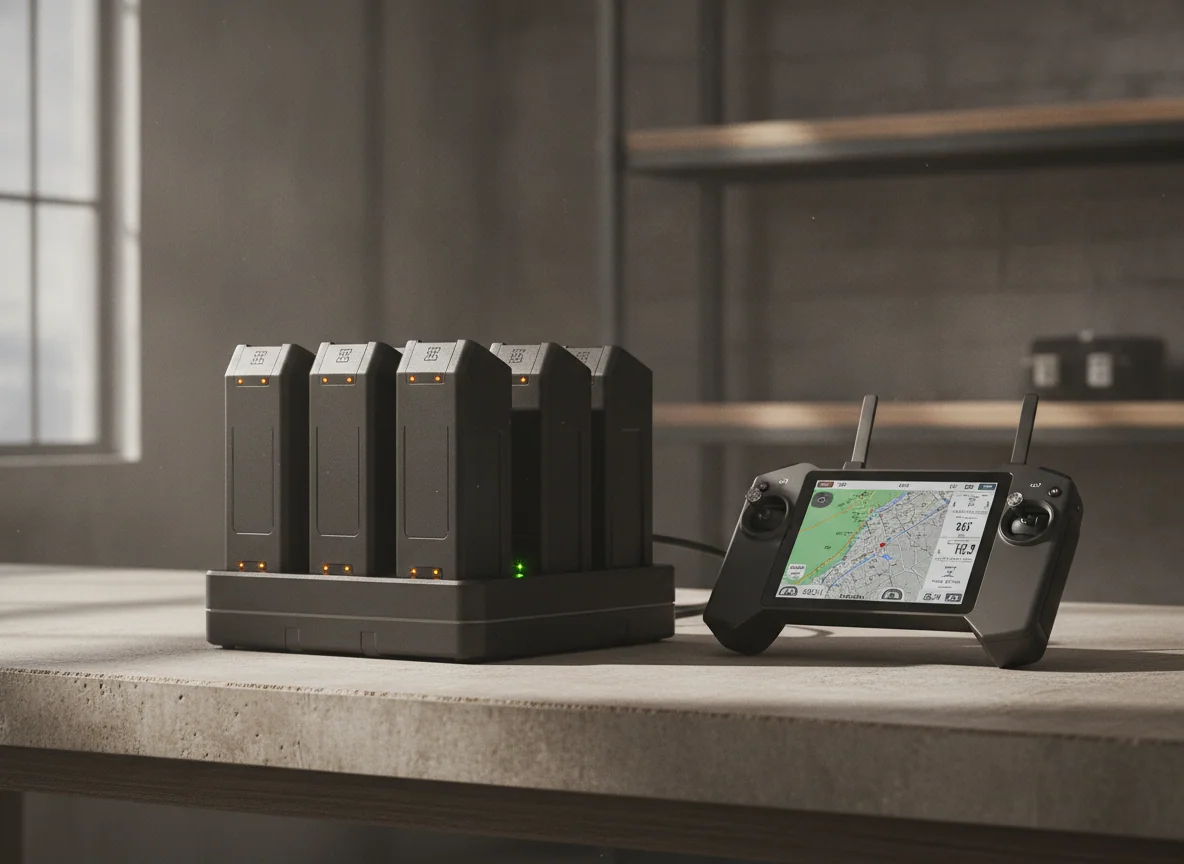
| Controller | DJI RC 2, 5.5in FHD, 700 nits | RC Pro 2, 7in Mini-LED, folding sticks, rotating screen | Only by buying a second controller outright |
| Batteries | Three | Three | No difference to close |
| Charging | Hub, 100W adapter, sequential | Parallel hub, 240W adapter | Yes, and cheaply |
| Aircraft storage | Not stated on the listing | 512GB internal | No |
| Codec | Standard encoding | ALL-I 4:2:2 | No |
| ND filters | None | None | Aftermarket, either way |
The controller is the visible half of the gap
Taken on its own terms the RC 2 is a competent piece of kit: a 5.5-inch Full HD touchscreen rated at 700 nits, 420 grams, the Fly app preinstalled so there is no phone to clamp on, and a rating of 4.7 across 855 ratings on its own listing, which is a far deeper evidence base than the drone itself has. The RC Pro 2, on DJI's own product pages, is a different class of object: seven inches of Mini-LED, folding sticks, a screen that rotates, a built-in microphone, four hours of battery and 128GB of storage. An owner who has flown behind both counts twelve differences, and the ones that change a working day are a faster processor, a brighter and larger screen, full-size HDMI out, and an elevated screen design that keeps your own hands out of the shot.
The complaints about the RC 2 on this aircraft are consistent enough to take seriously. One owner who chose the Fly More Combo on budget names a faster controller and a brighter screen as his two wishes and says the glare can get crazy, and another describes the RC 2 as slow and sluggish from his time using it on an Air 3S. None of that makes it unusable. It does mean that if you shoot in open sun and judge exposure off the screen, the seven-inch panel is the difference you will feel every single flight, not a spec-sheet flourish. If you are working out what else an RC 2 will and will not talk to, our guide to the RC 2 covers the rest of the lineup.
There is a transmission wrinkle worth knowing, because it lives in DJI's own numbers rather than in anyone's opinion. The Fly More listing advertises 30km on O4+, sitting in the same bullet run as the description of the controller that is not in the box. DJI's listing for the RC 2 sold separately states 20km on O4, measured outdoors with no interference, one way, no return leg. The owner with the twelve-point list says flatly that the Pro controller is the one carrying O4+ and the better signal. Quadcopter Bench found nothing that settles the exact figure for this aircraft paired with an RC 2, and it matters less than it looks, because on every drone ever sold the constraint you hit first is the battery you need to get home rather than the radio link: a tester running a smaller DJI machine turned back at around 4,500 metres out with four of five signal bars still lit. Treat both numbers as link budgets in clean air, and read how far a rated figure actually gets you before planning a shoot around either.
The charger is the half nobody notices until the third month
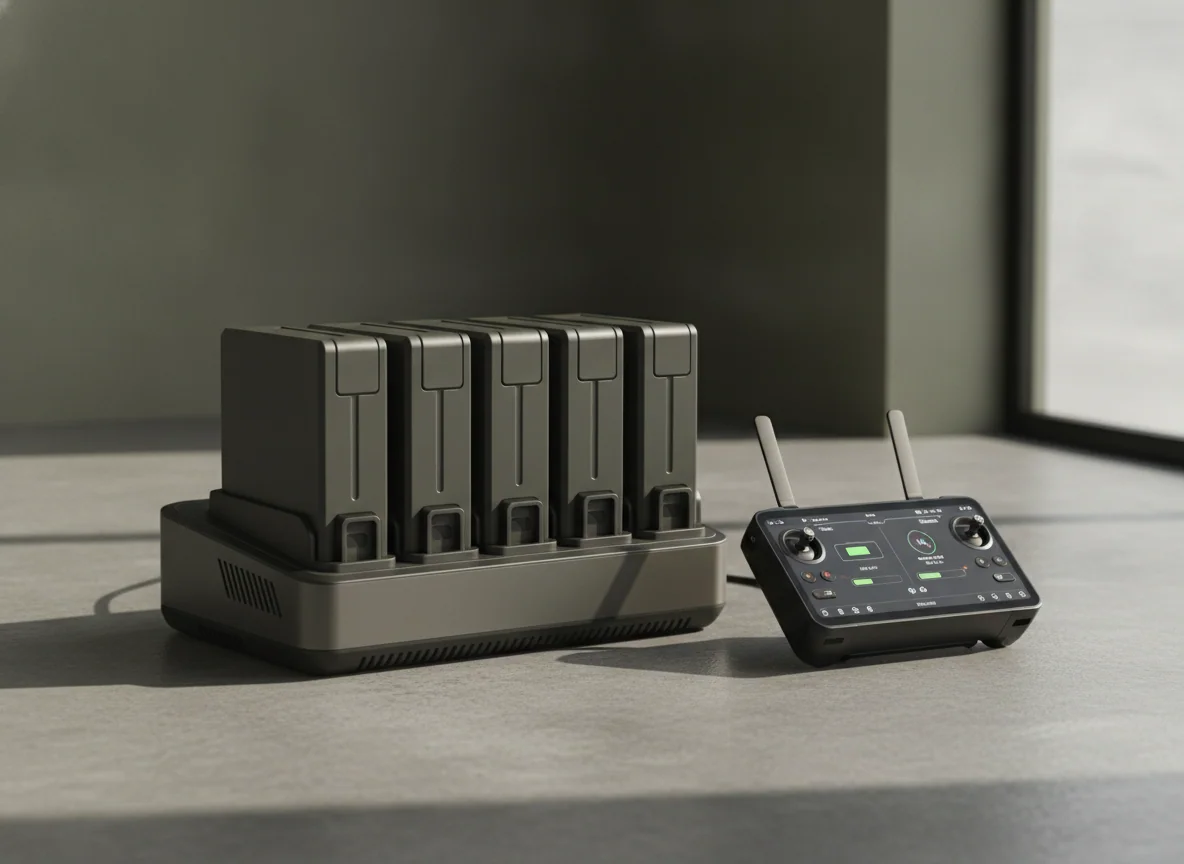
This is the sharpest practical finding in the whole comparison, and it is the one that saves real money. Someone who unboxed the Fly More Combo lists what is in it: a case larger than the Air 3S one, eight propellers, a hub with two batteries seated and a third in the aircraft, plug adapters for what feels like every country on earth, and a 100W brick with two outputs that share that hundred watts between them. Three batteries buy you a longer session, not a faster turnaround. Both combos ship a three-bay hub, but only the Creator Combo ships the adapter that fills the bays in parallel, so on the cheaper kit a full refill is an evening rather than a coffee break.
Owners have already solved this in public. One who bought the Fly More Combo because he cared about neither the internal storage nor the fancier controller flew it for months before landing on his single regret, which was the charger, then bought the 240W brick secondhand and now says he can almost completely fly nonstop, juicing two batteries while the third is in the air. A second owner in the same thread immediately asked him for the link, having skimped the same way. Buy that adapter and you have closed the charging half of the gap for a small fraction of the step between the two boxes, which reframes the whole question: the Creator premium is not buying you three things you cannot get, it is buying you a screen and a codec, with a charger thrown in that you could have sourced yourself. Our Fly More Combo explainer runs the same arithmetic across the rest of DJI's range.
The codec is the one you cannot fix with a credit card afterwards
The 512GB of internal storage and ALL-I 4:2:2 encoding are stated as Creator Combo properties in the listing's own description, and they belong to the aircraft rather than to the accessories around it. That is the whole reason this decision has a hard edge. An owner asked directly in the forums whether a Fly More aircraft could be upgraded to get those codecs, and nobody answered him. Nothing in the record suggests it can be, and no aftermarket purchase buys your way back.
So the test is not whether you would enjoy an all-intra codec. It is whether anyone will ever ask you for one in writing. If a broadcaster, an agency or a client spec sheet names 4:2:2, buy the Creator Combo and stop reading; the cheaper box will fail the deliverable and no accessory will rescue it. If your footage goes to a colour grade you control, or to a client who has never once asked what chroma subsampling you shot, the higher bitrate is a file-size problem you are paying extra to acquire. Our guide to drones for paid work sets this aircraft against the rest of the field for that kind of buyer.
What neither box fixes
It is worth saying plainly, because the Creator name invites the assumption that it is the better aircraft. Apart from storage and the codec, it is the same drone with the same faults. Neither box contains ND filters, on a machine whose main camera is built around controlling exposure. True vertical shooting is tilt-restricted on both, and an owner puts the ceiling at roughly ten to twenty degrees of downward tilt. The LiDAR that makes the night-flying claim work looks forward only, so on either kit you can reverse into something in the dark and lose the aircraft. And the ownership problem that dominates this drone's record applies identically to both: US buyers report that DJI Care Refresh is not available for it, and several have gone to third-party policies with contested results. Our piece on insuring a drone now that Care Refresh has gone is the honest state of that, and it is a cost you should price before you price a controller.
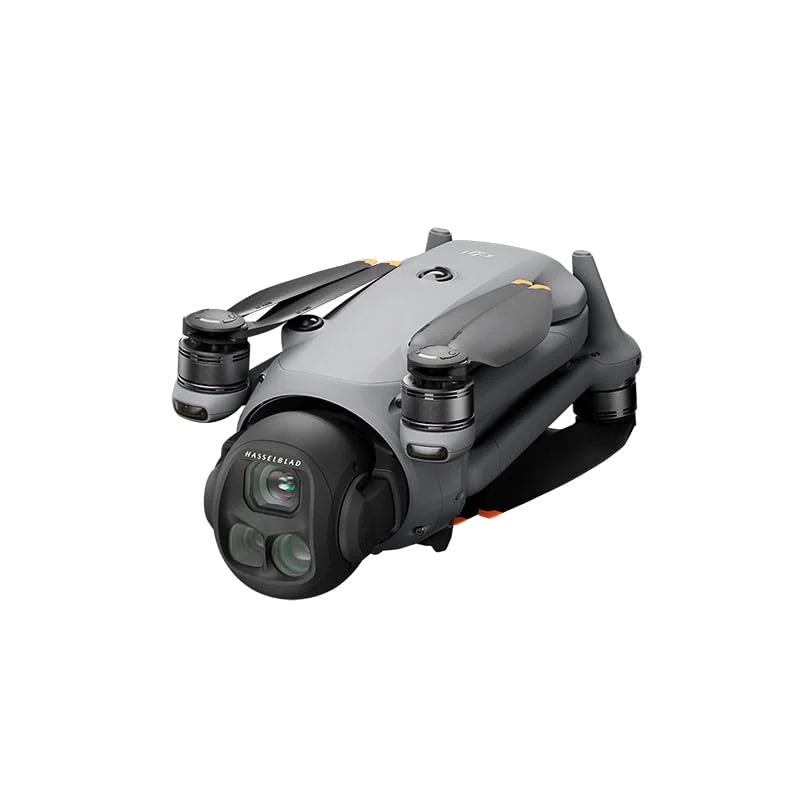
DJI Mavic 4 Pro
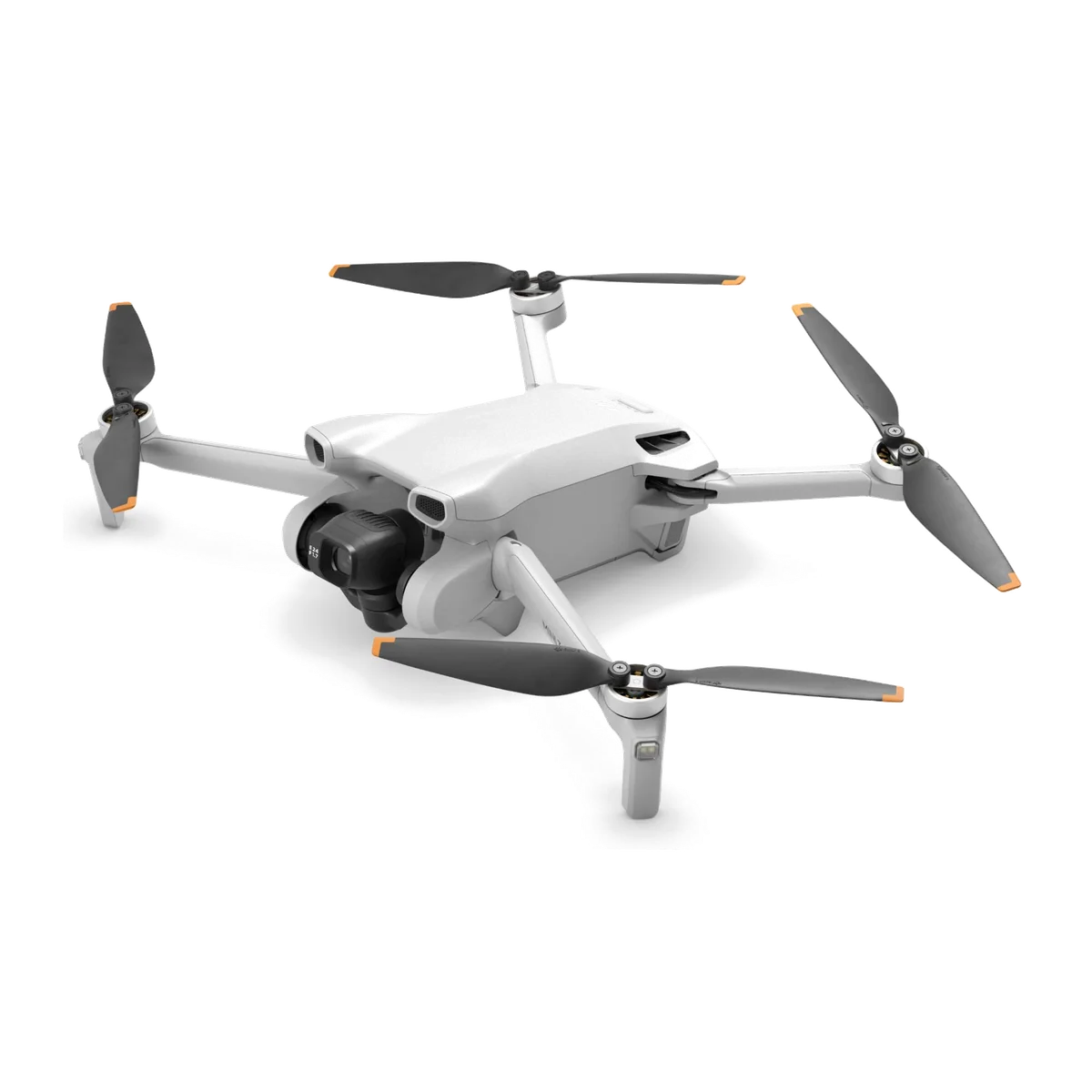
DJI Mini 3 Fly More Combo
Which box, for which person
Buy the Creator Combo if a paying deliverable names ALL-I 4:2:2, if you shoot long days in bright sun and judge exposure off the screen, or if offloading to a card in the field is a workflow you have already decided against. Those are three specific working conditions, and if you recognise yourself in any of them the extra outlay is not vanity.
Buy the Fly More Combo if you grade your own footage, if you can live with a 5.5-inch screen and a phone-free launch, and if you are willing to make one accessory purchase to fix the charging. That covers most buyers of this aircraft, including a good number who are shooting commercially: one owner doing paid work chose this exact non-Creator combo precisely because he did not need the storage or the bigger controller, and his verdict on the drone is that if it crashed tomorrow he would order another because it earns its cost back.
Walk away from both if this is a hobby. That is not a comment on either combo, it is the shape of the whole purchase: this aircraft costs more to lose than most people want to think about, and the honest alternative for a recreational flyer is the Air 3S, which the same owner names himself for exactly that reason. The Mavic 4 Pro against Air 3S comparison is the page to read if that sentence landed.
The box most buyers of this drone should actually take home
It flies the same aircraft, shoots the same picture and carries the same three batteries as the Creator kit, so unless a client names the codec you are paying the difference for a screen and a file format.
Its 100W adapter fills the three-bay hub one battery at a time, so budget for the 240W brick separately or accept that a full recharge takes an evening.
The spare radio, for a second pilot or a backup on the drones DJI names
Sold on its own it is the same 5.5-inch, 420-gram, app-preinstalled controller that ships in the Fly More box, and it holds a 4.7 rating across 855 ratings, a far deeper sample than the flagship it partners.
Buying this will not get you the Creator Combo's seven-inch RC Pro 2, and its own listing's compatibility line names the Flip, Mini 4 Pro, Air 3, Air 3S and Neo without mentioning the Mavic 4 Pro at all, so confirm the pairing before you buy it as a second radio for this aircraft.
Frequently Asked Questions
Which box actually has the seven-inch controller?
Only the 512GB Creator Combo, even though the Fly More listing's seventh bullet describes it.
Does the cheaper combo shoot a worse picture?
An owner who has used both says the image quality is identical unless you use the higher bitrate that only the Creator aircraft supports.
Can a Fly More aircraft be upgraded to 512GB and ALL-I 4:2:2 later?
Nothing in the record suggests it can, and the one owner who asked the question in public never got an answer.
Does the Fly More hub charge all three batteries at once?
Not with the adapter in the box, because the parallel hub and the 240W adapter are Creator Combo items and owners report buying the bigger brick separately to fix it.
Is the 30km transmission figure real on the RC 2?
DJI's own listing for the RC 2 sold separately states 20km on O4 in interference-free open air, and either way the battery you need to get home limits you long before the radio does.
Do either of them include ND filters?
No, and on a camera built around controlling exposure that is an aftermarket purchase whichever box you choose.
Is the Creator Combo a tougher or better-flying drone?
No, it is the same airframe with the same forward-only night sensing and the same restricted vertical tilt, differing only in storage, codec, controller and charger.
Ready to Choose?
Sources (5)
- Amazon listings and customer reviews — Dji Mavic 4 Pro and Dji Mini 3 Fly
- Owner reports across r/dji threads
- Owner and reviewer video, 2 channels
- DJI — Article — www.dji.com
- Firstquadcopter — Article — www.firstquadcopter.com