At the cheap end of the drone market you are not buying a drone, you are choosing which compromise you can live with
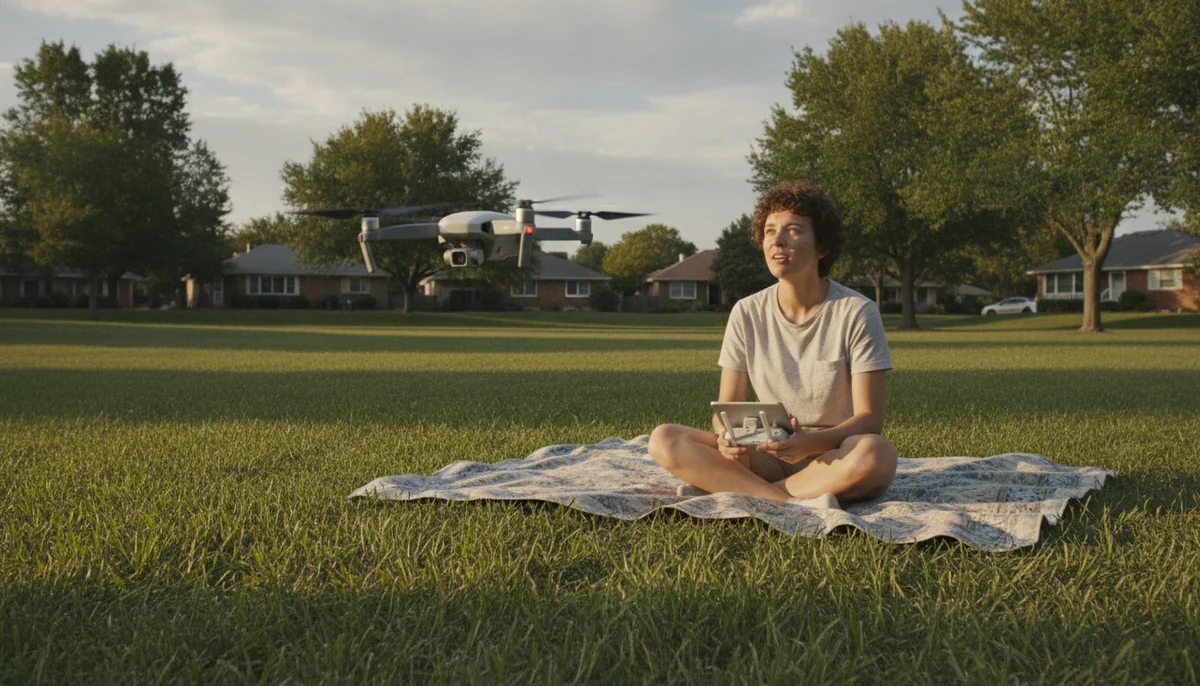
There is no drone at this end of the market that is good at everything, and any page telling you otherwise is reading the bullet points instead of the owners. What there is, down here, is a small set of honest trades. You can have a stabilised camera and almost no range. You can have GPS, return to home and a proper controller, and a camera bolted rigidly to the airframe. You can have a screen on the controller and a drone that does not want to leave your garden. What you cannot have, at any price below the line this page is drawn on, is all three at once.
So the useful work here is not ranking. It is naming the three claims that never survive contact with an open field, because all five of these products make at least one of them. The first is flight time: a headline number on a budget listing is almost always two batteries added together, and Holy Stone's own description quietly concedes that its 46 minutes is the combined maximum in ideal conditions. RELIDOL does the same arithmetic more brazenly, advertising 25 minutes on the bullet and then admitting 10 to 12 minutes per pack further down its own description. The second is range. karuisrc prints a 400 metre control distance, and the sharpest negative review on that listing is from an owner who says the real link was half of it and that the drone triggered its own return, flew into a tree and was written off. An HS175D range test topped out around 240 metres before the aircraft turned itself around, against a 500 metre maximum the app will happily let you dial in. The third is the resolution on the box, which describes a sensor rather than a result: two of the nine retained reviewers on the FAKJANK say the footage does not look like the 1080p they were sold.
Held against that, the Neo's pitch is unusually clean. It is 135 grams, it launches off your palm, it has 22GB of storage built in so there is no card to forget, and its 4K/30 comes off a mechanical gimbal doing the coarse work with electronic stabilisation finishing the job. Nobody sane would call that camera good in absolute terms, and one owner who bought it expecting a real 4K camera rated it one star for oversharpened, oversaturated footage. The Drone Girl, grading the same files against the money rather than against a Mavic, found them surprisingly sharp and smooth. Both readings are correct, and the one that applies to you depends entirely on whether anything better is going to sit in the same edit. What is not in dispute is that the Neo is the only aircraft on this page with a stabilisation system at all, and that is the whole ball game when the subject of your video is a moving world seen from a wobbling stick.
| Buy from this page if | Close the tab if |
|---|---|
| You want to be in the shot, walking or jogging, and the clip is going to a phone screen. | Anyone is paying you for the footage, because nothing here broadcasts Remote ID and that alone rules it out of US commercial flight. |
| You want to find out whether you actually enjoy flying before committing four figures to it. | You want landscapes, distance or anything shot in a stiff wind, which is a job for something in the sub-249g class a tier up. |
| You want a drone you can afford to break in the first month, which is the month you are statistically going to break one. | You expect obstacle sensing, because not one of these five has any, in any direction. |
If the right-hand column is where you live, stop here and read the camera drone roundup instead. If you are still with us, the rest of this page is what each of the five is actually for.
Quick Picks at a Glance
| Feature | Editor's Pick Holy Stone HS175D | DJI Neo |
|---|---|---|
| Price Range | Under $200 | Under $200 |
| Finish | Black | gray |
| Configuration | 10.83" x 8.27" x 2.48" | — |
| Check Price on Amazon | Check Price on Amazon |
The five, and the job each one is honestly good at
Three tiers are hiding inside this list. The Neo is a camera that flies. The HS175D and the karuisrc are GPS aircraft with cameras attached, which is a different animal: they hold a position, they know where home is, and they will come back to it. The RELIDOL and the FAKJANK are optical-flow machines with a screen on the controller, which means they hover well over a lawn and have no idea where they are the moment the wind takes them. Nothing about that third tier is dishonest in itself. The dishonesty is in listings that describe a yard toy in the vocabulary of an aircraft.
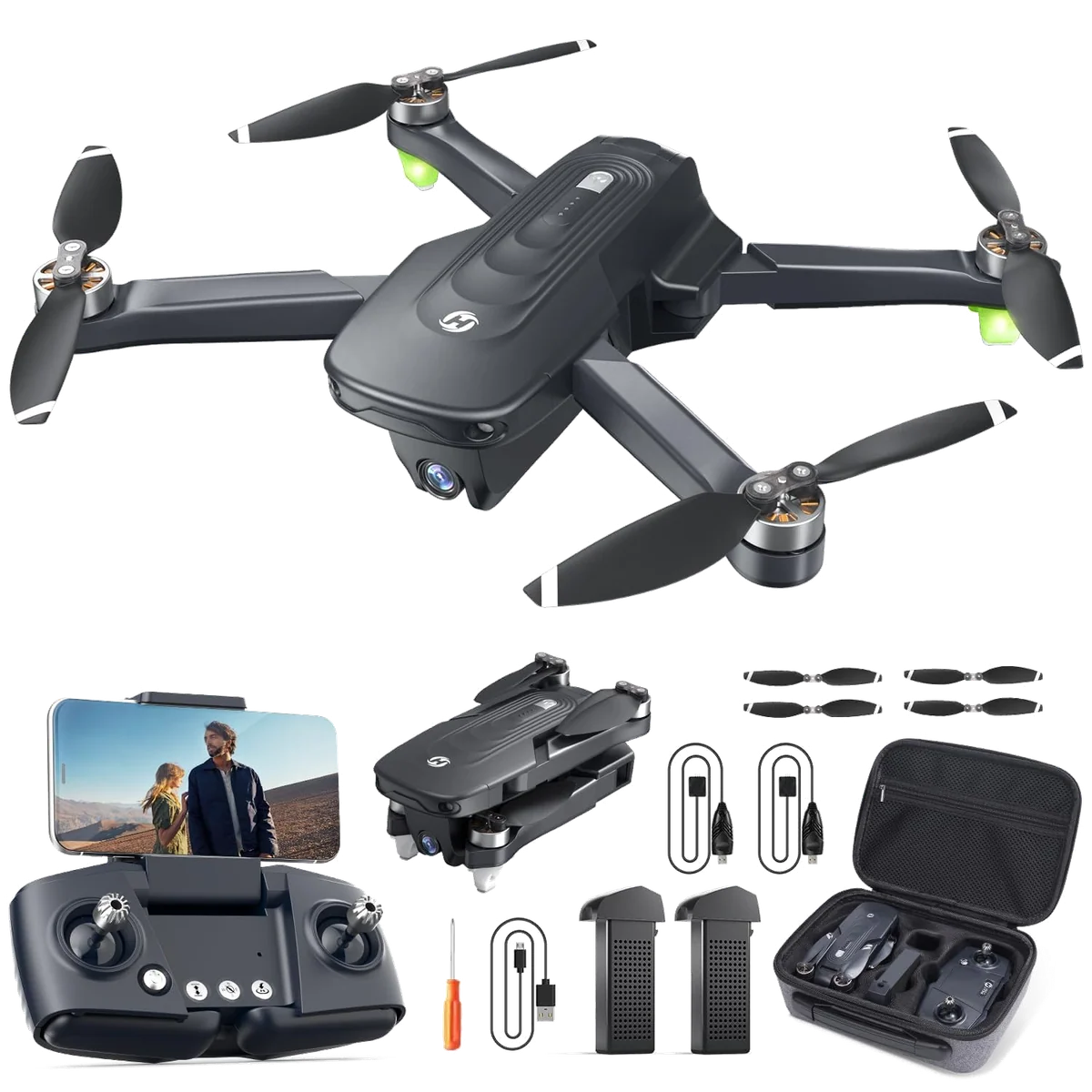
Holy Stone HS175D
This is the aircraft on the page with the deepest public record, and it reads well right up until the camera. It locks into a hover, it is quiet enough on brushless motors to fly beside your head, and its return to home is the claim that holds: one owner measured it landing within a foot of the launch point repeatedly in wind, and a flight test put it on the takeoff mark on video. Two batteries, a hard case, eight spare props and a screwdriver come in the box, which quietly changes the arithmetic against a bare airframe. Owners crash it into trees and keep flying it. The beginner mode fences it to a set distance and ceiling, which is the single most underrated feature at this price, and our full review works through the rest.
What you are giving up is everything downstream of the lens. Nothing damps the camera against the airframe, so the workaround owners converge on is to fly slowly, hover, then shoot; one of them learned to rotate the aircraft and wait two full seconds before pressing the shutter so the horizon does not tip. The stills are genuinely good, good enough that a buyer photographed an inaccessible roof with it after inspection quotes came back high. The video is a different product, and no setting in the app rescues it.
The trainer: buy it to learn on, not to film with
GPS hold, a fence you can set, a return to home that lands within a few metres on a fresh calibration, and a case full of spare parts make it the cheapest way to build real stick reflexes without dreading the first crash.
Nothing stabilises the camera against the airframe, so every stick input and every gust goes straight into the frame.
DJI Neo
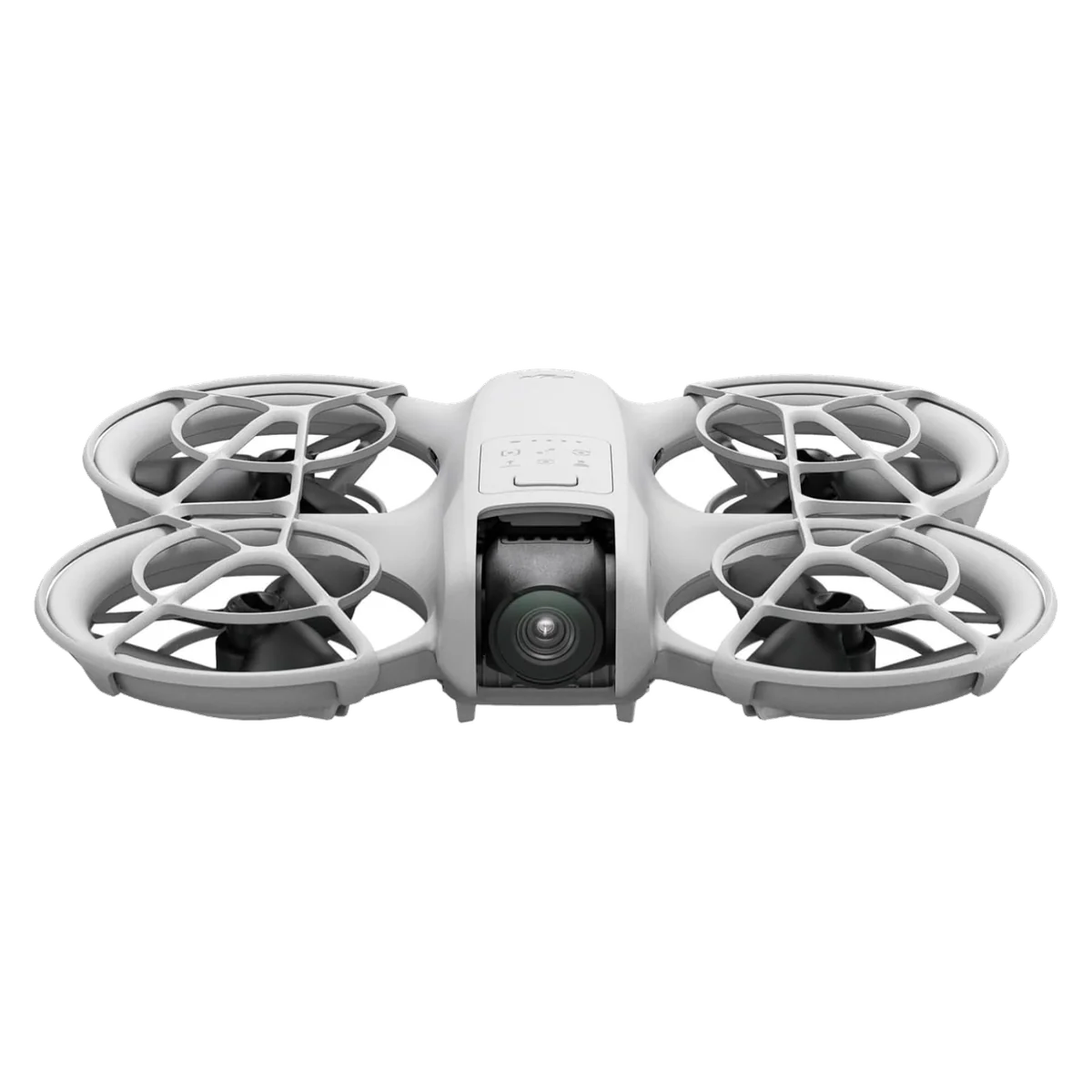
The Neo wins this page by refusing to be a drone in the way the others are. There is no controller to pair, no satellite lock to wait for and no case to unzip: you press a button on the body, hold it flat on your palm and it goes. Owners who already own better drones keep admitting, slightly sheepishly, that the Mini stays home and this is the one that gets carried, and one of them describes flying it into tree branches with no lasting damage thanks to the full propeller cage. Indoors and low down, its downward vision positioning holds a hover that embarrasses aircraft costing several times more. If tracking is the entire reason you are shopping, read the full review and then the follow-me shortlist, because the ceiling here is lower than the marketing suggests.
That ceiling is worth stating plainly. Follow is rated at 12 mph and works from behind, which covers a walk and a steady jog and rules out a bike at speed, a scooter and any vehicle. Real flight time lands nearer fourteen or fifteen minutes than the advertised eighteen, and one buyer who chained the automated shots burned eighty percent of a pack in six and a half minutes of recording. There is no vertical video mode on a drone sold explicitly for social clips, which remains the clearest case anywhere in this group of the marketing team and the engineering team not being in the same room. And DJI's own copy invites you to dive through tree branches without worry, which the hardware cannot support, because the cages protect the drone rather than prevent the collision.
The pick: the only one here whose video does not need an apology
Palm launch, a rock-steady hover from vision positioning, 22GB of storage that removes memory cards from your life, and a stabilised 4K/30 file make it the one drone at this price you will still be using in a year.
Flown the advertised way, from a phone with no controller, usable range collapses to roughly a city block and the link is the first thing that fails.
RELIDOL PK01
The PK01 is the most honest product on this page and the least ambitious, and those two facts are related. Its own listing tells first-time flyers to stay indoors, below six metres and inside thirty metres, which is a manufacturer describing its aircraft accurately. Owners land in the same place: crystal clear picture on the controller screen, about ten minutes a battery, roughly a hundred feet of range, easy enough that one buyer keeps it specifically as a practice machine and lands it FPV on his own porch. As a way to find out whether your teenager will still care about this in March, that is a real answer.
One report on that listing deserves more attention than its single star suggests. An owner describes the drone going unresponsive with the video feed still live and simply flying away, five times in fifteen sessions, each time chased down and knocked out of the air, with broken propellers to replace afterwards. Whatever the cause, there is no GPS and no return to home to catch it, and that is the structural difference between this tier and the one above.
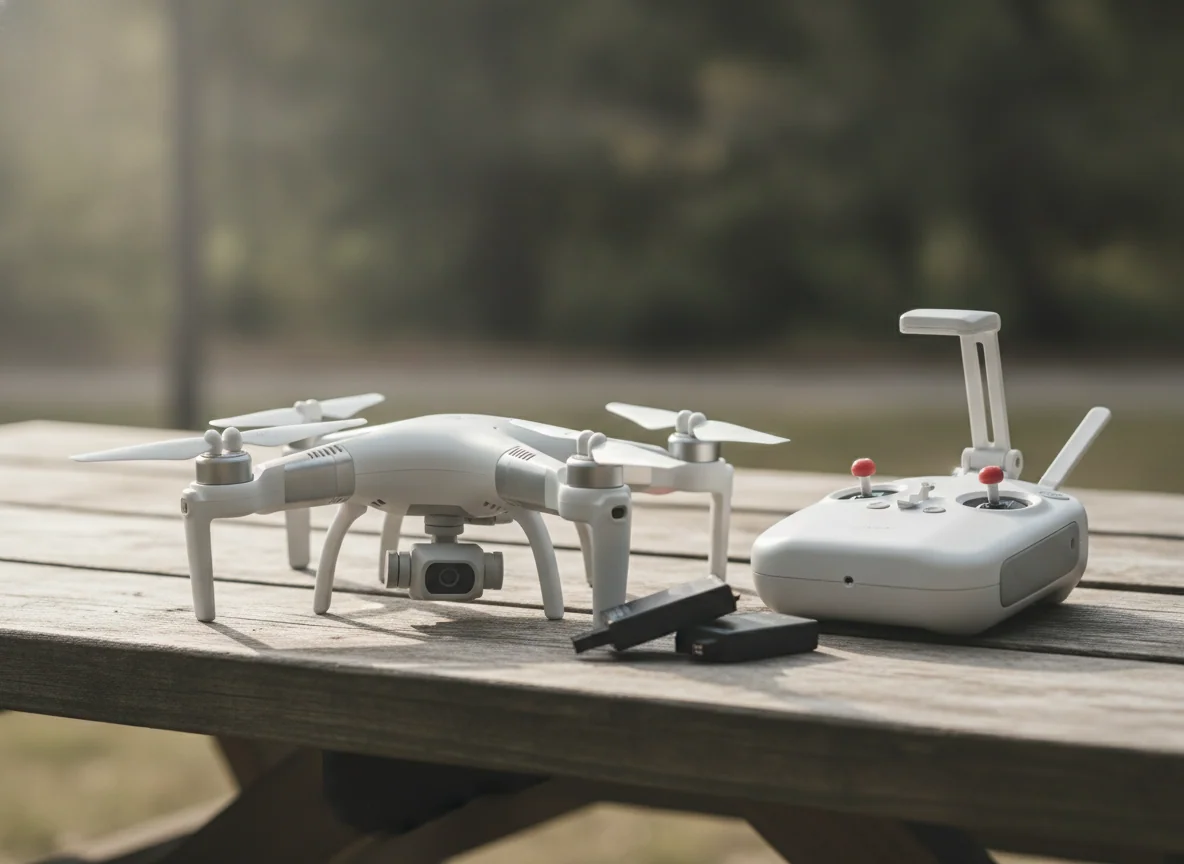
The garden machine: a screen on the controller and no pretence of range
It hovers steadily, the built-in screen means no phone to wrangle and no app to fight, and two packs give roughly ten minutes each of unambitious fun within sight of the house.
Owners put the real range near a hundred feet, and one describes it going unresponsive mid-flight and flying off with nothing aboard that could bring it back.
FAKJANK F417PRO
The F417PRO is the hardest product here to write about honestly, because its record is thin and lopsided. It folds, it comes with a case, it has a screen on the controller and it holds position with optical flow rather than GPS, which the listing is at least straightforward about. Most of the retained reviews are five stars and read like general enthusiasm rather than observation. The two that carry detail are the negative ones, and they point at the same thing from different angles: the picture does not look like the number on the box, and one buyer reports it flying too fast at its lowest speed setting, crashing repeatedly, then spinning its blades without lifting off on a fully charged pack.
Quadcopter Bench will not pretend to know from that record whether those are two bad units or a pattern. What we will say is that nothing in this listing does a job the other four do not do better, and that a drone without GPS is a drone you can lose to one gust.
The gift-shaped one, for a first flight in a park and not much beyond it
It folds into its own case, hovers on optical flow without an app in the way, and gives a beginner a live view on the controller for a first afternoon in an open field.
Reviewers dispute that the footage is really 1080p, and one reports it lifting off uncontrollably at the lowest speed setting before refusing to take off at all on a charged battery.
karuisrc GPS drone
On paper this is the most interesting listing on the page, because it is the only one that combines GPS and a home point with a 4.5 inch screen in the controller, which means a beginner gets both safety nets without ever touching an app. The best owner account describes exactly the experience that combination promises: smooth flight, following, a path flown from waypoints, and the drone landing itself on its takeoff point as the battery ran down. Another calls the build quality good and the compact size guilt-free to pack.
Then the other half of the record arrives, and it is all documentation. One buyer returned it because the instructions were largely not in English and it was too complicated to learn. Another lost the aircraft on its third outing when it stopped answering the throttle, and his complaint is not that it failed but that nothing in the box told him how to trigger the return home. A third puts the connection range at half the advertised figure. A GPS drone with a manual nobody can follow gives you the hardware of a safety net and none of the reflexes, and if you buy this one, budget an evening with the app before the first flight rather than after the first scare.
The one that pairs a home point with a screen, if you can decode the manual
GPS positioning, auto return and a 4.5 inch display built into the controller give a beginner a home point and a live feed without an app, which no other listing at this price manages together.
The documentation defeats people, with owners describing directions that never explain how to trigger the return home and one returning the drone unflown because the instructions were mostly not in English.
How Quadcopter Bench chose these five
Nobody here has flown any of these drones. Nobody has put a scale under one, timed a battery, measured a range or crashed one, and this page makes no claim otherwise. What it does is read the whole public record for each aircraft and decide what stands up: the manufacturer's own listing and description, the customer reviews on that listing, and, where they exist, independent flight tests by people who did fly the thing.
Those records are not equal, and it would be dishonest to pretend they are. The HS175D and the Neo have deep ones, including video reviews, range tests and years of community threads, which is why each has its own review on this site and why this page can be specific about them. The RELIDOL, the FAKJANK and the karuisrc have thin ones: a listing, a few hundred ratings and a handful of retained reviews apiece. Where the record is thin, this page says less rather than inventing more, and it will not extrapolate a pattern from two unhappy buyers any more than it will accept a wall of five-star enthusiasm as evidence of image quality.
Two rules of thumb ran through the whole read. Claims about a specific drone come from sources about that drone, and anything brand-level, such as Holy Stone's battery record, is labelled as brand-level in the text. And where sources genuinely disagree, as they do on the Neo's camera, the disagreement is shown rather than resolved into whichever answer made the page tidier. How we work generally is on the about page.
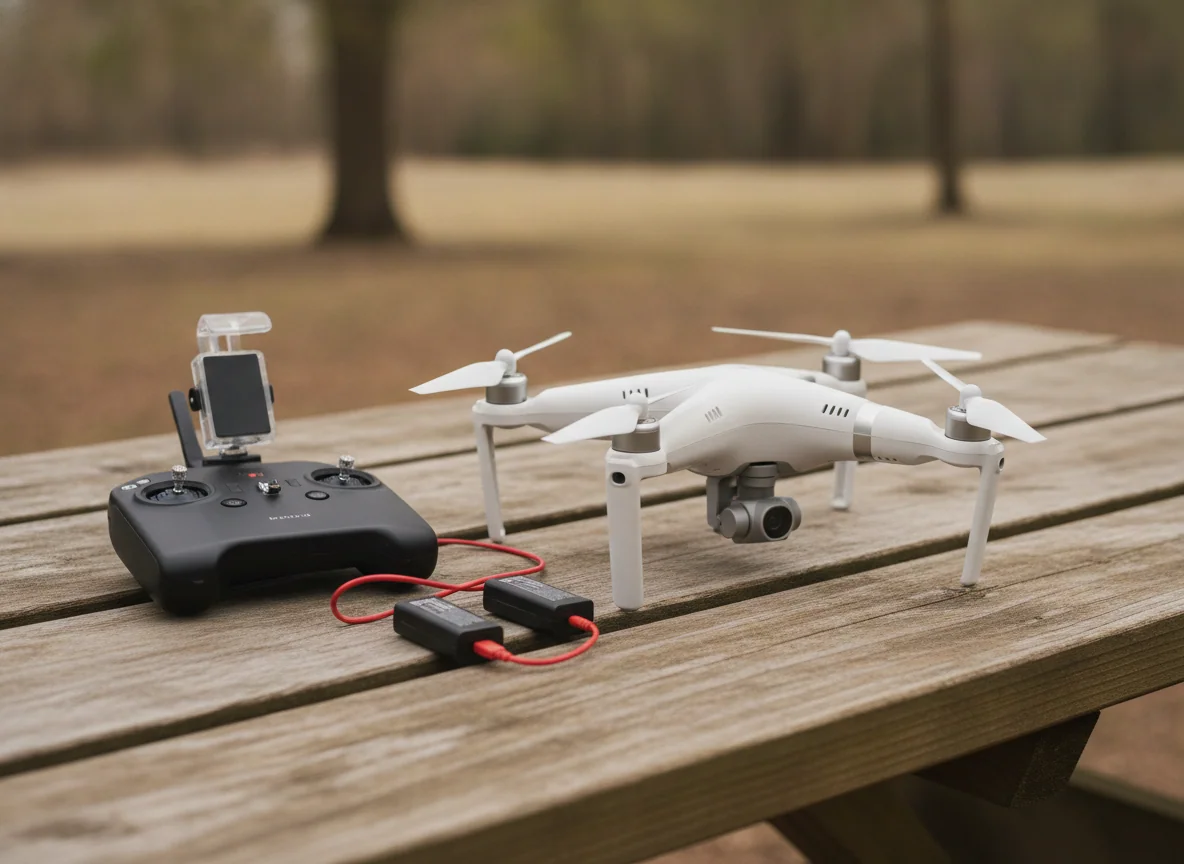
Four things that decide whether you keep it or return it
Stabilisation beats resolution, every time
The number buyers shop on is the resolution, and it is the least predictive spec on the listing. A 4K file from an unstabilised mount is a 4K record of your own thumb movements. This is why the Neo's mediocre sensor produces watchable clips and the HS175D's better-regarded stills sit alongside video that lurches, and it is why the difference between a gimbal and electronic stabilisation is the single most useful thing to understand before you spend anything. One further trap worth naming: judge output from the memory card, not from the live feed, because the picture on your phone or on the controller screen is a compressed preview and people return drones over image quality they only ever saw through the FPV window.
Range is set by the radio, not by the settings screen
Every drone here sends its picture over Wi-Fi or something close to it, and that one architectural fact explains the whole cluster of complaints around this price band: the modest distances, the freezing feed, the way a hedge between you and the aircraft can end the connection. The gap that catches people is between what the software permits and what the link supports, and the software is always more optimistic. There is a mitigating point, though it is not a defence of the marketing: flying legally in the US you must keep the aircraft in unaided visual line of sight anyway, and a drone this small vanishes against a bright sky well before the radio gives out.
GPS is the difference between a crash and a loss
None of these five has obstacle sensing, so a tree is your responsibility on all of them, and what those systems actually catch is narrower than most buyers assume even when they are fitted. What GPS buys you is different: a position hold that does not drift, and an aircraft that knows where it took off from. Between the HS175D, the karuisrc and the Neo's vision positioning on one side, and the two optical-flow drones on the other, that is the line between an incident you walk over and pick up, and an incident that ends with you scanning a treeline. If wind is a regular feature of where you fly, how much a lightweight airframe can take is the other half of that question.
Paperwork, and the batteries nobody thinks about
Weight is the one place this whole category does you a favour. Flying recreationally in the US, these sit under the 249 gram registration threshold, though the free TRUST knowledge test still applies to every recreational pilot regardless of what their drone weighs, and none of these listings mentions it; the rules are worth twenty minutes before your first flight. The moment money changes hands the calculus inverts, because Remote ID is required for commercial work and nothing here broadcasts it.
Batteries are the failure most likely to reach you, and the one nobody plans for. Across Holy Stone's wider range, owners report packs dropping from twenty minutes to ten inside a month, gauges that do not match the charge in the cell, and packs found swollen after storage with almost no use. That is a brand-level pattern rather than an HS175D-specific defect, and it generalises to this whole tier, where cells are the cheapest component in the box. The practical instruction is the same whichever of these you buy: cycle every battery properly inside the retailer's return window rather than leaving the spare sealed in the case until spring, because a dead pack found in week two is a return and one found in month six is a negotiation.
If you can stretch past this page
The honest comparison this bracket keeps losing is the one against the tier immediately above. The Potensic ATOM SE puts electronic stabilisation behind its 4K and is close enough in money to be a real question, which is why we ran the two head to head. The DJI Mini 4K is the aircraft the sceptics are usually pointing at when they tell you to save up, and it brings a three-axis gimbal, a proper transmission system and endurance that none of the five here approach. Neither is on this page because neither belongs under this line, and if either is inside your budget after all, our beginner shortlist is the better starting point. If the pull is toward the brand rather than the model, how Potensic really compares to DJI and whether Holy Stone is worth buying into both take longer runs at it.
Frequently Asked Questions
Is there a drone at this price that will actually follow you?
The DJI Neo will, from behind, at up to around 12 mph, which covers a walk and a steady jog and not a bike, a scooter or a hard change of direction.
Why does no cheap drone fly for as long as the box says?
Because the headline figure is usually every supplied battery added together in ideal conditions, and low-battery return to home fires before any of them is empty, which is the pattern our flight time explainer takes apart in detail.
Do you need to register a drone this size?
Not for recreational flying in the US at these weights, though the free TRUST test still applies to every recreational pilot and commercial work needs Remote ID that none of these aircraft broadcasts, which the registration guide covers properly.
Is a screen built into the controller better than using your phone?
It is genuinely more convenient, because there is no app to sideload, no Wi-Fi network to join by hand and no airplane mode to sit in for the whole flight, but the screen changes nothing about how far the radio reaches, which is the point the controller question keeps coming back to.
Does anything at this price have obstacle avoidance?
No, and the downward sensors some of these carry are vision positioning for hovering rather than collision sensing, so a tree is entirely your problem on all five.
Is it worth buying a cheap drone to practise on before a DJI?
It is, and the strongest version of that argument comes from people who own both, who point out that the reckless flying happens on the throwaway aircraft and the careful flying starts the day you spend real money, which our piece on learning without wrecking anything works through.
Is Holy Stone a brand worth buying into?
For a first GPS drone it is defensible on durability, on what comes in the box and on a support department that tends to send replacements, which is the fuller case the brand piece makes.
Can you still buy and fly a DJI drone in the US?
Models already authorised remain legal to buy and fly while newly released ones are the ones blocked from approval, and the ban explainer tracks where that currently stands.
Why will the motors not start on a new drone?
On most of these it is the arming gesture rather than a fault, with both sticks pulled down and inward on a level surface after calibration, and on the Holy Stone specifically there is a connection and calibration sequence that has to be completed in order first.
Our Top Pick
The Holy Stone HS175D is our #1 recommendation — beginner drones.
Check Price on Amazon: Holy Stone HS175DSources (3)
- Amazon listings and customer reviews
- Owner and reviewer video, 3 channels
- Thedronegirl — Article — www.thedronegirl.com