Every wind rating on a small drone is a survival figure, not a working one
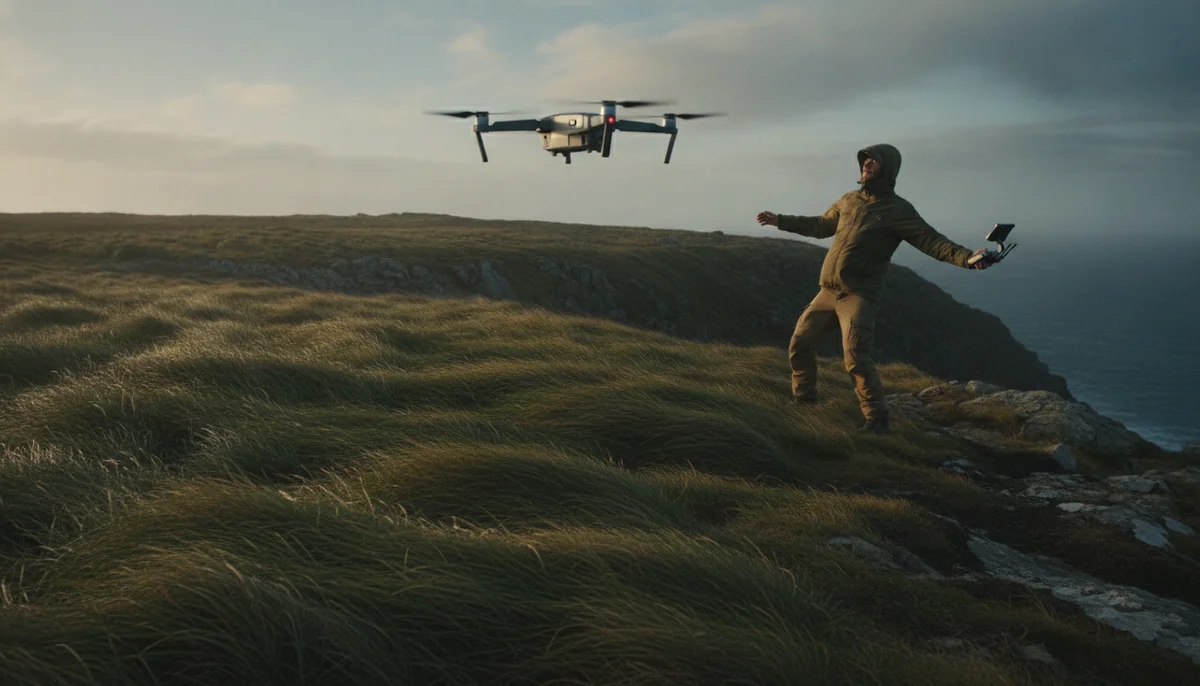
Start with a thing nobody points out. Quadcopter Bench read the Amazon listings for all four of the drones on this page, and not one of them mentions wind anywhere in its bullet points. The Neo 2 sells palm takeoff, gesture control and omnidirectional sensing across eight bullets. The Flip sells carbon-fibre guards, a 1/1.3-inch sensor and 31 minutes of flight. The Atom 2 sells 8K photo, 10km transmission and a 5.5-inch touchscreen. The Mavic 4 Pro sells 100 megapixels, three cameras and 51 minutes in the air. The wind figures exist, but they live in the specification tables you have to go looking for, and the reason is not a mystery: wind resistance is the one specification that gets worse as every other specification on a small drone gets better.
When you do find the number, it is usually the same one. DJI publishes a maximum wind speed resistance for each consumer model, and for the Flip that figure is 10.7 m/s, roughly 24mph. That is not an engineering result. It is the top of force 5 on the Beaufort scale, a bracket that arrives on the ground as small trees swaying and whitecaps forming on inland water. What it certifies is that the aircraft can still hold itself up and get home in those conditions. It says nothing whatsoever about whether you will come back with a shot.
So the practical answer to the question in the headline is: less than the box implies, and it depends far more on how you are flying than on which of these you bought. If your local weather is reliably still in the early morning, all four of these work and the wind question is a non-issue. If you fly on a coast, on a ridge, or in the middle of an ordinary breezy afternoon, three of the four are going to disappoint you, and the fourth costs several times as much and brings its own problems.
The gimbal is why you do not notice until it is too late
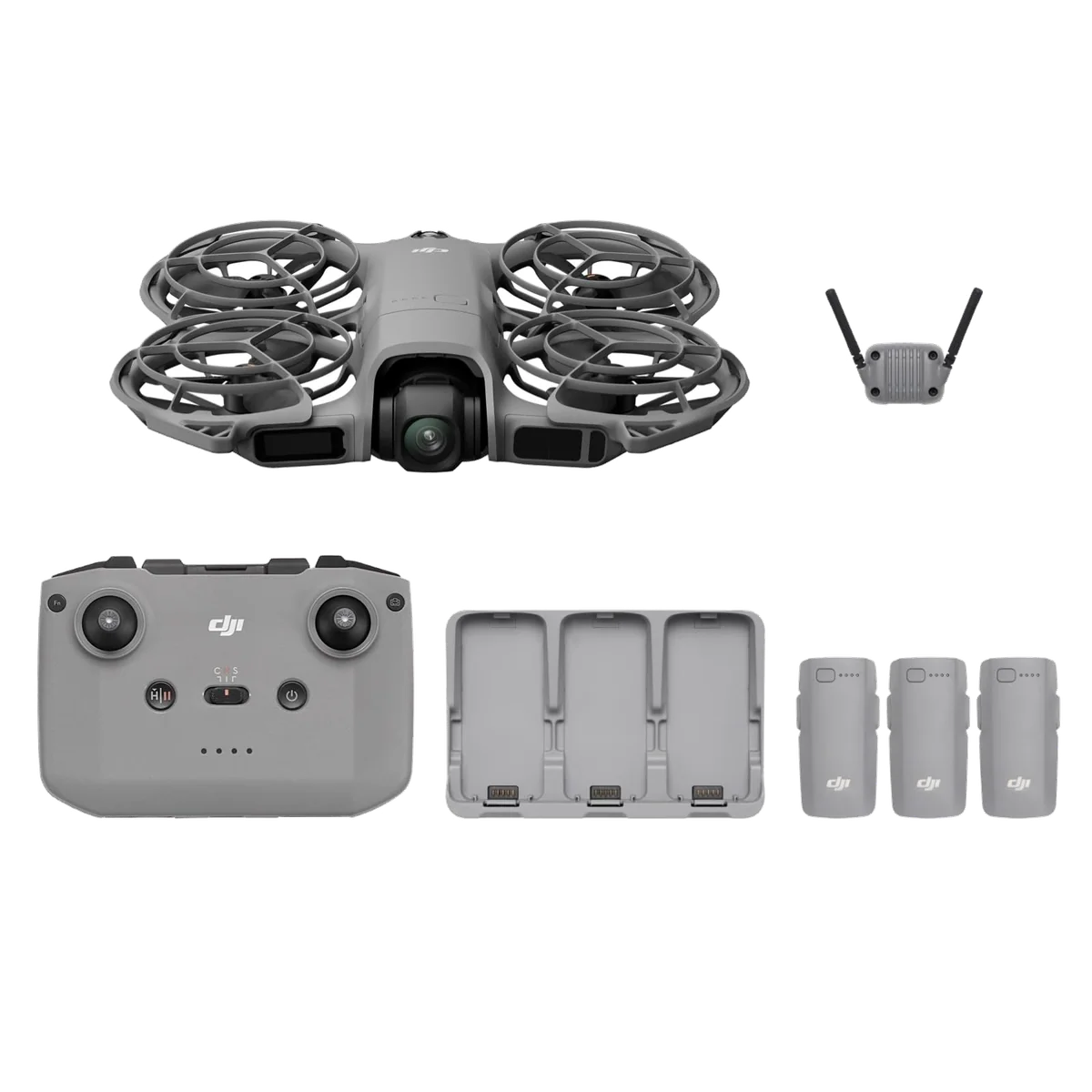
Here is the mechanism that makes light-drone wind genuinely dangerous rather than merely annoying, and it is the single most useful thing on this page. A three-axis mechanical gimbal is very good at its job. It isolates the camera from what the airframe is doing, which means the aircraft can be tilted hard into a headwind, burning current, drifting backwards, and the picture on your controller will be level, smooth and entirely calm. The stabilisation is not lying to you exactly, but it is answering a different question from the one you need answered.
An owner of the Flip gave it four stars purely to make this point, and it is worth taking seriously precisely because he liked everything else: in wind the aircraft cannot stay up for long and begins to struggle to hold control, and while all that is happening the video quality remains good and the only symptom you get is warning messages telling you the conditions are unsuitable. A reviewer flying the same aircraft in roughly 20mph reports the same wall from the other side, with the drone still holding station but refusing its cleverer flight modes outright and posting return-to-home warnings. That is your instrument. Not the picture, the warnings, and the warnings arrive well below the published rating.
The corollary is that the difference between a mechanical gimbal and electronic stabilisation does not change your wind ceiling at all. A better gimbal produces a calmer picture from an airframe in the same amount of trouble. It buys usable footage in a breeze. It buys nothing at all in a gale.
Where the line sits for each of these four
The four drones on this page span a genuine range, from 151 grams to something you need a licence to fly near people, and they fail in wind in four different ways.
| Aircraft | What limits it | What the record shows |
|---|---|---|
| DJI Neo 2, 151g, caged | Thrust reserve | The lightest of the four and the one with the least in hand; wind is named as its number one enemy, and warnings begin appearing once it climbs past about fifteen metres. |
| DJI Flip, 249g, caged | Surface area | Rated to 10.7 m/s but refusing intelligent modes and calling for home noticeably below that, with owners split between one who flew it in wind happily and one who says plainly it is not a wind-safe drone. |
| Potensic Atom 2, 249g, no cages | Warnings and speed caps | Holds a hover without measurable drift and owners report flying it in strong wind without trouble, at the cost of repeated wind warnings you cannot dismiss. |
| DJI Mavic 4 Pro | Nothing you will meet on a normal day | The mass that makes it a chore to carry is the same mass that lets an owner who moved up from a Mini fly in conditions that had been impossible before. |
151 grams cannot punch through anything
The most experienced reviewer in the Neo 2 record is unambiguous, and Quadcopter Bench has not found anyone who contradicts the physics of it: at 151 grams with full propeller guards fitted, this aircraft effectively becomes a kite, and the breeze that starts the trouble is the sort you notice getting out of the car rather than anything you would call weather. The specific problem is not stability, it is authority. There is no thrust in reserve to bully your way back into a headwind the way you can with something heavier, so once the wind is winning, waiting is your only tactic and waiting costs battery.
That is the second half of the trap. Fighting to hold position burns power, so a drone that was already only going to give you around twelve real minutes gives you fewer, and the honest planning figure drops further still. Owners list wind sensitivity in their own summaries of the aircraft's weaknesses alongside the battery, and the two are the same problem wearing different hats.
There is one genuine split in the Neo 2 reports and it resolves in a way that changes what you should buy. The owners who complain loudest about wind are flying from a phone, where fine throttle control is difficult; owners on a controller describe it as faultless in blustery conditions at several hundred metres. The controller adds no thrust whatsoever. It adds the precision to spend what thrust there is. If wind is part of your normal flying, that alone settles the controller question, and it is why the version of the Neo 2 we recommend is the one with sticks in the box. Its honest drawback stands regardless: at this weight it will not fight weather, and no configuration changes that.
A cage is a sail you paid for
The Flip's whole design argument is four carbon-fibre propeller cages that make it safe to launch from a palm and safe around people, and every wind complaint about the aircraft is a bill for that decision. Enclosing a propeller adds structure for moving air to push against, and the two caged drones on this page are the two that hit their behavioural ceiling first. That is a real drawback and it is not one you can fly around, which is why our verdict on the Flip puts anyone whose local flying is reliably windy in the walk-away column, and puts anyone who invoices for the footage there too, since the aircraft does not broadcast Remote ID.
The dissent deserves airing, because it is instructive rather than wrong. One Flip owner reports flying his in wind with no problems at all, and mentions in the same breath that he added clips to join the propeller rings together. Two people can fly the same model on the same day and file opposite reports, because what matters is the gust, the altitude and whether they were asking the drone to hold a tracking shot or just to hover in front of them. Treat every owner's wind report, including the reassuring ones, as a description of an afternoon rather than a specification.
Steady is not the same as safe
The Potensic Atom 2 is the most interesting case here, because it flies better in wind than its price suggests and still carries the worst risk profile of the four. The measured professional review found no drift at all in GPS hover, and owners describe it holding a line in conditions that should trouble something this light, with one flying in strong wind without difficulty and another calling it perhaps slightly more sensitive but manageable. The airframe is genuinely good.
Two things undercut that. The first is the warnings: the one detailed critical owner in the record describes repeated wind alerts that cannot be dismissed or muted, cluttering the screen at exactly the moment you want to see what you are doing. The second is worse and specific. The drone drops out of sport mode into normal below 30% battery, which caps it around 17mph. If you are a mile or two out with a headwind between you and home, your top speed has just been halved by a software rule at the precise moment you needed the speed. Combine that with the aircraft's real drawback, which is that it has no forward or side obstacle avoidance at all, and a windy return leg over trees becomes the scenario this drone is least equipped for. Our full verdict on it is that it is a fine buy well below list and a poor one near the top of its range, and wind does nothing to move that either way.
The expensive answer, and its bill
If wind is your normal condition rather than your bad day, the honest answer is that you need weight, and on this page that means the Mavic 4 Pro. An owner who moved up to it from a Mini 2 SE describes flying in conditions that had seemed impossible before, which is the plainest statement of the trade anyone in the record makes.
Its drawback is not aerodynamic. It is that this is a professional instrument sold into an ownership environment with no manufacturer safety net under it in the United States, and it is heavy enough to pull you across every regulatory line at once: one owner names the A2 certificate he needs to fly it near people, and adds that it is hard to hike with on your back. Buy it if the footage pays for itself. If it does not, the Air 3S comparison is the page you actually want, and what is left of drone cover is worth reading before you spend anything at this level.
Three ways a breezy day becomes a lost drone
The wind at altitude is not the wind at your feet. Surface friction slows the air near the ground, so the gradient is steep in the first fifty metres and a still-feeling field can sit under a very different layer. The Neo 2 reports put the onset of warnings at around fifteen metres up, which is barely higher than a house. European readers flying a C0-marked aircraft have a hard ceiling of 120 metres above the takeoff point in any case, a limit that bites hardest in mountains where the terrain falls away beneath you. Climb in stages and watch the drift, not the picture.
The outbound leg is a lie. Downwind, everything feels fast and effortless, which is why pilots go further than they meant to. The return costs several times as much battery, and on a small aircraft it can cost more than you have. This is the point where the advertised endurance figure and the wind ceiling collapse into the same problem, and it is worth reading how those flight-time numbers are produced to see how little margin the box figure was ever describing. Fly out into the wind and come home with it behind you.
The coast is the worst combination, not the best. Open water looks like the ideal place to fly because there is nothing to hit, which is exactly why people take small drones to beaches and lose them. Sea breezes build through the afternoon, there is no shelter, and a ditched aircraft is not a repair, it is a write-off. The Neo 2 record contains one flat instruction on this: unless the sea is glassy, surfers should not buy it. Mountain biking, by contrast, is fine, because the aircraft copes far better with its own speed than with ambient air pushing at it.
A fourth thing, briefly, because it gets recommended as a wind fix and is not one. Sport mode gives you speed, and on the Neo 2 it also turns the safety features off entirely. Using it to muscle home through a gust means flying an aircraft that has stopped watching for obstacles at the moment you are least able to steer precisely.
So what do you actually do
Halve the published figure and treat what is left as the last honest number. For everything on this page under 250g, that lands you somewhere near 10 to 12mph of steady wind for flying you will enjoy and footage you will keep, with gusts mattering more than the average because gusts are what exhaust the thrust reserve. Above that, the drone will probably still come home, and you will spend the flight watching warnings instead of composing shots.
If that ceiling does not fit your weather, be honest about which of the two fixes you are willing to buy. One is mass, which costs money, registration, paperwork and the freedom of the sub-250g class we cover across the lightweight shortlist and in the registration rules. The other is patience, which costs nothing and works every time: fly early, before the sun has had a chance to stir the air. Most people asking this question want a third option where a lighter drone gets tougher, and that option does not exist.
Frequently Asked Questions
How much wind can a 249g drone really handle?
Plan on roughly 10 to 12mph of steady wind as a working limit, which is about half the figure the makers publish.
Why does my footage look perfectly smooth while the drone is clearly struggling?
The gimbal isolates the camera from the airframe, so the picture stays level long after the aircraft has started losing the argument with the air.
Is the DJI Flip's 10.7 m/s wind rating honest?
It is honest about survival rather than usefulness, since owners and reviewers both report the aircraft refusing its intelligent modes and calling for home noticeably below that figure.
Do propeller guards make a drone worse in wind?
Yes, because a cage is extra surface for moving air to push against, which is why the two caged drones here hit their ceiling before the uncaged ones.
Which of these four should I buy if my flying is usually windy?
The Mavic 4 Pro if the footage earns its keep, and otherwise none of them, because the fix for a windy site is an earlier start rather than a different sub-250g aircraft.
Will sport mode get me home through a headwind?
It will give you speed at the cost of the safety systems, and on the Neo 2 sport mode disables obstacle sensing outright.
Should I fly out with the wind or into it?
Into it, so that the leg you fly on a tired battery is the one the wind is helping.
Does a screen controller help in wind?
Not directly, though owners flying on sticks rather than a phone consistently report far better results in a breeze because fine throttle control is what lets you spend a small drone's limited thrust well.
Sources (7)
- Amazon listings and customer reviews
- Owner reports across r/DjiNeo, r/videography threads
- Owner and reviewer video, 1 channel
- DJI — Article — www.dji.com
- Fstoppers — Article — fstoppers.com
- Techradar — Article — www.techradar.com
- Photo — Article — jvn.photo