Potensic Atom 2 with the PTD 1: the screen earns its place, the full asking price does not
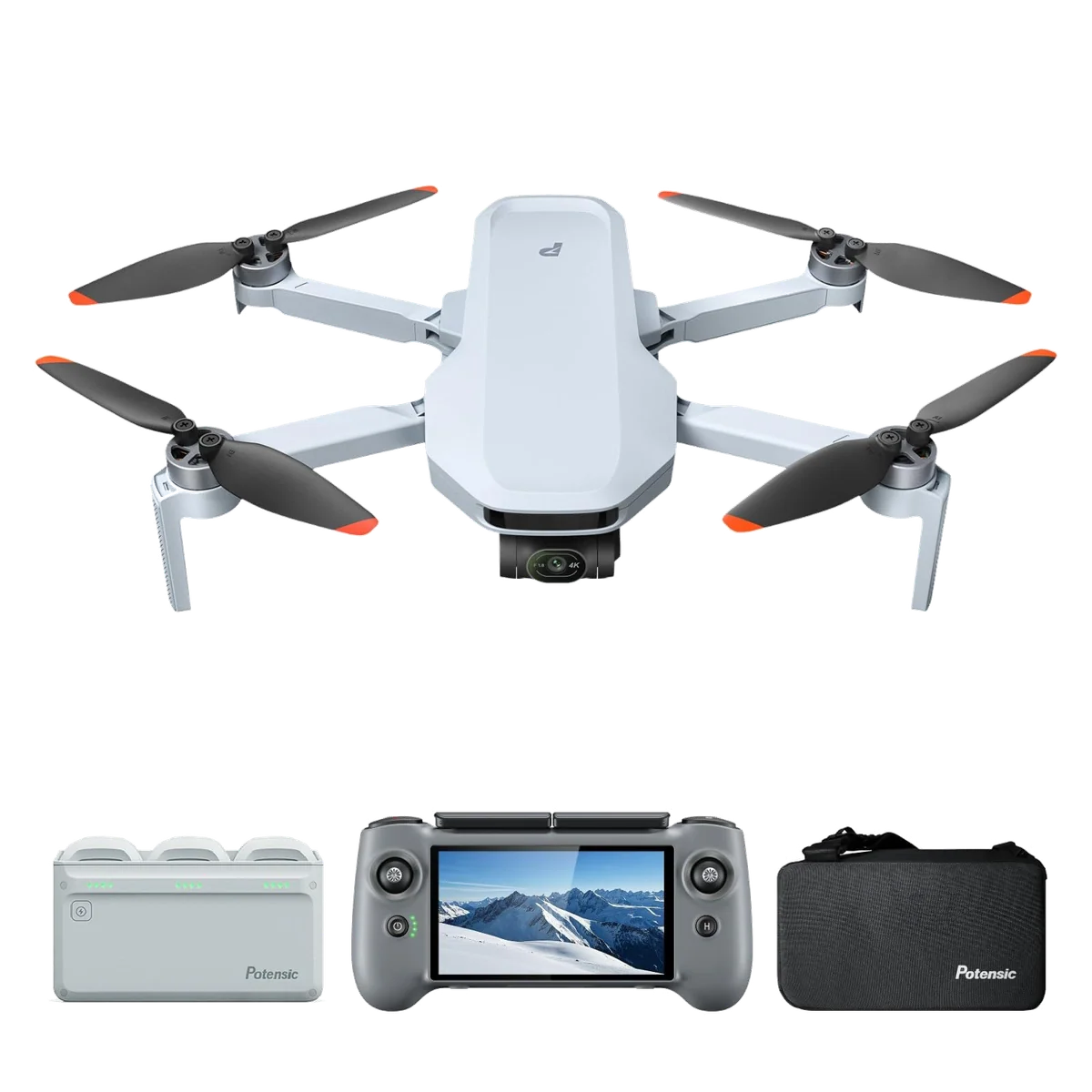
Buy this bundle when it is discounted hard and you want a folding sub-250g camera drone with a real screen in your hands; pay near the top of its asking range, with no obstacle avoidance, 4K locked to 30fps and a successor already on the shelves, and you should be buying a DJI instead.
Based on 1900 owner ratings, 13 owner discussions and 7 other sources. We have not tested this machine ourselves.
We earn a commission if you buy through our links, which does not affect what we say.
Read how this site works →
So where does that leave it
The Atom 2 is a better aircraft than its brand's reputation and a worse purchase than its listing implies, and both of those things are true because of price. Bought well, it is one of the most complete things you can put in a shoulder bag under the registration weight: a real gimbal, a real screen, an hour of flying and a set of creative modes DJI does not offer at the same level. Bought at the top of its range, it is a drone with no obstacle avoidance and half the frame rate of its rivals, from a maker who has already moved on to the next model. The verdict at the top stands. Pay accordingly, or buy something else. If you are here because it is your first drone, start with our shortlist of drones to learn on and read the first-flight advice below before you take it out.
The drone in this box is the same Atom 2 that Potensic sells with a phone clamp. Every part of the flying is identical: the same 249g airframe, the same 1/2-inch Sony sensor behind an f/1.8 lens, the same three batteries and the same parallel charging hub. What you are paying extra for is the PTD 1, a controller with a 5.5-inch 1080p touchscreen rated at 700 nits, a claimed three hours of runtime and 27W charging, which means you power it on and fly instead of unfolding a phone, finding the cable and waiting for an app to decide it is ready. Potensic states in its own listing that the PTD 1 works with the Atom 2 and nothing else, which is worth reading twice before you treat it as an investment in future hardware.
The flying is the easy part of this review, because the record is close to unanimous. Owners describe a drone that goes straight up, sits still and stays still, holds a line in wind that should bother something this light, and survives hard landings that the pilot expected to end the day. The professional review with the most careful methodology behind it gave the Atom 2 a Recommended badge and called it the best DJI alternative its author had flown, with no drift detected in GPS hover at all. People who own a DJI alongside it keep saying the same slightly awkward thing: the Potensic is the one that ends up in the bag.
Now the part the listing does not lead with. There is no forward, side or upward obstacle avoidance on this drone, and the downward vision system is so nominal that one reviewer flying low over uneven ground could not detect it doing anything at all. That absence collides directly with the feature Potensic sells hardest: AI Track exists to send the aircraft chasing a moving subject, and nothing on board is watching the trees it is chasing them past. Add 4K capped at 30fps, 48MP stills that only come out as JPEG, no live histogram, and an app that is the weakest component in the package, and you have a drone whose entire case is made by its price.
So: buy it if you want a travel-sized folding drone with a proper mechanical gimbal, you fly in open country, you care more about video than about stills, and you found it well below its list. Walk away if you fly near buildings, trees or people, if you need 4K60, if you shoot raw stills as your main output, or if you are buying at full price, in which case the DJI Mini 4K and the DJI Neo 2 are both making a better argument than this one is.
Key Specifications
The screen is the whole reason this bundle exists
The complaint that dogged the Atom line from the beginning was simple, and an owner put it on the internet within days of the Atom 2 launching: the drone was great, but why is there still no controller with video on it. The PTD 1 is the answer to that, roughly a year late, and owners who bought this specific bundle single it out first. One calls it the reason he can actually see what is going on while flying, and another notes that it holds a charge across sessions in a way phone-tethered flying never does.
Quadcopter Bench went looking for an independent, measured test of the PTD 1 itself and came back close to empty. The professional review with numbers in it was carried out on the phone-clamp controller, which puts the handset between two outward-extending grips and drives the transmission through a directional antenna. That means the 700 nits, the three-hour runtime and the 85-minute fast charge are the manufacturer's figures rather than anybody's stopwatch. What we can say with confidence is that 700 nits is mid-pack for a screen controller and that Potensic itself moved to 900 nits on the follow-up unit, which tells you where the weakness was.
Two pieces of friction are documented and specific. The control sticks are awkward to unscrew and stow for anyone without fingernails, which sounds trivial until it is the last step before you can close the bag. And a long-standing Atom irritation carries straight over: the supplied cable is proprietary and roughly an inch too short for tablet use, so a one-piece third-party cable will not solve it. One serious owner also managed to switch the controller off mid-flight with the joint of his thumb, which forced a re-pair and a wall of warning dialogs while the drone had already begun its return. If you are weighing a screen controller against flying off your phone in general, the trade-offs are laid out in our piece on whether you need a real controller at all.
The camera is better than the spec sheet reads, and worse than the title reads
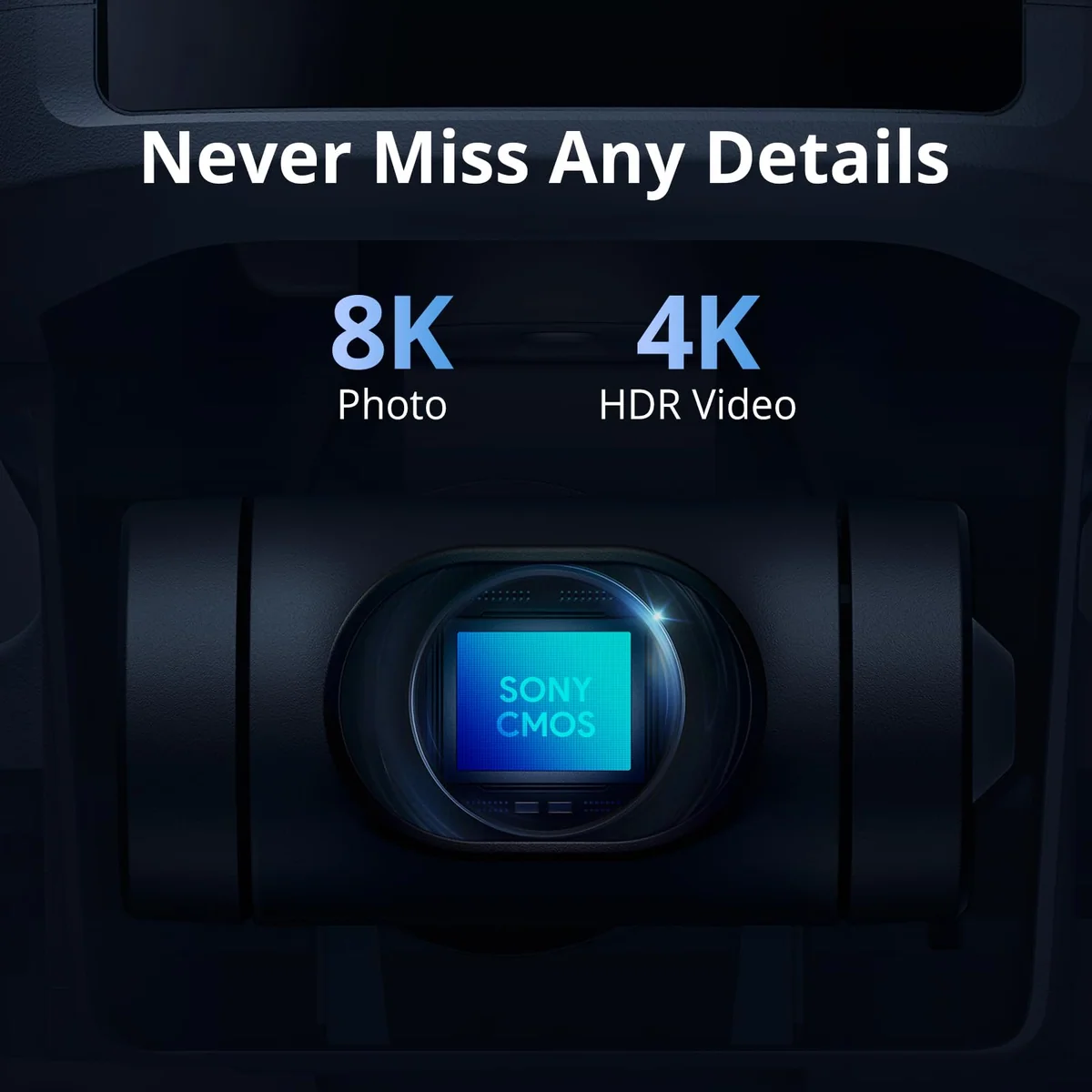
The 1/2-inch sensor at f/1.8 is a real step up from what DJI puts in its cheapest mini, and the difference is visible without being dramatic. Video is where this drone is strongest: consistent, clean, HDR available at 4K, up to 80Mbps, and a flat P-Log profile that arrived by firmware after launch and is genuinely unusual at this level. The gimbal tilts from straight down to a little above the horizon, which almost nothing else in this class does and which quietly unlocks a whole category of shot.
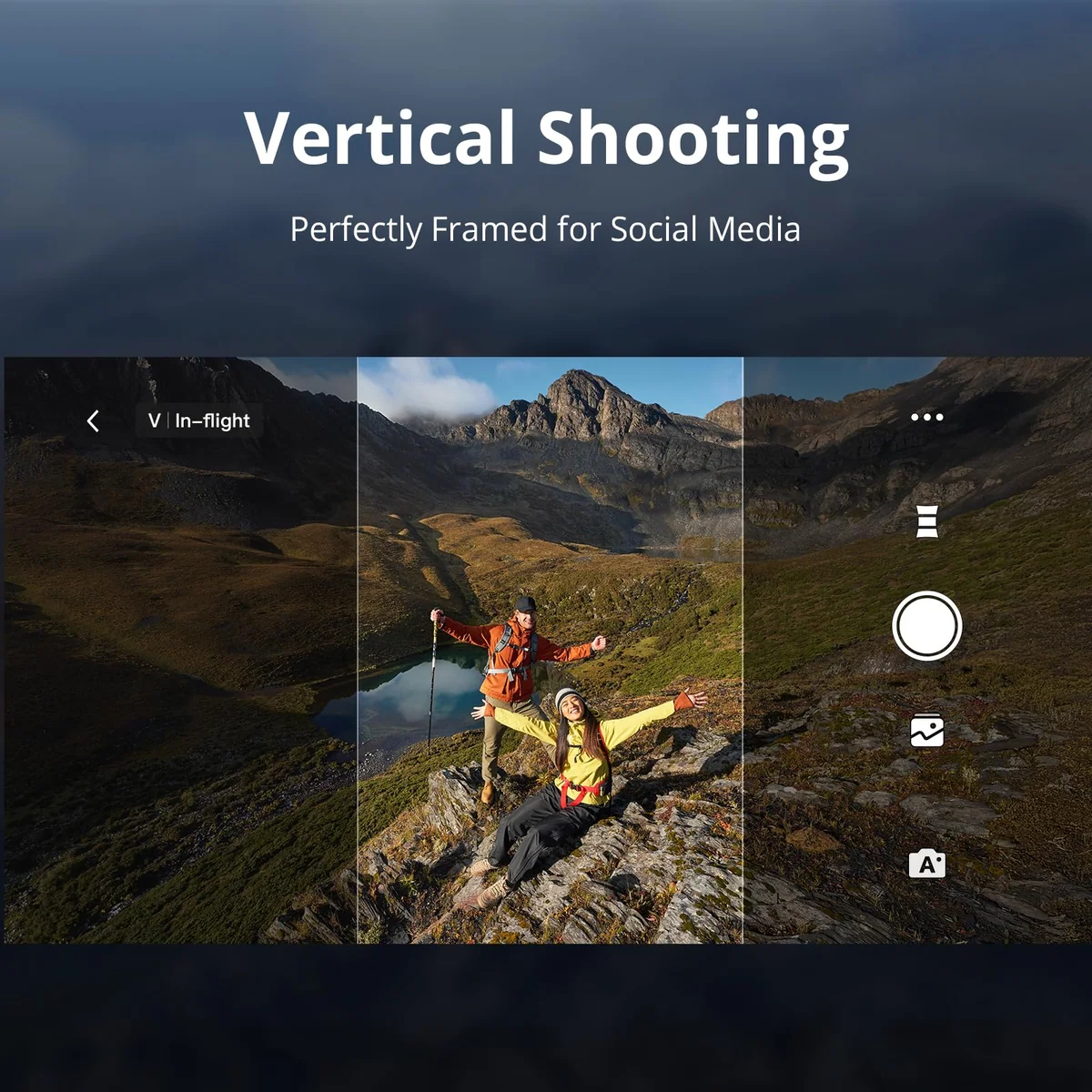
Stills are the softer side. Sharpness falls off toward the edges, there is vignetting, and white balance wanders in both auto and manual, all of which is recoverable from raw except that raw only exists at 12MP. The headline 48MP mode, the one the listing prints as 8K, is JPEG only, and the JPEG processing applies heavy sharpening, so the biggest number lands you in the worst file format. For anyone shooting property or landscape work, the compensations are real: bracketing at three or five frames, wide, 180 and vertical panoramas, and manual white balance, ISO and shutter from 1/30 to 1/1000. There is no histogram, which is the one omission a manual shooter will feel every single flight.
Two things worth knowing that no review mentions and every owner should. The panorama file comes out at 12MP, but the individual source frames are written to the card, so you can pull them and stitch a full-resolution version yourself. And there is a defog mode buried in camera settings for humid days, which the app itself warns you to switch back off, because it hurts clarity when there is nothing to cut through.
One caution on the marketing. AI Night Shot is sold as a headline feature and the only careful assessment of it calls the resulting image quality questionable, with the reviewer explicitly unimpressed by low-light performance despite the four-in-one pixel binning. Owners are warmer about it, and one who has flown both rates it comparable to DJI's night mode for the money. Treat it as a mode that rescues a shot you would otherwise not get, not as a reason to buy.
Strengths & Limitations
Strengths
- It hovers without drift and holds a line in wind that should trouble something this light.
- Three batteries and a hub that fills all of them in about an hour and twenty minutes removes the charging break that ends most single-battery flying days.
- Subject tracking genuinely works, and it is the feature DJI's cheapest mini does not have at all.
- 48MP stills, three or five frame bracketing, full manual exposure and a flat log profile are unusually serious tools for this end of the market.
- The gimbal tilts slightly above the horizon, which almost nothing else at this size does.
- The props are quiet, with a low hum instead of the usual high whine.
- Warranty and RMA handling is the best-documented thing about the brand, including replacing a drone an owner broke himself.
- The PTD 1 removes the phone, the cable and the app launch from every flight.
Limitations
- There is no forward or side obstacle avoidance and the downward vision system barely registers as present.
- 4K is locked to 30fps, and the 48MP photos the listing calls 8K are JPEG only with heavy sharpening applied.
- Tracking only engages with the gimbal between roughly 25 and 75 degrees, which quietly removes many of the shots people buy it for.
- The Potensic Eve app is the weak link, with small white telemetry at the top of the screen that disappears against bright sky and a battery percentage in red you cannot read in sun.
- Firmware has a documented history of taking capability away, including a range cut to the previous Atom that was never reversed.
- The signal bar turns orange within a few hundred feet even when the link is fine.
- There is no live histogram, and reaching the memory card means pulling the battery out first.
- The PTD 1 controller works with this drone and no other, including Potensic's own successor.
- A slow memory card will stop it recording 4K outright, and no card is supplied.

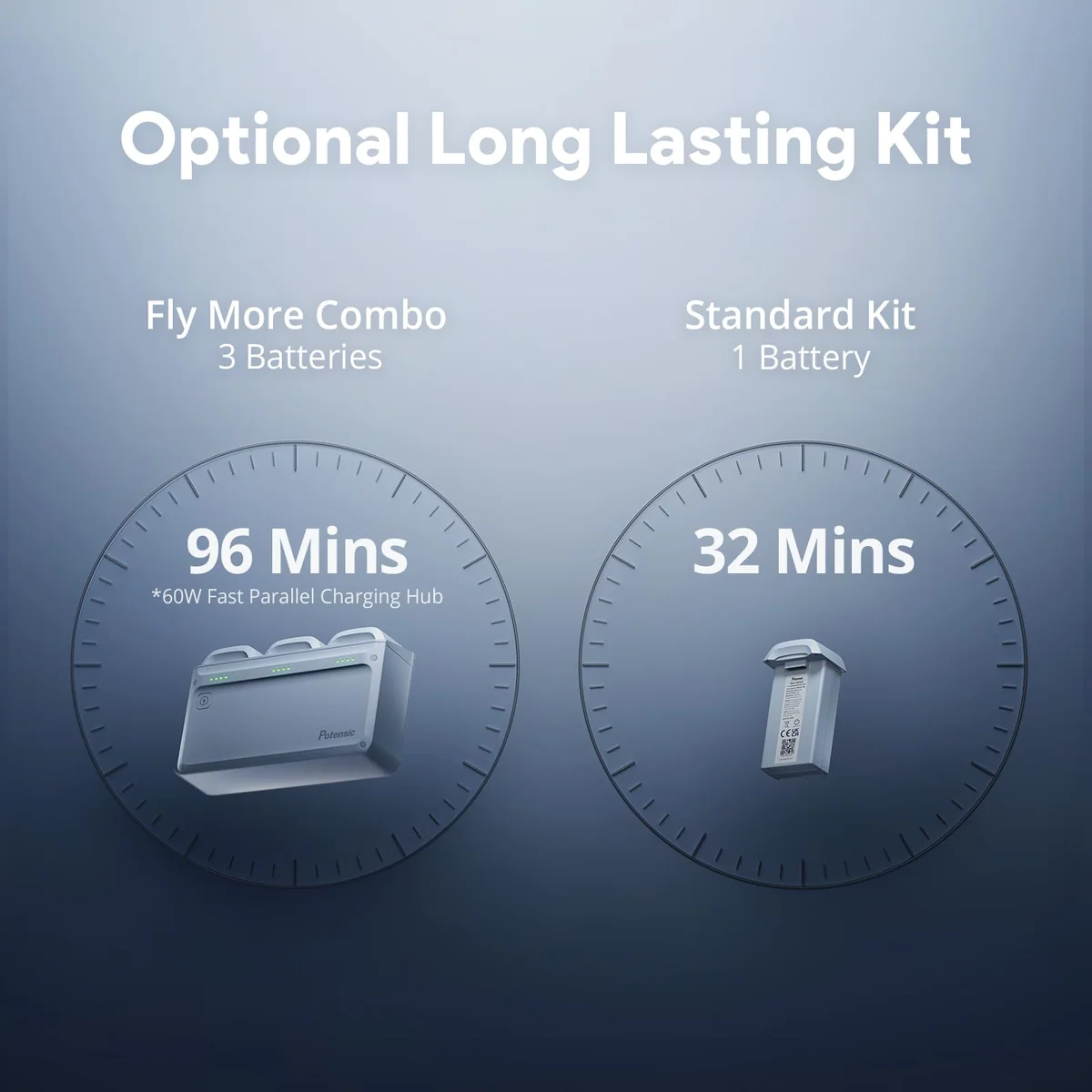
What the box says, and what the record actually supports
| On the listing | What holds up |
|---|---|
| 96 minutes of flight | Three batteries multiplied by an optimistic 32. Measured, one pack runs about 22 minutes to the low-battery prompt; owners independently report 23 and 15 to 20. A realistic day is an hour to seventy minutes. |
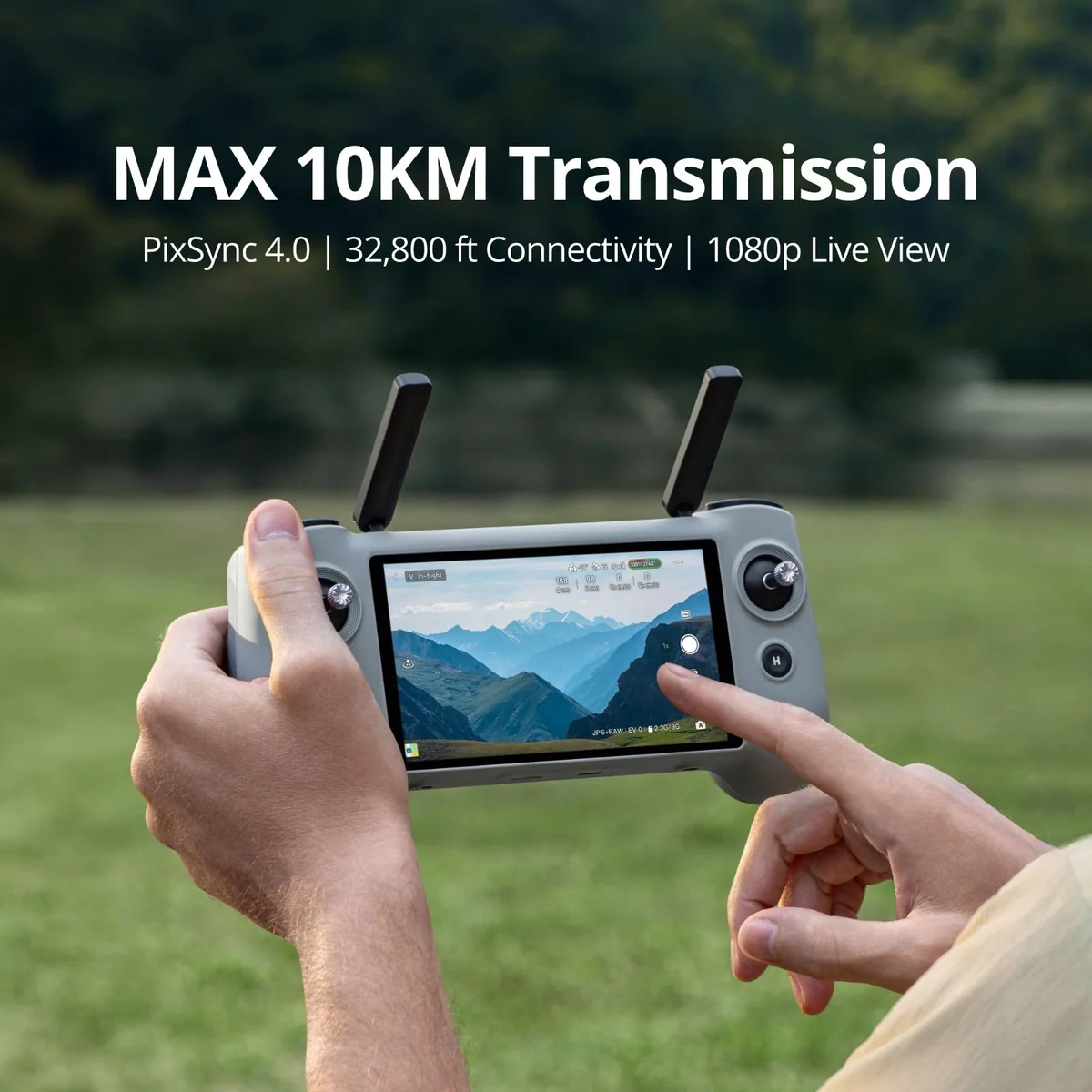
| 10KM transmission | A clean-air figure. One owner on the coast held signal five miles over open water; another saw disconnects and video freezes at two miles inland. Legal line of sight stops you long before the radio does. |
| 8K photo | 48MP, JPEG only, heavily sharpened. Raw exists at 12MP. |
| 4K video | True, at 30fps only, with HDR available. There is no 4K60 on this drone. |
| 4x digital zoom | Only at 1080p. 4K gives you 2x, 2.7K gives you 3x. |
| 3-axis gimbal | Fully true, mechanical, and the single biggest reason to take this over the older ATOM SE with its single axis and electronic stabilisation. |
| Under 249g | Exactly 249g, and it carries Remote ID as a toggle rather than a forced broadcast. |
The flight-time gap is not a Potensic problem, it is an industry habit, and we have written about why the box number is several flights added together. The honest reframe is that the combo exists because one battery does not go the distance, and having three of them charge together in around 1.3 hours is worth more in practice than any single figure on the carton. If you are still deciding whether the extra packs justify themselves, that argument is its own piece.
Speed is real: top sport speed measures at just under 36mph and one owner clocked around 35 on his own. The catch is that the drone drops out of sport mode into normal below 30% battery, capping you around 17mph, which is a slow, anxious crawl home if you are a couple of miles out. Wind resistance is the usual level 5 rating, about 24mph, the same as the Mini 4K and the Neo 2, and reviewers flying all three saw no meaningful difference between them. Our own guidance on what that rating means in real air applies here unchanged. Two independent sources also note it is quiet, with a low hum rather than the high whine of most small quads.
The tracking has fine print, and the fine print is the problem
Spotlight, Follow and Parallel all work, and work well: you drag a box round a subject and the drone holds it, on people, boats and cars alike. But an owner who bought the drone specifically for tracking found the camera has to sit between roughly 25 and 75 degrees of tilt for it to engage, which rules out a large slice of the shots people imagine when they buy a tracking drone. Follow mode also silently refuses to work if the drone is too low, which reads as a fault until you climb.
Put that beside the missing sensors and you have the honest risk picture: the feature that most tempts a new pilot is precisely the feature that flies the aircraft toward obstacles while nothing on board is looking. There is a decent counter-argument that learning without avoidance makes you a better pilot, and plenty of owners make it. There is also the pilot who used one for roof inspections, got closer for a better shot, and ended up knocking on a neighbour's door to ask for his drone back. Read what avoidance actually catches before deciding which of those you are.
Three specific things that will catch you out
A slow memory card stops this drone recording. Two separate reviewers hit an on-screen warning that the card was too slow and had to drop from 4K to 2.7K to keep filming, so a reputable high-speed card is part of the purchase, not an accessory. No card is included in the box. Second, the signal bar goes orange at a few hundred feet even when the link is perfectly healthy, which owners complained about constantly and which Potensic quietly corrected on the next controller rather than admitting to. Third, return to home lands accurately but not precisely, somewhere in the region of half a metre to a metre from the take-off point in a side-by-side against a DJI machine that put itself back on the mark. Fine for a field, not fine for a balcony.
Everything depends on what you pay, and that has swung wildly
This is the part of the Atom 2 story that no spec table captures. The same box has been bought by owners at prices so far apart that they are effectively reviewing different products: people who caught it through warehouse clubs or the manufacturer's refurbished channel describe an outright steal, while the figure this listing has carried at its highest puts it in conversation with hardware that beats it comprehensively. Those cheaper channels come and go, and one buyer who missed them said so bluntly in public. The drone did not change. The argument for it did.
The relative maths is what matters. The phone-controller version of this same Fly More combo has consistently sold for meaningfully less than the PTD 1 version, and since the drone, the batteries, the hub and the bag are identical, the entire premium buys you a screen. That is a defensible purchase if you fly in bright sun, hate cables or want your phone free, and a poor one if you were going to use a phone happily anyway. Judge it as a screen, not as a drone upgrade.
Against DJI, the split is clean and reviewers keep landing in the same place. The Mini 4K is the safer, more polished, better-supported machine with the friendlier app; the Atom 2 has subject tracking, which the Mini 4K does not have at all, plus vertical shooting, dolly zoom, night mode and fast transfer to phone. One comparison put it as ninety per cent of a thousand-dollar drone's features for a fraction of the money, and credited Potensic with raising the bar in a segment DJI had stopped defending. We have the full head-to-head at Potensic Atom 2 vs DJI Mini 4K, and the tighter fight against the bigger sensor at Atom 2 vs Mini 3.
The other reason people are here at all is not about the drone. A recurring purchase motive across the record is DJI supply and DJI politics: buyers who could not get the machine they wanted at a sane price, or who did not want to negotiate with an ecosystem about where they are allowed to fly. That motive has weakened since DJI relaxed geofencing worldwide, and honest sellers should say so. What survives is the Remote ID toggle and the absence of a manufacturer sitting between you and takeoff, which some pilots value a great deal and which puts the responsibility for airspace squarely back on you. If the wider question is what you can and cannot buy right now, we keep a running answer.
Living with Potensic: firmware giveth, firmware taketh away
The single most important pattern in this drone's record is not a spec, it is the way the company behaves after you have paid. It cuts both ways, hard, in both directions.
On the good side, two features that were promised at launch and missing from the box actually arrived. P-Log was a future-firmware promise in the spring reviews and now ships. Waypoints turned into a public fight: a serious owner who tests drones for a living wrote that Potensic had advertised them, then denied ever promising them, then said there were no plans to add them. Independent owners in the Potensic community report waypoints landing in a later update anyway, and reviewers now describe the waypoint mode as a genuinely professional-feeling addition. Delivered late, after being denied, is not a clean record, but it is delivery.
On the bad side, a firmware update to the previous-generation Atom degraded its range, owners complained loudly, and the change was never reversed. Multiple owners reported blurry images and video after an Atom 2 update, to the point that one long-time supporter publicly told people to stay away until it was fixed, and another returned the drone over photo quality. One owner reports a flyaway on a calm, clear day after an update, preceded by gimbal warnings and motor saturation errors. Quadcopter Bench cannot tell you from this record whether those were fixed, and that uncertainty is itself the finding: Potensic ships fast and patches afterwards, which is why the missing features arrived and also why the regressions happened.
Set against that, the transactional support is the most consistently praised thing about the brand anywhere in the record. One owner snapped an arm and wrecked the gimbal through his own error, worked through a fortnight of slow, timezone-lagged email, and was sent a replacement drone. Another had customer service manually reopen an expired window so he could still buy the extended coverage, which replaces the drone up to four times over two years. The distinction worth drawing is precise: Potensic is very good at fixing your individual problem and poor at acknowledging a problem that affects everyone. If coverage matters to you now that DJI's own scheme has gone from the US, we cover the options for insuring a drone separately.
The accessories, and the succession problem
The aftermarket started barren and is now merely thin. At launch there were no first-party ND or polarising filters, which pushed owners into cranking shutter speed or retrofitting filters cut for other drones, and there is still no factory landing gear or controller sunshade. Potensic's own variable ND eventually appeared and is the accessory most worth adding, along with a landing pad to keep grit off the downward sensors and out of the gimbal. There are no third-party flight apps at all, no Litchi equivalent, which native waypoints partly compensates for. Our shortlist of what the Atom 2 actually needs goes further.
One serious buyer left over a claim rather than a fault: he ordered the drone for its log profile, worked out that the log footage is 8-bit, and cancelled, and reports that the seller acknowledged the omission of bit depth from the description and paid for the return. Eight-bit log is a weak proposition for grading and the listing does not tell you which you are getting. If colour work is why you are buying, that is the sentence to remember.
And then the succession. Potensic has already launched the Atom 3 with a larger sensor, higher frame rates, a brighter controller and a card slot you can reach without pulling the battery, which makes the Atom 2 the previous generation as of this year. Given how the older Atom was treated after the Atom 2 arrived, and given that owners noticed development attention shifting to whichever model was newest, there is a real chance this drone is next in line to be quietly left alone. The counterweight is that the Atom 3's larger battery option breaks the 249g line, which is the whole legal advantage of this class. We work the trade through at Atom 2 vs Atom 3 and keep a wider list of camera drones that stay under 249g.
Where the brand came from, which is not where it is
Plenty of scepticism about Potensic traces back to hardware like the T25, a 2018-era quad that flew for six to eight minutes on a battery, had no gimbal, produced visible jello from rolling shutter, followed your phone rather than you, and needed a full calibration ritual on every power cycle. That is a fair thing to have been burned by and a poor basis for judging this drone: the generational distance between that machine and a 3-axis, 4K, 22-minute aircraft with visual subject tracking is enormous. The community's own verdict now runs ATOM SE, then the original Atom, then the Atom 2, with the gimbal being the reason the SE sits at the bottom. Owners who upgraded from the SE describe it as an unambiguous improvement, and the mechanics of why are in our piece on gimbals versus electronic stabilisation.
Whether that adds up to DJI parity is the argument the hobby has been having for two years, and it does not resolve. A pilot who owns DJI gear says he would buy three Potensics before one DJI; another calls the brand a mimic that leans toward toy; a third, in Spanish, tells him flatly that these are not toys. The most useful summary in the whole record came from the owner of a much more expensive DJI who concluded he could do just fine without one. Our longer answer lives at are Potensic drones as good as DJI.
Frequently Asked Questions
Does the Potensic Atom 2 have obstacle avoidance?
No, it has only a basic downward vision system and nothing watching forward, sideways or up, which is the wrong combination with tracking modes designed to send it chasing a moving subject.
How long does it really fly on one battery?
Plan on roughly 20 to 23 minutes of real flying rather than the 32 on the spec sheet, which puts the three-battery combo nearer an hour than the 96 minutes printed on the box.
Did Potensic ever add waypoints?
Yes, after publicly denying it had ever promised them, the company shipped waypoints in a later firmware update alongside the P-Log profile that was also missing at launch.
Is the PTD 1 screen controller worth the premium over the phone version?
If you fly in bright sun or resent the cable it probably is, but at 700 nits the screen is only mid-pack and it is compatible with this drone alone, so you are buying convenience today rather than anything you can carry forward.
What memory card should I buy for it?
A fast, reputable card, because a slow one will trigger an on-screen warning and force you down from 4K to 2.7K, and nothing is supplied in the box.
Is the Atom 3 a reason to skip this one?
It improves the sensor, the frame rate and the controller, so the Atom 2's remaining case is price and the sub-250g weight that the newer drone's larger battery option breaks.
Do I have to register it with the FAA?
Flown recreationally at 249g it stays outside US registration and carries Remote ID as a toggle rather than a forced broadcast, but anything you fly for someone else, paid or not, needs registration and a Part 107 certificate regardless of weight.
Should I practise on a simulator first?
The Atom 2 owners who asked that question were told, near unanimously, that no useful non-FPV simulator exists for it and that the drone effectively flies itself, so take it to an open field and burn a battery instead.
What should I do on the first flight?
Wait for a solid GPS lock of at least eight or nine satellites before takeoff, read the manual properly, and fly somewhere with nothing to hit while you learn what the tracking modes will and will not do.
Sources (8)
- Amazon listings and customer reviews — Potensic Atom 2
- Owner reports across r/drones, r/Potensic threads
- Owner and reviewer video, 8 channels
- Techradar — Article — www.techradar.com
- Firstquadcopter — Article — www.firstquadcopter.com
- Dronedj — Article — dronedj.com
- Potensic — Article — store.potensic.com
- Facebook — Article — www.facebook.com