Potensic caught DJI on hardware, and the gap that is left is one you only notice later
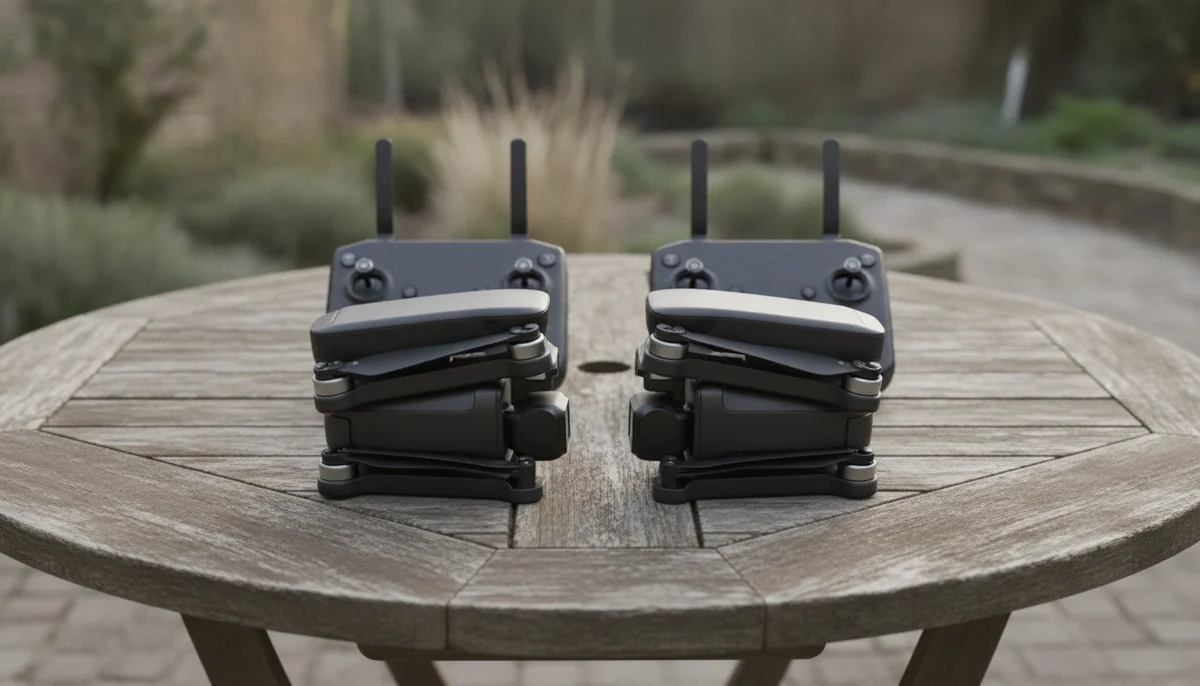
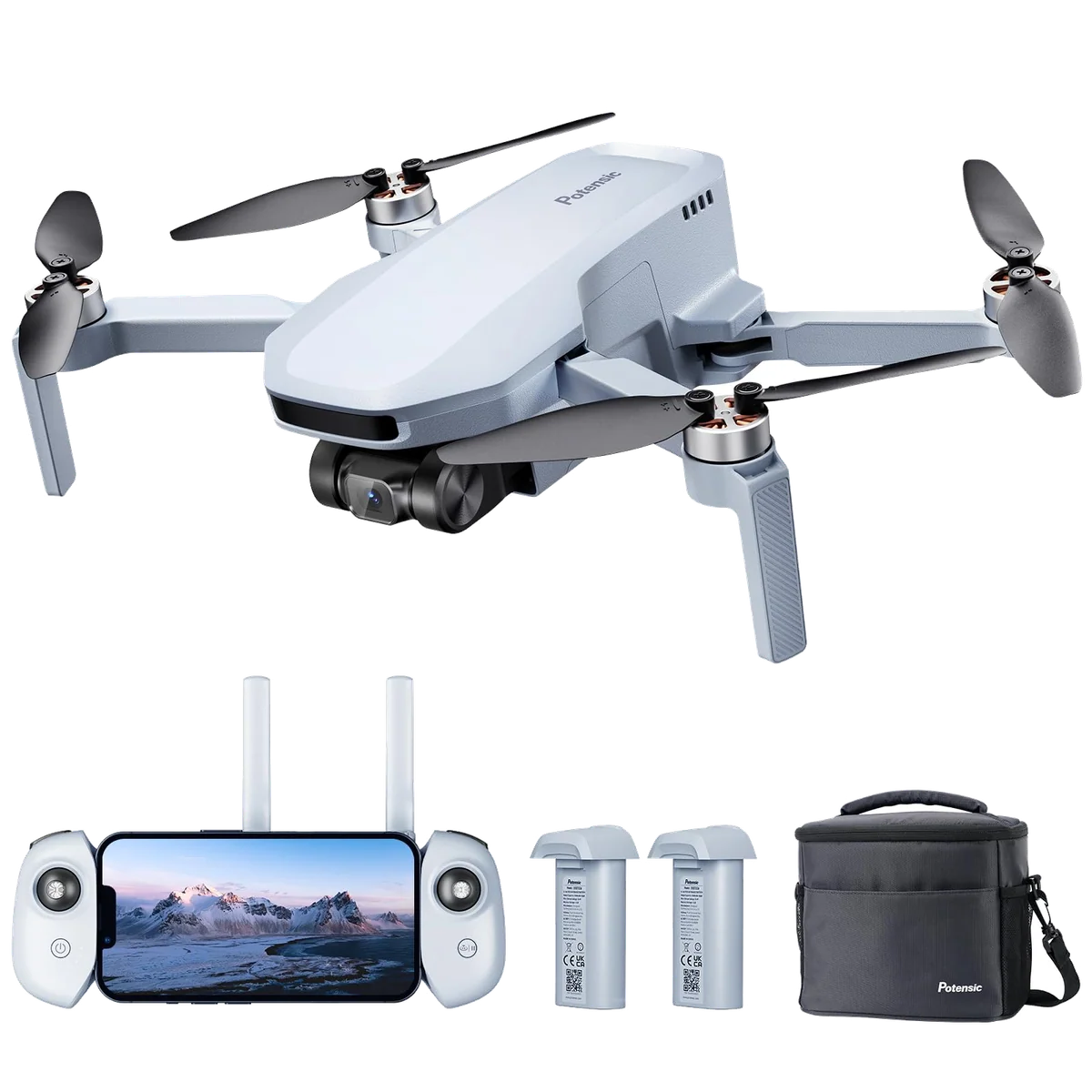
This question used to answer itself. A budget drone meant a plastic airframe, a camera bolted to a tilting bracket, a video feed carried over ordinary Wi-Fi, and a hope that GPS would bring it home. That is not what Potensic sells any more. The Atom 2 has a genuine three-axis mechanical gimbal, GPS hold that owners describe as going straight up and simply staying there, tracking modes that lock a box around a person or a boat and hold it, and a controller with a 5.5-inch screen built into the middle of it. DJI's cheapest drone, the Mini 4K, has no tracking of any kind, no obstacle sensors in any direction, and a controller that is a cradle for your phone. On the specification sheet, the budget Potensic is now the better equipped aircraft, and anyone still describing this as a drone against a toy has not looked in a while.
The gap that remains is harder to put in a bullet point, because almost all of it happens after the flight. DJI's files take a grade and Potensic's fight you: the Atom 2's headline 48MP mode is JPEG only with heavy sharpening baked in, and raw exists only at the smaller size. DJI's app is dull and stable in the way you want. Potensic's is the single component owners complain about hardest, and the most detailed review on the Atom 2 listing comes from a buyer who also owns a Mini 3 and a Mini 4K and who spends several hundred words on telemetry that is unreadable against a bright sky before he gets round to the aircraft. Firmware moves in both directions too. Features that were promised at launch turned up late, and an update to the previous-generation Atom cut its range and was never put back.
None of which makes it a rout. The people who own both brands are far calmer than the argument is: the settled view among ordinary owners is that DJI leads for a reason and Potensic makes genuinely good aircraft for a lot less money, and both halves of that sentence are meant. Mainstream reviewers have caught up too, to the point that a Potensic now gets recommended on merit rather than as the consolation option. Quadcopter Bench's position is that the honest answer depends entirely on which failures you are equipped to notice, and the rest of this page is about working out which of those you are.
| Potensic is the right call if | DJI is the right call if |
|---|---|
| You want the drone to lock onto a moving subject, which DJI does not offer at the bottom of its range at all. | The footage is the point, and it is going into an edit where you will push the colour around. |
| You want a screen in your hands and spare batteries in the bag without paying separately for both. | You are new to this and want the fewest possible things to go wrong between the box and the first hover. |
| You are buying for stills and inspection work rather than for cinematic video, and you fly in open country. | You expect to still be flying this aircraft in two years and want the software under it to stay put. |
Start with the parts that are genuinely level
The flying is a solved problem at both companies, and pretending otherwise is where most brand arguments go wrong. Every drone on this page sits under 249g, every one of them is rated to level 5 wind, and the figure is the same 38kph on the DJI listings as the equivalent claim on the Potensic ones. Read that rating precisely, though, because it is a promise about the aircraft and not about the picture: a drone this light stays airborne in a gust by leaning into it, and what happens to your horizon while it leans is a camera question, not a motor question. If that is the deciding factor for where you fly, we have gone through what a lightweight drone can actually take separately.
Return to home is a tie as well, which is the finding that should end the "cheap drones fly away" line for good. An ATOM SE owner measured a landing eighteen inches from his pad on a first flight. An Atom 2 owner five miles out over a bay reported it coming back within inches of where it left. A Mini 4K owner used almost identical words. Where Potensic is a fraction behind is precision rather than reliability, and the useful version of that distinction is that any of these will find a field and only some of them will find a balcony.
Both brands inflate flight time, and only one of them does it honestly
This is the one place where the marketing gap runs clearly in DJI's favour, and it is worth laying out because buyers compare these numbers directly and should not.
| What the box says | What the number is |
|---|---|
| Potensic ATOM SE, 62 minutes | Two batteries at a claimed 31 minutes each, added together |
| Potensic Atom 2, 96 minutes | Three batteries in the combo, added together |
| Holy Stone HS175D, 46 minutes | Two batteries, which Amazon's own description concedes further down the page |
| DJI Mini 4K, 31 minutes | One battery, flown at a constant 17kph in a windless laboratory, from full to flat |
| DJI Mini 3, 38 minutes | One battery, measured at a constant 21.6kph in windless conditions |
The DJI figures are laboratory numbers and nobody flies in a laboratory, but they are at least a description of one flight. The Potensic and Holy Stone headlines are arithmetic performed on the contents of the case, which is why an owner who reads 96 and lands after twenty-something minutes feels lied to and an owner who reads 31 and lands after twenty-five merely feels informed. Neither company is unusual here and the mechanism is the same across the category, which we have set out in why the box figure is several flights added together. Judge them on minutes per battery and the two brands are within a few minutes of each other.
Three things Potensic does that DJI does not do at this end of the range
First and most important: the Atom 2 tracks a subject. Spotlight, Follow and Parallel are on the listing and they work, which matters because the Mini 4K has nothing of the sort and the Mini 3 never claims it either, listing QuickShots and panoramas and stopping there. This is the single strongest argument in the brand's favour and it comes with two pieces of fine print. The camera has to sit inside a fairly narrow band of tilt for tracking to engage at all, and there is nothing on the aircraft watching forward or sideways while it chases somebody through a landscape, which is an uncomfortable pairing. If a drone that genuinely follows you is the whole reason you are shopping, neither brand's cheap folding model is the answer and the machines built for that job work in a completely different way.
Second, the screen. The complaint that dogged this class for years was the phone: the cable, the app launch, the case that will not seat properly, the brightness that loses to daylight. Mini 3 owners who paid extra for DJI's screen controller are evangelical about it, one of them admitting outright that he was certain a screen was a waste of money and was completely wrong. Potensic simply puts a screen controller in the Atom 2 combo, and owners of that bundle name it first when asked what they like. The catch is printed on Potensic's own listing and deserves reading twice: the PTD 1 pairs with the Atom 2 and with nothing else, including Potensic's own newer drone. You are buying convenience for this aircraft, not a controller you carry forward, which is a different proposition to the one DJI's controllers offer.
Third, the box is fuller. Three batteries and a hub that charges them in parallel is the difference between a flying day and a single flight, and the same logic applies at the cheap end, where the Holy Stone ships two batteries, a hard case, eight spare propellers and a screwdriver. DJI sells you those things one at a time, which is worth doing the sums on before you compare stickers; we have worked that through in whether the bigger bundle earns its money. Support is a genuine Potensic strength too, and the evidence is unflattering to the customer rather than the company: owners who admit they broke the drone themselves report replacements and free propellers arriving anyway. That matters more than it used to now that DJI's own accidental damage scheme has left American buyers looking at third-party cover instead.
Three things DJI still does better, and you will meet all of them
The picture is first, and the important word is processing rather than resolution. Both brands cap 4K at 30fps on the models here, so the resolution argument is a draw. What is not a draw is what the file does when you open it: careful testing of the Atom 2 found softness toward the frame edges, vignetting, white balance that wanders in auto and in manual, and a biggest-number photo mode that hands you a heavily sharpened JPEG with no raw underneath it. There is no live histogram either, which a manual shooter feels on every flight. A working photographer will notice all of that inside one edit and a holidaymaker will never notice any of it, which is precisely why this question keeps producing two confident and opposite answers.
The app is second, and it is the clearest quality gap between the companies. The most useful document on the Atom 2 listing is a long, furious, specific list of interface faults from someone who tests drones: telemetry in small white text at the top of the screen where it disappears against cloud, a battery percentage rendered in red that becomes unreadable in sun exactly when it turns critical, speed reported in feet per second to an American audience, warnings that cannot be dismissed, and a signal indicator that goes orange while the link is perfectly healthy. Not one of those is a hardware problem and every one of them is between you and the flight. DJI is not immune, mind. Its own app is no longer on Google Play, so Android buyers have to fetch it from DJI's website before the drone can even be activated, and the only Mini 4K review in the retained set that is not five stars is from a man who spent three days unable to get airborne and nearly packed the thing back into its box.
Third is the direction of travel after you have paid. Potensic ships fast and patches afterwards, which is why features that were missing at launch eventually arrived, and also why an update to the previous Atom shortened its range permanently and owners reported image quality regressions after a later one. The same restlessness shows in the model line. The Atom 3 arrived while the Atom 2 was still the current recommendation, and its earliest owners were already turning up in public with new faults and a return to home that missed the pad by a foot. Buying the newest Potensic is a slightly different risk to buying the newest DJI, and we have taken that specific decision apart.
Two owners of both brands, opposite verdicts
The most honest way to settle a question like this is to find the people who bought both and see where they landed, and on the Atom 2 listing there are two of them pointing in opposite directions. One says he has zero regrets choosing it over a much more expensive DJI and is excited to keep flying it. The other owns a Mini 3, a Mini 4K and a Holy Stone flagship alongside it, has catalogued the app, the missing 60fps, the speed cap that drops in below thirty percent battery and leaves you crawling home from two miles out, and ends with a single sentence that is the whole argument compressed: the Atom 2 does not come close to the Mini 3 or even the Mini 4K.
Both of those people are describing the same drone accurately. The first bought an aircraft and got a very good one. The second bought an instrument and found the interface between himself and it to be the weak part. If you read that second review and recognised your own standards in it, you have your answer and it is DJI. If you read it and thought it was a lot of fuss about font sizes, you have your answer too.
Holy Stone is the reason this question exists at all
It is worth putting the third brand on the table, because it shows what the ladder actually looks like and how far Potensic has climbed it. The HS175D is a likeable, forgiving GPS trainer that owners crash repeatedly and keep flying. It is also a drone whose camera has nothing damping it against the airframe, so the video carries every stick input straight into the frame, and whose video feed runs over ordinary Wi-Fi and gives out somewhere around two hundred metres while the app will happily let you set a five hundred metre limit. Add a calibration ritual before every single flight and you have a drone that teaches flying and does not pretend to be a camera. The fuller case is in our piece on the brand and in the review itself.
Potensic's own cheapest aircraft sits one rung up and shows the same trade in miniature. The ATOM SE stabilises with a single mechanical axis plus software rather than a real gimbal, and the finding that matters is not that this is bad but that it is a category limit: independent reviewers rate its daylight image the best they have seen from a drone relying on electronic stabilisation, and describe the horizon going flat as the airframe leans into wind, because nothing can rotate to compensate. Potensic's own product page confirms the single axis, the automatic-only camera settings and the absence of any zoom, digital or otherwise, and reviewers noted at the time that the SE suffix was telling everyone a proper gimbal version was coming. DJI put a three-axis mechanical gimbal in its cheapest drone years ago. That, rather than any megapixel count, is the cleanest single answer to whether the brands were equivalent, and the mechanics of why it matters are worth ten minutes if the difference is new to you.
One caution about the enthusiasm you will find elsewhere. Potensic's stated conditions for supplying review aircraft have at times included asking for sunny, windless test days and no comparisons against other brands. That does not make the resulting coverage wrong, and reviewers working under those terms have still published real faults. It does mean a wall of glowing verdicts deserves reading with one eye open, and it is part of why this page leans on owners who paid for their own aircraft.
So what should you actually buy
If this is your first drone and you mostly want to learn to fly one, the DJI Mini 4K is still the recommendation, because a mechanical gimbal, GPS hold and a dull reliable app are what a beginner needs and none of the missing features are ones you should be relying on early. Accept what you are giving up: no tracking, no obstacle sensing whatsoever, a small older sensor that gives out in low light, and a sideload before the first flight if you are on Android. The direct head-to-head against its Potensic rival is at Atom 2 against the Mini 4K, and there is a comparison against the older Potensic at HS175D against the ATOM SE if the cheap end is where you are shopping.
If you want tracking, a screen and spare batteries in one purchase, the Potensic Atom 2 with the PTD 1 is the drone this whole argument is really about, and it is a good one bought sensibly. The drawbacks are not small: nothing on board sees an obstacle, video stops at 4K30, the app is the weakest part of the package and its controller pairs with this aircraft alone. Buy it for what it does rather than for what the listing implies, and read what it actually needs before you add anything, starting with a fast memory card, since a slow one will stop it recording 4K outright.
If photographs are the point and the subject holds still, the DJI Mini 3 with the screen controller is the most complete thing here, with the longest real flight time and true vertical shooting. It also cannot track a moving subject in any mode and has no obstacle sensors beyond the downward pair, a fact that several owners on its own listing contradict in five-star reviews because they assume a modern DJI must have them. That confusion is the single most expensive misunderstanding in this category, and the honest version of it is on what avoidance catches and what it flies straight through. The closer fight against Potensic is at Atom 2 against the Mini 3.
If the budget is the constraint and you accept that you are buying a trainer, the Potensic ATOM SE remains the cheapest honest way into real GPS flight, with the caveat that its stabilisation is the wrong type for serious video, there is no zoom of any kind and the batteries lose meaningful charge sitting for a week. The Holy Stone HS175D sits below it and buys you forgiveness rather than footage. Both belong in the same conversation as the rest of our beginner picks, and the whole field is ranked at camera drones under 249g.
The verdict at the top of this page is not a fudge. Potensic has closed the hardware gap and opened a features gap in its own favour at the bottom of the market, and it has not closed the gap in colour science, software discipline or the promise that the drone you own in a year is the drone you bought. Which of those two sentences decides your purchase is the actual question, and only you know the answer.
Frequently Asked Questions
Is a Potensic a real substitute for a DJI now?
For flying, yes, and for features per pound, better than a DJI at the bottom of the range, but not for image processing or software polish, which is where every serious complaint about the brand ends up.
Will the Atom 2 stop itself before it hits something?
No, it has only a rudimentary downward vision system and nothing looking forward, sideways or up, which is an awkward pairing with tracking modes designed to send it chasing a moving subject.
Atom 2 or DJI Mini 4K?
The Potensic if you want subject tracking, a screen controller and three batteries, the DJI if you want the more polished, better supported machine and are happy hand-flying every shot.
Is the DJI Mini 3 the fairer fight?
It is the closer one, because the Mini 3 answers the Atom 2 on camera quality and flight time, though it cannot track a subject either, which leaves Potensic holding the one feature DJI declines to sell at this level.
Where does Holy Stone sit in all this?
A rung below both, because the HS175D has no working stabilisation on its camera and a Wi-Fi video link that gives out a long way short of the distance its own app will let you set.
Does the PTD 1 screen controller work with other Potensic drones?
No, Potensic states on its own listing that it pairs with the Atom 2 and nothing else, including the company's newer models.
Is DJI's situation in the United States a reason to switch brands?
It is a live consideration rather than a settled one, and we keep the current picture in whether you can still buy and fly a DJI in the US rather than restating it here.
Do any of these need registering?
All five sit under 249g, which keeps recreational American pilots clear of registration and Remote ID, though paid work needs certification regardless of weight and most other countries register the operator anyway, as our guide sets out .
Sources (10)
- Amazon listings and customer reviews
- Owner reports across r/Potensic threads
- Owner and reviewer video, 1 channel
- Techradar — Article — www.techradar.com
- Facebook — Article — www.facebook.com
- Popularmechanics — Article — www.popularmechanics.com
- Digitalcameraworld — Article — www.digitalcameraworld.com
- Potensic — Article — store.potensic.com
- Firstquadcopter — Article — www.firstquadcopter.com
- Gagadget — Article — gagadget.com