Nobody has ever flown a drone for the time printed on the box
That is the whole method, and you can apply it before you read another word. A drone sold on 93 minutes is a drone that flies for a little over twenty. A drone sold on 62 minutes flies for a little over twenty. A drone sold on 46 minutes flies for a little over twenty. The headline numbers differ because the box counts differently, not because the aircraft differ, and once you notice that, the figure stops being a specification and becomes a marketing decision about how many batteries to include.
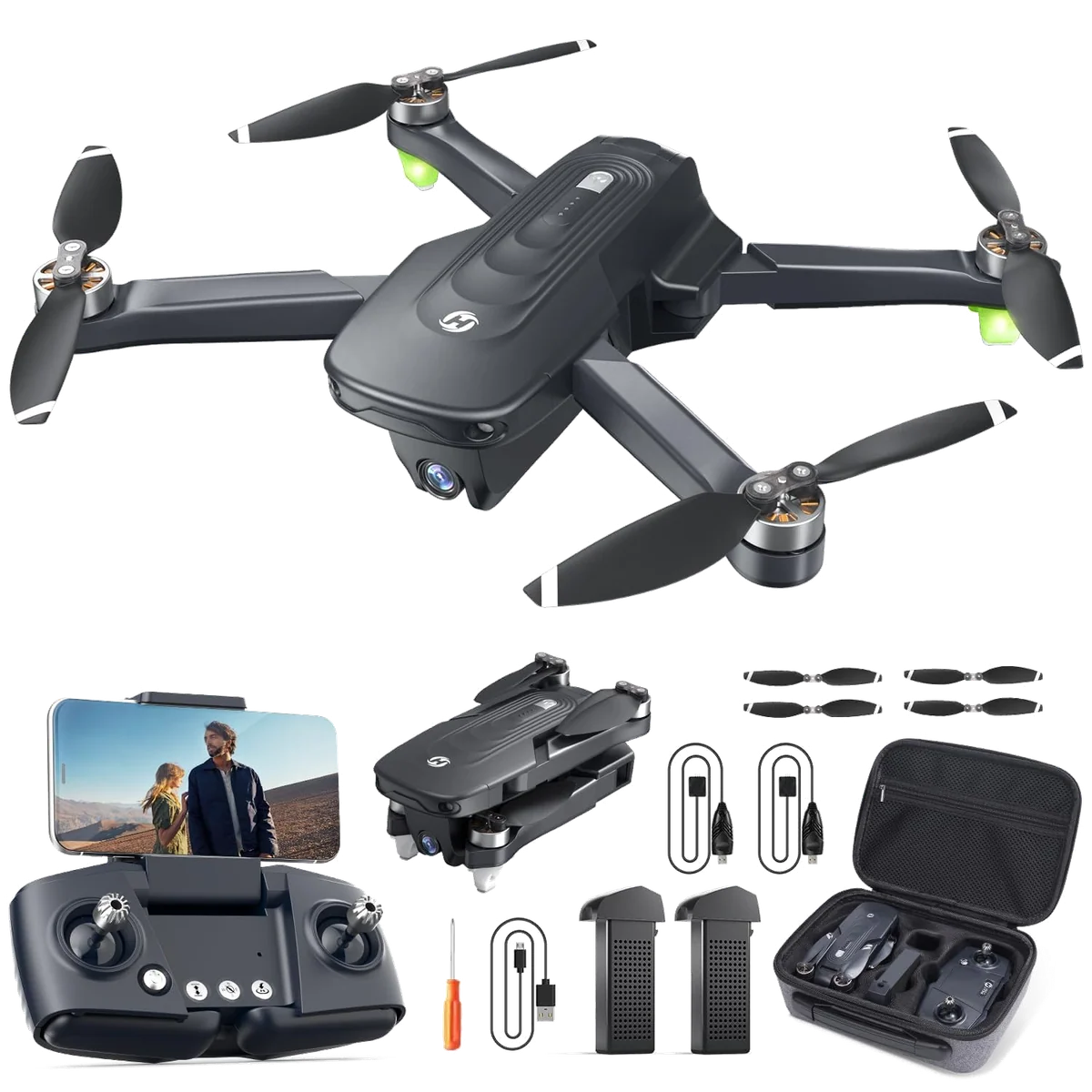
The most honest sentence anyone in this category has written about it belongs to Holy Stone, buried in the product description under a heading most buyers never scroll to. The company asks itself whether the 46 minutes is realistic and answers: "That's the combined max with two batteries in ideal conditions. Real flight time varies, but two batteries keep you flying longer with fewer breaks." That is a maker conceding the arithmetic in its own listing while the same number sits in the product title, and it is the clearest illustration on the internet of how this convention works. Owners of that drone independently report about twenty minutes a pack, which is exactly what the concession predicts.
None of this is fraud and Quadcopter Bench is not going to pretend otherwise. Every manufacturer quotes endurance the same way, the conditions are usually disclosed if you go looking, and the practice is stable enough across brands that the numbers remain roughly comparable to each other. The problem is narrower and more practical: the figure describes a flight nobody performs, so it cannot tell you how long you will be in the air, and buyers keep using it as the tiebreaker between two drones when it is the least informative number on the page.
Read the footnote, because the footnote is the test
DJI publishes its conditions, and they are worth reading once properly because they explain the entire gap. The Mini 4K's 31 minutes was measured "flying forward at a constant speed of 17 kph in a windless laboratory environment, in photo mode (without photo-taking operation during flight), and from 100% battery level until 0%." The Avata 2's 23 minutes came from "a constant flying speed of 21.6 kph in a windless environment at sea level, with camera parameters set to 1080p/30fps, video mode off, and from 100% battery level until 0%." The Mini 3's 38 minutes was taken at a constant 21.6 kph in still air, and the same footnote goes on to say that swapping the battery twice gets you to 114.
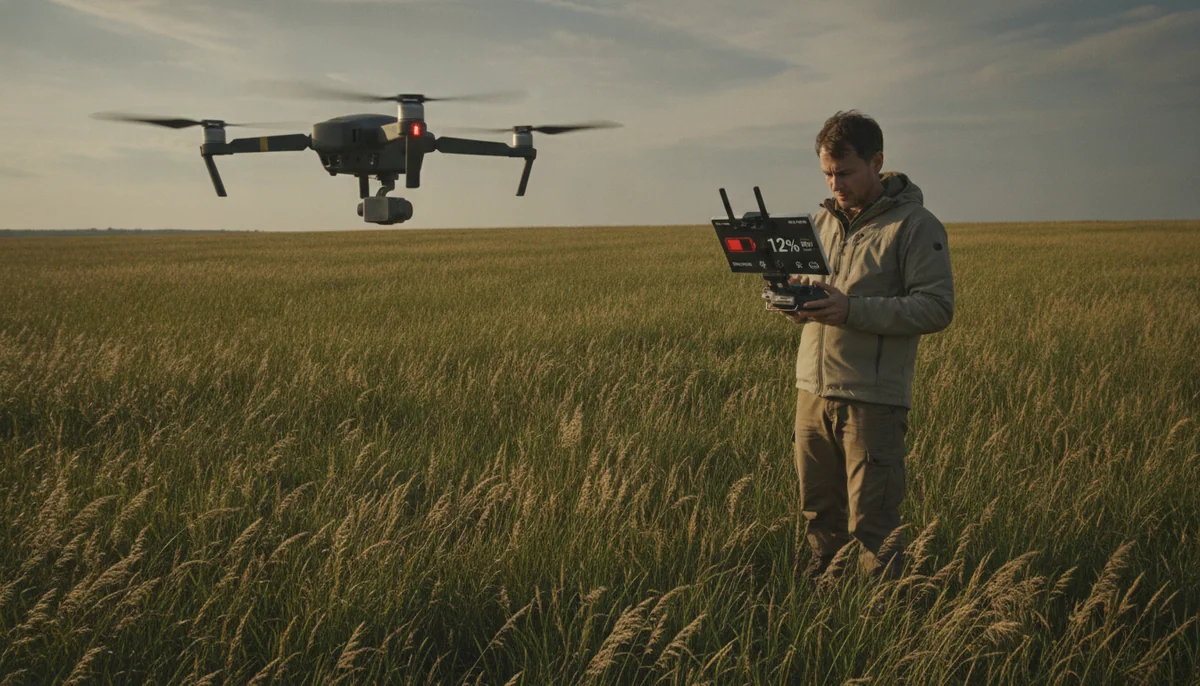
Four things in those sentences are doing the damage. The test is a steady cruise rather than a flight, and a multirotor moving forward at a fixed speed is close to the most efficient thing it can do, while a hover gets no help from the air and a climb costs more than either. The camera is either idle or in its cheapest mode, so the sensor, the gimbal motors and the video link are all drawing less than they will when you are actually filming. The air is still, and holding position against wind is work the motors have to pay for continuously. And the run goes to zero percent, a state no sane pilot reaches and most aircraft will not permit, because low-battery return to home fires while there is real charge left in the pack.
Put those together and the shortfall stops looking like dishonesty and starts looking like a conversion factor. Across the drones this site has reviewed, owners land somewhere around two thirds to three quarters of the single-battery rating, and the aircraft that fall furthest short are not the cheapest ones, they are the ones whose flying is least like a constant cruise.
Where the sum comes from
The second trick is simple multiplication, and once you have seen it you cannot unsee it on a listing page. Potensic's ATOM SE arrives with "2 intelligent 2500mAh batteries, each Battery running up to 31 minutes, for a total of 62 minutes." The Atom 2 combo carries 96 minutes in its title, which is three packs of the same kind added up. DJI's Flip does it with unusual candour, printing "3 Batteries for 93-Min Flight Time" in the product name itself alongside a separate bullet stating the 31-minute maximum. Holy Stone's 46 is two of a little over twenty.
The sum is not meaningless. Three batteries genuinely do buy you three flights, and a session that runs an afternoon rather than a quarter of an hour is a materially different product. What the sum hides is that those flights are separated by landings, battery swaps and, eventually, a wait at a wall socket, and that no single shot you plan can ever be longer than one pack. If the thing you actually need is twenty-five uninterrupted minutes over a location, three batteries do not give it to you and no combo ever will.
It also quietly obscures which drone is the endurance drone. A 96-minute Potensic and a 45-minute DJI Air 3S look like a rout on the box, and per flight the comparison runs the other way by a wide margin. The only comparison the advertised figure survives is between two aircraft of similar weight from the same maker with the same number of batteries counted, which is a narrow enough window that it is easier to ignore the number entirely.
What the record actually shows, drone by drone
Below is every drone this site covers, with the claim on one side and what people flying them report on the other. Nobody at Quadcopter Bench has timed any of these; the right-hand figures come from owners describing their own flights, and where the record is silent we have said so rather than filled the gap.
| Drone | On the box | What owners report | The catch that has nothing to do with battery |
|---|---|---|---|
| Holy Stone HS175D | 46 min, two batteries | About 20 to 23 minutes a pack | Nothing damps the camera against the airframe, so video carries every stick input straight into the frame. |
| Potensic ATOM SE | 62 min, two batteries | Roughly 22 to 25 a pack | Electronic stabilisation cannot level the horizon while the aircraft leans into wind, and there is no zoom at all. |
| Potensic Atom 2 | 96 min, three batteries | Around 23 a pack, less flown hard | No forward or side obstacle sensing, and 4K is locked to 30fps. |
| DJI Flip | 93 min, three batteries | 24 to 25 a pack | It does not broadcast Remote ID, which rules out paid flying in the US, and the propeller cages behave like sails. |
| DJI Mini 4K | 31 min | 20 to 28 | No obstacle sensing in any direction and no subject tracking whatsoever. |
| DJI Mini 3 | 38 min | Just past 30 | It cannot lock onto a moving subject in any mode, and it sees nothing but downward. |
| DJI Neo | 18 min | 14 to 15, nearer 10 chaining QuickShots | No obstacle avoidance behind the propeller guards, and no Remote ID for anything you invoice. |
| DJI Neo 2 | 19 min | 10 to 15, so plan on 12 | At 151g it cannot punch into a headwind, and tracking refuses to lock onto vehicles. |
| HOVERAir X1 | 11 min | 10 to 12 | No GPS and no return to home, so when it loses you it lands wherever it happens to be. |
| DJI Avata 2 | 23 min | About 15 | No forward obstacle avoidance, and return to home climbs vertically into whatever is above it. |
| DJI Air 3S | 45 min | Around 38 to 40 on mixed use | No wall charger in the box, and the obstacle sensors switch off entirely in Sport mode. |
| DJI Mavic 4 Pro | 51 min | No measured figure exists in our record | DJI Care Refresh is gone for US buyers and owners report repair queues quoted in months. |
The owner evidence behind those middle figures is unglamorous and consistent. A Mini 4K buyer writing in Spanish gives 25 to 28 real minutes against the 31 advertised and names the mechanism himself, noting it falls further if you record 4K or the air is moving. Mini 3 owners report comfortably past thirty, which is the best ratio in this table. Flip owners land on 24 to 25 and blame the guards. An Atom 2 owner in Germany puts his real figure at about 23 minutes a pack against a claimed 32, while another gets 15 to 20. ATOM SE owners cluster at 25. Neo 2 accounts run from 10 to 17 depending on how hard the sensors and the wind are working.
Two entries deserve singling out for opposite reasons. The Neo's shortfall is the largest proportionally in the table, and one buyer explains exactly why: chaining the automated shots burned 80 percent of a pack in six and a half minutes of recorded video, which extrapolates to around ten minutes of flying if that is how you use it. That is not the battery failing, it is a drone whose entire purpose involves climbing, orbiting and accelerating, which is the furthest thing from a constant cruise. The HOVERAir X1, meanwhile, claims roughly 20 automated flight paths and 11 minutes, and owners get 10 to 12, which is the most accurate endurance claim on this page and comes from the drone with the shortest one.
The Avata 2 has the most instructive account of all, because an owner published a timed discharge rather than an impression. From a 99 percent start, hovering indoors, which is the gentlest flight a quadcopter can perform, he logged 60 percent at eight and a half minutes, 30 percent at fourteen, the low-battery warning at fifteen, and a forced landing at seventeen. His own working figure is fifteen minutes, measured from full charge to a sensible 20 percent landing, against 23 on the box. Notice the shape of that curve as well as its length: the last third of the pack drains faster than the first.
The Air 3S produced the other thing worth noticing, which is how box numbers propagate. One five-star owner writes that it has "fly time 45 minutes per battery", repeating the specification back as though it were an observation, while an Italian owner on the same listing reports around 40 minutes on mixed use and says so as a measurement. Both reviews are honest. Only one of them is evidence, and telling them apart is most of the skill in reading a listing. The Mavic 4 Pro is where that discipline bites us: owners say its endurance is the best in the Mavic range and nobody in the record gives a number, so we are not going to invent one.
If you are using this table to choose rather than to calibrate, the short version is that endurance sorts these drones very differently from how we would sort them. The Mini 3 and the Air 3S are the two long-legged aircraft here and both are genuinely good buys, the first if your subject holds still and the second if wind has already ruined footage you cared about. The Mini 4K remains the cheapest honest way to find out whether you enjoy flying at all. The Neo 2 and the X1 are short-flight machines by design, bought by people who want to be in the shot rather than behind it, and judging either on minutes misses what they are for. And the two Potensics and the HS175D are learning aircraft first, cameras a distant second, which is a fine reason to buy one and a terrible reason to expect its footage to travel.
Where the missing minutes actually go
The reserve is the largest single bite and the one nobody plans for. Every GPS drone here starts asking to come home well before the pack is empty, and the sensible pilot lands at around 20 percent, so a fifth of the rated capacity is charge you are carrying rather than spending. The compounding version of this is nastier. Potensic's Atom 2 drops out of Sport mode into Normal below 30 percent, capping the return leg at a crawl, which one owner points out makes for a very slow trip back if you are a mile or two out and turns the last of the battery into the slowest, least efficient part of the flight.
Wind is the second, and it is not a discount, it is a multiplier that scales with how little the drone weighs. A light airframe holding position in a breeze is running its motors continuously to stand still, which is why the same drone gives you a comfortable session on a calm morning and a nervous one on a blustery afternoon. That interacts with everything else on the aircraft, and we have written up the ceiling separately in how much wind a lightweight drone can handle.
Then there is what the camera costs. DJI's own Avata 2 footnote sets video mode off for the test, and the Mini 4K's puts the camera in photo mode with no photographs taken, which tells you the manufacturers know the answer even if they do not print it. An owner who records 4K continuously and flies briskly reports 17 to 18 minutes where the gentler figure is 15, which is the honest complication: how you fly matters more than what you record, and the two usually move together anyway.
Cold is the seasonal version. An ATOM SE owner discovered that Sport mode simply refuses to unlock until the pack is warm enough, and only got it on the warmest day he had flown at 45F. A cell that will not release its full current will not release its full capacity either, so a winter flight is shorter than a summer one on the same drone with the same battery.
Finally, the pack ages, and it ages faster sitting in a drawer than being used. HOVERAir's own support desk explained to an owner whose three batteries had failed inside two years that these are non-smart cells with no automatic discharge, and that keeping them at a high charge for extended periods contributes to internal gas generation and swelling even when they are flown rarely; the fix is to store them near 60 percent and cycle them every month or two. A pack that has lost capacity will never again deliver the number it was rated at, and no listing anywhere accounts for that.
The thing that really sets the length of your afternoon
Here is the part the sum on the box hides completely. Three batteries do not give you 93 minutes of flying, they give you three flights and two ground stops, and after that your session length is decided by a charger you probably had to buy yourself.
The numbers vary more than you would expect. Potensic's hub fills three Atom 2 packs in about 1.3 hours. DJI's Neo 2 hub does three in 68 minutes and doubles as a power bank for your phone. The Air 3S Fly More Combo, a premium three-battery kit, ships with no wall charger at all and a listing bullet telling you to go and buy a 65W one. On some DJI hubs the packs charge one after another rather than together, so the wattage of the brick you supply is the difference between turning a kit round over a coffee and turning it round overnight.
That is the real argument for a multi-battery bundle, and it is a better one than the endurance figure it is sold on: you are buying flights per outing, not minutes per flight. Whether that is worth the premium depends entirely on how far you travel to fly and whether you can charge where you land, which is the calculation we work through in whether the Fly More Combo is worth it. DJI's Neo, for what it is worth, is sold both as a standard box with one battery and as a three-battery combo, and the aircraft in each is identical.
How to turn a printed figure into a plan
Do this in your head at the listing and you will never be caught out. Find the single-battery rating, which is usually a bullet or a footnote rather than the title. Take about three quarters of it, which absorbs the reserve you will not spend and the difference between a laboratory cruise and real flying. Subtract more if you fly in wind, in cold, or in any mode that involves the drone climbing and orbiting on its own. Then multiply by the number of batteries only if what you need is several flights rather than one long one, and check what charges them and how fast.
Applied to this page, a 31-minute rating means about 22 usable minutes, a 19-minute rating means about 12, and a 45-minute rating means somewhere just under 40. Those are the numbers to plan a shoot around, and the fact that they are boring is the point. The interesting differences between these drones are elsewhere entirely: whether anything is watching the tree in front of them, whether the camera is mechanically stabilised, whether they can hold a frame in moving air, and whether they broadcast the identifier you need if somebody is paying you. Those are covered in what obstacle avoidance actually catches, in gimbal versus electronic stabilisation, and in registration and Remote ID under 249g. If you are choosing your first drone, the beginner shortlist and the sub-249g roundup are where the comparison belongs, and neither of them is settled by minutes.
Frequently Asked Questions
Why does my drone never fly for as long as the box says?
Because the advertised figure is a windless laboratory cruise with the camera idle, run from a full pack down to nothing, and your flight includes climbing, hovering, wind and a reserve the aircraft will not let you spend.
Is a 46-minute claim on a two-battery drone dishonest?
It is arithmetic rather than dishonesty, and Holy Stone concedes as much in its own product description, which is more than most makers do.
What proportion of the advertised time should I actually plan for?
Take the single-battery rating, keep roughly two thirds to three quarters of it, and land at twenty percent rather than chasing the last of the pack.
Does recording 4K really shorten the flight?
Yes, and you can tell how much it matters from the fact that manufacturers switch video off or set the camera to its cheapest mode when they measure the number they print.
Do three batteries mean I get one long flight?
No, they mean three separate flights with landings and swaps between them, and the gap between sessions is set by the charger you supply rather than by the drone.
Which of these drones comes closest to its own claim?
The HOVERAir X1, which advertises around eleven minutes and delivers ten to twelve, and which also has the shortest endurance of anything here.
Does cold weather change the numbers?
It does, and on some drones a cold pack will not even release full performance, as ATOM SE owners discover when Sport mode refuses to unlock until the battery has warmed up.
Should I buy the bigger bundle purely for the flight time?
Buy it if you travel to fly and cannot recharge where you land, and read our piece on Fly More Combos before paying the premium for any other reason.
Will the batteries still hit those figures in a year?
Not if they have been stored fully charged, which is what killed three of one HOVERAir owner's packs inside two years, so keep them near sixty percent between sessions and cycle them occasionally.