Holy Stone is worth buying once, and the camera is not what you buy it for
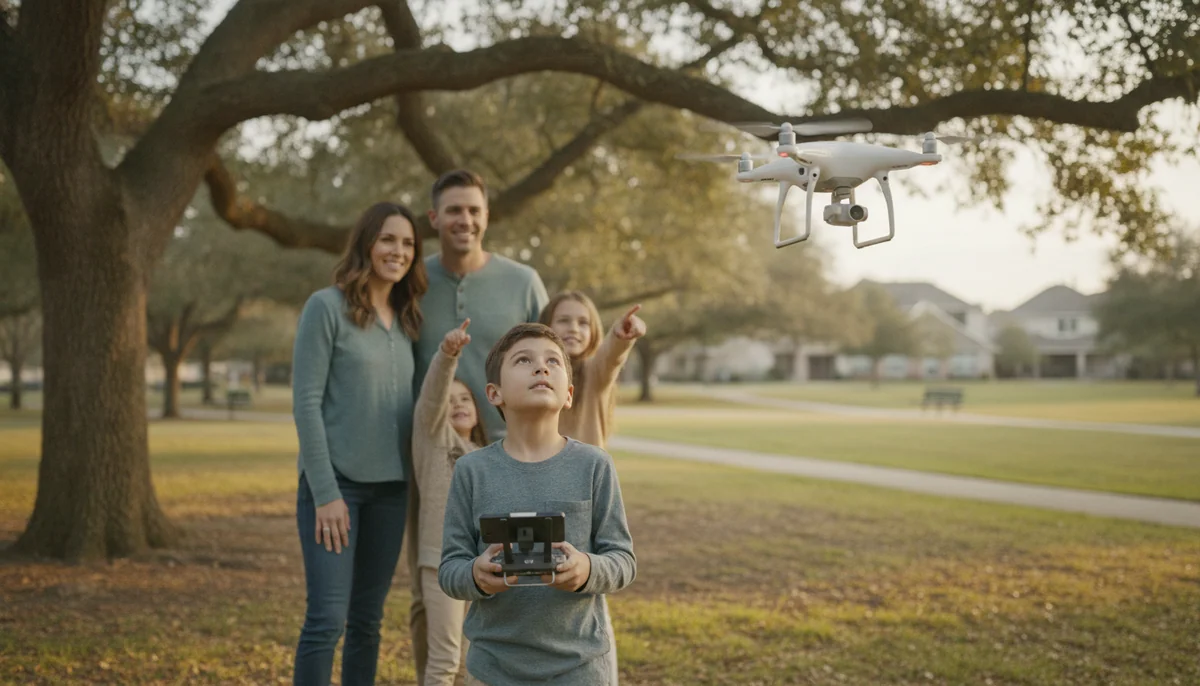
That is not a fence-sitting answer dressed up as a verdict. Holy Stone is a real manufacturer with a decade of aircraft behind it and a support department that ships replacements faster than most of the industry answers email. It is also a manufacturer whose entire product line stops at the same wall, and the wall is video. Nothing in the affordable half of the range isolates the camera from the airframe, so every gust and every twitch of your right thumb arrives in the frame. You can fly a Holy Stone well. You cannot film with one and be pleased about it.
So the real question is not whether the brand is good. It is what job you are hiring a drone to do. If the job is learning the sticks, seeing your own house from three hundred feet, photographing a roof you cannot climb onto, or discovering whether this hobby survives contact with your actual free time, Holy Stone is one of the most sensible ways to find out and the community consensus underrates it badly. If the job is a clip you intend to publish, no amount of practice closes the gap, because the fix is hardware these aircraft do not have.
| Buy into the brand if | Save for something else if |
|---|---|
| You have never flown a GPS drone and you want return to home, altitude hold and a hard beginner fence while the reflexes build. | You want video that holds still, since the camera mounts tilt but nothing damps them against the aircraft. |
| You fully expect to crash, and you would rather crash something you can re-prop with the screwdriver that came in the case. | You want distance, because the video link on these aircraft is ordinary Wi-Fi and behaves exactly like ordinary Wi-Fi. |
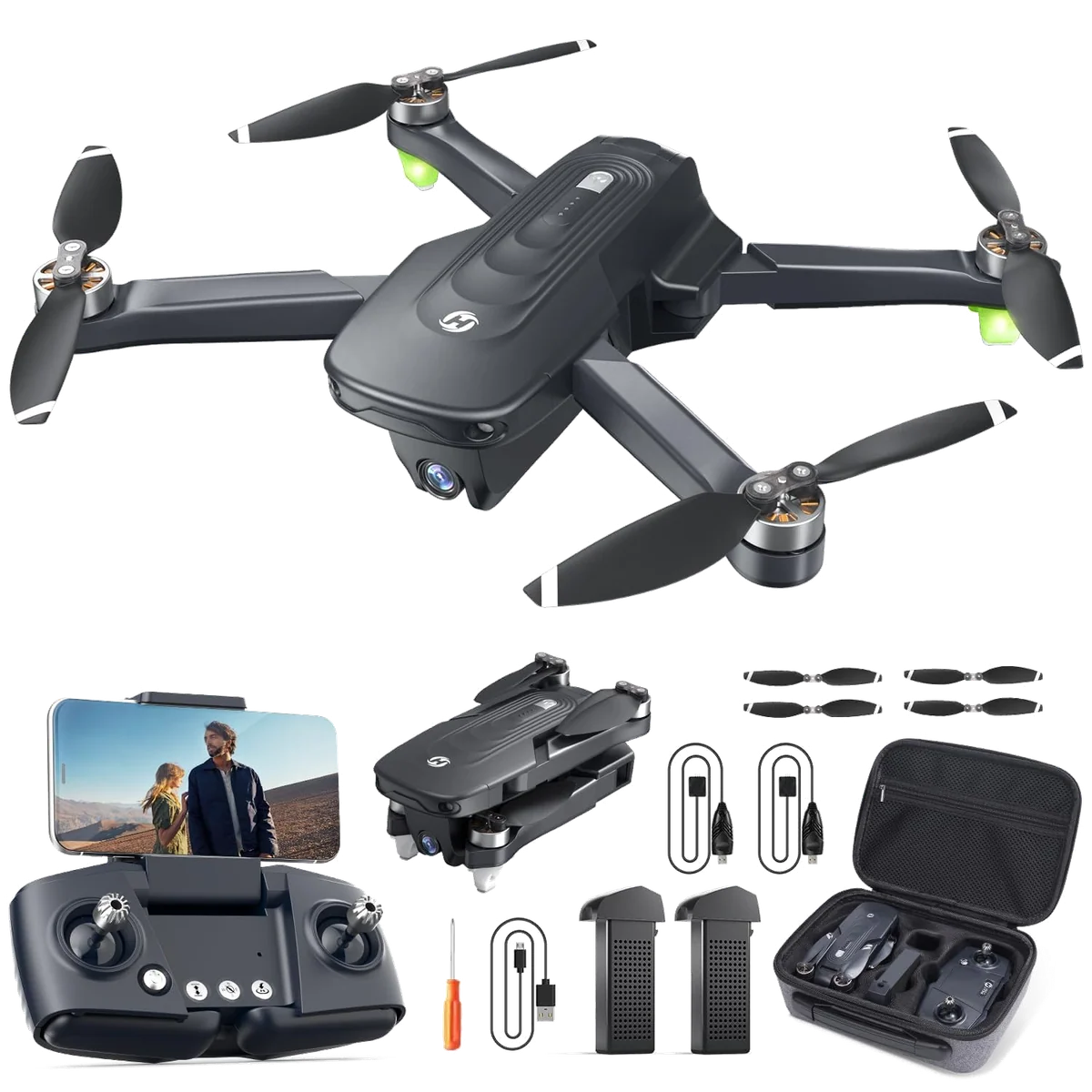
| You want a genuine hard case, two batteries, spare props and tools included rather than sold back to you as a bundle. | You need obstacle sensing, which the affordable Holy Stone models have none of, in any direction. |
Everything below is the evidence for that stance, and the sharpest evidence comes from owners who like their drones.
What the money actually buys, and it is more than the internet admits
Strip the marketing off and what Holy Stone sells at the GPS tier is a well-behaved little aircraft. It lifts off a one-key launch and parks itself in the air. Brushless motors do two useful things: they make it quick for the money, and they make it quiet enough to fly beside your head without annoying anyone. Return to home is the claim that holds up under testing rather than collapsing under it, putting the aircraft back within a few metres of the takeoff mark when the compass has been freshly calibrated, and within a foot of it for one owner who kept measuring in wind.
Durability is the underrated part. The pattern across owners is boringly consistent: people crash these repeatedly and keep flying them, with propellers as the usual worst-case damage. One reviewer flew a HS175D into a tree on camera, unfolded the arms and carried on. Somebody else dug a three-year-old one out of a cupboard, read the manual properly for the first time, and found it flew like new. That matters more for a first drone than any specification, because the thing that ends most people's first month is not a bad sensor, it is a fence post.
Then there is the beginner fence, which nobody markets properly. Set it and the aircraft simply stops at a distance and a ceiling like it has hit glass, and more than one experienced owner chooses to stay inside it rather than escape it. If you are working out how to build flying reflexes without wrecking anything, an aircraft that refuses to leave the field is doing you a favour that a better drone will not.
Support is the last thing on the list and the one the brand's own customers bring up unprompted. Replacement drones for GPS faults, replacement batteries without argument, in one case a whole new aircraft with no requirement to send the old one back. The counter-current is real and worth naming: flyaway reports that went unanswered, an owner cycled through four batteries before being told to buy a new drone. The pattern that fits both is that Holy Stone replaces generously and diagnoses thinly, and that out of warranty you are on your own.
Three ceilings, and they sit on every model in the affordable range
These are not defects in one aircraft. They are what the price buys, and they repeat across the line, which is exactly why a brand page is worth writing instead of a stack of individual reviews.
The camera moves because the aircraft moves
Reviewers who have flown these cannot even agree how many axes the mount has, and the listings carefully say "adjustable angle" without using the word gimbal. The argument is academic, because the functional answer is unanimous: nothing isolates the lens from the airframe, so footage inherits every input. Owners converge on the same workaround from opposite directions, which is to fly slowly, feed the sticks gently, hover, then shoot. One thoughtful owner learned to rotate the aircraft and wait two full seconds before pressing the shutter, because otherwise the horizon tips. If you are hazy on why this matters more than the resolution printed on the box, the difference between a gimbal and electronic stabilisation is the whole story of why cheap drone video looks the way it does.
Two things soften this and neither rescues it. The stills are genuinely good, good enough that one owner bought a drone specifically to photograph an inaccessible roof after inspection quotes came in high, and got what they needed. And judge output from the memory card rather than the phone, because on this class of gear the live feed is a compressed preview and people have returned drones over image quality they only ever saw through the app window. Treat these as flying cameras for photographs and flying toys for video, and the 4K label stops being a grievance.
The video link is Wi-Fi, and Wi-Fi does not go far
That single architectural fact explains the entire cluster of complaints around range: the modest distance, the freezing picture, the phone that has to sit in airplane mode, the hedge that ends a connection. A dedicated range test on the HS175D turned around near 240 metres, and a longer flight pushed into the high 280s with dropouts along the way. An owner in the brand's own forum described flying over a nine-foot hedge into the next field, losing control instantly, and having to push his arms through a gap in the hedge to retrieve the aircraft. Meanwhile the settings screen will happily let you dial in a 500 metre maximum the radio cannot hold, and that gap between what the software permits and what the link supports is the most misleading thing about these drones.
A fair qualification: flying legally you are meant to keep the aircraft in unaided sight anyway, and a 216 gram drone vanishes against a bright sky well before the radio gives up. The big number was mostly irrelevant to a law-abiding pilot before it was inaccurate.
Batteries are the brand's genuine weak point
This is the drawback that would make Quadcopter Bench hesitate to buy a second Holy Stone rather than a first. Across the range, owners report packs dropping from twenty minutes to ten inside a month, packs that will not hold a minute despite reading full, and gauges that bear no relation to the charge in the cell. Separate owners found packs swollen after storage with almost no use, one after two charges and roughly twenty-five minutes of total flight. A swollen pack does not get flown and does not get charged.
The practical response is the single most useful line on this page: exercise every battery that came in the case inside your retailer's return window, rather than leaving the spare sealed for spring. A dead pack found in week two is a return, and the same pack found in month six is a negotiation.
And the flight-time number is arithmetic
Where a Holy Stone box promises 46 minutes, that is two batteries at their best case added together, which the product description concedes in a line almost nobody scrolls to. Owners land independently on about twenty minutes a pack. Subtract a little more, because low-voltage return to home fires while there is still charge in the cell, a haircut visible across the brand's other models too. This is the standard trick for the whole category rather than a Holy Stone invention, and it is worth understanding how the box figure gets assembled before you compare any two drones on it.
The badge covers four very different aircraft, so "is the brand any good" is the wrong unit
People search for these models as if they were a range in the way a car maker has a range. They are not. They are four distinct propositions with one logo, and the answer changes completely depending on which one is in the shopping basket.
| Tier | What it actually is | Worth it? |
|---|---|---|
| Mini toys, the HS210 and its relatives | A palm-sized indoor drone around thirty dollars, gyro-stabilised, throw-and-go takeoff, flips, no GPS and no camera worth the name. | Yes as a toy or a gift, and no as a first step toward outdoor flying, because nothing you learn on it transfers. |
| The sub-249g GPS models, the HS175D above all | Brushless, GPS hold and return to home, a tilting 4K camera, two batteries and a case in the box. | This is the tier the brand earns its reputation on, and the one the verdict at the top is about. |
| The heavier HS720 family | The line the brand's own community likes least, where features such as Follow Me shipped simply not working. | Hard to recommend, and in Europe the weight has aged badly: one owner grounded his HS720 in 2025 under class-marking rules and replaced it with a sub-249g aircraft. |
| The new HS900 flagship | A three-axis gimbal, a longer-range transmission system and over-the-air firmware updates, none of which the company had shipped before. | It answers nearly every criticism on this page, which tells you the criticisms are not eccentric, and it is priced accordingly. |
Two consequences follow from that table. The first is that "I had a Holy Stone and it was rubbish" and "I had a Holy Stone and it was brilliant" are frequently both true and about different aircraft. The second is that the older models do not improve after purchase: firmware updates for legacy drones are, by owners' accounts, not something that happens here, so what is in the box is what you own for the life of it.
Should you save up for a DJI instead?
You will hit this advice within thirty seconds of searching, so it deserves engaging with rather than dodging. Ask the drone forums whether to buy a Holy Stone and the answers are close to unanimous and not gentle: buy a DJI Mini, buy a used one, buy anything else. One thread about these aircraft opens with somebody calling them nice junk and two other users endorsing that as the correct answer.
Two things about that consensus. Several of the loudest voices concede, when pressed, that they have never flown one. And the comparison is nearly always against a drone that costs a good deal more, which the person making it usually acknowledges in the same breath: in that same thread, the refurbished DJI everyone recommends was more than twice the price of the drones being called junk.
The most useful voice in the whole argument belongs to a DJI owner arguing against his own equipment. The cheap drones he owned before the Mini are the ones he did all his reckless flying on, and once he had spent real money he started flying carefully. That is the honest case for Holy Stone, and it is not that it beats a Mini. It is that the crash you are statistically going to have in your first month is a completely different event on a hundred-and-fifty-dollar aircraft than on a six-hundred-dollar one, and the fear of that crash is what stops beginners flying anywhere interesting.
The strongest version of the sceptics' case is not snobbery either, and it is worth stating plainly: a frustrating drone can put someone off the hobby entirely. That risk is real here, and it is concentrated almost entirely in setup rather than in flying. Nobody in the record struggles to fly these. Plenty struggle to start them.
Where the money goes if the ceilings above disqualify the brand
| If your actual problem is | Look at |
|---|---|
| Footage that does not wobble, at close to the same money | The Potensic ATOM SE, which puts stabilisation behind its 4K, and the head to head between the two |
| The drone the sceptics are actually pointing at | The DJI Mini 4K, which is the model most often named as the thing to save for |
| A proper gimbal without DJI money, and whether the rival brand really matches it | The Potensic Atom 2 and our longer answer on how Potensic compares with DJI |
| Simply the best first aircraft, whatever the badge | Our beginner shortlist and the cheaper end of the camera drone market |
One note that cuts back in Holy Stone's favour before you run that comparison. Two batteries, a hard case, spare props, screws and a screwdriver come in the box on the GPS models. On rival aircraft a single spare pack is a meaningful fraction of the drone's price and the case is extra, which is the same calculation that runs through every fly more combo decision. Compare complete kits against complete kits, not stickers against stickers.
How Quadcopter Bench reached this
We have not flown a Holy Stone. Nobody here has owned one, put a scale under one, timed a battery or measured a range, and this page makes no claim otherwise. What it does is read the public record closely and decide what stands up: the customer reviews on the listings, independent video reviews including a dedicated range test, and the brand and drone community threads where owners turn up asking for help.
Evidence about specific aircraft has been kept apart from evidence about the company. Anything asserted about the HS175D comes from sources about the HS175D, and anything about batteries, the app or support across the range is labelled as such, because letting the widely disliked HS720 line stand in for a GPS-stabilised sub-249g drone would be the easiest dishonest move available. Reviewers who disclosed being sent hardware have had their enthusiasm discounted and their observed faults kept at full weight, since those cut against their interest. Where sources genuinely disagree, this page says so instead of picking the tidier answer, which is why it will not tell you how many axes the camera mount has or how long the warranty runs. More on the method is on the about page, and the long-form version of this verdict is in our HS175D review.
Frequently Asked Questions
Which Holy Stone should a first-time flyer actually buy?
The sub-249g GPS model, because it is the only tier where return to home, position hold and a beginner fence come together at a price that makes a crash survivable for your wallet.
Why will the motors not start?
Put it on a level surface with a charged pack, wait up to a minute for satellites, finish the compass calibration, then pull both sticks down and inward at once, which is the gesture that defeats most new owners because down and outward is a different move entirely.
How do you get the drone talking to your phone?
Power the aircraft on first, then open your phone's Wi-Fi settings and join the drone's own network by hand before opening the app, a step the app will not do for you and one our walkthrough on pairing and calibrating a Holy Stone takes slowly.
Are the app problems your phone's fault?
Nobody agrees, since owners blame Android and other owners blame iPhone, and the only settled finding is that the software is fragile and cares about the order you switch things on in.
Does a Holy Stone need FAA registration or a Remote ID module?
Flown recreationally in the US the sub-249g models do not, because they come in under the threshold with room to spare, though commercial flying is a separate question and the rules deserve a proper read first.
Should you buy spare propellers straight away?
Yes, because when a model of this age is discontinued the parts go with it, and propellers are the component you will actually consume.
How much wind can one of these take?
Owners put position hold into the mid-teens in miles per hour with the aircraft still recovering to a stable hover, but the picture degrades long before the drone does, and the wider limits for lightweight drones are worth knowing before you launch.
Is there any obstacle avoidance?
None at all, in any direction, on the affordable models, which matters less than most buyers assume once you understand what these systems really catch , but a tree is entirely your responsibility here.
Is the brand a safer bet now that DJI is harder to buy in the US?
It is a genuine reason the alternatives are getting attention and investment, though it changes availability rather than capability, and where the DJI situation currently stands should shape that decision more than brand loyalty does.
Sources (3)
- Amazon listings and customer reviews
- Owner reports across r/drones, r/HolyStone, r/drone_photography threads
- Owner and reviewer video, 9 channels