The DJI Air 3S is the drone you buy after a small one has already cost you the shot
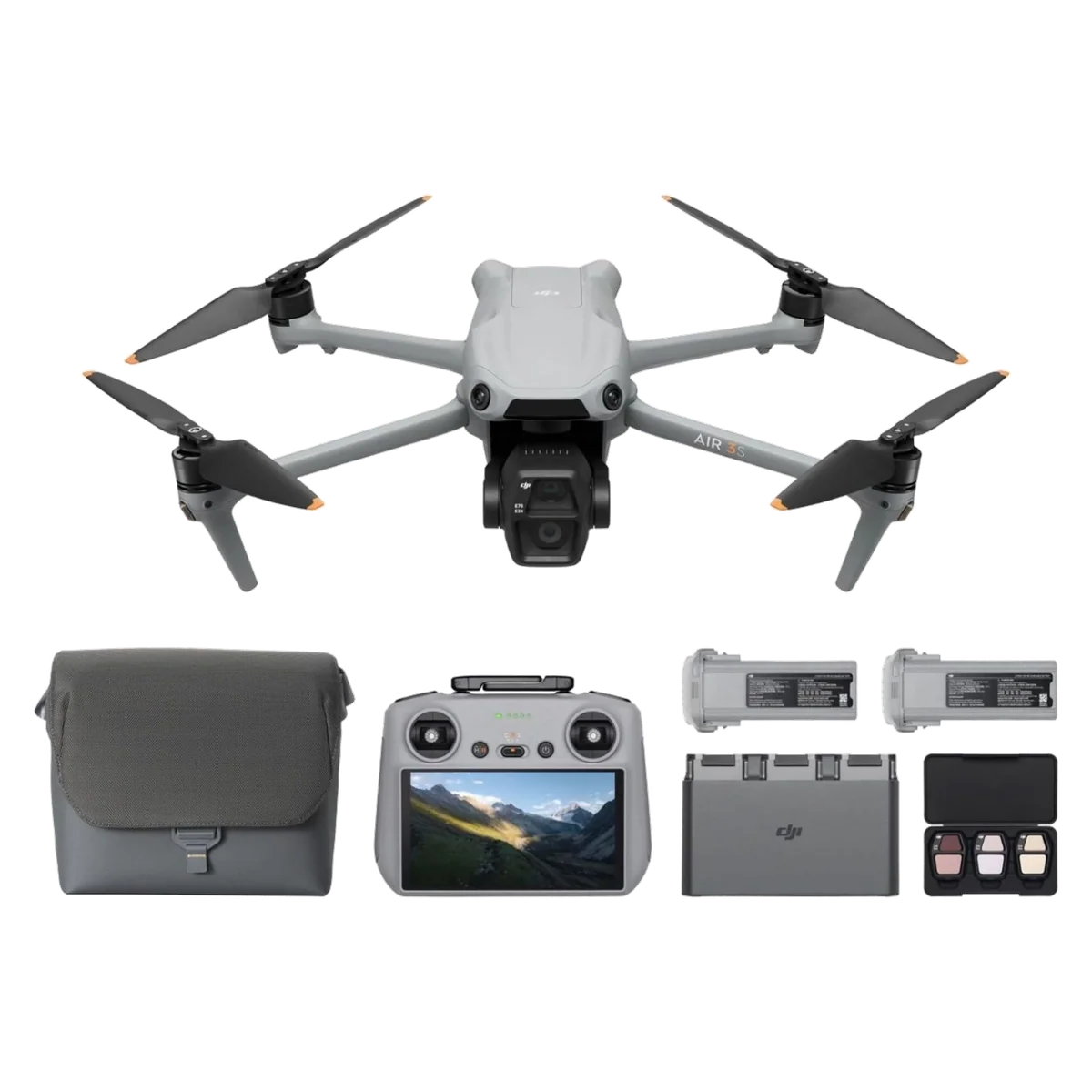
Buy the Fly More Combo if wind or a missing second focal length has already ruined footage you cared about, and walk away if you shoot casually, never colour grade, or need to stay under 250g.
Based on 809 owner ratings, 8 owner discussions and 5 other sources. We have not tested this machine ourselves.
We earn a commission if you buy through our links, which does not affect what we say.
Read how this site works →
Who should buy something else
If a client will ask for ProRes, if you need an adjustable aperture, or if you want the depth of manual camera control that comes with a Four Thirds sensor, the Air 3S will come up short and the Mavic 4 Pro is the aircraft you actually want. An owner who has flown an Air 2S, a Mavic 3 Pro, an Air 3S and a Mavic 4 Pro makes that case precisely, and keeps the Mavic for exactly those reasons. The counterweight matters too: reviewers comparing Air 3S and Mavic 3 Pro footage side by side found the gap far smaller than the price gap, and one preferred the Air 3S image in some shots. Our Mavic 4 Pro against Air 3S comparison is where that decision belongs.
If you never colour grade, the argument against this drone is stronger than any argument for it. What you are chiefly paying for in an Air-class aircraft is a sensor that produces 10-bit log footage worth grading, and if that footage goes straight to social media ungraded, the value proposition collapses. It is a point made repeatedly by working pilots and it deserves more airtime than it gets from anyone with an affiliate link, this page included.
If registration and Remote ID are the thing you were trying to avoid, or if the drone has to live in a jacket pocket, buy a light one. The Mini 3 Fly More Combo is the honest cheaper answer on this site, and the wider field is laid out in the best camera drones under 249g. There is a genuine live dispute about whether the current Mini class has closed the image-quality gap entirely, with one landscape photographer calling a modern 1-inch Mini on par with the Air 3S main camera at a single focal length; we take that argument apart in Air 3S against Mini 5 Pro. What is not in dispute is that a light drone gives up wind performance, which is exactly what our guide to wind limits exists to explain.
And if the work is mapping or survey rather than pictures, stop here. The Air 3S has no SDK, so the professional software that trade depends on cannot easily be pointed at it, which is the single concrete reason anyone calls this a hobby drone. Everything else behind that label is noise, and pilots who shoot creative work commercially describe the Air 3S as more than enough aircraft. If you are choosing kit for invoiced work, start from our list for paid video work instead.
For everyone left, the recommendation stands as it did at the top. This is the drone for the pilot whose ambitions have outgrown a Mini and whose budget has not reached a Mavic, and this bundle is the version of it to buy, with a 65W charger and a set of ND16 and ND64 filters added to the basket before you leave. It reads across the whole field in our roundup of the best camera drones, and it comes out very close to the top.
The Amazon listing calls this a "4K Drone." That is true, and it is the least interesting true thing anybody has said about it. The people who own one talk about a 1-inch sensor, a 70mm second camera, and 50-megapixel stills they print large. One of them, a photographer of fifty years who came to drones late, puts it more bluntly than the marketing copy dares: the Air 3S is not a toy, it is a pair of cameras that happen to fly.
Everything worth arguing about here follows from a single number that appears nowhere in the headline: 724 grams. That mass is why it holds a frame in gusts that leave a Mini bouncing, and it is also why you register it, why it broadcasts Remote ID, why it fills a shoulder bag rather than a jacket pocket, and why people notice you flying it. The buyer who is happy with an Air 3S is the buyer who has already decided that trade is worth making. The clearest statement of it in the whole record comes from a Mini 4 Pro owner who kept carrying his drone on hikes and kept not flying it, because high ground is rarely calm: he gave up the portability to get an aircraft he would actually launch. A drone you leave in the bag is worse than a bigger one you fly.
Quadcopter Bench's reservation is not about the aircraft. It is about the box. This is a premium bundle with three batteries and a charging hub, and DJI leaves the wall charger out and then tells you, in its own listing footnote, to go and buy a 65W one. That footnote sets the tone for the rest of the combo, which is very good with three specific holes in it.
Key Specifications
Two cameras, and only one of them is the reason to be here
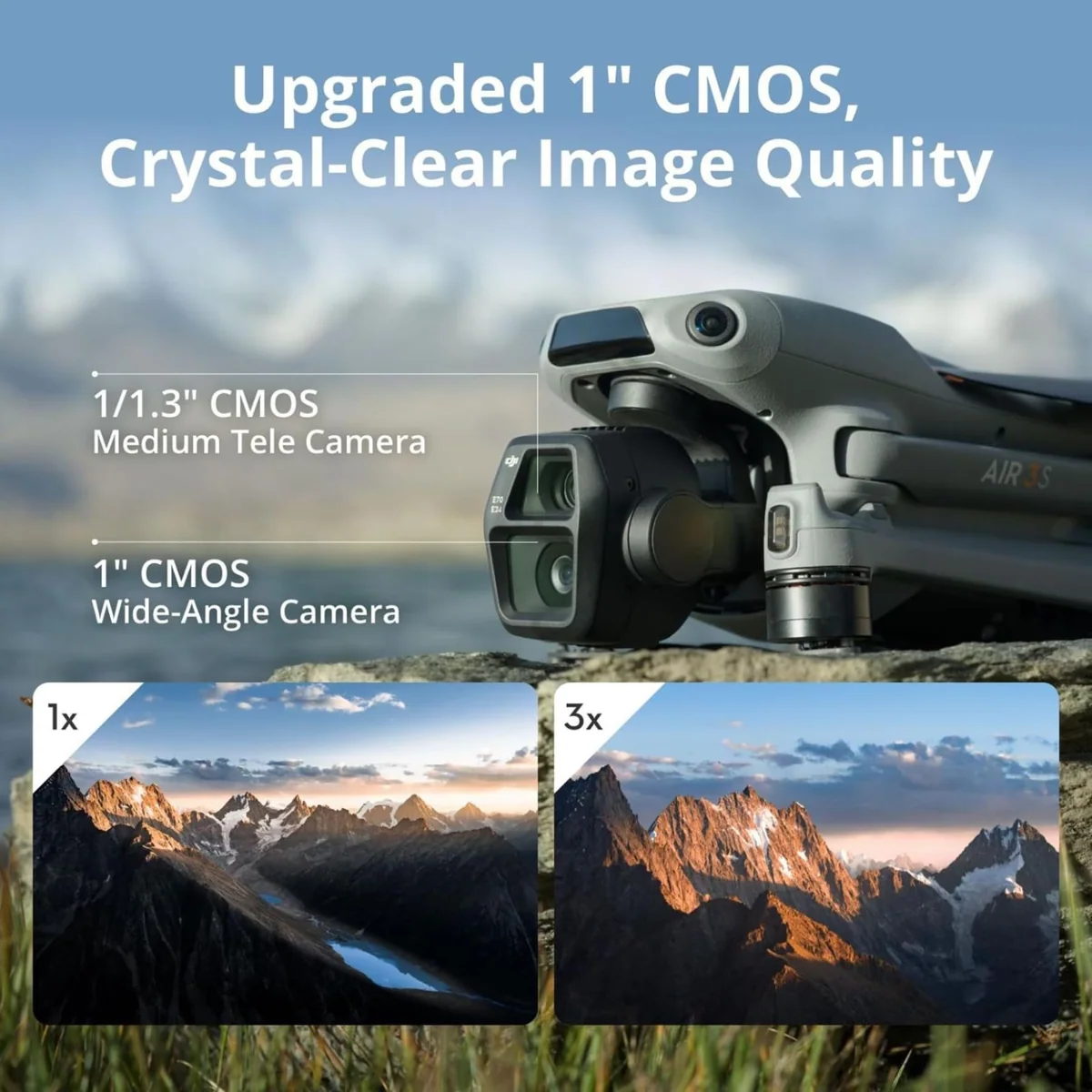
The main camera is a 1-inch CMOS at a 24mm equivalent, and it is the whole upgrade over the Air 3, which used a smaller 1/1.3-inch sensor in the same position. That is the sentence to hold on to when you see the two models sitting side by side at similar money. The secondary camera, a 1/1.3-inch 48-megapixel unit at a 70mm equivalent, carried over unchanged from the Air 3; what DJI did was retune its colour so shots from the two lenses cut together without a grade fight.
The tele is the feature that converts people who arrived sceptical. An owner upgrading from an Air 2 said outright that he expected to dismiss it and changed his mind after a shoot, because it let him reach distant subjects without flying at them. Another bought the aircraft specifically to get a normal-to-tele focal length he could not get from a Mini. That same owner is also the one who tells you the honest part: the 3x on top of that lens is digital, not optical. The second lens is real glass at a real focal length, the zoom beyond it is a crop, and reviewers who conflate the two are doing you no favours.
Two of the listing's more confident numbers deserve a shrug. The 14 stops of dynamic range is a figure DJI also attaches to much smaller sensors elsewhere in the range, which makes it a house number rather than a description of this camera. The 50-megapixel mode is quad-Bayer, and a landscape photographer who compared the high-resolution files against the binned 12.5-megapixel output at matched magnification could find no real detail advantage at all. Shoot the smaller files and spend the storage on more frames.
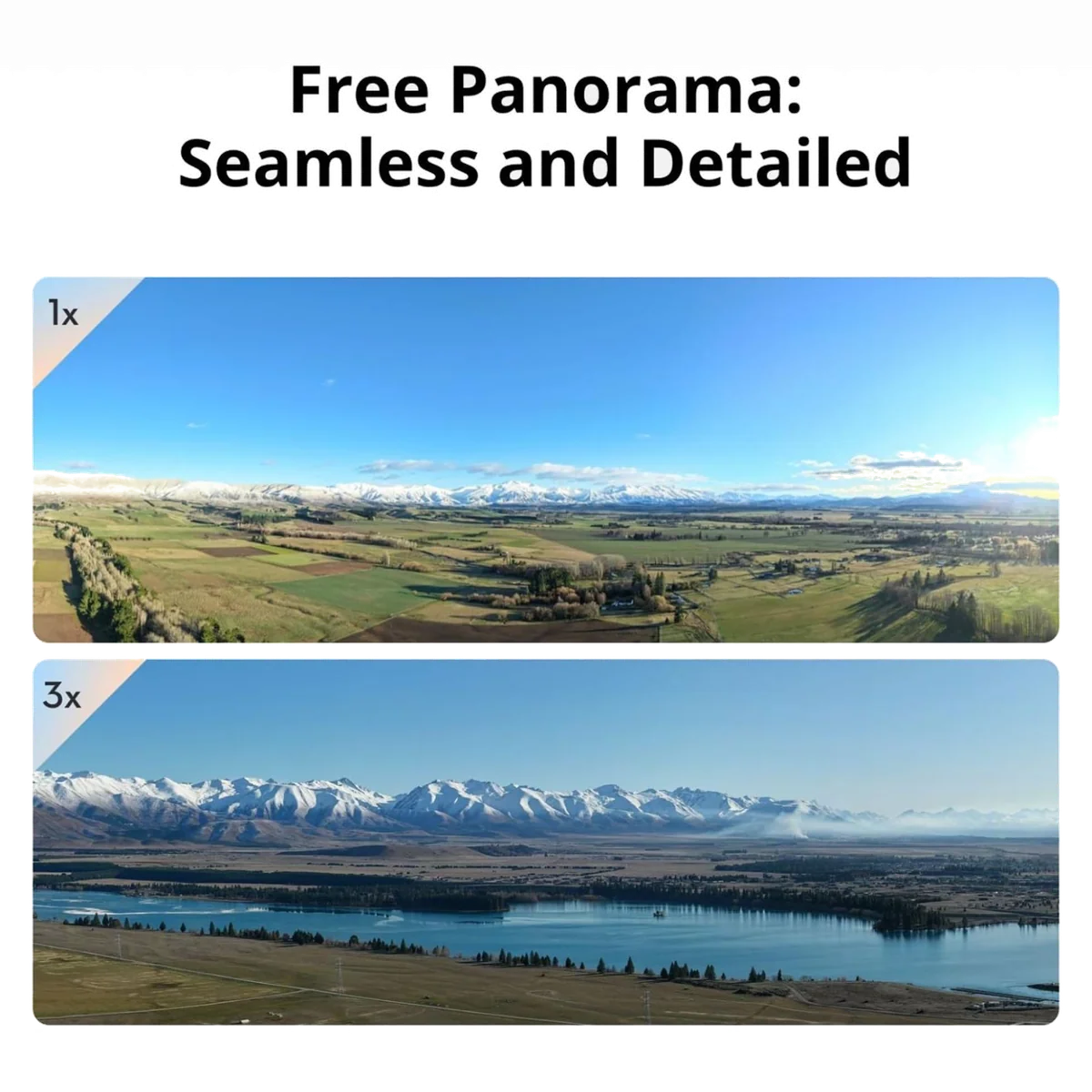
There is one genuinely useful thing DJI hid rather than sold. Exposure bracketing on the Air 3S lives inside Free Panorama mode, buried in camera settings, and an owner who flies this alongside a Mavic 3 Pro had to go looking to find it: three brackets at 50MP, five at 12MP, with the steps locked at roughly two thirds of a stop rather than left to you. If you shoot stills for stitching or blending, that is worth ten minutes with the menus before your first real outing.
Now the regressions, because they are real and nobody selling you this drone mentions them. The Air 3S tops out at 4K, while the several-years-older Air 2S managed 5.4K. Maximum bitrate dropped to 130 Mbps from the 150 Mbps of older models, and a reviewer who measured three DJI drones side by side recording 4K 10-bit H.265 got roughly 90 Mbps out of the Air 3S in practice. He then did the fair thing and admitted he could not tell the footage apart blind, and that he preferred the Air 3S image anyway for being sharper and cleaner. There is also no H.264 option at all, which is a Windows playback headache and nothing more if you edit on a Mac.
Neither camera has an adjustable aperture. That is a segmentation decision rather than an oversight, and it is why the Mavic line still exists, but it has a practical consequence: ND filters are not an accessory on this drone, they are a requirement for any video shot in daylight. Hold that thought, because it is what makes the contents of this particular box worth arguing about.
Strengths & Limitations
Strengths
- The 1-inch main sensor is a real generational step over the Air 3 and the reason to choose this model rather than its predecessor.
- The 70mm second camera converts sceptics, and it lets you frame distant subjects without flying at them.
- Mass buys composure, and owners consistently report it holding a frame in wind that makes a sub-250g drone unusable for video.
- The RC 2 screen controller keeps your phone in your pocket for the entire session, which owners repeatedly name as the best part of this bundle.
- Forward LiDAR makes night flying meaningfully less reckless than it was on any earlier Air.
- Three batteries, a charging hub, ten spare propellers and the best bag DJI includes make this the version of the aircraft worth owning.
Limitations
- No wall charger is in the box, and DJI's own listing tells you to buy a 65W one separately.
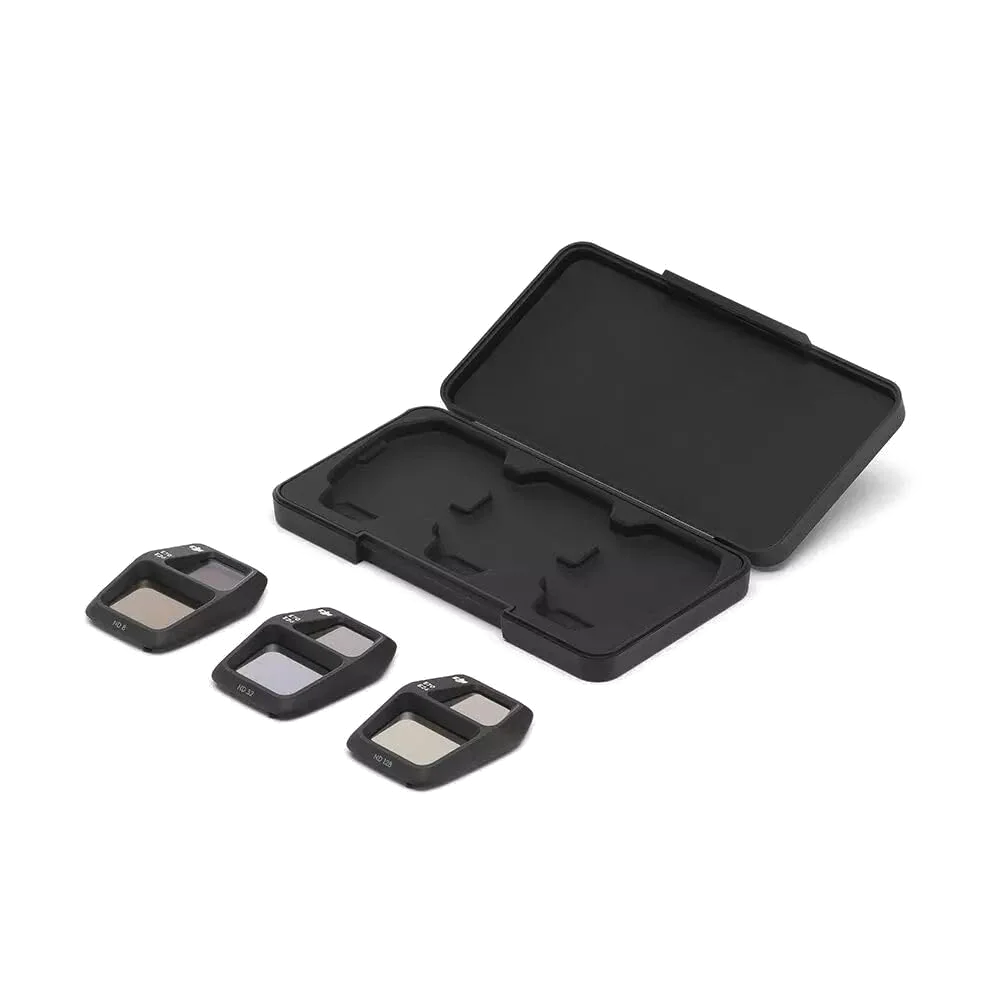
- The bundled ND8, ND32 and ND128 filters skip the ND16 and ND64 values reviewers say they actually reach for.
- Obstacle sensing switches off completely in Sport mode, and the LiDAR that makes night flight safer only looks forward.
- It is loud and conspicuous, and an owner reports hearing it clearly at 120 metres.
- Video tops out at 4K with a lower maximum bitrate than the Air 3, and the 5.4K the older Air 2S offered never came back.
- There is no SDK, so the third-party mapping and survey software professional customers ask for will not run with it.
- At 724g it is far past the 250g line, so registration and Remote ID are compulsory and the light-drone exemptions do not apply.
- Both cameras use a fixed aperture, which makes ND filters mandatory equipment rather than an optional extra.
What the sensors catch, and what they fly straight through
Stability is where the mass pays. Owners describe a hover that stays put in gusts, footage that stays smooth, and a general sense that the aircraft is not fighting the air. A pilot who flies this alongside a Mini 4 Pro and a Mavic 4 Pro reaches for the Air 3S most often and calls it the sweet spot of the range. The one qualification worth carrying into the field comes from an owner using follow modes in heavy wind: the recording stayed smooth, but the aircraft visibly wobbled while tracking. That is the boundary, and it is a reasonable one.
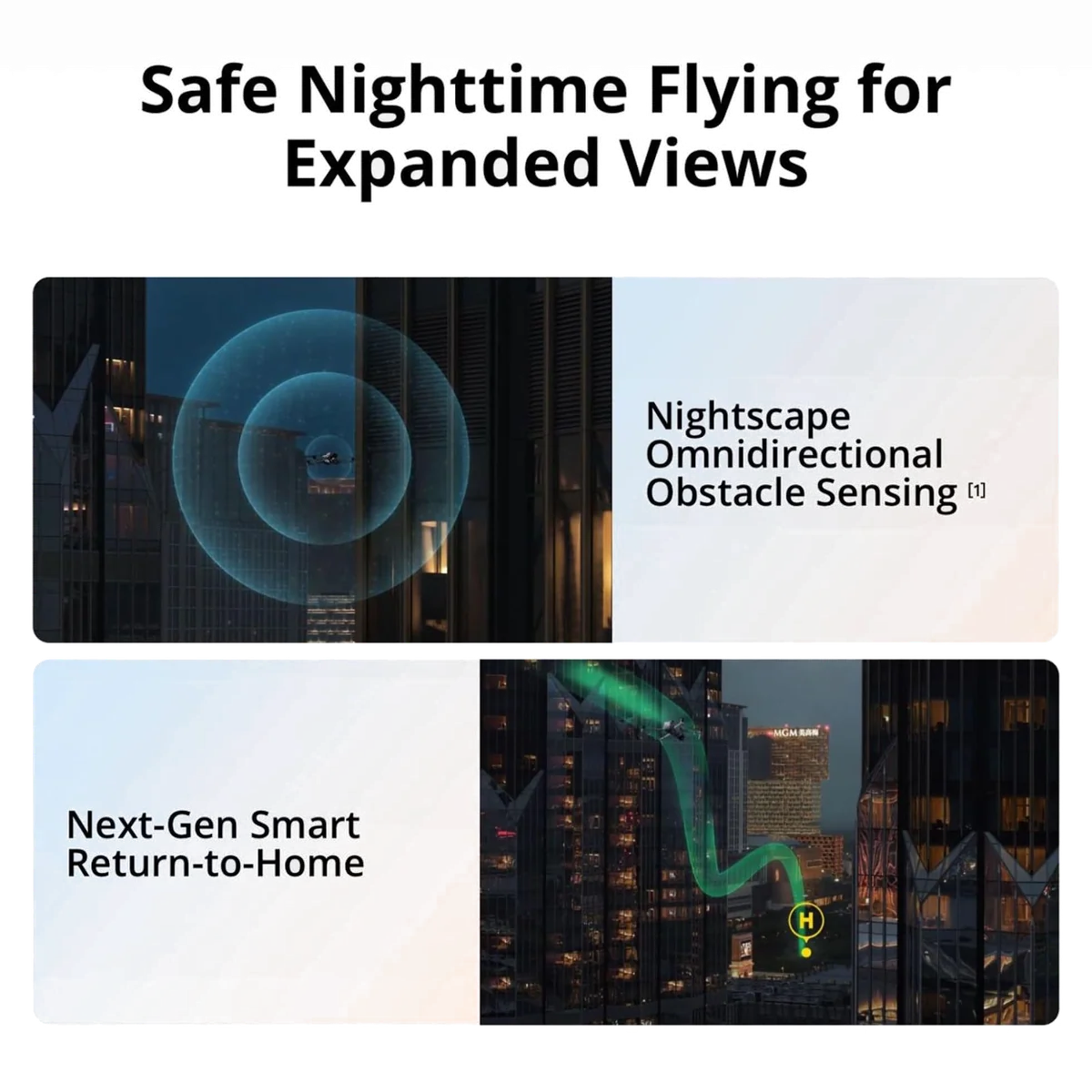
Obstacle avoidance is the section where marketing copy and reality separate most cleanly, so here is the shape of it. Omnidirectional sensing plus a forward-facing LiDAR is genuinely more than most drones carry, and a reviewer who flew it around trees and buildings at night reported it detected and avoided everything, which would previously have been reckless. Then come the three qualifications, all of them from people who actually flew it. The LiDAR looks forward only, so at night you do not fly backwards or sideways. On a dense brush trail with ActiveTrack running, the propellers nicked leaves and branches and knocked the aircraft off keel, and the reviewer replaced the props afterwards out of caution. And the sensors switch off entirely in Sport mode, which an owner flagged as the thing nobody warns you about.
The blind spot that ends drones is thin wire, and no vision system or LiDAR on the market sees it reliably; a tester with a decade of drone reviews behind him lost a sibling model when a propeller caught a fibre-optic cable he had flown underneath. That is a different aircraft, but it is the same physics. Treat all of this the way our guide to what obstacle avoidance actually catches treats it: an aid that buys you margin, not a system that flies the drone for you.
Two smaller irritations from owners, both specific enough to be checkable. Switching between the wide and tele cameras carries about a second of delay, which matters if you are chasing a moving subject. And the door covering the charging port and card slot feels cheap enough that an owner said he felt he could tear it off. Nobody in the record reports actually breaking one.
The headline numbers, against what the record shows
| What the listing claims | What the record actually supports |
|---|---|
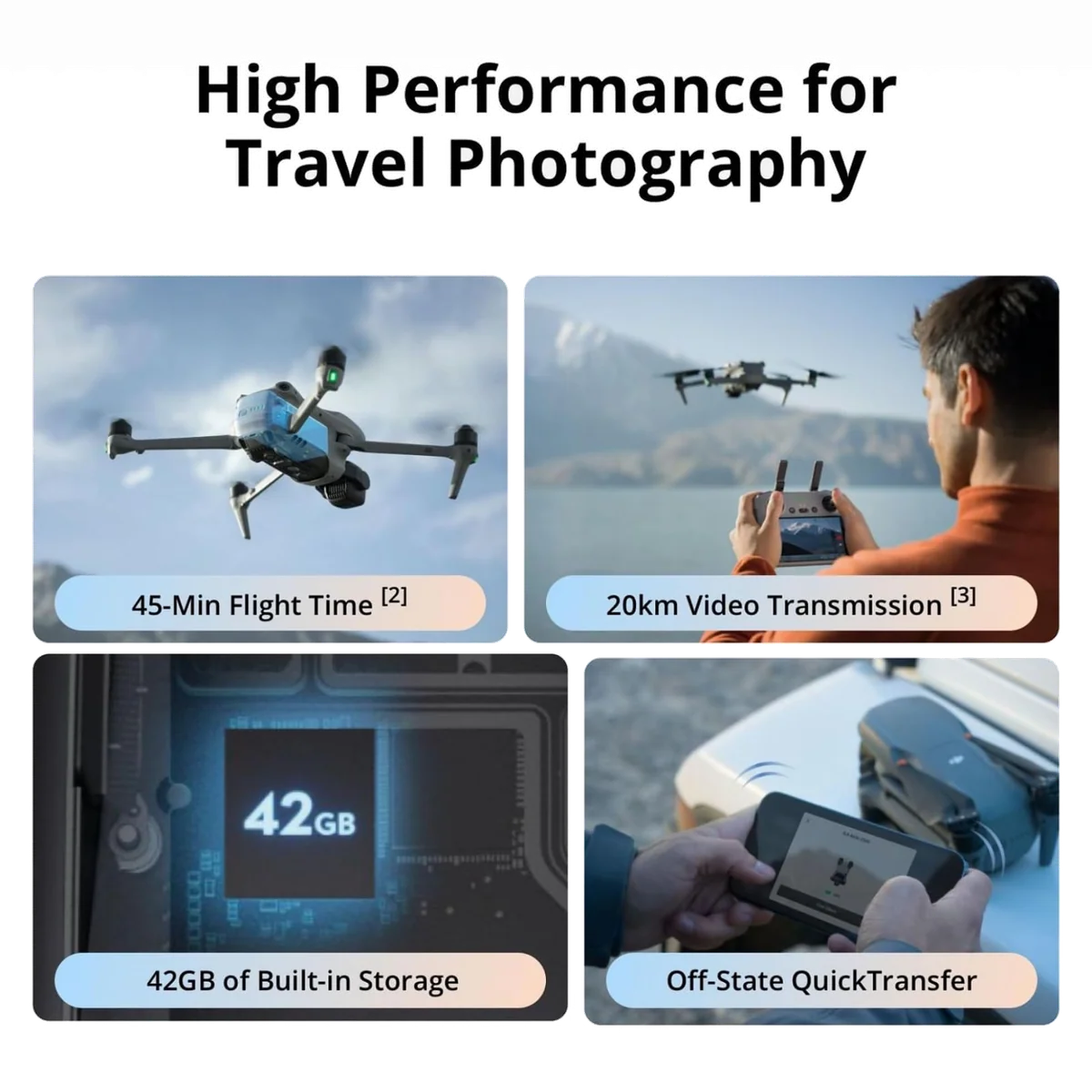
| 45-minute maximum flight time | An upgrader logged about 40 minutes on mixed use, a reviewer put real-world flying near 38, and a three-drone owner says around 35; it is also slightly less than the Air 3 managed, which the aircraft's extra hardware plausibly explains. |
| 20km of video transmission | That number describes the radio link, not the flight envelope; on the same O4 system a tester turned a sibling drone around at roughly 4.5km with four of five signal bars still showing, because the battery would not have brought it home. |
| Up to 14 stops of dynamic range | DJI quotes the same figure for considerably smaller sensors elsewhere in its range, so read it as a family claim rather than a measurement of this camera. |
| 50-megapixel stills | A photographer comparing the high-resolution files against binned 12.5-megapixel output at matched magnification found no visible sharpness advantage. |
None of that makes the drone worse than its rivals, because every manufacturer quotes flight time from a windless hover and range from a clean radio link. It does mean you should plan a session around three flights of a little over half an hour, not three of three quarters. We take that apart properly in how long a drone really flies on one battery.
On noise, the record genuinely splits, and it is worth staging rather than resolving. An Air 3S owner calls it very loud and plainly noticeable at 120 metres. Owners of the near-identical Air 3 airframe reached opposite verdicts, one describing a swarm of angry bees and another saying it is still pretty quiet for a drone. Two experienced multi-drone pilots complicate it further by insisting the small drones are the noisy ones, because higher-pitched propellers carry. What everybody agrees on is conspicuousness: an Air-class drone with a screen controller announces that somebody is flying, and if your reason for wanting a drone is discretion in a city, this is the wrong one.
The combo is the right box, with one thing missing and three filters wrong
Start with what turns up. The bundle contains the aircraft, the RC 2 screen controller, three batteries, the charging hub, an ND filter set in a hard case, a shoulder bag and spare propellers. Buyers who audited the contents against the listing found more than was promised, including a gimbal guard and ten spare propellers rather than the single pair they expected. The batteries arrive at about half charge, which is exactly right for lithium cells that have been sitting in a warehouse. The bag is the best DJI includes with anything, and it is still a tight enough squeeze that an owner recommended replacing it with a hard case before anything rolls around in a car boot.
Now the hole. There is no wall charger, and DJI's listing names the 65W one it wants you to buy. Two independent owners landed on the same advice without coordinating: 65W minimum, 100W better. This is not a rounding error on a three-battery kit. Charging a full set of batteries plus the controller on a modest brick is a whole evening's work, as one reviewer found when a sibling drone's three batteries and remote came to nearly four hours end to end. The brick you supply is the thing that decides whether you can turn a kit round the same day.
The second hole is the filter set. It contains ND8, ND32 and ND128, and two reviewers independently said the same thing about it: the values they reach for are ND16 and ND64, and neither is in the case. On a drone with a fixed aperture, where filters are the only way to control shutter speed, that is a real gap rather than a nitpick, and you will be buying a third-party set sooner than you expect. If you shoot stills rather than video, the filters matter far less, and the case for the combo rests entirely on the batteries. Our take on whether a Fly More Combo earns its premium goes through that arithmetic in general terms; for this drone specifically, three batteries and a hub are worth the money and the filters are a partial refund at best.
Third, and smallest: you need two microSD cards, one for the aircraft and one for the controller. The 42GB of internal storage takes the panic out of forgetting one, but it will not carry a day of 4K.
On the controller question, the record is close to unanimous. Owners who bought this variant describe the RC 2 as the thing that changed how often they fly, because a screen controller means your phone is not tied up, drained and buzzing for the hour you are in the air. There is a real dissent worth respecting: one owner deliberately chose the phone-tethered RC-N3 and paired it with a large, very bright tablet, because ageing eyes and direct sun beat a 5.5-inch screen. Owners split on that screen in full sunshine too, one calling it hard to read in bright light and another calling it clearly legible under the sun. If you already own an RC 2 from a Mini 4 Pro or an Air 3, the controller in this box is identical to yours and you should buy the cheaper bundle instead. Which controller pairs with what is laid out in our guide to the RC 2.
One thing to skip outright: the third-party "bundles" that pile in landing pads, cases and no-name filters. An owner who travels with this drone described them accurately as cheap accessories you replace the moment you start using the thing properly.
What owning one actually looks like from here
The Air 3S went on sale in late 2024, which by drone standards makes it mature rather than old. That is mostly a good thing; it is well past the firmware-teething stage that catches early buyers of new models. Mostly. A six-month owner complained that his aircraft had received no new features at all in that time and that he missed a dedicated night mode the older Air 3 had. A reviewer separately caught the focus wheel refusing to respond during an ActiveTrack sequence, with the aircraft reporting it could not adjust. Neither is disqualifying. Both are worth knowing before you assume a feature request will be answered.
The bigger structural change to ownership is insurance. DJI Care Refresh is no longer available to buyers in the United States, and the substitutes owners have found are rated poorly by the people who priced them; one Mini owner called his State Farm quote trash outright. On a four-figure aircraft that has to be flown near trees to be useful, the disappearance of the cover that used to backstop the purchase is a genuine cost increase even though the sticker did not move. We work through what is left in insuring a drone now that Care Refresh is gone.
Then there is the thing DJI admits on its own sales page. The drone is bound to your DJI account, and the listing warns in its own words that failing to unbind before a return can lead to unauthorised access and to potential remote locking of the device, rendering it inoperable. That is the clearest available answer to the question people keep asking about DJI drones, and it comes from DJI rather than from a commentator: this is a networked product with an account behind it, and the manufacturer can reach it. If you buy one used, unbinding is the first thing to sort out, not the last.
On the American regulatory question, the position as things stand is narrower than the headlines suggest. The FCC's action blocks new foreign-made drones from obtaining authorisation, which stops future models being sold or imported; drones already authorised remain legal to buy and fly. The Air 3S is on the authorised side of that line, which is the entire reason it is still sitting on a US listing while newer DJI hardware is not. The situation is contested and moving, so treat any statement about it, including this one, as dated; our standing page on buying and flying a DJI drone in the US is the one we keep current.
Finally, the upgrade question that a review has a duty to answer against its own commercial interest. If you already own an Air 3, do not buy this. The reviewer who tested them side by side found the footage so similar that the only clear improvement was dynamic range, and said plainly that he saw no reason to upgrade. Sell that advice to someone who needs it.
Frequently Asked Questions
Is the Air 3S actually better than the Air 3?
Yes on the point that matters, because the main camera moved from a 1/1.3-inch sensor to a 1-inch one, but the flight time and maximum bitrate both went slightly backwards, which is why nobody in the record advises an Air 3 owner to upgrade.
How far can it really fly?
The 20km figure describes the radio link rather than the aircraft, and in practice the battery is the binding constraint long before the signal is.
Do I have to register it?
Yes, since at 724g it sits far above the 250g threshold, so US buyers register it with the FAA and it broadcasts Remote ID, while European pilots will need the appropriate certificate.
Does the Fly More Combo contain everything I need to fly?
Almost, but you will need to add a wall charger of at least 65W and two microSD cards, one for the aircraft and one for the controller.
Can Americans still buy and fly this one?
As things stand yes, because the restriction blocks new authorisations rather than revoking existing ones and the Air 3S was authorised before that line was drawn, though the position is contested and worth checking rather than assuming.
Is the screen controller worth choosing over the phone-tethered version?
For most buyers yes, because it frees your phone for the entire session, but if your eyes want a bigger, brighter display then the RC-N3 plus a good tablet is a defensible choice.
Will my Air 3 batteries and filters fit?
The batteries fit and work despite a slight capacity difference, but the Air 3 ND filters are nowhere near fitting the larger 1-inch camera housing.
Should I wait for whatever replaces it?
No, because a successor is unconfirmed, and the advice owners keep giving is the sound kind: buy a great drone now rather than wait indefinitely for a great drone later.
Sources (7)
- Amazon listings and customer reviews — Dji Air 3s
- Owner reports across r/dji threads
- Owner and reviewer video, 3 channels
- Photo — Article — jvn.photo
- Firstquadcopter — Article — www.firstquadcopter.com
- Fstoppers — Article — fstoppers.com
- Pcmag — Article — www.pcmag.com