Under 250 grams gets you out of the paperwork, not out of the rules
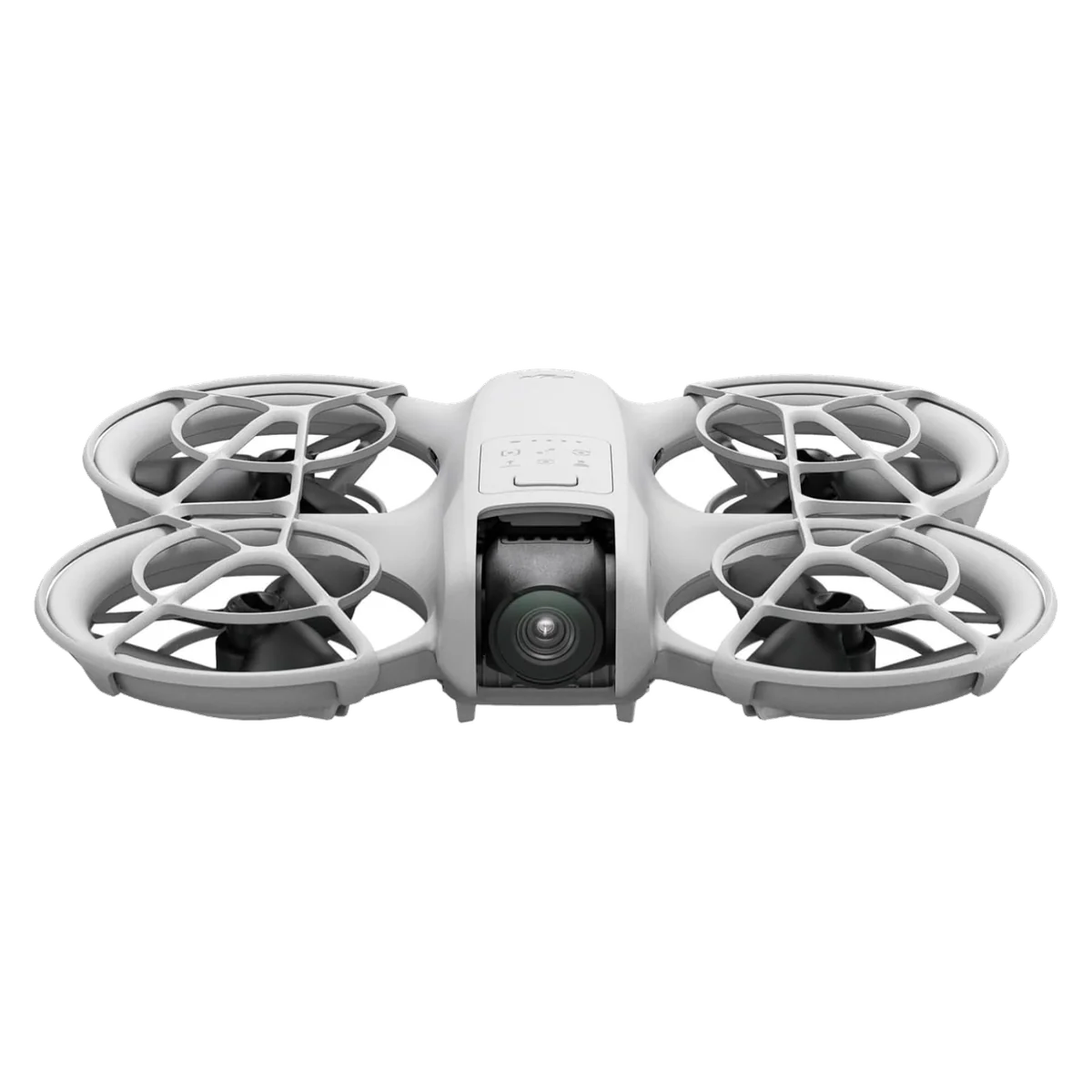
Manufacturers know exactly what that exemption is worth to a nervous first-time buyer, so they print it in the first bullet. DJI's Neo listing says the drone "does not require FAA registration and Remote ID". Potensic's ATOM SE listing promises "no need for FAA & Remote ID Registration". The Flip listing says it "doesn't need FAA registration or Remote ID in America". None of those sentences is false. Two of them are missing the word that decides whether they apply to you at all.
DJI's copy on the Mini 3 and the Mini 4K puts the word back in: registration and Remote ID are not required if you fly for recreational purposes, and the Mini 4K bullet then tells you to go and read the FAA's own site rather than trusting the bullet. That hedge is the whole shape of this subject. The 250 gram line is drawn around one thing, which is the aircraft's paperwork. It is not drawn around the pilot, the airspace, the altitude, the light level, the people underneath you, or the invoice.
So the useful sorting question is not what the drone weighs. It is what happens to the footage. If it goes to your own phone, your family, a channel nobody pays you for, then the sub-250g class genuinely saves you a registration, a broadcast requirement and a certain amount of low-grade anxiety, and it is worth choosing a drone around. If any of it is going to be paid for, in cash or in kind, the exemption is worth nothing to you, because the rules that govern commercial flying do not care how light the aircraft is and one of them is Remote ID. Several of the drones on this page cannot do that at any price.
And there is a third group, the one Quadcopter Bench finds most often in owner records: people who bought under the line, then quietly crossed it. Two hundred and forty-nine grams is a threshold, not a category, and a threshold can be crossed with a screwdriver.
What the line actually removes, and what it leaves exactly where it was
The cleanest way to hold this in your head is as a list of obligations with two columns, because only two of the rows change when the needle drops below 250 grams. The listings advertise those two rows and stay quiet about the rest, which is how a reader ends up believing that a light drone is an unregulated drone.
| Obligation | Under 250g | 250g and over |
|---|---|---|
| Register the aircraft with the FAA | No | Yes |
| Broadcast Remote ID | No | Yes |
| Pass the free TRUST knowledge test | Yes | Yes |
| Keep the aircraft in unaided visual line of sight | Yes | Yes |
| Obey altitude limits and get authorisation in controlled airspace | Yes | Yes |
| Follow the separate rules for night, and for flying over people | Yes | Yes |
| Hold a Part 107 certificate for anything that is not purely for fun | Yes | Yes |
The TRUST row is the one nobody puts on a box. It is free, it is online, it takes an afternoon at most, and it applies to every recreational flyer regardless of what they are flying. Owners find it eventually and are usually pleasantly surprised: an ATOM SE buyer did his through Pilot Institute and called it very easy, and a Mini 4K owner took the recreational flyer course and said it was what finally made the legal side make sense to him. Neither of them learned about it from the drone's packaging.
The word doing all the work is "recreational"
Recreational means flying for your own enjoyment and nothing else. It is a narrower category than most buyers assume. A monetised video, a property listing shot for a friend who is an agent, a roof survey you do not charge for but which saves your own business a contractor's fee: the moment the flight is furthering a purpose beyond fun, you are outside the recreational rule and into Part 107, where you register the aircraft, hold a certificate, and broadcast Remote ID no matter what the drone weighs. PCMag's drone coverage is written by a Part 107 certified pilot and treats that boundary as the first thing a buyer should check, which is the right instinct.
This is where the sub-250g class turns from a convenience into a hard wall. A drone with no Remote ID transmitter cannot be made compliant by paperwork; there is nothing to switch on. The DJI Neo has none, which is why our Neo review tells anyone who bills for footage to stop reading at the first paragraph. The DJI Flip has none either, and one owner spells out the workaround and its limits in a single review: the drone flies fine with a bolt-on broadcast module fitted, and if you are using it commercially in the US that is something you will want to note before you buy rather than after.
Note what that module does to the arithmetic. It adds weight to an aircraft that was chosen for being light, and the flight you are now legal for is a flight that required registration anyway. The exemption and the module cannot both be the reason you bought the drone. If money is involved, start from the drones built for paid work instead and stop trying to squeeze a hobby aircraft through a commercial rule.
Four ways to cross the line without noticing
Propeller guards. The most instructive account on any of these listings comes from a Mini 3 owner who wanted a substitute for the obstacle sensors his drone does not have, fitted guards, went over the threshold and had to register the aircraft after all. He is not annoyed about it, he simply notes he wishes he had bought the larger batteries too, since he had already forfeited the thing the smaller ones were protecting.
A bigger battery. DJI states this outright on the Mini 3 listing: the Intelligent Flight Battery Plus extends flight time to 51 minutes, and the aircraft will then weigh more than 249 grams. PCMag adds the sting, reporting that the Mini 3's Remote ID capability is reached through that extended battery, so the one accessory that makes the drone legal for paid work is also the one that costs you the weight exemption. You cannot have both, and any listing that implies otherwise is selling you a contradiction.
The batch you happened to get. DJI's own footnotes say the quoted weight includes the battery, the propellers and a microSD card, and that actual product weight may vary due to differences in batch materials. Some drones sit comfortably clear of the line and some sit on it. The Neo is 135g and the Neo 2 is 151g, so no manufacturing tolerance is going to matter. The Potensic Atom 2 is 249g, which is the line, and one ATOM SE owner put his on a kitchen scale and read 248g with the battery in. If you are within a couple of grams, a skin, a lens filter or a heavier third-party propeller is a legal event.
Assuming the exemption travels. It does not, and the next section is entirely about that.
What each of these drones can and cannot do about Remote ID
Weight decides whether you need Remote ID. Hardware decides whether you can have it. Those are separate questions and buyers routinely merge them.
| Drone | Weight | Recreational US | Paid work |
|---|---|---|---|
| HOVERAir X1 | 127g measured | No registration, no Remote ID | No broadcast in our record |
| DJI Neo | 135g | No registration, no Remote ID | No broadcast, so no |
| DJI Neo 2 | 151g, C0 marked | No registration, no Remote ID | Not established in our record |
| Holy Stone HS175D | About 216g | No registration, no Remote ID | No broadcast in our record |
| Potensic ATOM SE | 248g on an owner's scale | No registration, no Remote ID | No broadcast in our record |
| DJI Mini 4K | Under 249g | No registration, no Remote ID | Not established in our record |
| DJI Mini 3 | Under 249g as shipped | No registration, no Remote ID | Broadcast reached via the extended battery, which breaks the weight |
| DJI Flip | Under 249g | No registration, no Remote ID | Only with an add-on module |
| Potensic Atom 2 | 249g | No registration required | Remote ID on board as a toggle |
| DJI Avata 2 | 377g | Register and broadcast | Register and broadcast |
| DJI Avata 360 | Around 455g | Register and broadcast | Register and broadcast |
| DJI Air 3S | 724g | Register and broadcast | Register and broadcast |
| DJI Mavic 4 Pro | Flagship weight class | Register and broadcast | Register and broadcast |
Two honest gaps in that table. Where it says the record does not establish something, that means we could not find a source that settles it rather than that the answer is no, and you should confirm with the manufacturer before you plan a paid job around it. And the ATOM SE and HS175D listings simply advertise the exemption without saying anything about a transmitter, which is exactly what you would expect from aircraft designed for the recreational side of the line.
Outside America, the line is somewhere else entirely
The most useful evidence here is two German owners of two different drones reaching opposite conclusions. A HOVERAir X1 buyer praises the drone precisely because you need no registration with the aviation authority. An Atom 2 owner, flying a drone in the same weight class, writes several careful paragraphs explaining that because his aircraft carries a camera he must register as an operator, fix the issued e-ID to the airframe, and hold mandatory liability insurance before he flies outdoors at all, even in his own garden. A Holy Stone owner in the same market makes the same point from the other side, noting that his C0-class drone can be flown without Remote ID but that insurance is compulsory regardless.
They cannot all be right, and the discrepancy is the lesson. In the UK and across the EU the registration that matters is registration of the operator, and it is triggered by the drone having a camera rather than by the drone being heavy. An ATOM SE owner in Britain worked that out for himself and registered with the CAA as soon as the drone arrived, describing it as inexpensive and mandatory. Under 250 grams buys you a great deal in that system, and it does not buy you the right to skip signing up.
The C0 class marking on the Neo 2 and on newer European-market drones is the same exemption in a different currency: fly close to people without a certificate, in exchange for a hard ceiling of 120 metres above your takeoff point, which is a real constraint in mountains and a non-issue in a park. Cross the class boundaries upward and the certificates begin: a Mavic 4 Pro owner in the UK lists needing an A2 certificate to fly near people as one of the two drawbacks of owning a flagship, alongside the fact that it is heavy to hike with.
And the number itself is not universal. A Neo owner in Colombia bought the drone specifically because his country's recreational threshold is 200 grams rather than 250, which the 135g Neo clears with room to spare and a 249g Mini would not. Another five-star Neo reviewer cheerfully described the drone as exempt from many FAA rules, which is the kind of sentence that is close enough to true to be dangerous. Take none of this, including this page, as legal advice for your own country; take it as a map of what to go and check, and check it with your own regulator.
So which drone should you actually buy
If the exemption is the reason you are shopping, the field splits three ways, and our roundup of camera drones under 249g ranks the whole set. What follows is the short version, with the reason to buy each one and the reason not to.
You want to fly the drone yourself
The DJI Mini 4K is the cheapest honest way into a real gimballed, GPS-anchored aircraft, and it clears the weight line without anyone having to argue about tolerances. It has no obstacle sensing in any direction and it cannot track a moving subject, so it is a drone for open ground and for learning, not for chasing anything through trees. The Potensic ATOM SE does the same job for less, with accurate return to home and a genuinely forgiving hover, at the cost of a camera that stabilises electronically rather than mechanically and cannot hold the horizon level while the airframe leans into wind. The Holy Stone HS175D is the one to break while you learn, cheap enough that a crash is a shrug, and its video carries every stick input straight into the frame because nothing damps the camera against the aircraft. All three belong in the beginner conversation, and none of them will follow you anywhere.
You want the drone to film you
The DJI Neo 2 is the best tracker here at 151 grams, holding a cyclist at speed through trees and launching off your palm, and it gives you roughly twelve real minutes per battery rather than the nineteen on the box and cannot punch into a headwind. The original DJI Neo is the cheapest way to get the same trick and the one that actually leaves the house, with no obstacle sensing whatsoever and no Remote ID, which puts paid work permanently out of reach. The HOVERAir X1 is the lightest and the quickest to launch, and it has no GPS and no return to home, so when it loses you it lands wherever it happens to be. The DJI Flip has the best camera of the four and full propeller cages that make palm launch genuinely safe, and its guards behave like sails in wind while its lack of a Remote ID broadcast rules out the paid flying its picture quality would otherwise justify. Our follow-me shortlist sets them against each other properly, and Flip against Neo 2 is the comparison most buyers are really having.
You want the best camera that still clears the line
The DJI Mini 3 has the longest legs and true vertical shooting, and it cannot track a moving subject at all and reaches Remote ID only through a battery that pushes it over the weight you bought it for. The Potensic Atom 2 is the only drone here that carries Remote ID as a toggle at 249 grams, which makes it the most flexible answer on this page for anyone who might one day be paid, and it has no forward or side obstacle avoidance while marketing tracking modes that fly it at moving subjects. Read Atom 2 against the Mini 4K before you commit, because on the day you look the price gap decides it.
You are registering anyway, so stop optimising for weight
Once you accept the registration and the broadcast, the whole class opens and the compromises change shape. The DJI Air 3S is the most complete camera drone here, and it ships without a wall charger and with a filter set missing the two values you will actually reach for. The DJI Mavic 4 Pro takes the best picture in this company and is the worst one to own right now, with no manufacturer accident cover for US buyers and repair queues owners report in months. The DJI Avata 2 is the gentlest way into goggles, at roughly fifteen real minutes per battery, with no forward obstacle sensing and a legal requirement for a spotter standing next to you. The DJI Avata 360 guarantees you came home with the shot, and any normal crop out of its sphere resolves nearer 2.5K than the 8K on the box. If that is the direction you are heading, our notes on insuring a drone without Care Refresh and on what can still be bought in the US matter more to your total cost than any weight figure does.
The one number to stop trusting
Every claim on this page has a source behind it and none of those sources is a regulator. Quadcopter Bench has read the listings, the owner accounts and the published reviews, and the pattern is consistent: manufacturers state the exemption accurately and incompletely, owners repeat it enthusiastically and sometimes wrongly, and the two German owners above prove that a five-star review is not the same thing as an accurate one. The FAA publishes its own requirements and the Mini 4K listing is right to point you at them. Do that before your first flight rather than after your first invoice, and read how this site works if you want to know why we would rather show you a disagreement than resolve it for you.
Frequently Asked Questions
Does a sub-250 gram drone need Remote ID?
Not for recreational flying in the United States, where the same weight threshold that exempts you from registration also exempts you from the broadcast requirement.
Do you have to register a drone at all?
Yes, unless it weighs under 250 grams and you are flying it purely for your own enjoyment, and every drone at or above that weight goes on the register regardless of why you are flying it.
Does the weight exemption still apply if I get paid for the footage?
No, because commercial operation requires a Part 107 certificate, aircraft registration and a Remote ID broadcast whatever the drone weighs, which is why a drone with no transmitter cannot be made compliant at any price.
Do I still have to take the TRUST test on a light drone?
Yes, since the free recreational knowledge test applies to the pilot rather than the aircraft and no listing on this page mentions it.
Do DJI drones have Remote ID?
The heavier models broadcast it as standard, the Neo and the Flip do not have it at all, and the Mini 3 reaches it only through the extended battery that pushes the aircraft past 249 grams.
Can propeller guards make me register a drone I bought to avoid registering?
They can and they have, as one Mini 3 owner discovered when the guards he fitted as a substitute for obstacle sensors took his aircraft over the line.
Which drone here keeps the weight exemption and can still broadcast Remote ID?
The Potensic Atom 2 is the one in this group that carries a Remote ID toggle at 249 grams, which makes it the most flexible choice for anyone who might one day be paid.
Does the 250 gram rule work the same way in Europe or the UK?
No, because there the registration that matters is registration of the operator and it is triggered by the drone carrying a camera rather than by its weight, with liability insurance compulsory in some countries and a 120 metre ceiling attached to the lightest class.
Can I fly a light drone anywhere I like?
No, since altitude limits, controlled airspace, visual line of sight and the separate rules for night flying and flying over people all apply to the smallest drone on this page exactly as they apply to the largest.