The Neo 2 sees what the original Neo could only bounce off
Buy the Neo 2 if this drone is going anywhere near trees, buildings, people or anything that moves faster than a walk, and buy the original Neo only if you want the cheapest possible flying selfie camera for open ground and can genuinely accept that it cannot see a single obstacle in any direction.
DJI Neo 2
DJI Neo
Take the Neo 2 if you want tracking that holds a cyclist, a second gimbal axis, sensors that stop most of your mistakes, and a box that comes with the controller and the spare batteries you will need on day one.
Stay with the original Neo if the flying you have in mind is a dronie over a picnic table, a circle over a beach, or a follow shot along an open path at walking pace, and the money you save matters more than the margin for error.
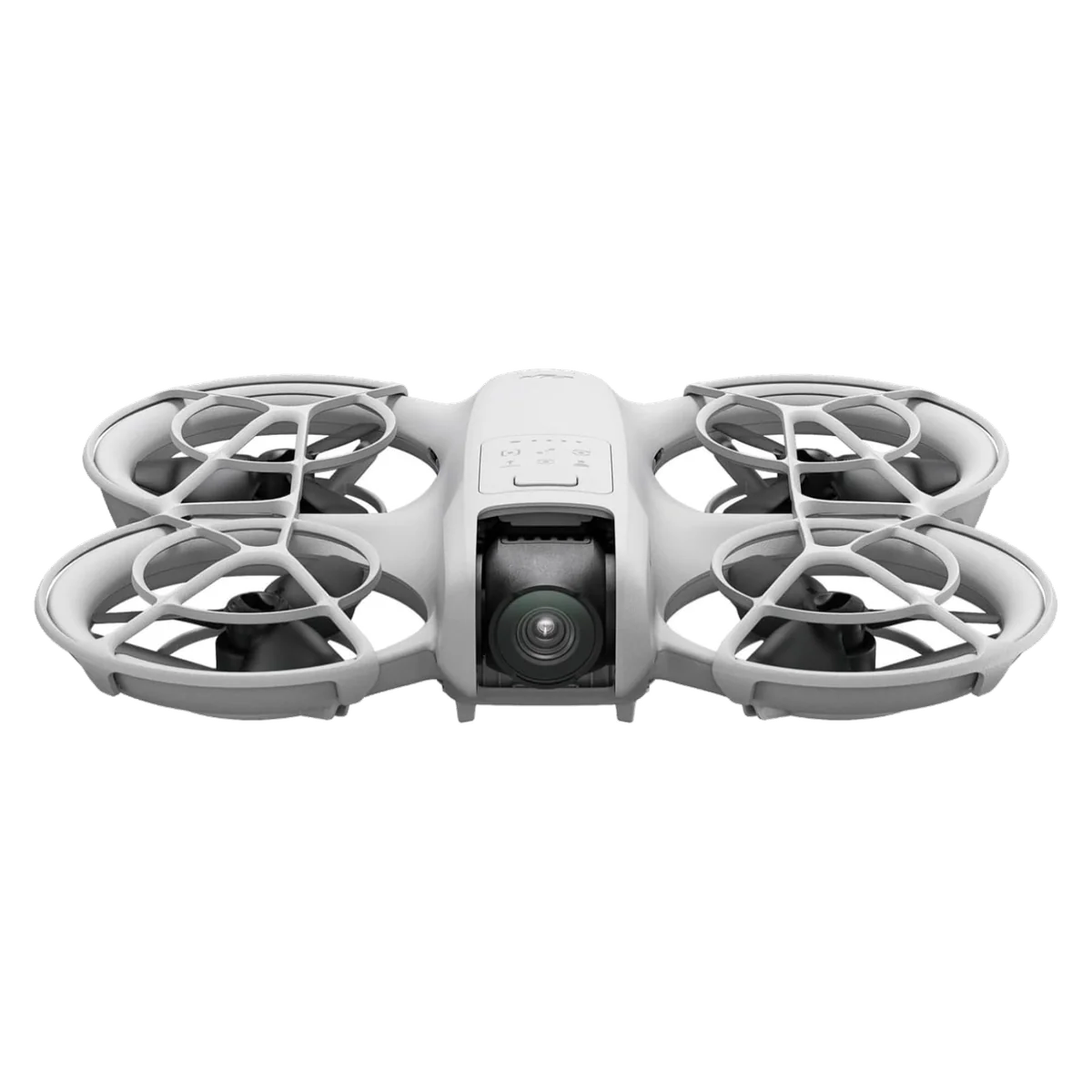
Most yearly drone updates are a firmware note wearing a new shell. This one is not. The original Neo has no obstacle avoidance of any kind: the two eyes on its belly are downward vision positioning, the things that let it hold a hover indoors, and they know nothing about what is in front of the aircraft. DJI's own listing copy for it invites you to dip and dive around your house and through tree branches without worry, which is a sentence the hardware cannot support and which the cage, not the electronics, is quietly doing all the work for. The Neo 2 adds omnidirectional sensing that works well enough that a reviewer trying to make it hit bare winter branches, the classic case that defeats vision systems, kept failing to.
Quadcopter Bench has reviewed both of these separately, and the two verdicts point the same way as this one: the original Neo is a mediocre camera bolted to a genuinely good idea, and the Neo 2 is worth buying in the three-battery configuration and no other. What follows is the argument between them, not a re-run of either.
DJI Neo 2
DJI Neo
At a Glance
| Feature | Editor's Pick DJI Neo 2 | DJI Neo |
|---|---|---|
| Price Range | $200–$500 | Under $200 |
| Finish | Gary | gray |
| Configuration | DJI Neo 2 Fly More Combo | — |
| Check Price on Amazon | Check Price on Amazon |
Where the generation gap actually is
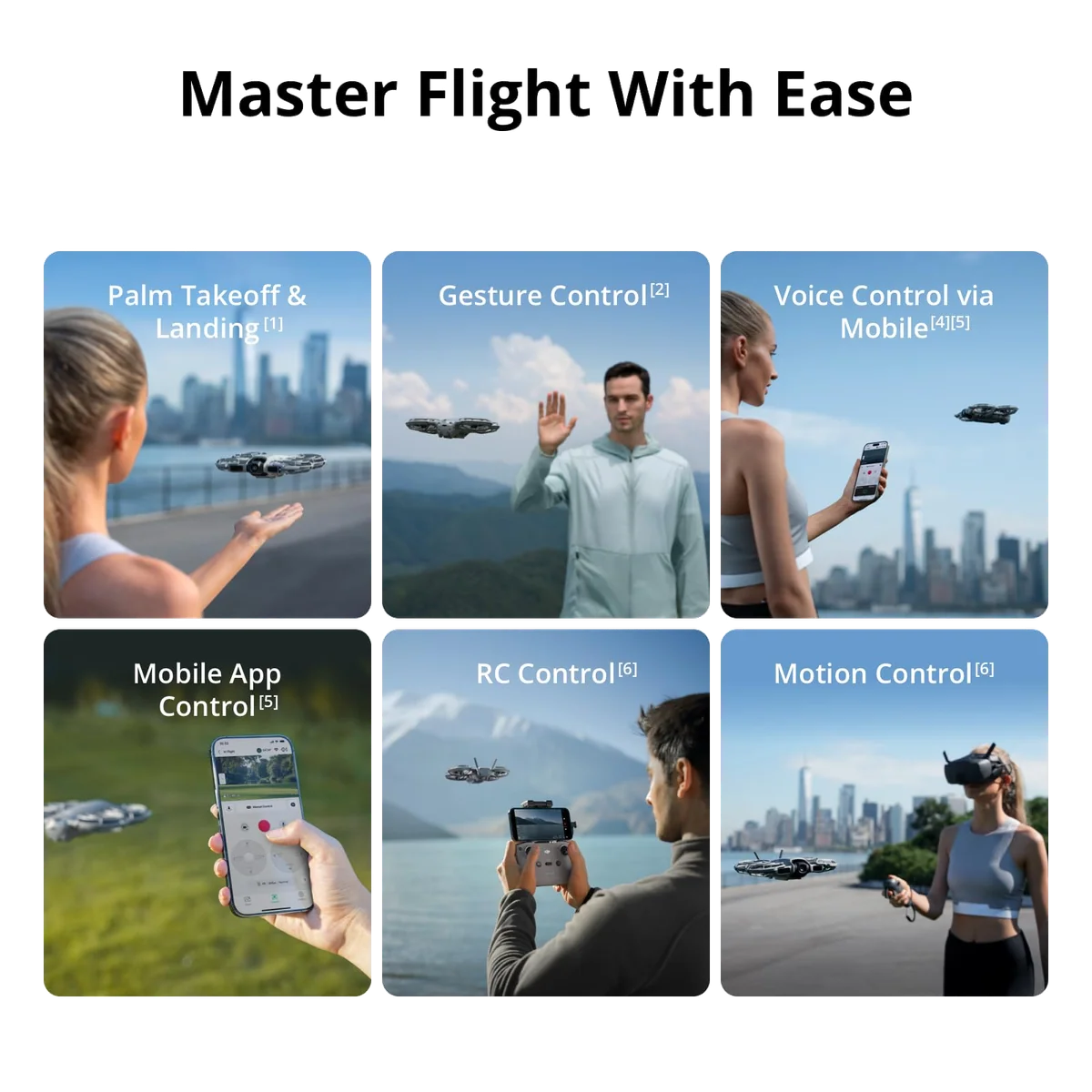
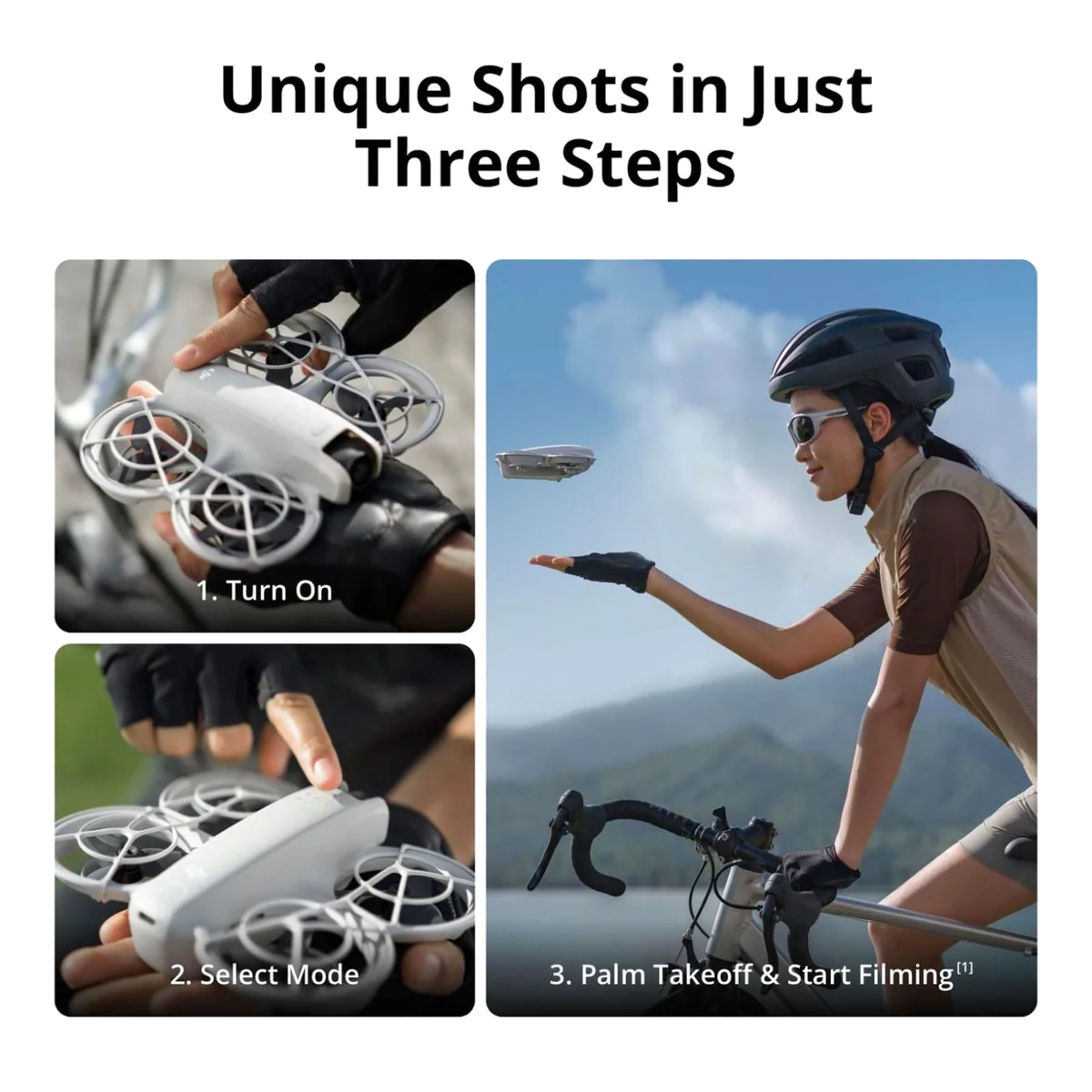
Both drones do the trick that makes people buy them. You hold the aircraft flat on your palm, press a button, and it lifts off with no controller paired, no satellites to wait for and no case to unzip. Both weigh less than a phone, both wear fixed cages that make a tree strike an anecdote rather than an insurance claim, and both carry enough internal storage that memory cards stop being part of your life. If that is the whole of what you want, the older one already delivers it and the newer one does not deliver it any harder.
The differences sit in four places, and they compound.
| DJI Neo | DJI Neo 2 | |
|---|---|---|
| Obstacle sensing | None in any direction; the belly sensors are vision positioning only | Omnidirectional, with forward LiDAR, and a proximity display in the app |
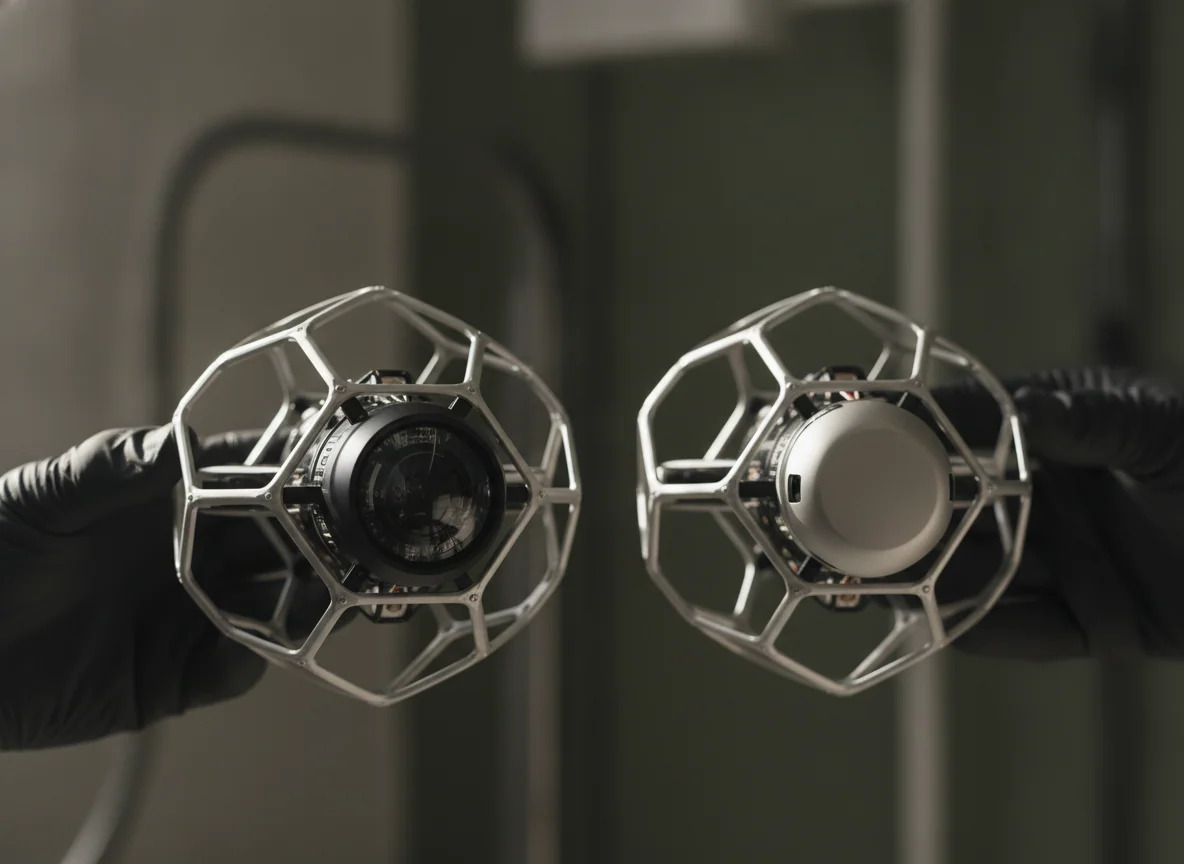
| Gimbal | Single mechanical axis with electronic stabilisation doing the rest | Two axes, so the horizon stays level when the aircraft banks |
| Video ceiling | 4K capped at 30fps, horizontal only, no vertical mode at all | 4K to 100fps from a half-inch sensor |
| Tracking envelope | Rated around 12mph, and it drops the subject on hard turns | Holds a cyclist at full speed and a mountain biker through trees |
| Weight | 135g | 151g, C0 marked |
| Internal storage | 22GB, no card slot | 49GB, no card slot |
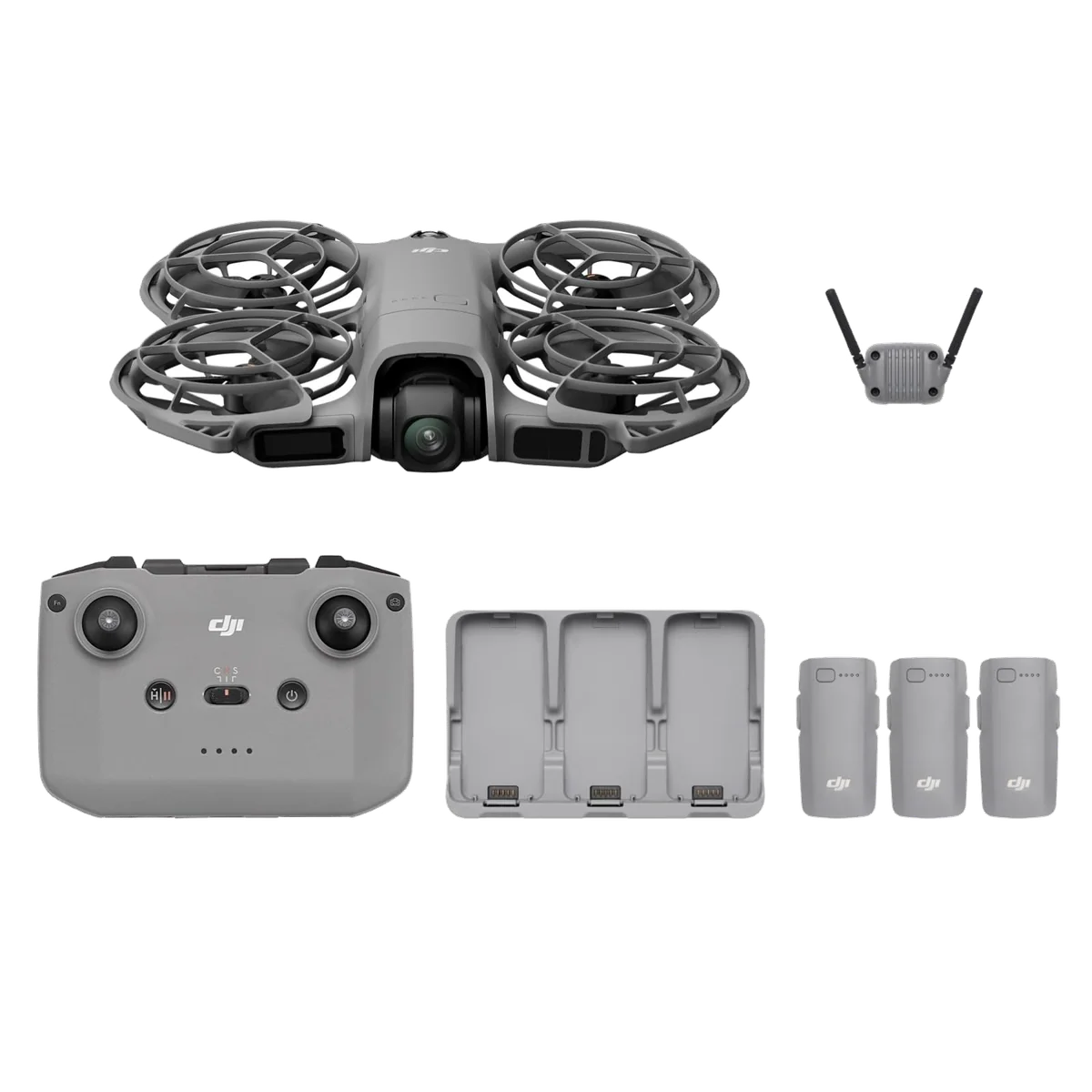
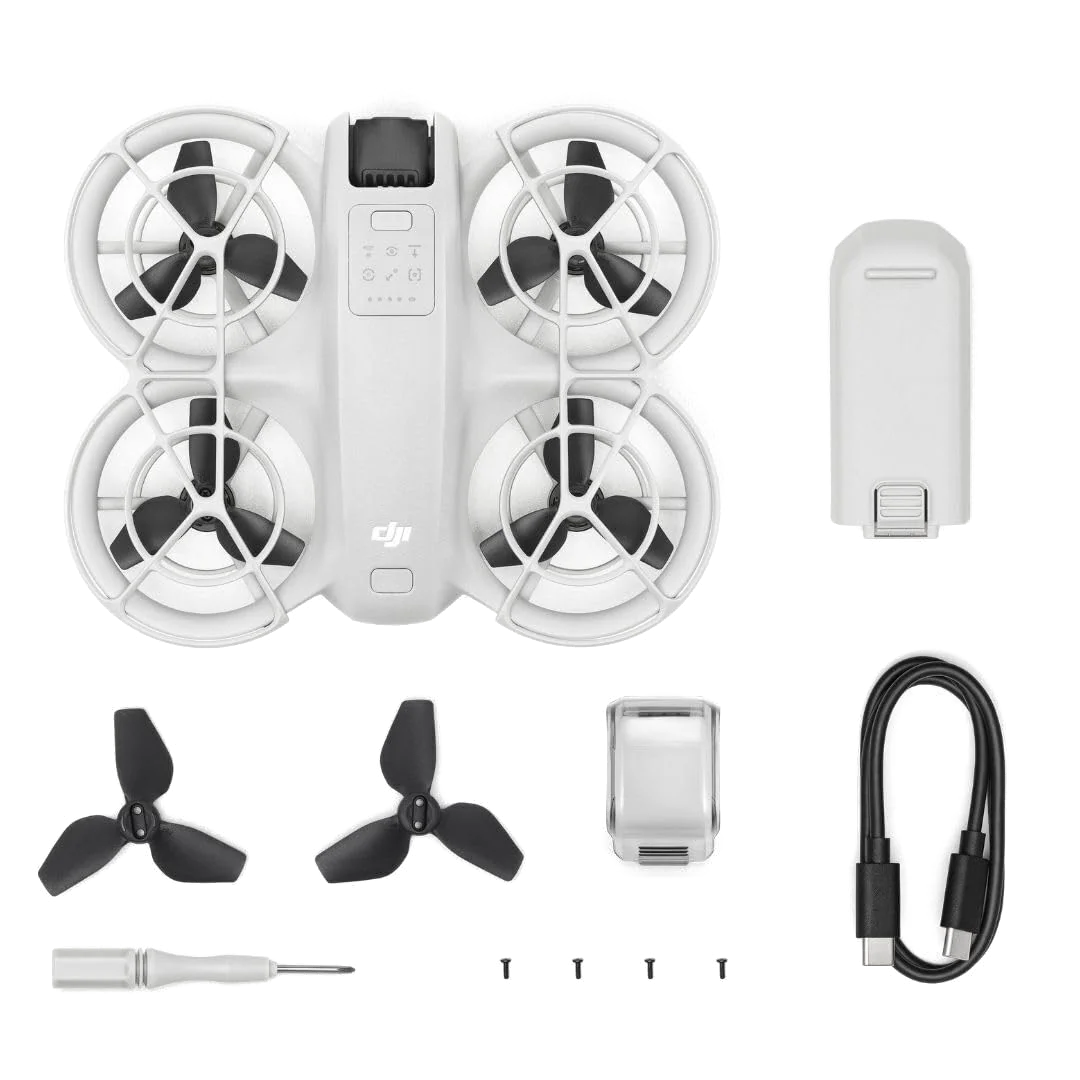
| Box on this page | Drone, one battery, guards, no controller | Drone, RC-N3, transceiver, three batteries, charging hub |
The sensors are not a luxury on a drone people fly close to things
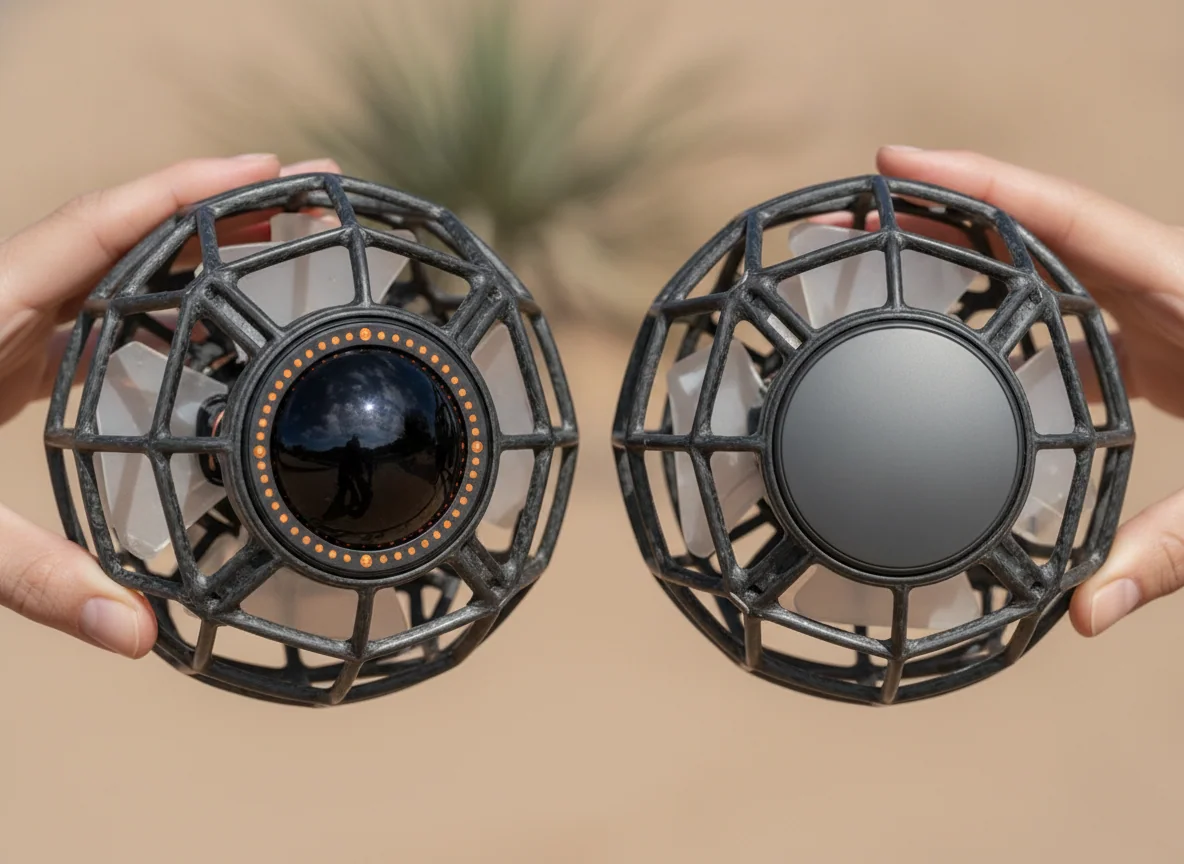
It would be easy to file avoidance under nice-to-have, the way you would on a drone that spends its life at altitude over a field. That is the wrong frame here. The entire pitch of both aircraft is that they fly near you: down low, in gardens, along trails, indoors, around the people you are filming. That is precisely the environment where a drone with no forward sensing eventually finds something solid, and the cage means it survives the impact rather than avoids it.
Be equally clear about what the Neo 2's sensing is not. It is a backup, not a guarantee. One owner cycling with it had it clip a stop sign and, on a separate occasion, hit a parked car. Another, filming a child at a bike park, watched the drone track its subject into the child's helmet, and his phrasing is better than anything we would write: a micro drone does not mean micro consequences. Sport mode switches the safety features off entirely, the faster you fly the more the system trades safety for keeping up, and water is a blind spot. If you are buying the Neo 2 mainly for the sensors, read what these systems catch and what they fly straight through before you rely on them.
Tracking is the other thing that genuinely got faster
The original Neo's Follow tops out around 12mph, and that number explains why owner accounts of it look contradictory. A runner on an open path reports it tracking beautifully from ahead, behind or the side. A buyer who took it out for an afternoon found it losing him on any hard turn and gave up on anything past a light jog, concluding it could not follow a bike or a scooter. Both are true, because steady pace in a straight line is inside the envelope and direction changes are not. There is also a discovery problem: the shot where the camera retreats ahead of you along a trail is Direction Track, and it lives in a Custom slot nobody finds by accident.
The Neo 2 moves the ceiling rather than nudging it. Owners report it holding a mountain biker at over 40km/h through trees and a cyclist at full speed without dropping the shot, and rate it above the Mini series for follow work. One hard limit carries over unchanged and catches people out: neither drone will lock onto a vehicle, so a follow shot of a car, a quad or a side-by-side is off the table at any speed, and at least one buyer cancelled over exactly that. If tracking is the entire reason you are shopping, the follow-me shortlist is where the non-DJI options get weighed, and the X1 against the original Neo covers the only serious rival to the older aircraft.
Neither camera is the reason to buy either drone
The Neo 2's half-inch sensor, two-axis gimbal and 4K to 100fps are a real step up from 4K/30 through a single mechanical axis, and the second axis fixes the specific ugliness of a horizon tilting as the aircraft banks. It does not turn either of these into a camera drone. The Neo 2's auto white balance skews consistently blue and the fix is shooting manual, which means using the controller rather than the palm; there is one colour profile, no log, and a shutter floor that makes night footage unusable. The older Neo's output is over-sharpened and over-saturated by default, which is either an unattractive baked-in profile or perfectly sharp for the money depending on whether anything else is going in the same timeline.
Asked directly whether a Neo 2 was the right first drone for stills, a subreddit of owners said no from several directions, including a working photographer who owns one: these are video-first machines and the photographs are close to an afterthought. That verdict applies to the older one with more force, not less. If stills are the point, neither of these is the drone, and the Flip with its larger sensor and three-axis gimbal is the nearest thing on this site that is.
One quiet loss worth naming on the older aircraft: it has no vertical video mode at all, so a drone sold explicitly for social clips cannot shoot the aspect ratio social wants, and every upload costs you a crop out of a 4K frame you could not afford to throw pixels away from.
The battery gap is smaller than the marketing gap
DJI claims eighteen minutes for the Neo and nineteen for the Neo 2. Neither number survives contact. Owner accounts of the original cluster at fourteen to fifteen minutes of ordinary flying, and one buyer who chained automated shots burned eighty percent of a pack in six and a half minutes of recorded video. The Neo 2's accounts cluster lower: around twelve minutes hovering in still air, ten to twelve with the obstacle sensors working, eight to ten if you fly briskly. The newer drone is heavier and running more sensors, and it shows.
So the honest planning figure is roughly a quarter of an hour for one and about twelve minutes for the other, and in both cases the aircraft starts asking to come home before the pack is empty, and a hot battery has to cool before it charges. The practical consequence is the same for both: this is an afternoon of short flights, not one long one. How manufacturers arrive at those box figures is worth ten minutes before you buy any drone.
Wind is the ceiling on both, and the cages make it worse
Neither of these is a windy-day aircraft, and buying the newer one does not fix it. The most experienced reviewer in the Neo 2 record calls wind its number one enemy and says that at 151 grams with guards on it effectively becomes a kite, with warnings appearing once it passes fifteen metres up in the sort of breeze you notice getting out of the car. The original is rated by DJI at level 4 and described by owners as splitting between holding position better than expected down low and getting shoved around at altitude. There is a useful pattern buried in the complaints on both: owners flying from a phone report far more trouble than owners on a controller, because the sticks give you fine throttle control the phone cannot. The controller adds no thrust, only precision. Where the real line sits for a drone this size is its own subject.
These are not comparable boxes, and that is half the decision
The comparison people think they are making is drone against drone. The comparison actually in front of them is a bare controller-free Neo against a Neo 2 combo with three batteries, a charging hub and the RC-N3. That gap does most of the work in the price difference, and it also means the two boxes behave completely differently in the air.
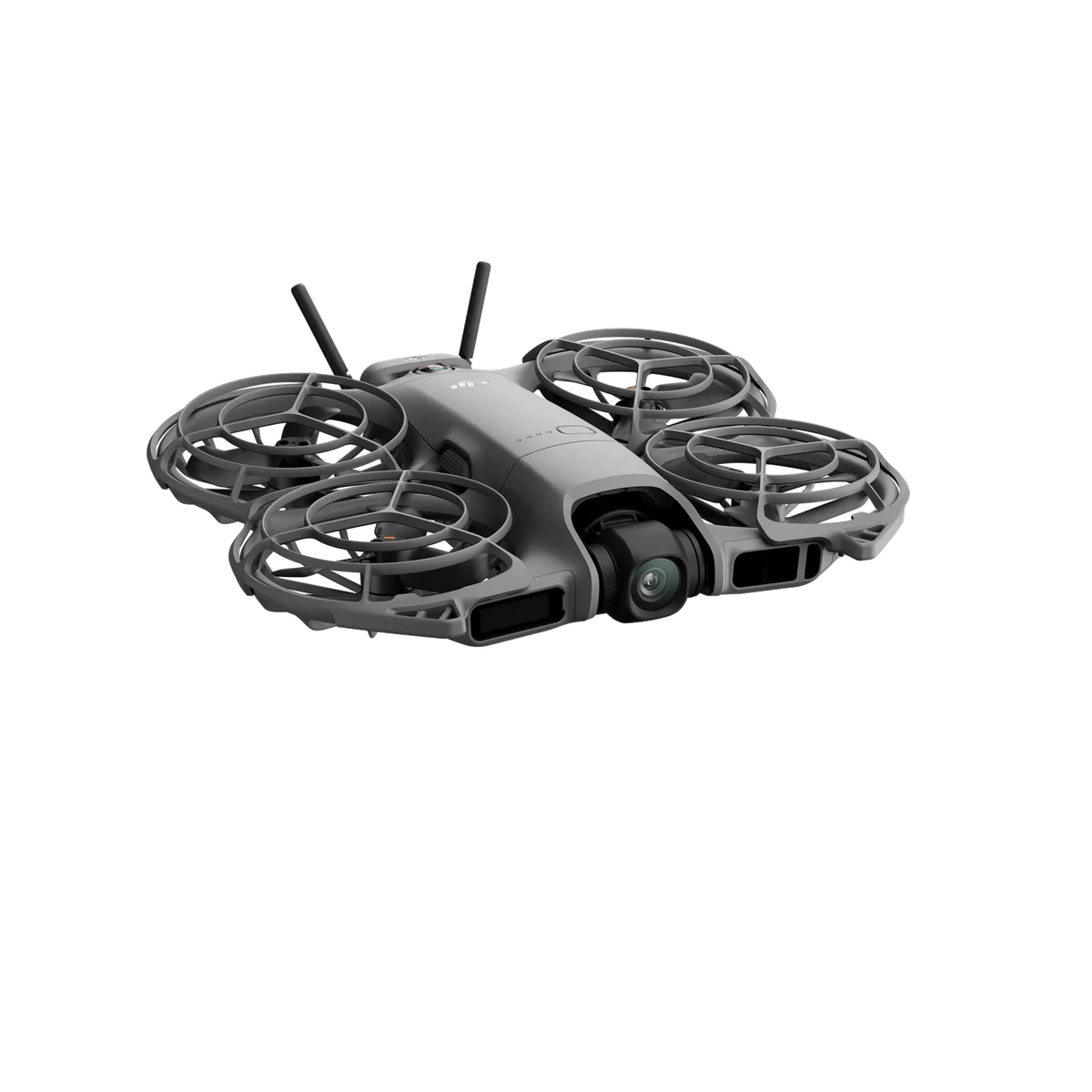
Flown the advertised way, from a phone, the original Neo's usable range collapses to roughly a city block even if you walk along with it, and owners report the link dropping and the home point failing to set. Add a controller and it becomes a normal small drone with real range, which is why owner reports of it read like descriptions of two different products. The Neo 2 combo simply includes that controller, which is why owners describe range ceasing to be the constraint and battery becoming it. The controller is also the only route to manual camera settings, and therefore to fixing the blue cast. There is an honest cost: the RC bundle's transceiver antenna stands up at ninety degrees from the aircraft, which spoils the pocketability that is supposed to be the point. Our fuller answers live in whether you need a real controller and whether the Fly More Combo earns it.
Two things that only apply to one of them
First, paperwork. Both sit under the American recreational registration threshold and both still require the free TRUST test, which neither listing mentions. The original Neo's listing goes further and advertises the absence of Remote ID as a feature, which is accurate for recreational flying and a disqualifier the moment money changes hands: no Remote ID broadcast means no lawful paid work in the US. If you shoot property listings or invoice for a wedding, that closes the older aircraft off before image quality even comes up, and the registration and Remote ID rules are the place to start.
Second, reliability. The older Neo's record is boring in the good way. The Neo 2's is not entirely: a single one-star reviewer who owns both a Mini 2 SE and the original Neo without complaint describes a Neo 2 with no forward, backward or sideways control, a firmware update on essentially every power-on, and a stall fifty yards out, and his conclusion was that the model was rushed to market. There are active owner threads on flyaways and signal transmission alongside it. That is a small minority of a listing averaging 4.5 across hundreds of ratings and it does not change the verdict, but it is a real reason to fly a new one low and close over grass before you trust it over anything you cannot walk to. Both aircraft, incidentally, need the DJI Fly app sideloaded from DJI's own site on Android, which is friction on a product whose whole pitch is the absence of friction.
DJI Neo 2
DJI Neo
Which one to actually buy
The best line anyone has written about the Neo 2 came from an owner rather than a reviewer: there is something better than it in every specific area, and if you can only have one drone, there is nothing better. That is the case for paying the difference. The case against is narrower than it looks but it is real, and it is not about the camera. It is that the older aircraft does the palm-launch trick just as well, survives just as much abuse, and asks for a fraction of the outlay from someone who does not yet know whether they will still be flying in six months.
The one to buy if you are only buying one
Omnidirectional sensing, a two-axis gimbal and tracking that holds a cyclist at full speed make this the version of the palm-launch idea that stands up to real use, and the three-battery box with the RC-N3 is the only configuration that matches how it gets flown.
The nineteen-minute claim never arrives, twelve is the number to plan with, and a headwind that barely registers on the ground is enough to end the flight.
The cheapest honest way to find out if you like this at all
It does the palm launch, the automated shots and the walking-pace follow for a fraction of the newer drone's outlay, survives tree strikes on the cage, and carries enough internal storage that memory cards never enter the conversation.
It has no obstacle sensing in any direction, so every avoided crash is one you avoided yourself, and flown from a phone as advertised the usable range is about a city block.
Two people should buy neither. If you want landscapes, distance or a file you intend to grade, both of these are the wrong tool and the sub-249g roundup or the Flip is the better spend. If this is going to be a first drone that still satisfies you in a year, the beginner shortlist explains why the answer is usually a Mini-class aircraft rather than either of these. And if you are cross-shopping the newer one against the Flip specifically, we set those two side by side, as we do the older Neo against the Flip.
One regulatory note that hangs over both. The Neo 2 received FCC clearance before foreign-made drones were added to the Covered List, which is why it can still be sold and flown in the US when newer DJI models cannot, and the original Neo is in the same position by virtue of being older still. That position has moved repeatedly, so treat it as where things stood at the time of writing and see our standing page on the ban for the current state.
Frequently Asked Questions
Is the newer one enough of an upgrade to justify the jump?
Yes if you fly near trees, buildings or moving subjects, because obstacle sensing and a much faster tracking envelope are structural changes rather than a spec bump.
Does the original Neo have obstacle avoidance?
No, none at all in any direction, and the sensors on its underside are downward vision positioning for holding a hover rather than anything that looks ahead.
Will either of them follow a bike?
The Neo 2 will hold a cyclist at full speed and even a mountain biker through trees, while the older Neo tops out around a jogging pace and loses the subject on hard turns.
Can either one track a car?
No, neither will lock onto a vehicle at any speed, which is a hard limitation rather than a setting hiding in a menu.
How long does each actually fly on a battery?
Plan on about fifteen minutes for the original Neo and about twelve for the Neo 2, against claimed figures of eighteen and nineteen.
Why does the newer drone fly for less time than the older one?
It is heavier and running an omnidirectional sensor suite, and both of those cost power in the air.
Do I need the controller, or is palm launch enough?
Palm launch covers the automated shots and the selfies, but the controller is what gives you range, fine throttle control in wind and the manual camera settings that fix the Neo 2's blue colour cast.
Is the older Neo still worth buying, or is it obsolete?
It is still worth buying as an inexpensive, near-indestructible way to learn whether you enjoy flying at all, provided you accept that nothing on board is watching for obstacles.
Can I use either one for paid video work?
Not the original Neo, because it broadcasts no Remote ID and that alone puts it outside the American commercial rules.
Which one is better for shooting stills?
Neither, since both are video-first machines whose photographs owners describe as close to an afterthought.
Are both of them safe to fly indoors?
Yes, the fixed cages and downward vision positioning make both unusually good indoors, though the Neo 2's obstacle sensing can become intrusive in tight rooms.
Ready to Choose?
Sources (7)
- Amazon listings and customer reviews — Dji Neo 2 and Dji Neo
- Owner reports across r/dji, r/DjiNeo, r/drones threads
- Owner and reviewer video, 1 channel
- Ca — Article — vancouverislanddrones.ca
- Photoshopcafe — Article — photoshopcafe.com
- Thedronegirl — Article — www.thedronegirl.com
- Pcmag — Article — www.pcmag.com