The DJI Flip is the better drone, and the DJI Neo is the one that will actually leave the house
Buy the Flip if you expect to still be flying in a year, because a 1/1.3-inch sensor on a three-axis gimbal and roughly 25 real minutes a battery outlive the novelty of a hand launch, and buy the Neo only if you are the subject of nearly every shot, the footage is going straight to a phone, and the drone's job is to weigh nothing.
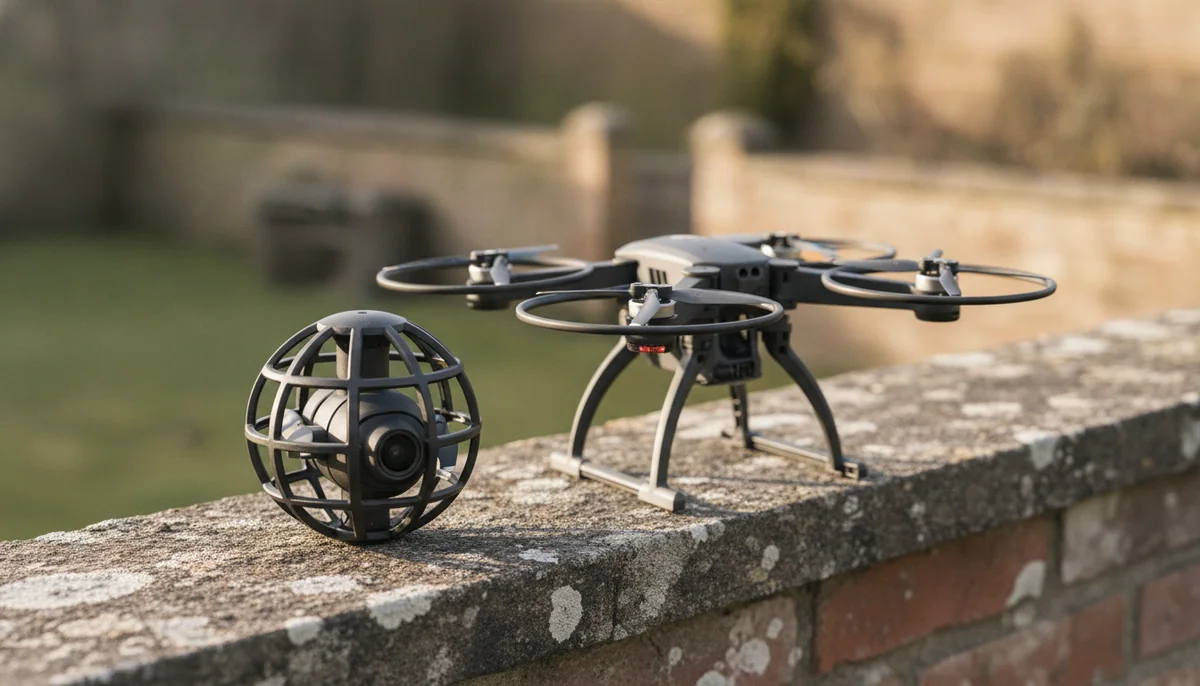
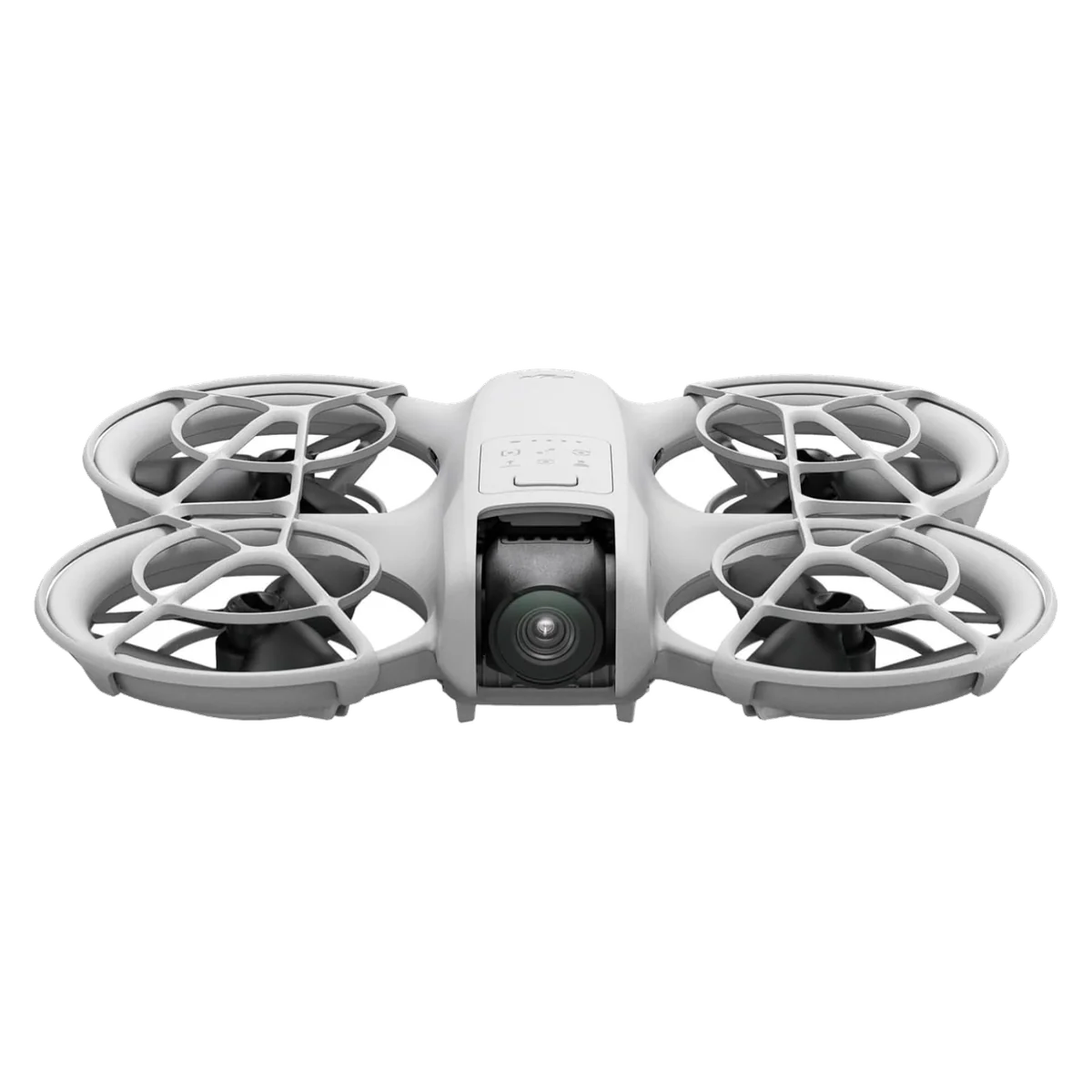
DJI Neo
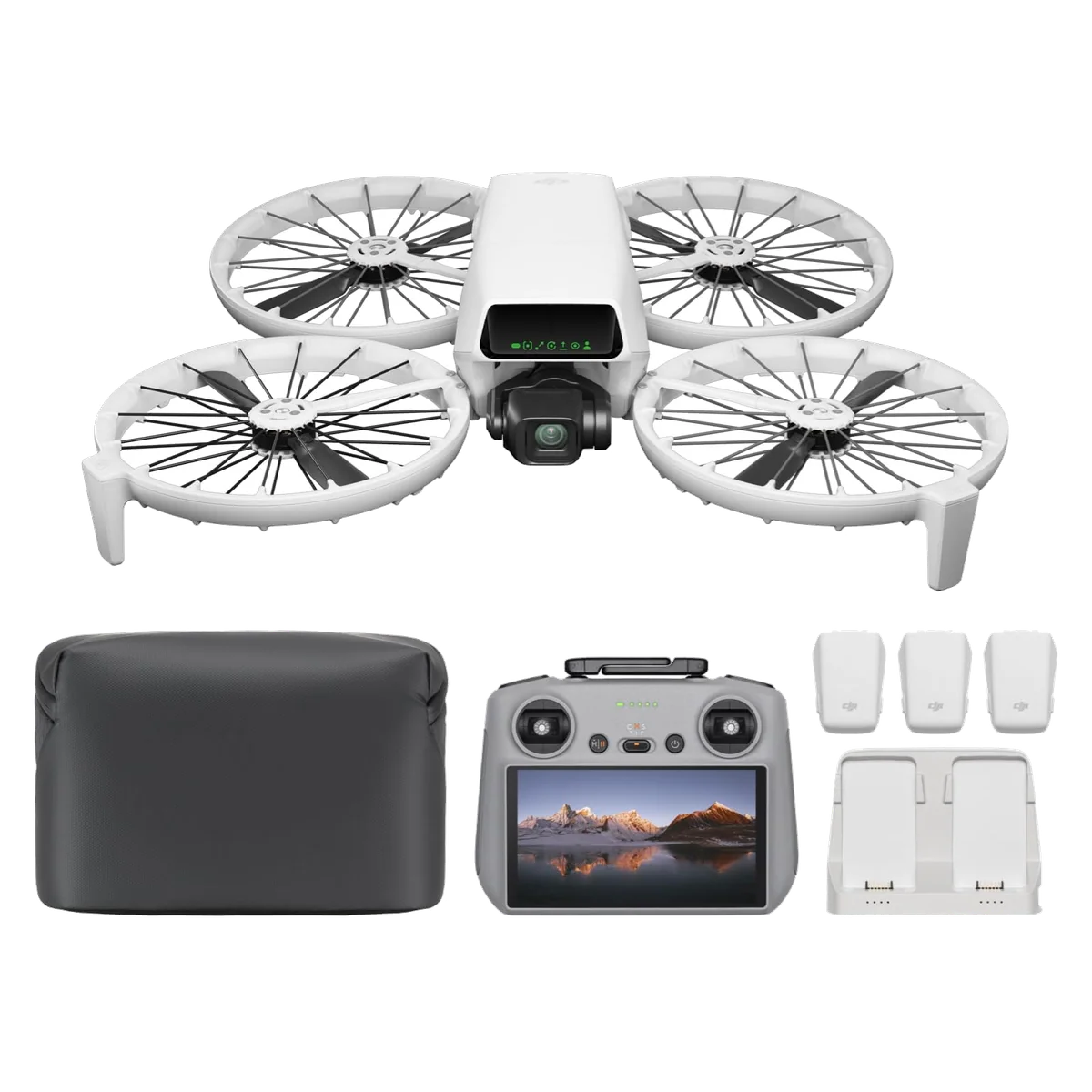
DJI Flip
Both of these take off from an open palm. Both hide their propellers inside guards, which is why handing either one to a nervous adult is not reckless. Both sit under the weight where American paperwork starts. If you have been reading listings, you would be forgiven for thinking the choice is between two versions of the same idea at two prices.
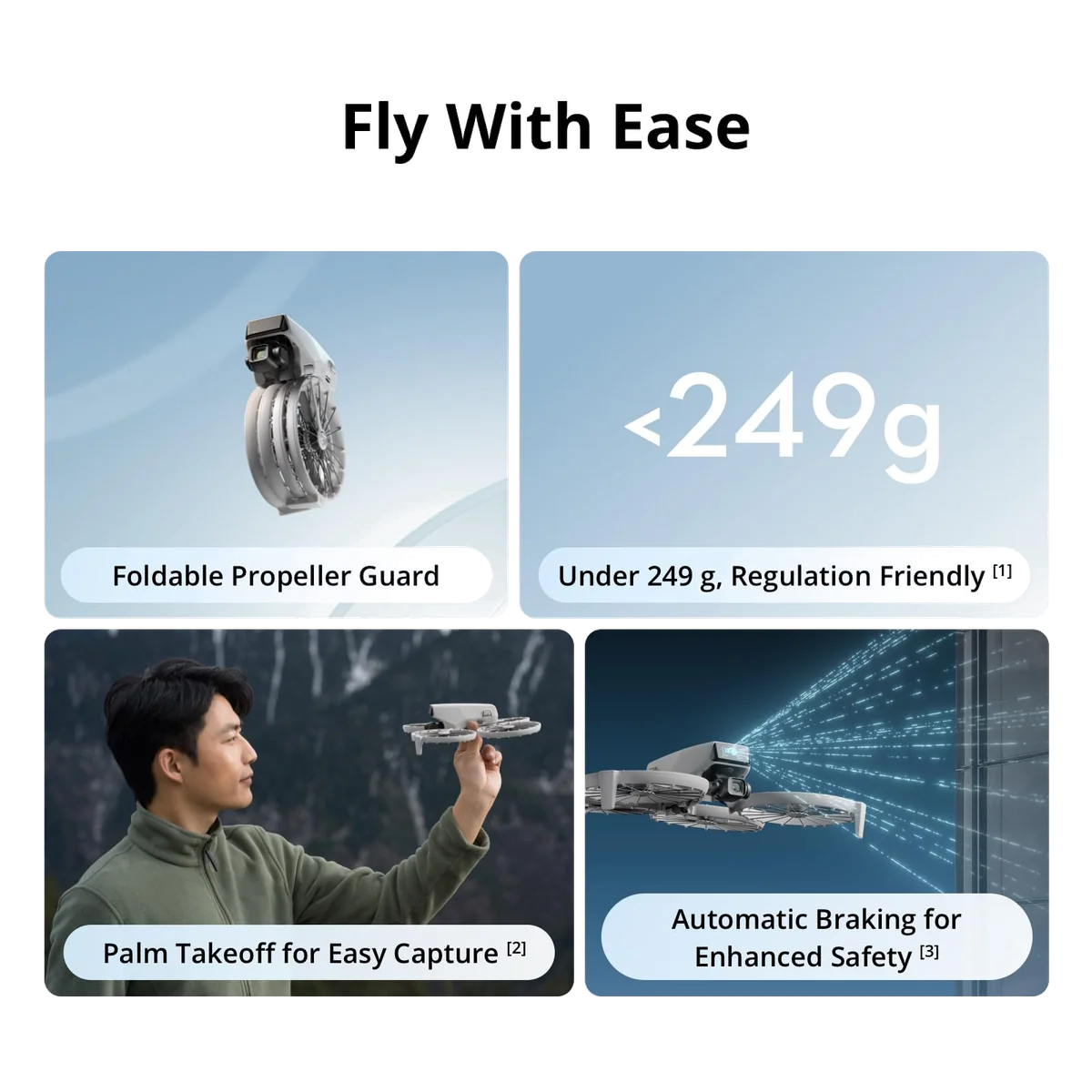
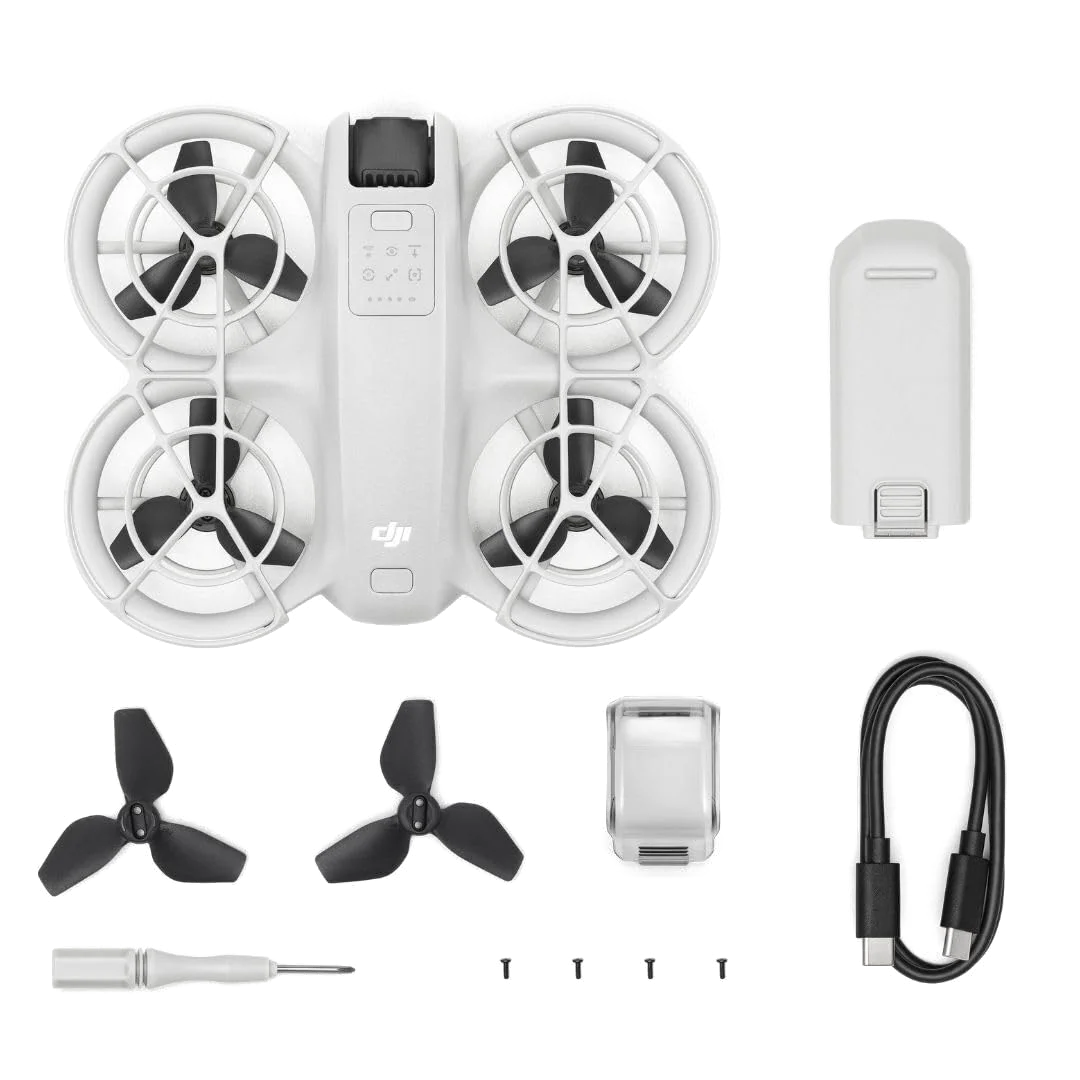
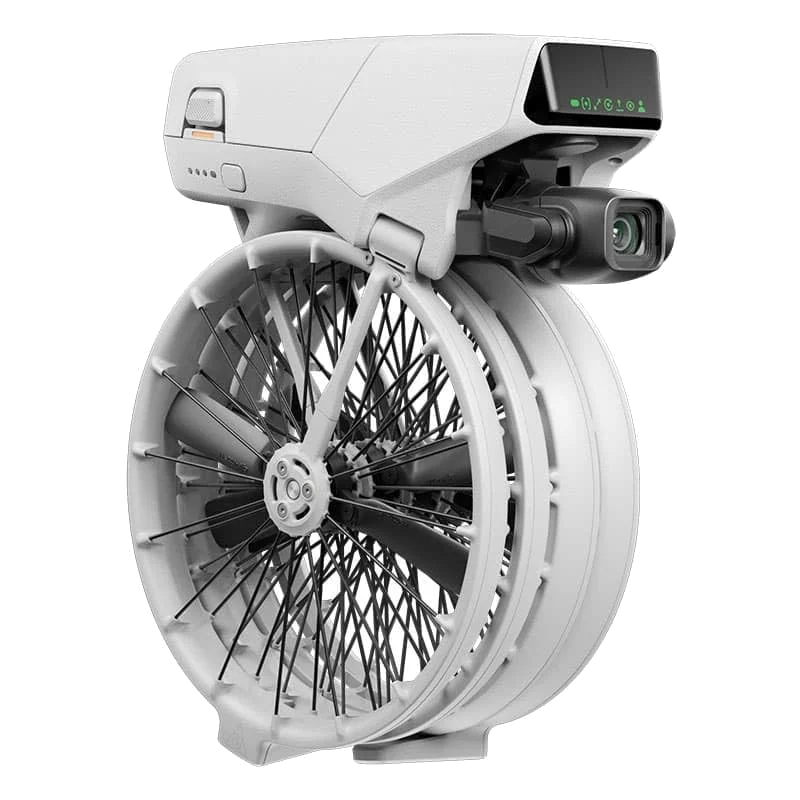
It is not, and the boxes are the first tell. The Neo on this page is the controller-free standard configuration: one drone, one battery, no controller, no case, no memory card because there is no card slot. The Flip on this page is the Fly More Combo: the aircraft, the RC 2 screen controller, three batteries and a parallel charging hub. One of those is a thing you throw in a coat pocket on the way out. The other is a kit you pack.
One thing to settle before anything else, because it disqualifies both drones for a whole category of buyer. Neither the Neo nor the Flip broadcasts Remote ID. Recreationally that does not matter, since both clear the 249g threshold and the only obligation left is the free knowledge test. The moment somebody pays you for a frame, in the US, it matters completely: no Remote ID means no lawful commercial flight, and no amount of enthusiasm about the camera changes it. A Flip owner reports flying successfully with a bolt-on broadcast module, so it is solvable rather than fatal, but decide that before you buy and not after your first invoice. If any of this is going on a rate card, our explainer on registration and Remote ID under 249g is the honest starting point and the paid-work shortlist is where your money should go instead.
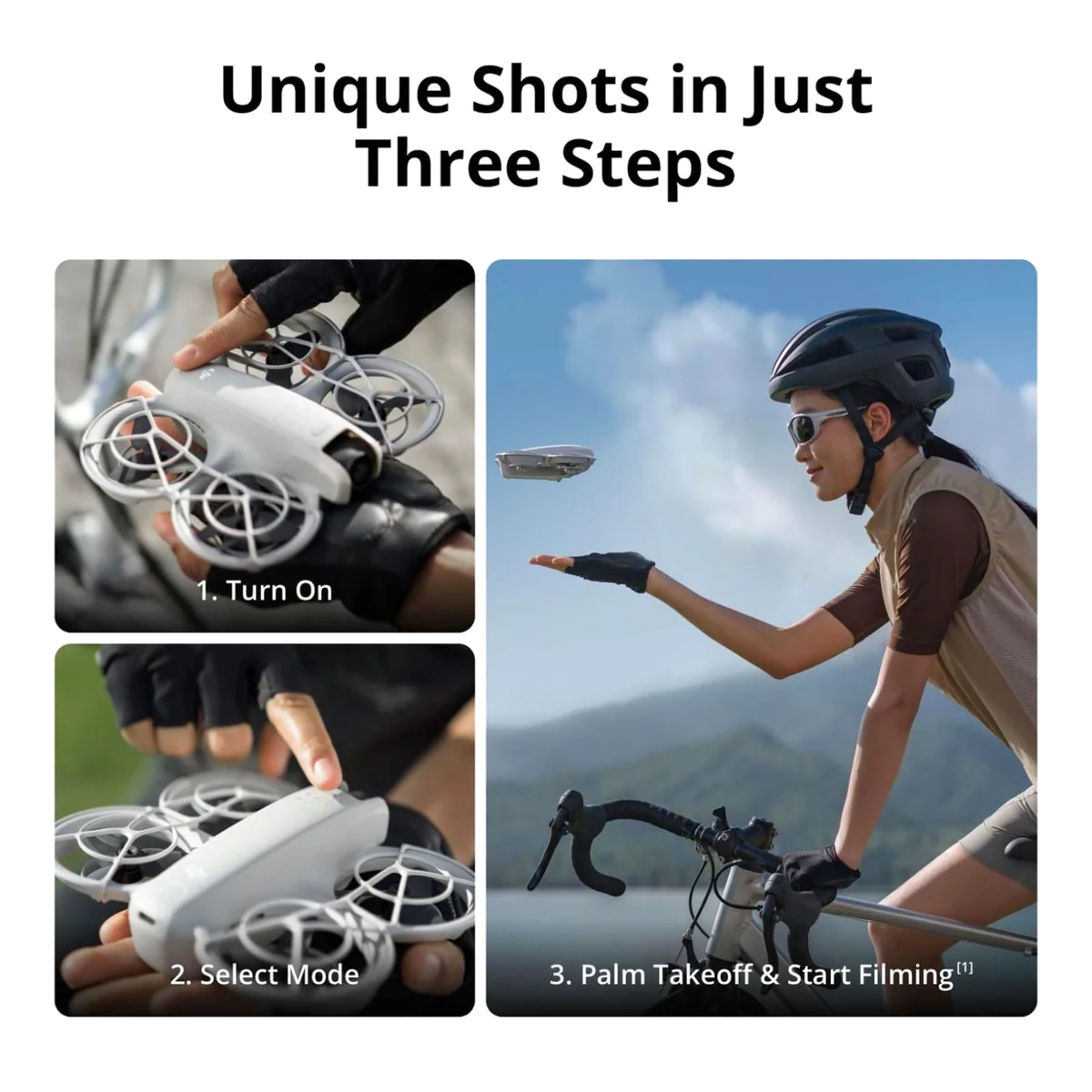
DJI Neo
DJI Flip
At a Glance
| Feature | DJI Neo | DJI Flip |
|---|---|---|
| Price Range | Under $200 | $500–$1,000 |
| Finish | gray | Gray |
| Configuration | — | DJI Flip Fly More Combo (RC 2) |
| Check Price on Amazon | Check Price on Amazon |
What the much larger outlay actually buys
The gap between these two is not a matter of degree. On every axis a camera drone is normally judged by, the Flip is not slightly ahead, it is in a different tier, and Quadcopter Bench's reading of both records is that the Neo does not lose the technical argument so much as decline to have it. Here is the shape of the thing before the detail.
| DJI Neo (controller-free) | DJI Flip Fly More with RC 2 | |
|---|---|---|
| Weight | 135g | Under 249g |
| Sensor and gimbal | Small sensor, one mechanical axis plus electronic stabilisation | 1/1.3-inch CMOS at f/1.7 on a three-axis gimbal |
| Video | 4K at 30fps, horizontal only | 4K at 60fps HDR, 4K at 100fps for slow motion, vertical as a 2.7K crop |
| Stills | 12MP JPEG, no raw | 48MP with DNG raw, and a D-Log M profile for grading |
| Storage | 22GB built in, no card slot, no card to lose | 2GB built in, so a microSD card is part of the purchase |
| In the box | One battery, no controller | Three batteries, a parallel hub, and the RC 2 with its own screen |
| Obstacle sensing | None in any direction | Forward and downward only |
| Remote ID | None | None |
The camera is not a close call, and pretending otherwise helps nobody
The Flip's imaging is the whole reason it exists. A 1/1.3-inch sensor gathers light a drone this size has no business gathering, the three-axis gimbal does mechanically what the Neo does with software, and D-Log M means footage that a colourist, or you with a free LUT and ten minutes, can actually push around. Owners who arrived at it from other DJI aircraft say the Flip's camera is noticeably better than the one on the considerably pricier Avata, and that is not a fluke of enthusiasm; it is the sensor.
The Neo's footage, by contrast, is the compromise the rest of the drone is built on. It caps at 4K/30, the stills are 12MP JPEG with nowhere to go, the default sharpening is heavy enough that people who know what they are doing dial it back before the first flight, and the single-axis gimbal leaning on electronic stabilisation behaves like what it is. Published verdicts on that file split cleanly and both sides are right: graded against DJI's larger drones and their log profiles, it looks overbaked; graded against its price and its destination, which is a phone screen, it looks sharp and smooth. Which of those applies to you depends entirely on whether anything else is going to sit in the same timeline. If that distinction is new, gimbal against electronic stabilisation is the ten minutes that will save you a purchase.
There is one omission on the Neo that is worth naming on its own, because it is the clearest case of the marketing and the engineering not being in the same room. A drone sold explicitly for effortless social clips cannot shoot vertical at all. Every upload costs you a crop out of a 4K frame that already could not spare the pixels. The Flip's vertical is not a rotating camera either, it is a crop capped at 2.7K and 30fps, but a real crop beats no mode.
Endurance, and three numbers on two boxes that are all fiction
The Flip's title carries a 93-minute figure. That is DJI's 31-minute laboratory rating multiplied by the three batteries in the box, and the laboratory conditions are published if you go looking: still air, constant forward flight, camera not recording, flown until the aircraft forces itself down. Owners who fly rather than hover report 24 to 25 minutes a pack, and the conservative ones plan on 20 once climbing, framing and a sensible landing reserve are accounted for. So the real number is something near 65 to 75 minutes of flying, split across three trips into the sky with two landings and two battery swaps in the middle.
The Neo's box says 18 minutes. The owner record clusters at 14 to 15 for ordinary flying, and one buyer who deliberately chained QuickShots burned 80 percent of a pack in six and a half minutes of recorded video, which extrapolates to roughly ten. Neither of these gaps is a scandal, they are how the category advertises itself, and our page on why the box figure is never your figure explains where it comes from. The useful comparison is not 18 against 31, it is one battery of about a quarter of an hour against three batteries of about twenty-five minutes each. That is not double. In practice it is closer to five times the air time per outing.
| The claim | The working figure |
|---|---|
| Neo, 18-minute flight time | 14 to 15 minutes flying normally, nearer 10 if you chain automated shots. |
| Flip, 31-minute maximum | A wind-tunnel rating; 24 to 25 minutes is typical and 20 is the number to plan around. |
| Flip, 93-minute flight time | Three separate flights, not one, with two landings and two swaps between them. |
| Neo, level-4 wind resistance | Fine for a breezy park, wrong for altitude or an open coast. |
| Flip, 10.7 m/s wind resistance | The airframe gives up its cleverer modes and starts asking to come home some way below that. |
| Both, no registration or Remote ID needed | True while you fly for pleasure, disqualifying the moment the flight is commercial. |
Two costs the Flip's box quietly does not carry, both of which belong in your budget rather than in a footnote. DJI's own description ends by telling you the battery charger is sold separately and suggesting a 30W or 65W USB-C unit, and the wattage is not cosmetic: to charge two batteries in parallel the hub needs about 65W going into it or it simply will not do it, which owners in two languages discovered the hard way. And 2GB of internal storage is a handful of 48MP raw frames, so a memory card is not an accessory, it is part of the price. The Neo inverts both of those: 22GB on board, no card, no reader, no adapter, and no discovering at the trailhead that the card is in your laptop. It is the one place where the cheaper drone's design is straightforwardly cleverer.
One of them sees a little, and the other sees nothing at all
The Flip looks forward with an infrared system and downward with a vision sensor. There is nothing to the sides, nothing behind and nothing above; all-round detection is reserved for more expensive aircraft. Fly forward and it watches where it is going, fly backwards for a reveal, which is the single most tempting move a new pilot makes, and it is blind. The Neo has no obstacle avoidance whatsoever, and the two sensors on its belly are downward vision positioning that keep it steady indoors and do nothing about what is in front of it. Its listing invites you to dip and dive through tree branches without worry, which is a sentence the hardware cannot support: the cages mean the drone survives the branch and your fingers survive the drone, not that either one saw it coming. What avoidance systems catch and what they miss is its own subject, and we have written it up in what obstacle avoidance actually stops.
Wind is where the guards get their revenge on both aircraft. Cages are surfaces for air to push against, and a Flip owner's description of them behaving a bit like sails is the best three words written about either drone. The Flip is rated at 10.7 m/s and will hold station in a stiff breeze while quietly refusing intelligent modes and posting return-home warnings, which means its behavioural ceiling sits below its published one. The Neo is a 135g airframe wearing full-coverage guards, and above head height with air moving it behaves like a kite; DJI's level-4 claim is a park rating, not a coastal one. Neither of these is a bad-weather drone, and the difference between them is how much warning you get. If your flying happens where the flag is usually moving, read what a lightweight airframe can really take before either purchase.
Which one actually keeps up with you
This is the question that sends most people to a comparison like this one, and the answer is more even than the spec sheets imply. The Flip's tracking is genuinely good and genuinely narrow: reviewers report it holding a moving rider at road speed through a tight street, which is well beyond anything the Neo can do. But it locks onto people and not vehicles, and if it loses you it cannot yaw to look for you again without dropping the lock first, which is precisely the wrong workflow when you are the subject and both your hands are busy.
The Neo's Follow is rated at 12 mph and that number explains why its owner record looks self-contradictory. A runner reports it tracking beautifully from ahead, behind or the side. A buyer who spent an afternoon with it found it dropped him on any hard turn and gave up on anything past a light jog, and concluded it could not follow a bike or a scooter. Both accounts are accurate: steady pace on an open path is inside the envelope, sharp direction changes and real speed are outside it. There is also a trap in the defaults, because Follow only works from behind, and the shot where the camera retreats ahead of you along a trail lives in a Custom slot nobody finds by accident. Set it before your first flight rather than three walks later.
The other half of the tracking answer is the controller, and it is the half the Neo's marketing skates over. Flown from a phone as advertised, the Neo's usable range collapses; one owner puts it at not much more than a city block even walking alongside it, and the link is consistently the first thing to fail. Flown with a physical controller it becomes a normal small drone with real range, and the owners who describe flying it confidently across acreage are almost all holding one. That is not a scandal, but it does mean controller-free is a mode rather than a value proposition, and the Flip box on this page already contains the answer with a screen on it, no cable, no clamp and no incoming call landing on top of your live feed. Our notes on flying with a phone versus a real controller, on whether a Fly More bundle earns its keep and on what else the RC 2 will fly are the three things to read if the Neo tempts you and you can already feel the upgrade coming.
Two things the cheaper drone wins outright
Toughness is the first, and it is the one specific argument for putting a Neo rather than a Flip into a beginner's hands. The Neo's cage spreads impact across a body with almost no mass behind it, and owners describe flying it into tree branches with nothing to show for it afterwards. The Flip is also encouragingly durable, with owners reporting wall strikes, branch strikes and outright crashes it walked away from, but its camera and gimbal hang unshielded at the nose, which is the first thing to meet the ground in a nose-down arrival and the one part not worth repairing cheaply. With DJI Care Refresh no longer sold to US buyers, that exposure is worth planning around, which is what insuring a drone without Care Refresh is for.
The second is friction, and it is the whole case for the Neo. No controller to pair, no card, no case to unzip, no satellites to wait for, nothing to charge but the one thing. Owners of Minis and Mavics keep admitting, slightly sheepishly, that the Neo is the drone that leaves the house. The Flip folds into a neat package but the guards make it a taller object in a bag than a flat-folding Mini, and it is a thing you decide to bring rather than a thing you find yourself already carrying. Neither drone is quiet, incidentally: the Neo's whine is a carrying pitch that neighbours notice, and enclosed propellers on the Flip run louder than open ones, which rather undercuts the friendly impression the cages are there to create.
DJI Neo
DJI Flip
So which one is yours
Answer one question honestly and the rest follows. Is the drone the camera, or is the drone the tripod? If the footage is the point, if you want landscapes and light that falls off, if the file is going to sit in a timeline next to anything shot on a real camera, the Flip is the only one of these two having that conversation, and the three-battery box with the screen controller is the configuration that gets used rather than resented. If you are in nearly every frame, if the clip's whole life is a phone screen, and if the drone's real job is to be already in your bag on the day something happens, the Neo's subtractions are the feature and paying five times over for a better sensor buys you footage you will never look at closely.
The drone you actually carry, because carrying it costs you nothing
It is airborne off your palm in seconds with no controller to pair and no card to remember, and 22GB of internal storage means the entire workflow ends at your phone before you have walked back to the car.
The picture is the price: 4K stops at 30fps from a single-axis gimbal, the default sharpening is heavy, and a drone sold for social clips cannot shoot vertical at all.
The one to buy if you expect to still be flying next year
A 1/1.3-inch sensor on a three-axis gimbal with 4K/60 HDR, 48MP raw and D-Log M produces footage that survives a proper screen, and the three batteries, hub and screen controller in this box remove the two things that keep drones at home.
The carbon-fibre guards behave like sails, so it starts refusing its cleverer modes and asking to come home in wind noticeably below its 10.7 m/s rating, and the memory card and wall charger it needs are not in the box.
Two of you should buy neither. If following you at speed is the entire purchase, the Neo 2 tracks harder than the original and adds omnidirectional detection the Flip does not have, and we lay that argument out in Flip against Neo 2 and Neo 2 against the original. If you want the hand-launch trick with a sharper picture and you are not wedded to DJI, the HOVERAir X1 against the Neo settles the only serious non-DJI contender at that end. And if you want distance, altitude and a wind rating rather than a personal cinematographer, a Mini 4K is a better travel drone than either of these; the sub-249g roundup and the list of drones to learn on cover the rest of the field, and the follow-me shortlist is the place to start if tracking is non-negotiable.
One note on how this page was built, because it changes how you should weigh it. Quadcopter Bench has not flown either aircraft. This comparison comes from the full published record on both: our own Neo review and Flip review, every customer review the two listings retained, the manufacturers' own specifications and marketing copy read against each other, and the editorial reviews of people who did fly them. Where the sources contradict each other, as they do on the Neo's camera and on how much wind the Flip will take, we have kept both accounts and explained why both can be true rather than picking whichever figure made the page tidier.
The stance again, since it is the only thing worth carrying away: the Flip is the better drone by a distance, and the Neo is the better purchase for a narrow, real and surprisingly common kind of buyer. Work out which of those two people you are before you look at a price, not after.
Frequently Asked Questions
Does either drone need FAA registration?
Neither does for recreational flying, since the Neo is 135g and the Flip is under 249g, but every recreational pilot in the US still has to pass the free TRUST knowledge test whatever their drone weighs.
Can I use either one for paid drone work in the United States?
Not as sold, because neither broadcasts Remote ID and commercial operation requires it, although a Flip owner reports flying successfully with a bolt-on module fitted.
Is the Flip's flight time really double the Neo's?
Per battery it is roughly 24 to 25 minutes against 14 to 15, but this Flip box carries three batteries and the Neo box carries one, so the practical gap over an afternoon is far wider than double.
Which of them follows you better?
The Flip, comfortably, because it holds a moving person at road speed where the Neo's Follow is rated at 12 mph and drops you on hard turns, though neither will track a vehicle.
Can I fly the Neo without ever buying a controller?
Yes, and most owners will for QuickShots and selfies, but expect the usable range to be measured in a short walk and expect the link to be the first thing that fails.
Do I need to buy a memory card?
You need one for the Flip, whose 2GB of internal storage holds only a handful of 48MP raw frames, and you never need one for the Neo, which has 22GB built in and no card slot at all.
Which one handles wind better?
The Flip, because more mass and a higher rating buy you real margin, but both wear propeller guards that act like sails and neither is a drone to take out on a blustery coast.
Should I buy the Neo 2 instead of either of these?
Buy the Neo 2 if the drone's job is to follow you and stay tiny, since it adds omnidirectional detection and faster tracking, and stay with the Flip if the drone's job is to produce the better picture.
Which is the safer first drone for someone who will crash it?
The Neo, because its low mass and full cage shrug off tree strikes, while the Flip's camera and gimbal hang unprotected at the nose and are the expensive part of any nose-down landing.
Ready to Choose?
Sources (7)
- Amazon listings and customer reviews — Dji Neo and Dji Flip
- DJI — Article — www.dji.com
- Fstoppers — Article — fstoppers.com
- Pcmag — Article — www.pcmag.com
- Thedronegirl — Article — www.thedronegirl.com
- Photoshopcafe — Article — photoshopcafe.com
- Digitalcameraworld — Article — www.digitalcameraworld.com