One of these two drones watches every direction at once, and it is the cheaper one
Buy the Flip: it takes the better photograph, stays up roughly twice as long per battery and arrives with a controller that needs no phone, and the only reader who should choose the Neo 2 instead is the one whose subject is themselves, moving.
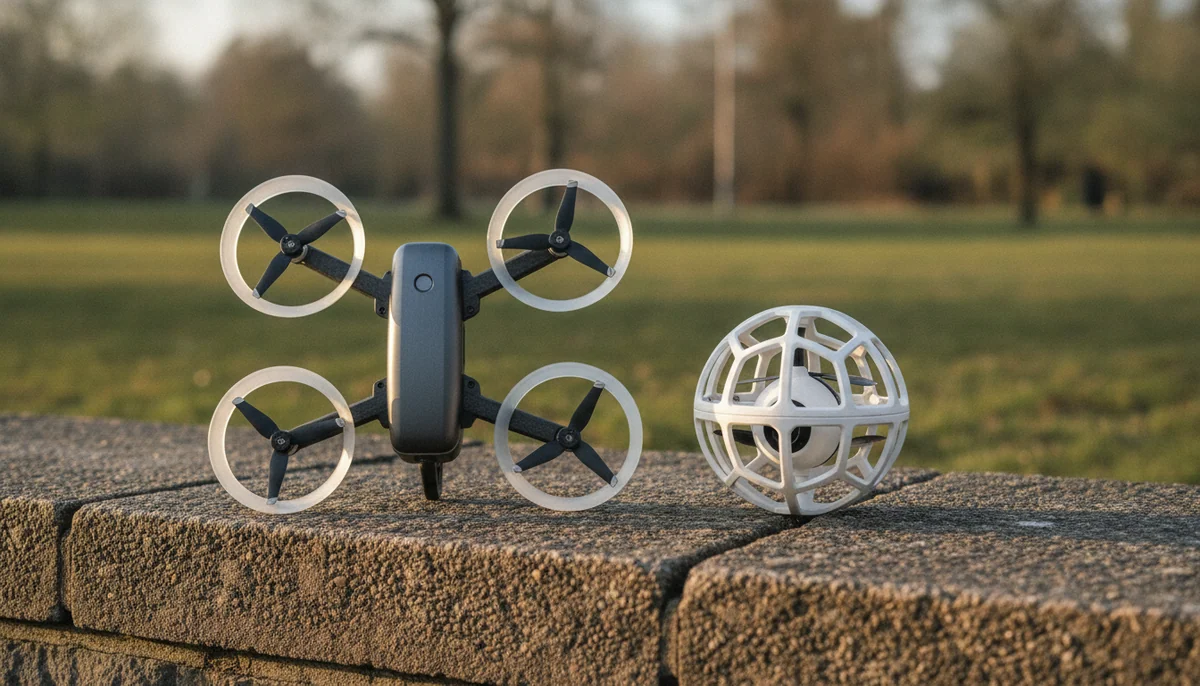
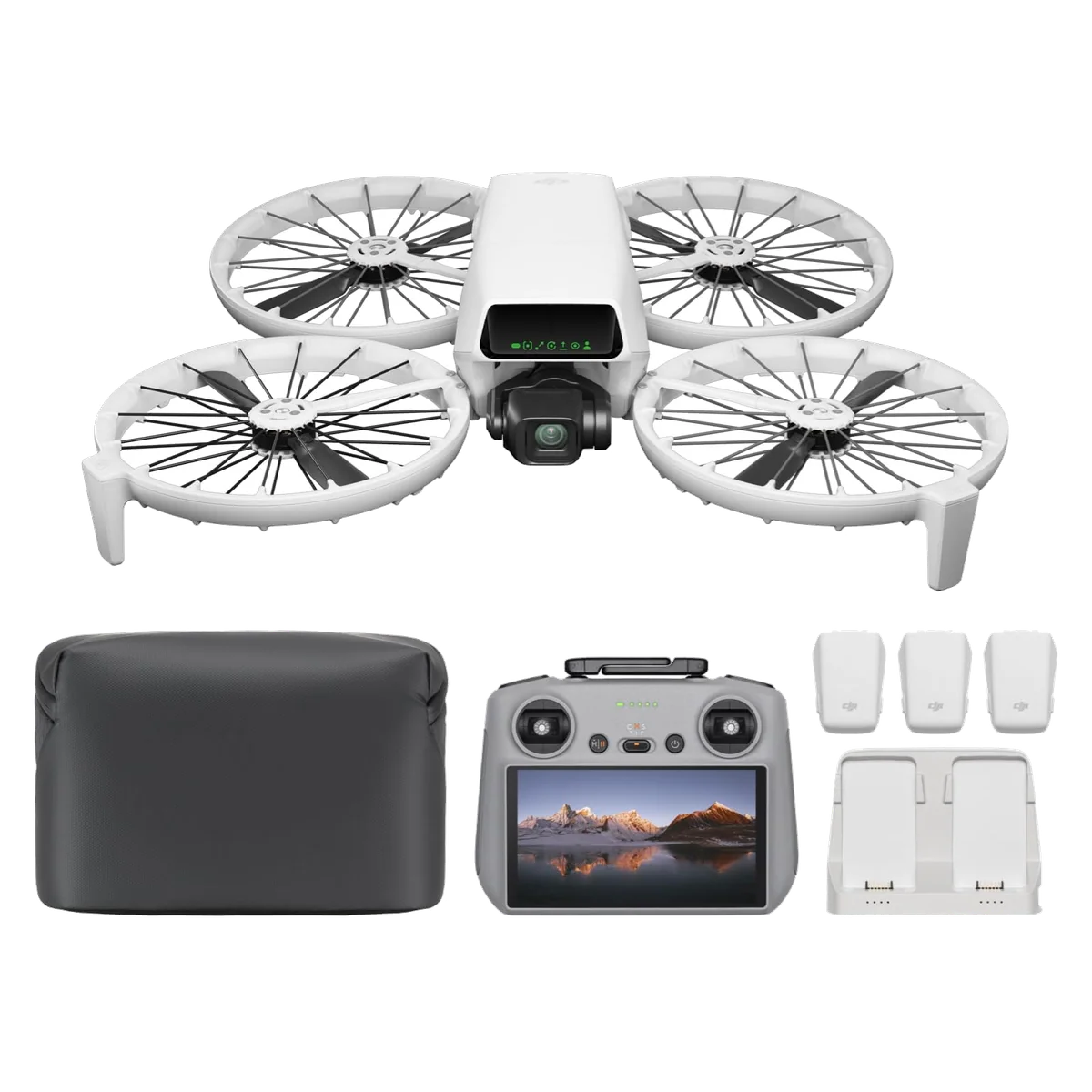
DJI Flip
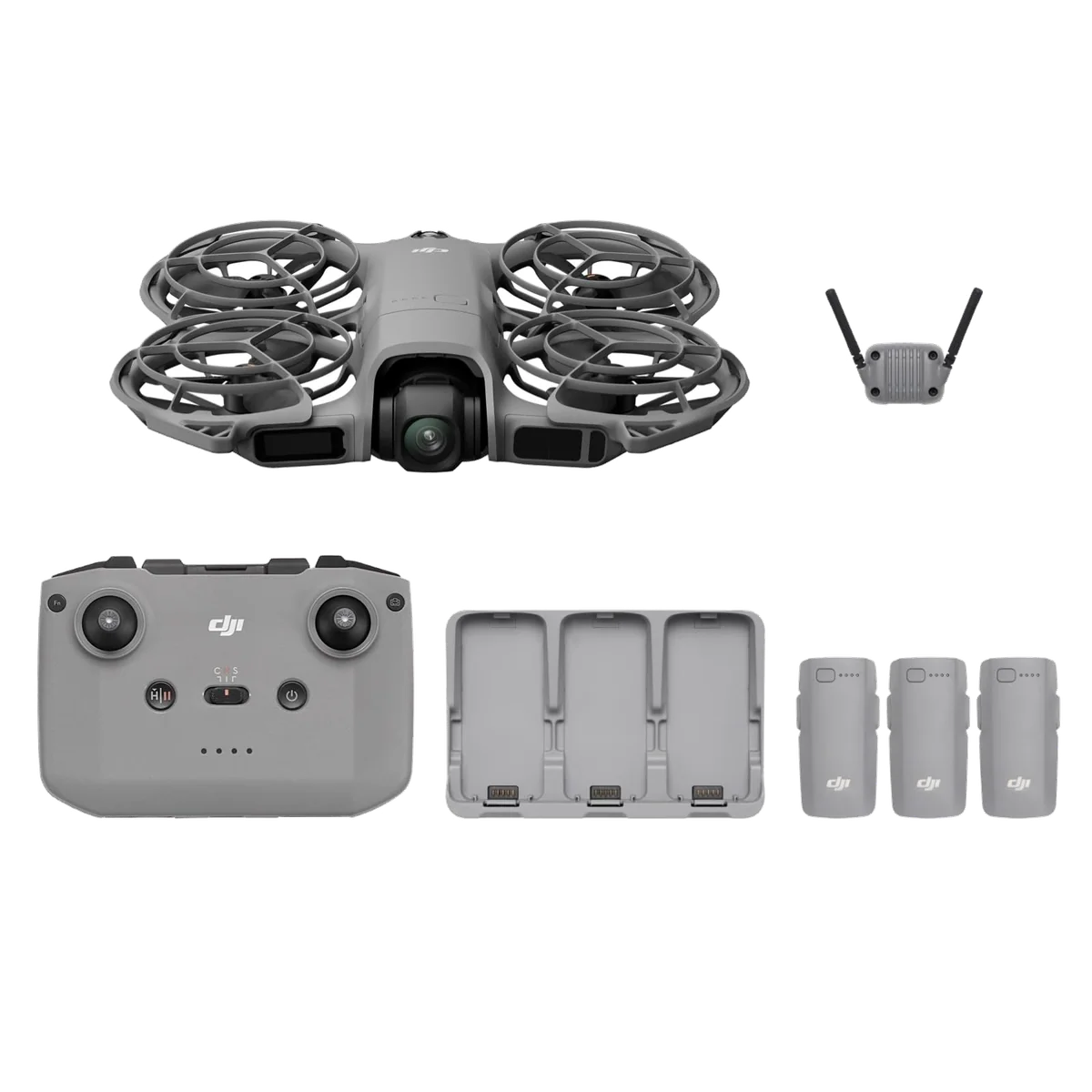
DJI Neo 2
These two share a brand, a propeller cage and a palm you can launch from, and almost nothing else. Put them side by side and the gap is not the usual half-step between adjacent models in a lineup. One is a small camera with a quadcopter attached, sold to somebody who wants better holiday footage than a phone can give them. The other is a wearable camera that happens to fly, sold to somebody who wants to be in the shot rather than behind it. Buying the wrong one of these is not like buying the slightly slower version of a thing. It is like buying a bicycle when you needed a rucksack.
There is one genuinely awkward fact sitting under this comparison, and it is worth putting up front because it inverts the usual logic of a price ladder. DJI's own consumer lineup credits the cheaper Neo 2 with omnidirectional obstacle sensing, while the Flip looks forward and downward and nowhere else. The more expensive aircraft, the one aimed at nervous first-time buyers, is the one that cannot see a tree behind it. That does not settle the argument, because the Neo 2 pays for those sensors in sensor size, gimbal axes and endurance, but it does mean the Flip's advantage lives entirely in the picture and not at all in the safety net.
- Buy the Flip if
- you want footage you will still be pleased with in a year, you fly it yourself rather than starring in it, and you would rather have one long flight than three short ones.
- Buy the Neo 2 if
- the shot is you on a bike, on a trail or on a run, filmed from eight metres away, and you accept phone-grade image quality as the price of getting a shot nobody else could have taken for you.
- Buy neither if
- somebody pays you for the results, because the Flip does not broadcast Remote ID and nothing in the record shows the Neo 2 does either, which puts commercial flying in the United States out of reach for both without an add-on module.
DJI Flip
DJI Neo 2
At a Glance
| Feature | Editor's Pick DJI Flip | DJI Neo 2 |
|---|---|---|
| Price Range | $500–$1,000 | $200–$500 |
| Finish | Gray | Gary |
| Configuration | DJI Flip Fly More Combo (RC 2) | DJI Neo 2 Fly More Combo |
| Check Price on Amazon | Check Price on Amazon |
Two box numbers, both fiction, in opposite directions
The Flip's listing sells ninety-three minutes. That is DJI's thirty-one minute rating multiplied by the three batteries in the combo, and the thirty-one comes with footnotes most buyers never open: still air, a constant forward six metres per second, camera in photo mode rather than recording, flown until the aircraft forces itself down. Owners who actually fly report twenty-four to twenty-five minutes, and the careful ones plan on twenty once climbing, hovering to frame and landing with a reserve are accounted for.
The Neo 2's number is smaller and further from the truth. DJI says nineteen minutes. The owner accounts cluster around ten to twelve with the sensors working, and the aircraft starts asking to come home well before the pack is empty, so the last slice of capacity is reserve you will not spend. Twelve is the number to plan with, and it falls in wind, because a 151-gram airframe burns power fighting to hold station.
Run the arithmetic on the two combos and the gap stops being a spec-sheet quibble. Three Flip batteries buy you somewhere near sixty-five to seventy-five minutes of flying across three trips into the air. Three Neo 2 batteries buy you a little over half an hour across the same three trips. If you have driven somewhere to fly, that difference decides whether the drive was worth it. Neither manufacturer is lying, exactly, and if the general shape of that deception interests you we have written up how those box figures get produced separately.
| The thing you care about | DJI Flip | DJI Neo 2 |
|---|---|---|
| Realistic minutes per battery | Twenty to twenty-five | Ten to fifteen, plan on twelve |
| Sensor and gimbal | 1/1.3-inch, three axes, f/1.7 | Half-inch, two axes, limited tilt |
| Grading and stills | D-Log M, 48 MP raw | One profile, no log, 12 MP JPEG |
| Obstacle sensing | Forward and downward only | Omnidirectional, plus forward LiDAR |
| Following a moving person | Good, and it holds road speed | Better, and it is the reason the drone exists |
| Following a vehicle | No | No |
| Controller in this box | RC 2, its own bright screen, no phone | RC-N3, clamps your phone, no screen |
| Storage | 2 GB internal, so buy a card | 49 GB internal, no card slot |
| Wind | Poor, and it warns you | Worse, and it becomes a kite |
| Surviving your mistakes | Very good | Exceptional |
The camera gap is wider than the numbers make it look
Both listings say 4K, which is the least informative word in this category. What separates them is everything either side of the resolution. The Flip carries a 1/1.3-inch sensor behind an f/1.7 lens on a three-axis gimbal, shoots 4K at 60fps in HDR and 100fps for slow motion, produces 48 MP stills in raw, and offers a D-Log M profile that grades properly. An owner who bought a Flip alongside an Avata says this camera is noticeably the better of the two.
The Neo 2 has a half-inch sensor, two gimbal axes, one colour profile, no log option and a shutter that will not go slower than a tenth of a second. Two axes means the horizon stays level when the aircraft banks, which matters, but it also means tilt is restricted and framing is restricted with it. Shot on auto, which is how most owners will shoot, the footage skews consistently blue, and the fix is manual white balance, which means reaching for the controller. In good light the result looks like a very good phone. In bad light it looks like a phone.
If your output is stills you intend to edit and deliver, neither of these is the answer and the Neo 2 is emphatically not: owners of it, including working photographers, say plainly that these are video-first machines and the photographs are close to an afterthought. Step sideways to the Mini 3 or start at the camera drone roundup instead.
The cages do the same job and produce opposite aircraft
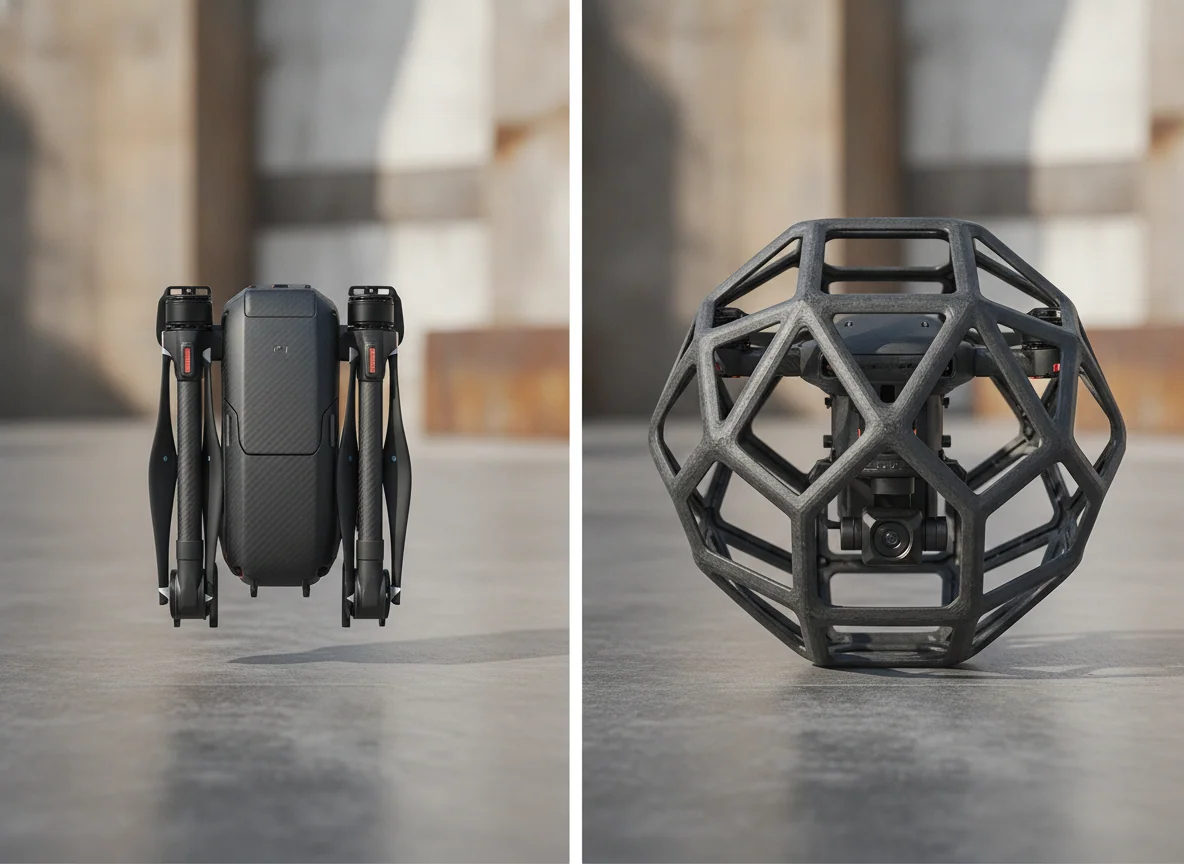
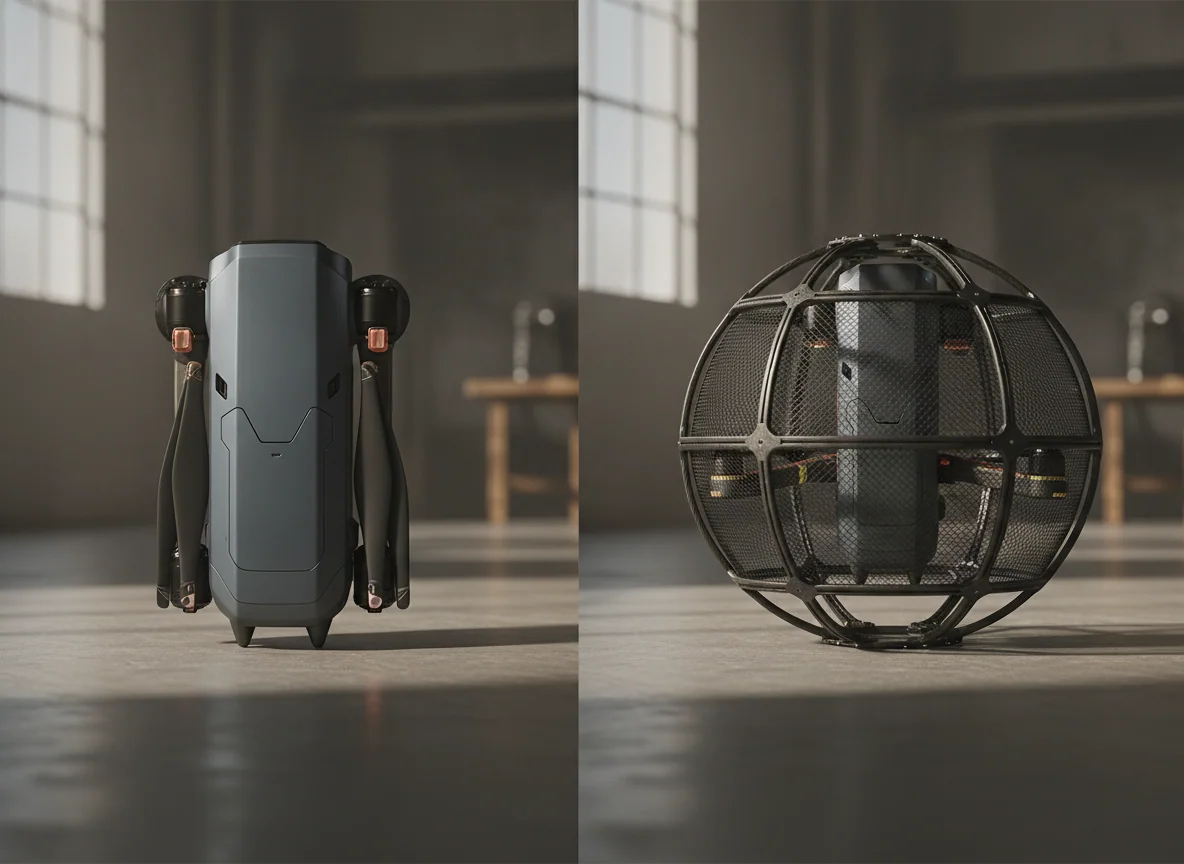
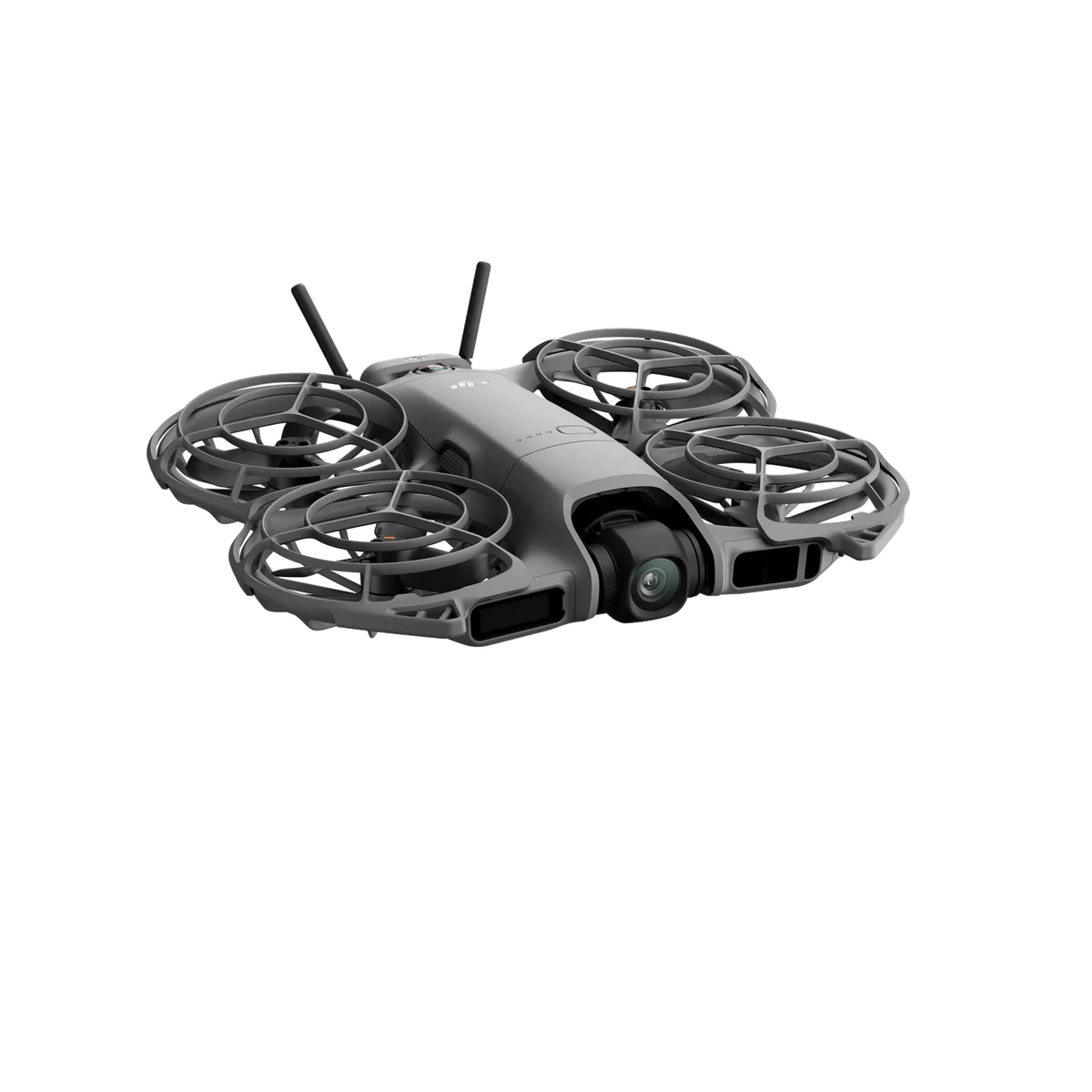
Both drones put a guard around every propeller, and in both cases that decision explains almost everything downstream. It is why you can hand either one to a nervous adult and let them launch it from an open palm, why both survive branch strikes that would end a Mini, and why owners of both fly more boldly than they otherwise would. Flip owners report bumping walls with no damage to props or airframe and crashing outright and finding it fine. Neo 2 owners describe bouncing hard off a tree in sport mode and finding the aircraft unscathed in the undergrowth.
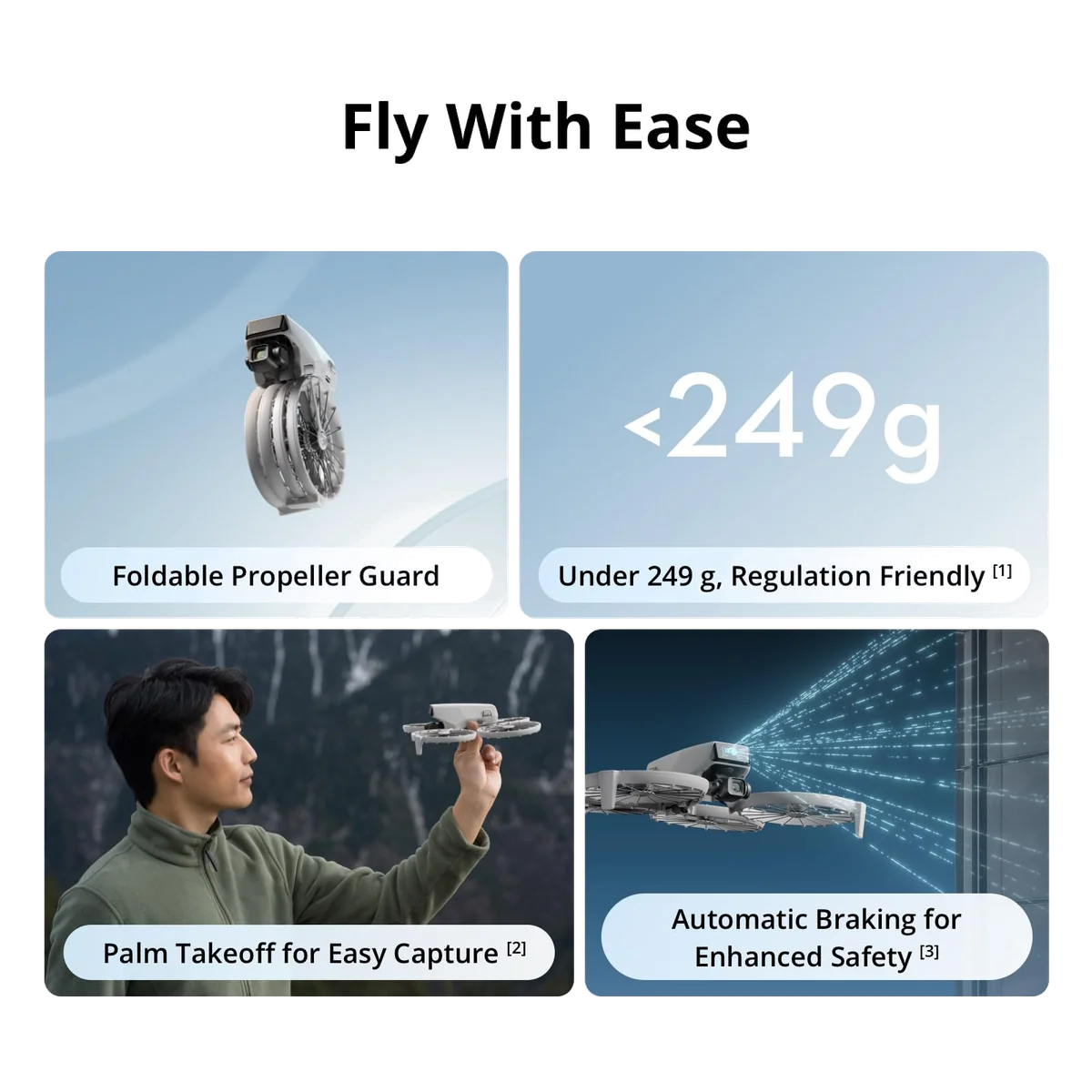
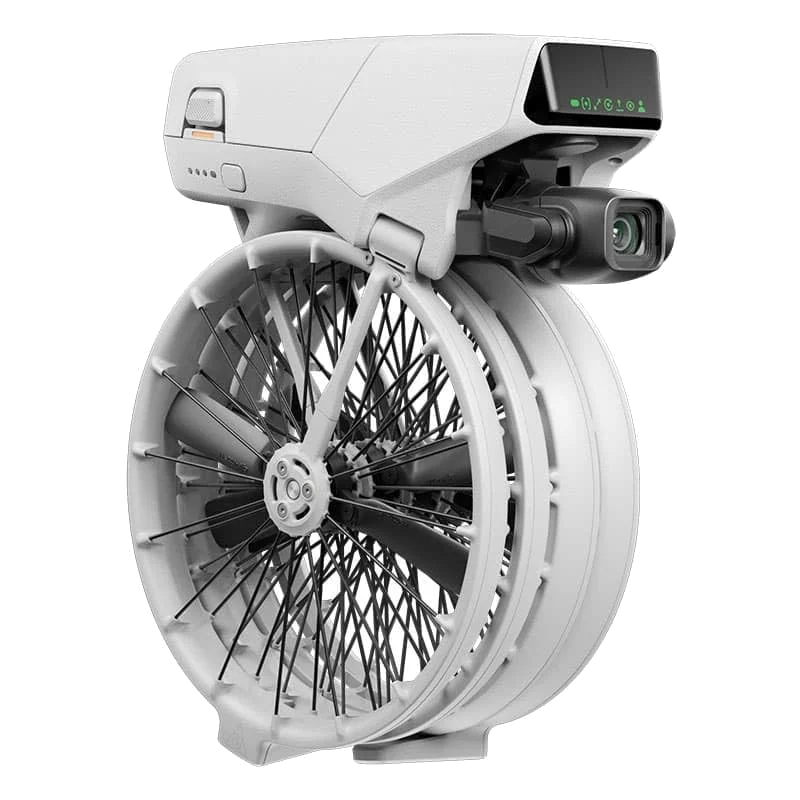
The difference is what the cages cost each aircraft. On the Flip they fold flat and add enough weight and drag to knock top speed down to roughly eighteen miles an hour and take several minutes off the endurance, which is the trade an owner who also flies a Mini 4 Pro describes without complaint. On the Neo 2 they are fixed, the airframe does not fold at all, and at 151 grams the whole machine has so little mass that the guards define its ceiling rather than trimming it.
Neither cage protects the part you cannot cheaply replace. Both aircraft hang the camera and gimbal unshielded at the nose, both meet the ground there first in a nose-down arrival, and Neo 2 owners report gimbals killed by a series of hard impacts and, in one case, by a slight bump against a door. With DJI Care Refresh no longer sold to American buyers, and at least one Neo 2 buyer finding no Refresh option at activation, that gap is now yours to plan around; what is left in its place is a short read and worth doing before the first flight.
Wind beats both of them, and it beats the Neo 2 first
The Flip is rated to 10.7 metres per second, about twenty-four miles an hour, and its behavioural ceiling sits noticeably below its published one. In roughly twenty miles an hour of wind it will hold station but start refusing the clever modes and posting warnings about coming home. The mechanism is not subtle: an owner's description of the guards behaving like sails is the best three words written about this aircraft.
The Neo 2 sits below that line rather than above it. The most experienced reviewer in its record calls wind the number one enemy of the drone and describes it becoming, effectively, a kite, with warnings once it passes fifteen metres up in the sort of breeze you notice getting out of the car. You cannot bully a headwind at 151 grams because there is no thrust in reserve to do it with. The one useful nuance is that Neo 2 owners flying on the controller report far better results than owners flying from a phone, since the sticks give the fine throttle control the situation needs. Neither aircraft belongs on a coast or a ridge on a blustery afternoon, and the real threshold for a drone this size is lower than most buyers expect.
Following you is the one contest the Neo 2 wins outright
The Flip tracks people well. It held a rider on an electric skateboard at twenty miles an hour through a tight street in one review, and Flip owners cite the follow modes as the reason they bought it. But it locks onto people rather than vehicles, and if it loses you it cannot yaw to look for you again without dropping the lock first, which is exactly the wrong workflow when you are the subject and both hands are busy.
The Neo 2 is built around this job and it shows. Owners report it holding a mountain biker at over forty kilometres an hour through trees and a cyclist at full speed without dropping the shot, and they rate it above the Mini series for follow work. Its omnidirectional sensing is what makes that usable rather than terrifying, and it is a genuine generational change: the original Neo had no obstacle avoidance at all.
Two things stop that becoming a blank cheque. The sensing is a backup and not a guarantee, having been recorded clipping a stop sign, hitting a parked car and, in one account of a child being filmed at a bike park, tracking its subject straight into the child's helmet. The faster you move the more the system trades safety for keeping up, and sport mode turns the safety features off entirely. And like the Flip, the Neo 2 will not lock onto a vehicle at any speed, so a follow shot of a car, a quad or a side-by-side is off the table for both of these regardless of how slowly it is crawling. What these systems catch and what they fly through is its own subject, and it is worth ten minutes if you are buying partly for the sensors.
The controllers in these two boxes are not the same kind of thing
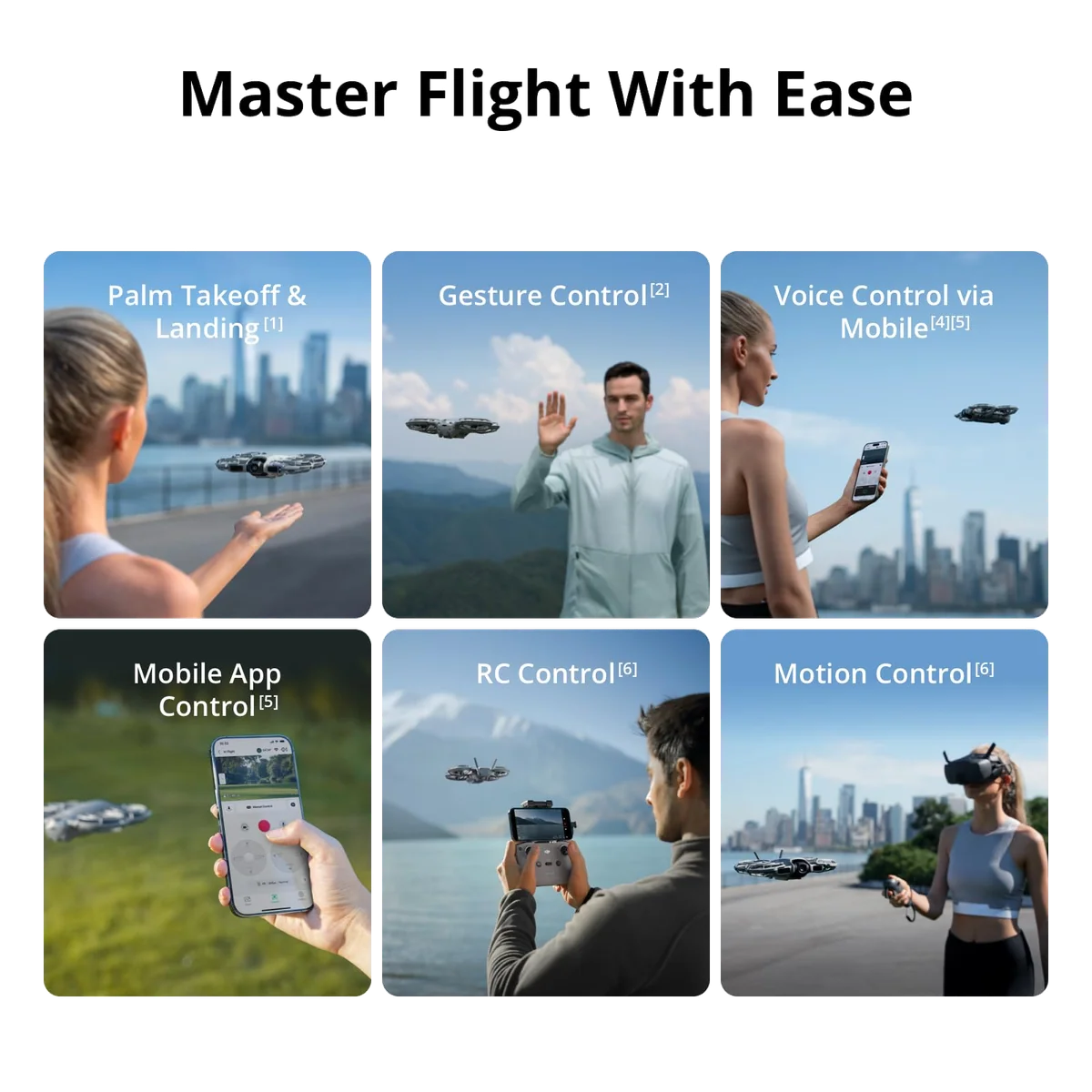
This is the detail buyers most often miss, because both listings say "remote controller" and mean different objects. The Flip combo ships the RC 2, which has its own bright 5.5-inch screen and needs no phone at all: no cable, no clamp, no phone battery draining, no incoming call landing on top of your live feed. Owners who chose the cheaper phone-tethered version are conspicuously the ones writing about regret months later, and one reviewer with a great deal of previous DJI controller experience called the RC 2 feed the best he had seen on any drone. Its one real fault is that it has no internet connection of its own, so maps must be preloaded in small tiles that make it hard to know which parts of your area you actually have.
The Neo 2 combo ships the RC-N3, which has no screen and clamps your phone, with cables for both platforms in the box. That is a step down in convenience and it is still the version to buy, because on this aircraft the controller is what turns range from the limiting factor into a non-issue and it is the only route to the manual camera settings that fix the blue cast. It also costs you something the Neo 2's marketing does not mention: the transceiver module that comes with it mounts on the aircraft with an antenna standing at ninety degrees from the body, which spoils the pocketability that was meant to be the point. If you are weighing screen against phone in general, we argue it out in whether you need a real controller, and what else the RC 2 will fly matters if you expect to own more than one drone.
Small print that costs money after checkout
Both boxes are missing a wall charger, and on both drones that omission has teeth. DJI's own Flip description ends by telling you the battery charger is sold separately and recommending a 30W or 65W USB-C unit, and the reason is arithmetic: the parallel charging hub you paid for will not charge two batteries at once unless you feed it 65W. The Neo 2 hub fills three batteries in a little over an hour and doubles as a power bank for your phone, but it wants a proper adapter to do it, and Neo 2 owners discover this the same way Flip owners do, which is to say afterwards.
Storage goes the other way and the Neo 2 wins it cleanly. The Flip has 2 GB on board, which is a handful of 48 MP raw frames, so a microSD card is part of the purchase price rather than an accessory. The Neo 2 has 49 GB internal and no card slot at all, which means nothing to buy, forget or corrupt, and also means 4K fills it faster than owners expect. Neither box includes a case. Android owners of both must fetch the DJI Fly app from DJI's own website rather than the Play Store, a sideload that is disclosed on both listings and is genuinely awkward on a product whose pitch is that there is no setup. Whether these bundles are worth their premium in general is the subject of our piece on Fly More Combos, and this is one of the rare pairs where the answer is yes for both, for different reasons: on the Flip because three batteries are what makes the drive worthwhile, and on the Neo 2 because three batteries are the direct answer to its single worst trait.
DJI Flip
DJI Neo 2
So which box, and for whom
Decide by asking who is holding the camera. If the answer is you, standing still, pointing an aircraft at a landscape or a building or your children in a garden, buy the Flip, because everything that makes a photograph good is better on it and the extra ten minutes per battery is the difference between getting the shot and running home to swap a pack. If the answer is that nobody is holding the camera because you are the thing being filmed, buy the Neo 2, and accept that you are buying a follow-cam rather than a camera drone.
The one to buy if the footage matters more than the flying
The bigger sensor, the three-axis gimbal, the D-Log M profile and roughly twice the usable flight time per battery make this the better camera by a margin no amount of clever automation closes.
It looks forward and down and nowhere else, so the reversing reveal shot every new pilot tries is flown blind.
The one to buy if you are the subject
Nothing else here tracks a person at speed through trees as reliably, and the omnidirectional sensing plus a cage that shrugs off crashes is what makes flying it that close to obstacles a reasonable thing to do.
Plan on twelve minutes a battery rather than the nineteen on the box, and expect the camera to behave like a good phone rather than a drone.
Two readers should take neither. If money changes hands for the footage, the Remote ID gap turns a good purchase into an unusable one, and the Air 3S is where that budget belongs; the registration and Remote ID rules under 249 grams spell out exactly where the line falls. And if the whole point is a follow-cam that also has to survive an American purchase decision that keeps moving, note that the Neo 2 cleared the FCC before foreign-made drones were added to the Covered List, which is why it remains sellable, and treat that as the position at the time of writing rather than a settled matter. Our standing page on whether you can still buy a DJI in the US is where that gets updated.
Three honest sideways moves before you commit. If you want to find out whether you enjoy flying at all before spending Flip money, the Mini 4K answers that for much less. If you want a Flip-shaped drone without the DJI badge, the Potensic Atom 2 is the serious non-DJI answer and we have compared the brands directly in whether Potensic is as good as DJI. And if the Neo 2's job description is the one you recognise, the HOVERAir X1 and the rest of the follow-me shortlist deserve a look, though Neo 2 owners who have flown both rate DJI's tracking higher.
Which leaves the recommendation where it started. The Flip is the better product and the Neo 2 is the more specific one, and specificity beats quality when the specific thing is what you needed. Buy the Flip and pick a calm day. Buy the Neo 2 and buy a fourth battery.
Frequently Asked Questions
Which one is better for someone who has never flown a drone?
Both are forgiving enough for a first flight, but the Neo 2 is the easier one to succeed with on day one because it launches from your palm and sees in every direction, while the Flip is the one you will still be happy with in a year.
Is the Neo 2's camera really that far behind the Flip's?
Yes, because the Flip's larger sensor, third gimbal axis and log profile put it in a different class, and the Neo 2's footage is closer to a good phone than to a camera drone.
How many minutes will I actually get from each?
Plan on twenty to twenty-five minutes per battery on the Flip and twelve on the Neo 2, which means the Flip's three batteries buy nearly double the flying of the Neo 2's three.
Can either of them be used for paid work in the United States?
Not as sold, since the Flip does not broadcast Remote ID and nothing in the record shows the Neo 2 does either, though one Flip owner reports flying successfully with a bolt-on broadcast module fitted.
Will either one follow a car or a quad bike?
No, both track people and refuse to lock onto vehicles at any speed, which is a hard limitation rather than a setting you can change.
Which handles wind better?
The Flip, though only by a class, because at 151 grams the Neo 2 has no thrust in reserve to push into a headwind at all.
Do I need to buy a memory card for either of them?
For the Flip yes, since 2 GB of internal storage holds only a handful of raw frames, while the Neo 2 has 49 GB built in and no card slot to fill.
Is the screen controller worth choosing the Flip for on its own?
It is a real advantage, because the RC 2 removes the cable, the clamp and the phone from every takeoff, but it is not worth buying the wrong aircraft to get.
Should I consider the original Neo instead of the Neo 2?
Only on price, because the first Neo had no obstacle avoidance at all and a single-axis gimbal, and we have set the two generations against each other in full.
Which one packs better for travel?
The Flip folds flatter but stands taller in a bag because of its guards, while the Neo 2 does not fold at all and carries an upright transceiver antenna, so neither is as pocketable as its marketing suggests and the travel shortlist has better options if that is the deciding factor.
Ready to Choose?
Sources (7)
- Amazon listings and customer reviews — Dji Flip and Dji Neo 2
- Owner reports across r/DjiNeo, r/drones, r/videography threads
- Owner and reviewer video, 1 channel
- DJI — Article — www.dji.com
- Pcmag — Article — www.pcmag.com
- Fstoppers — Article — fstoppers.com
- Ca — Article — vancouverislanddrones.ca