The Mini class caught the Air 3S on picture quality, and that is not the same as catching the Air 3S
Buy the Air 3S for the 70mm second camera and for an airframe heavy enough to hold a frame when the air is moving, and if you shoot single-focal-length landscapes on calm days and want to stay under the registration line, the extra half kilo is dead weight you are paying for twice.
DJI Air 3S
DJI Mini 4K
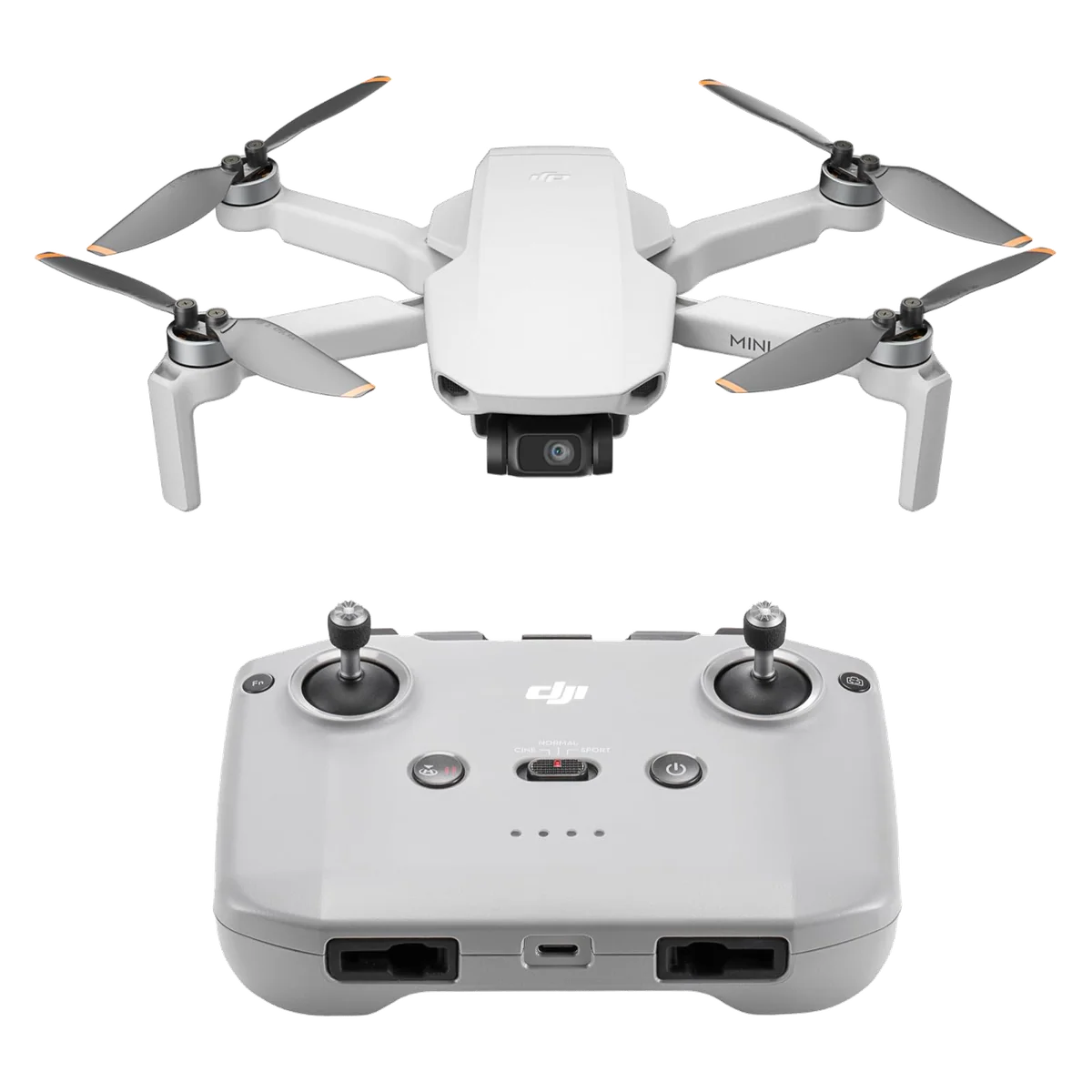
For most of the last decade this comparison answered itself before anyone asked it. The big drone had the big sensor, the small drone had the small one, and everything else was a footnote about how much you were willing to carry. That is the part that has stopped being true. A landscape photographer who put DJI's current 1-inch Mini against the Air 3S came away calling the two main cameras on par at the focal length they share, which quietly removes the oldest reason anybody ever bought up a class.
So the question is no longer which one takes the better picture. It is what the Air 3S sells that a 249g airframe with an equally good sensor structurally cannot, and the answer comes down to two things: air, and a second focal length. Everything else on the Air 3S side of the ledger is either a wash or a tax. The most honest advocate for that reading is an Air 3S owner writing on Amazon who tells casual buyers, in the middle of a five-star review of his own drone, to save the money and get the Mini instead. He is right, for the buyer he is describing.
Quadcopter Bench has flown neither aircraft. What follows is built from DJI's own listing and footnotes, from the customer reviews Amazon retains, and from published reviews and owner threads by people who did fly them, including several who own an Air 3S alongside a Mini. Where the record splits, this page says so rather than picking the tidier version.
DJI Air 3S
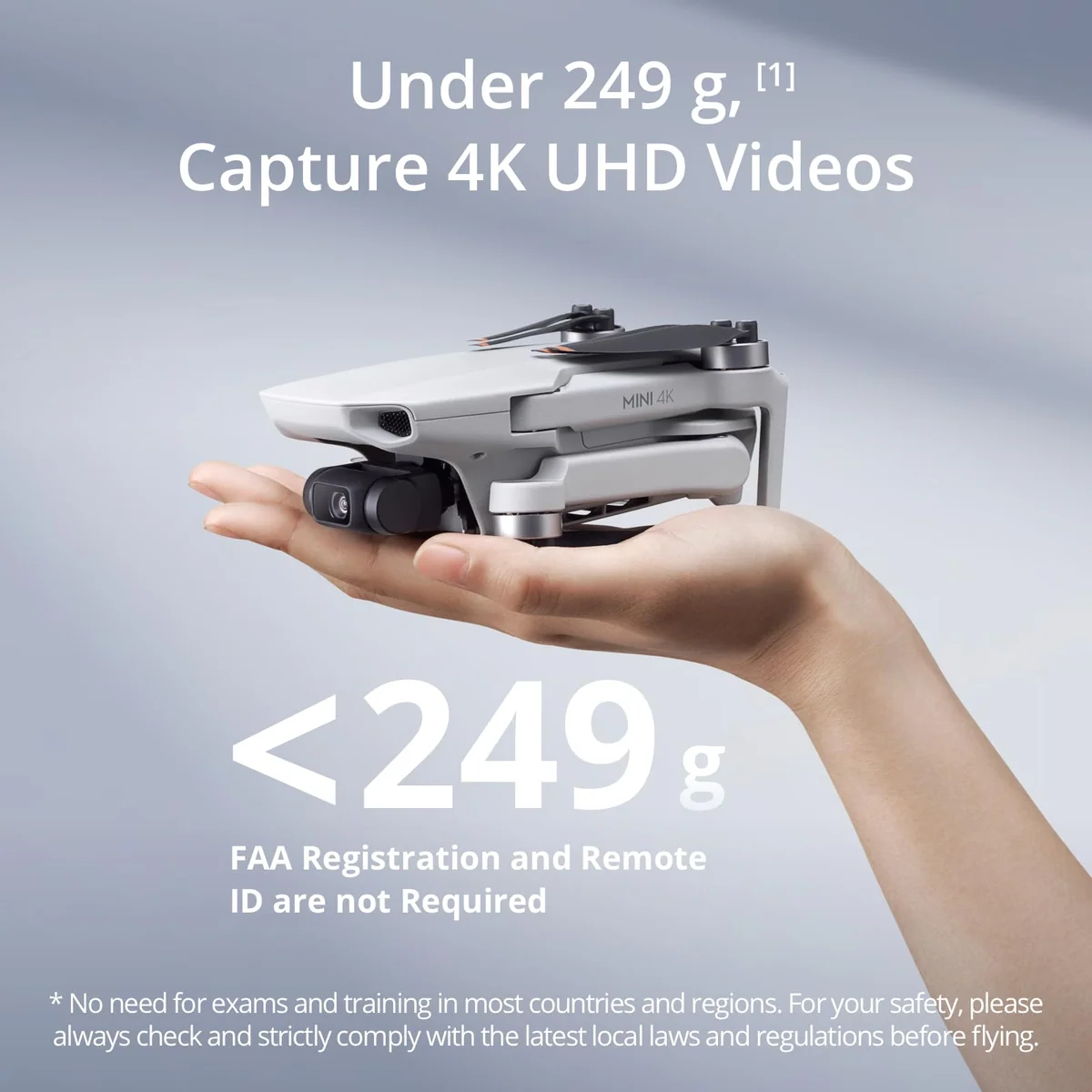
DJI Mini 4K
At a Glance
| Feature | Editor's Pick DJI Air 3S | DJI Mini 4K |
|---|---|---|
| Price Range | $1,000–$1,500 | $200–$500 |
| Finish | gray | Gray |
| Configuration | Medium | — |
| Check Price on Amazon | Check Price on Amazon |
The half kilo buys air, not pixels
724 grams is the number that explains the Air 3S, and it appears nowhere in its marketing. Mass is why the aircraft holds position in gusts that leave a light drone bouncing, and owners describe exactly that: a hover that stays put, footage that stays smooth, and an aircraft that does not appear to be fighting the sky. The cleanest statement of what that is worth comes from a Mini 4 Pro owner who kept carrying his drone up hills and kept not launching it, because high ground is rarely calm, and who gave up the portability to get an aircraft he would actually fly. A drone that stays in the bag is worth nothing, whatever its sensor measures.
The boundary is real and worth carrying into the field. One owner running follow modes in heavy wind reported that the recording stayed smooth while the aircraft itself visibly wobbled, which is roughly where the physics runs out. If you want the shape of that limit for the lighter class, our guide to how much wind a lightweight drone can actually handle is the honest version, and the short answer is that the 250g line and the wind line are the same line viewed from different sides.
One focal length is a composition constraint, not a spec
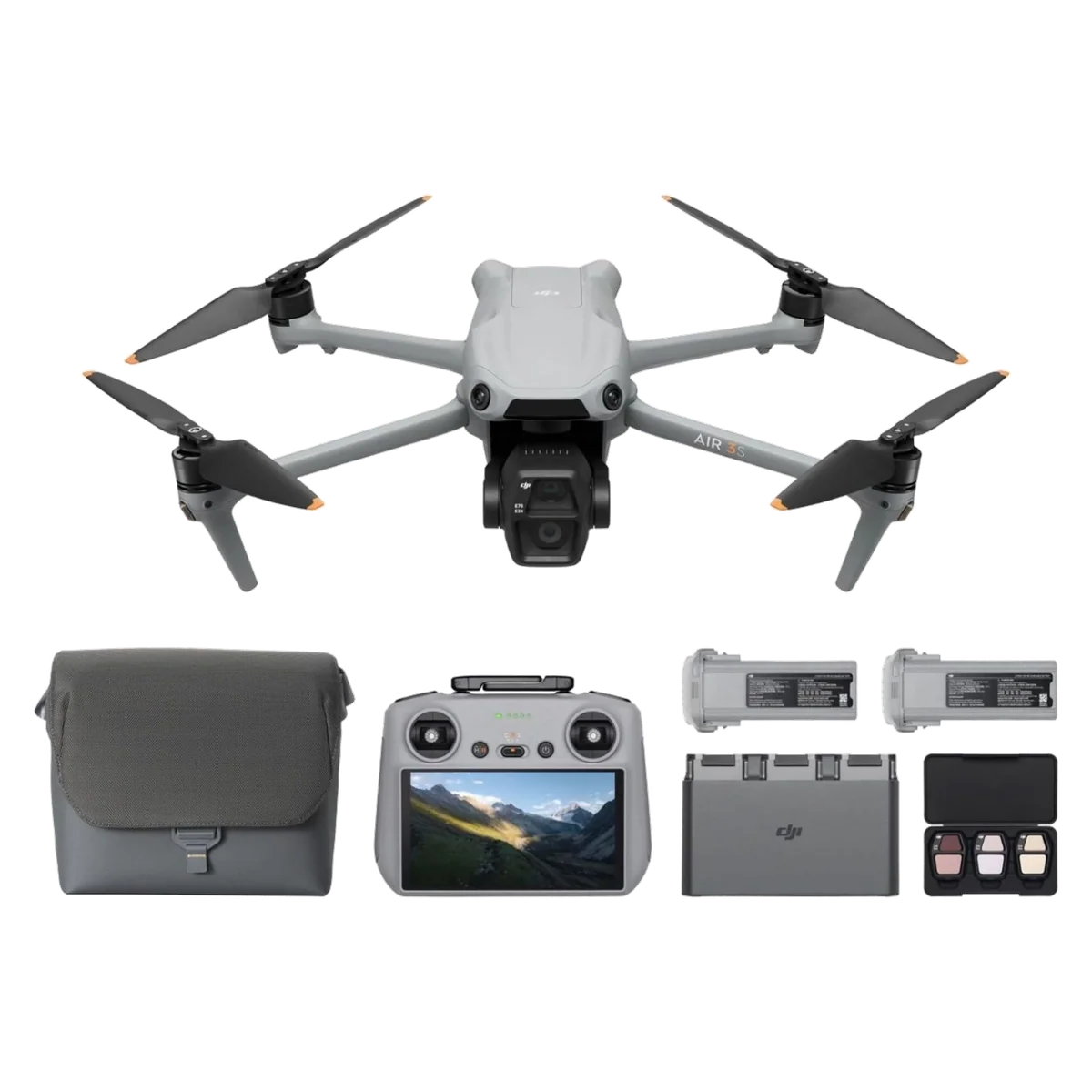
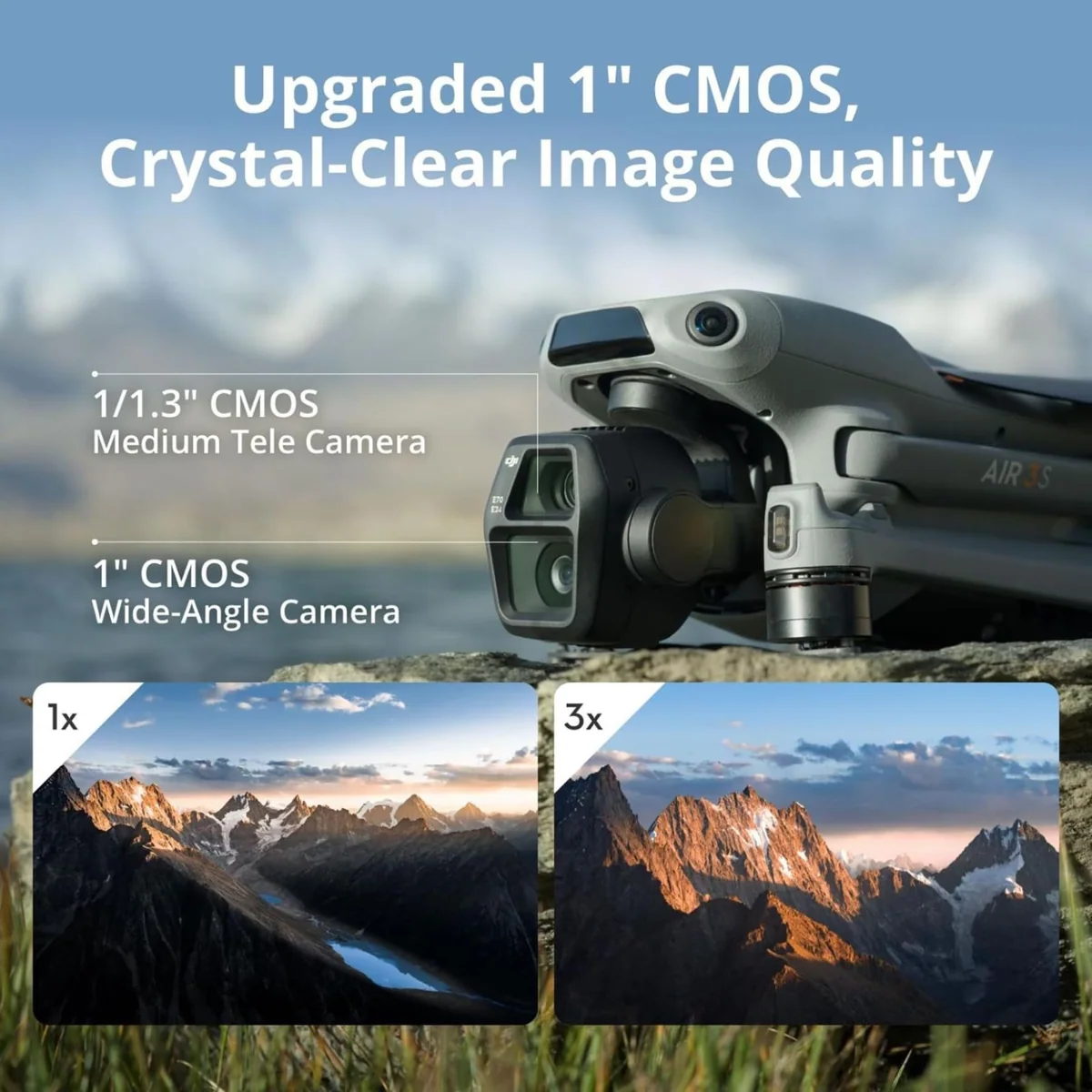
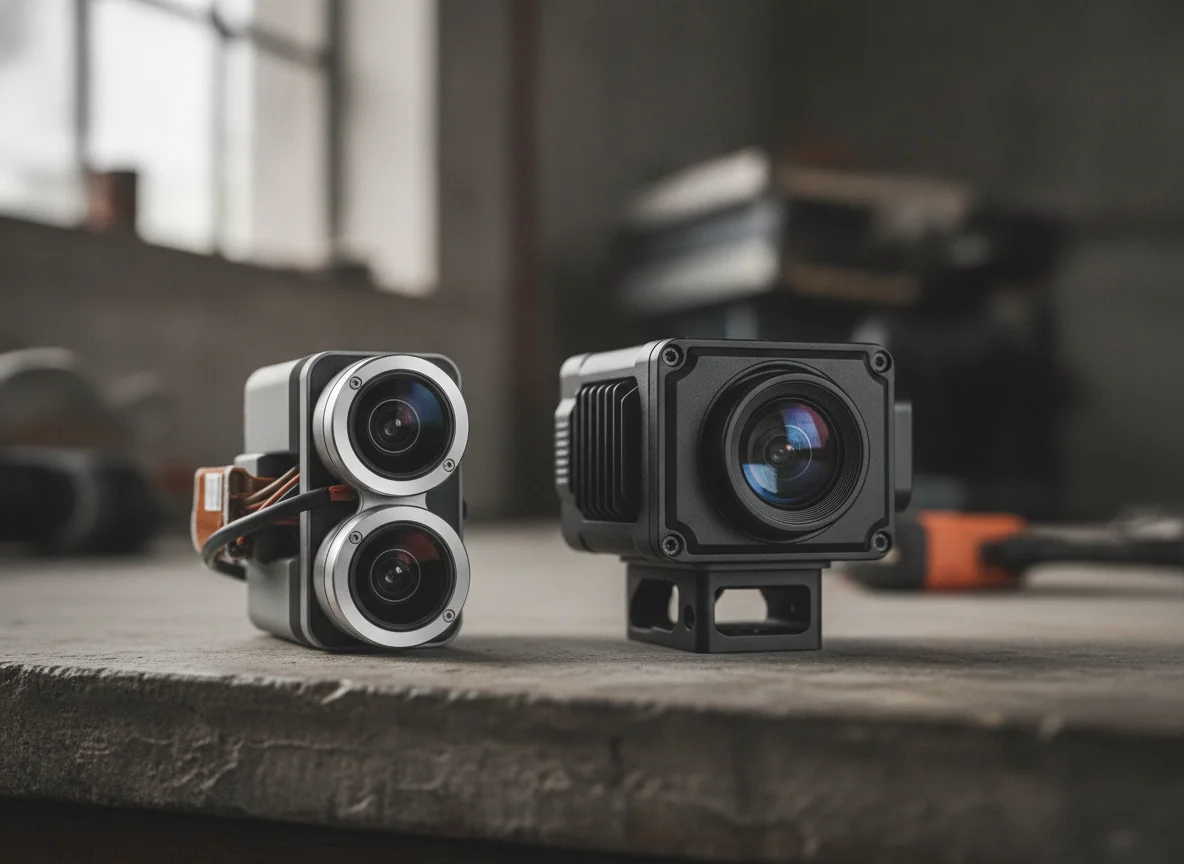
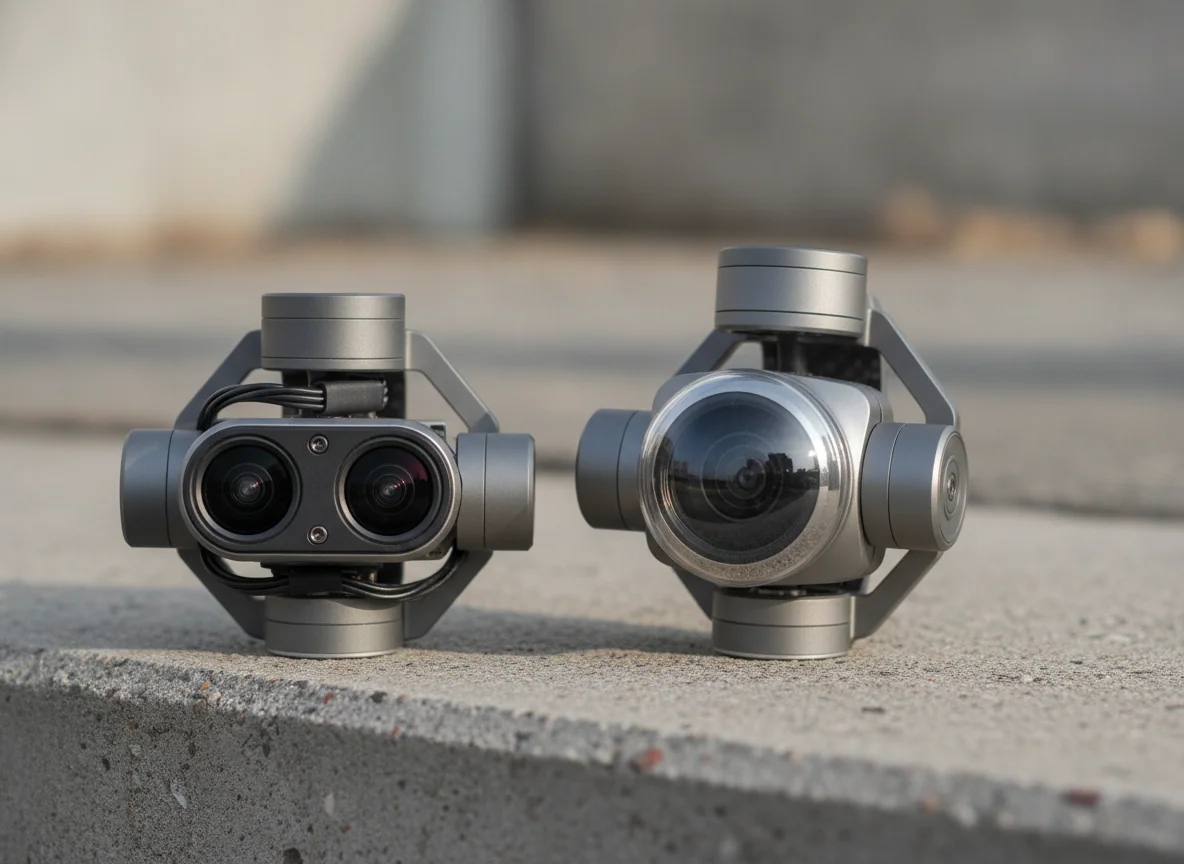
The Air 3S carries a second camera at a 70mm equivalent, inherited from the Air 3 with its colour retuned so the two lenses cut together without a grade fight. It converts sceptics. A photographer of fifty years bought the aircraft specifically because his Mini could not give him a normal-to-tele focal length, and an Air 2 upgrader expected to dismiss the tele and changed his mind on the first shoot. One caveat that reviewers keep blurring: the second lens is real glass at a real focal length, and the 3x on top of it is a crop.
Against a one-camera Mini, that is not a nice-to-have, it is the difference between reaching a subject and approaching it. Zoom on the small drone means flying closer, and flying closer is frequently the thing you are not allowed to do, or not sensible to do, or not able to do without putting the aircraft somewhere its obstacle sensors have no business being. If your work is wide landscapes at 24mm, none of this touches you and the Mini wins on every other axis. If your shot list has compression in it, no sensor comparison will get you there.
Where the bigger drone loses on paper
Buying up does not buy uniformly better. Video tops out at 4K, and the several-years-older Air 2S managed 5.4K; the 130 Mbps maximum bitrate is lower than the Air 3's, and a reviewer measuring 4K 10-bit H.265 in practice got roughly 90 Mbps out of it. He also admitted he could not tell the footage apart blind and preferred the Air 3S image anyway, which is the sort of finding that should lower everyone's blood pressure about bitrate specs.
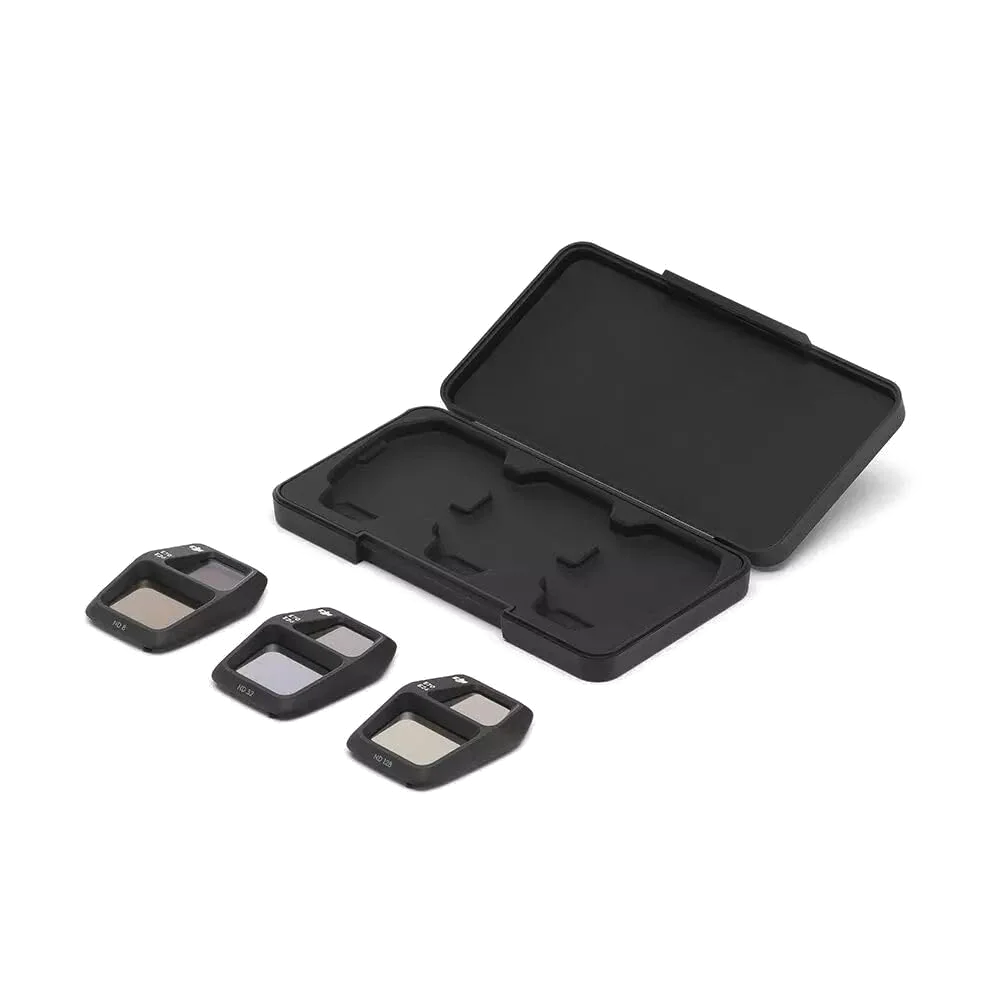
Both cameras have a fixed aperture, so ND filters are equipment rather than an accessory for any daylight video. The combo's own filter set is ND8, ND32 and ND128, and reviewers independently note that the values they reach for, ND16 and ND64, are the two not in the case. The box also has no wall charger in it, and DJI's listing footnote points you at a 65W one; owners say 65W minimum and 100W better. Then there is noise and visibility. An owner reports hearing his clearly at 120 metres, and an Air-class drone with a screen controller announces to everyone in the field that somebody is flying. If discretion is part of why you wanted a small drone, that is not a footnote, it is the decision.
Flight time flatters neither aircraft. The listing's 45 minutes is a windless-hover figure; owners report around 40 on mixed use and reviewers put real flying closer to 38. Plan three flights of a little over half an hour, and read how long a drone really flies on one battery before you plan around the box number for either class.
Paperwork, and the one difference an American buyer cannot argue with
At 724g the Air 3S is far past the 250g threshold, so registration and Remote ID are compulsory and none of the light-drone exemptions apply; the Mini line exists on the other side of that line, which is the whole point of the Mini line. Our page on registration and Remote ID under 249g covers what that actually saves you.
Then the current shape of US policy pushes the other way, and hard. The FCC's action blocks new foreign-made drones from obtaining authorisation, which stops future models being sold or imported, while drones already authorised remain legal to buy and fly. The Air 3S was authorised before that line was drawn and DJI's newest hardware was not, which is a difference no amount of sensor parity resolves. It is also contested and moving, so treat this paragraph as dated and check our standing page on buying and flying a DJI drone in the US, which is the one we keep current.
One more asymmetry that only shows up after a crash: the bigger aircraft is the more expensive one to replace, and DJI Care Refresh is no longer sold to US buyers, with the substitutes owners have priced rated poorly by the people who priced them. Flying a heavier, costlier drone near trees now carries a risk that used to be underwritten and is not, which we work through in insuring a drone now that Care Refresh is gone.
The decision, on one screen
| What you are actually choosing | DJI Air 3S | A 249g Mini with a 1-inch sensor |
|---|---|---|
| Main camera at 24mm | 1-inch sensor, a real generational step over the Air 3's smaller unit | A photographer who compared them called the two level at this focal length |
| A second focal length | 70mm camera, real glass, retuned to match the wide | None, so you move the aircraft instead of the lens |
| Weight and paperwork | 724g, registration and Remote ID compulsory | Under the line where the light-drone exemptions live |
| Moving air | Mass is the feature, and owners fly in wind that grounds a Mini | The first thing to give, and the reason light drones stay in bags |
| Being noticed | Loud and conspicuous, heard clearly at 120 metres by one owner | Far less visible, though pilots dispute that small props are quieter |
| US regulatory footing | Authorised before the FCC line was drawn | The newest hardware sits on the far side of that line |
DJI Air 3S
DJI Mini 4K
Which one is actually your drone
The stance again, since the detail above can bury it: the Air 3S is no longer the automatic answer for image quality, and it is still the right aircraft for a specific and reasonably common pilot. The three-drone owner who flies an Air 3S alongside a Mini and a Mavic reaches for the Air 3S most often and calls it the sweet spot of the range. That is a verdict about how often an aircraft gets used, not about pixels, and it is the right kind of verdict.
- Buy the Air 3S if wind has already cost you footage you cared about, or if a missing second focal length has.
- Buy it if you shoot 10-bit log and grade what you shoot, because that is what an Air-class sensor is for.
- Buy it if you want an aircraft whose US authorisation was granted before the current restriction rather than after it.
- Walk away if the footage goes straight to social media ungraded, because the value proposition collapses without a grade.
- Walk away if registration and Remote ID were the things you were trying to avoid.
- Walk away if the drone has to fit in a jacket pocket, since the one you carry beats the one you admire.
The drone for the pilot whose shot list has outgrown one focal length and one weather window
It sells two things a 1-inch Mini cannot offer at any price: a real 70mm second camera, and an airframe heavy enough to hold a frame when the air is moving.
The box leaves out the wall charger DJI's own listing tells you to go and buy, and the bundled ND8, ND32 and ND128 set skips the two filter values reviewers say they actually reach for.
If you land on the Mini side of this, the honest cheaper answer on this site is the Mini 3 Fly More Combo, and the rest of the light class is laid out in the best camera drones under 249g. If you land past the Air 3S instead, because a client will ask for ProRes or you want an adjustable aperture, that argument belongs in Mavic 4 Pro against Air 3S rather than here. The full case for this aircraft on its own terms, including the three specific holes in the combo, is in our Air 3S review, and it sits near the top of our roundup of the best camera drones.
Frequently Asked Questions
Is the Air 3S main camera still better than a 1-inch Mini's?
No, and that is the finding that changed this comparison: a photographer who compared them called the two on par at the shared focal length, so the Air 3S now has to win on the tele and on wind rather than on the sensor.
What does the second camera give me that zooming cannot?
Reach without approach, since the 70mm is real glass and everything beyond it is a crop, which means the Air 3S can frame a distant subject from a position a Mini would have to fly into.
Can Americans still buy and fly the Air 3S?
As things stand yes, because the restriction blocks new authorisations rather than revoking existing ones and the Air 3S was authorised before that line was drawn; the position is contested and moving, so check it rather than assume it.
Do I have to register the Air 3S?
Yes, since at 724g it sits far above the 250g threshold, so US buyers register with the FAA and the aircraft broadcasts Remote ID, while European pilots will need the appropriate certificate.
Is the Fly More Combo the version to buy?
Yes for the three batteries, the hub, the ten spare propellers and the best bag DJI includes, but budget for a 65W charger and a set of ND16 and ND64 filters on the same order, and read our take on whether a combo earns its premium first.
I already own an RC 2, so should I buy this bundle?
No, because the controller in this box is identical to the one you have and the cheaper variant leaves you no worse off, which our guide to the RC 2 sets out in full.
Ready to Choose?
Sources (6)
- Amazon listings and customer reviews — Dji Air 3s and Dji Mini 4k
- Owner reports across r/dji threads
- Owner and reviewer video, 3 channels
- Photo — Article — jvn.photo
- Firstquadcopter — Article — www.firstquadcopter.com
- Pcmag — Article — www.pcmag.com