The Mini 3 is the better drone, and the Atom 2 wins the two arguments DJI never answered
Buy the DJI Mini 3 Fly More Combo unless you need the aircraft to follow a moving subject or to broadcast Remote ID while staying under 249g, because those are the only two jobs the Potensic Atom 2 wins outright and it wins both of them decisively.
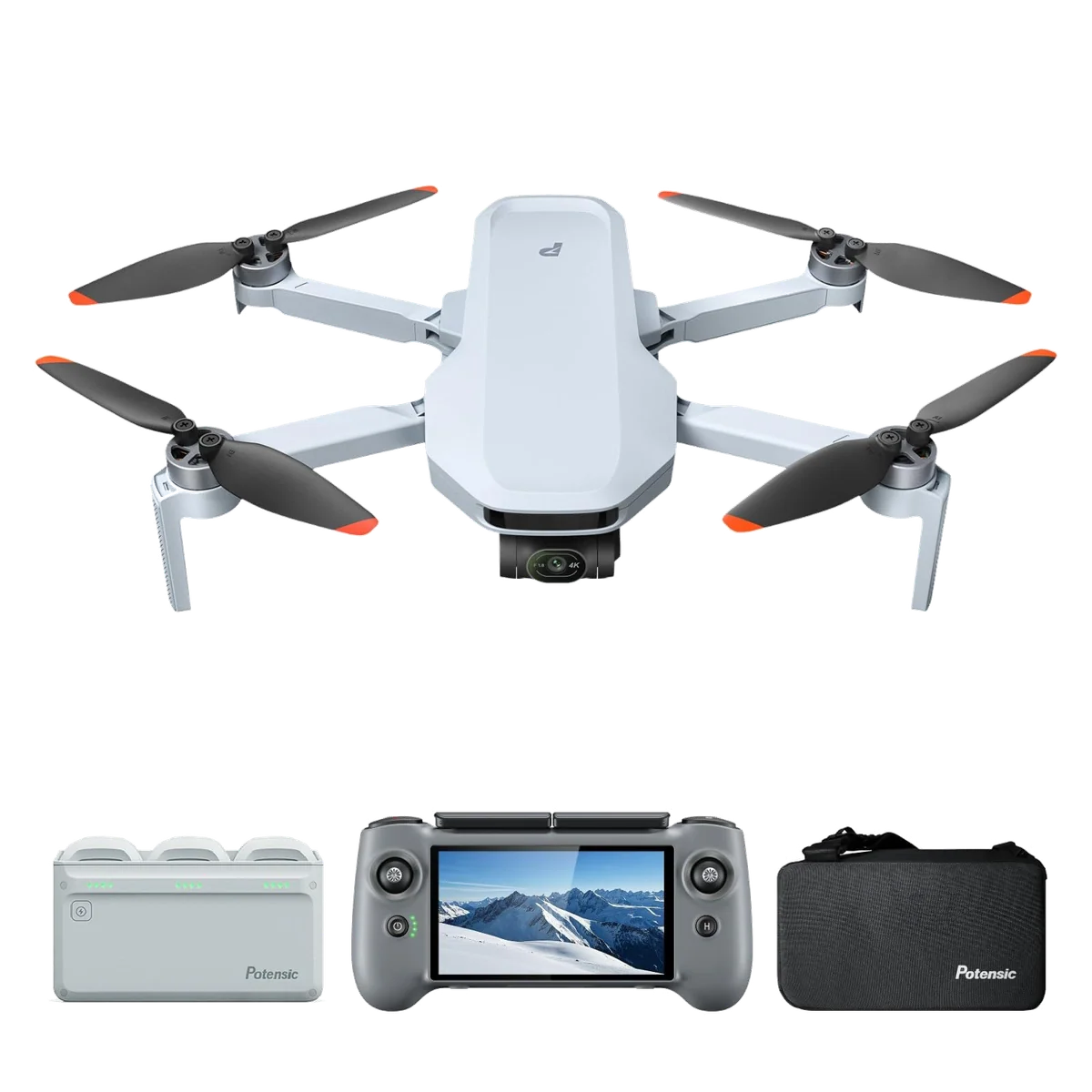
Potensic Atom 2
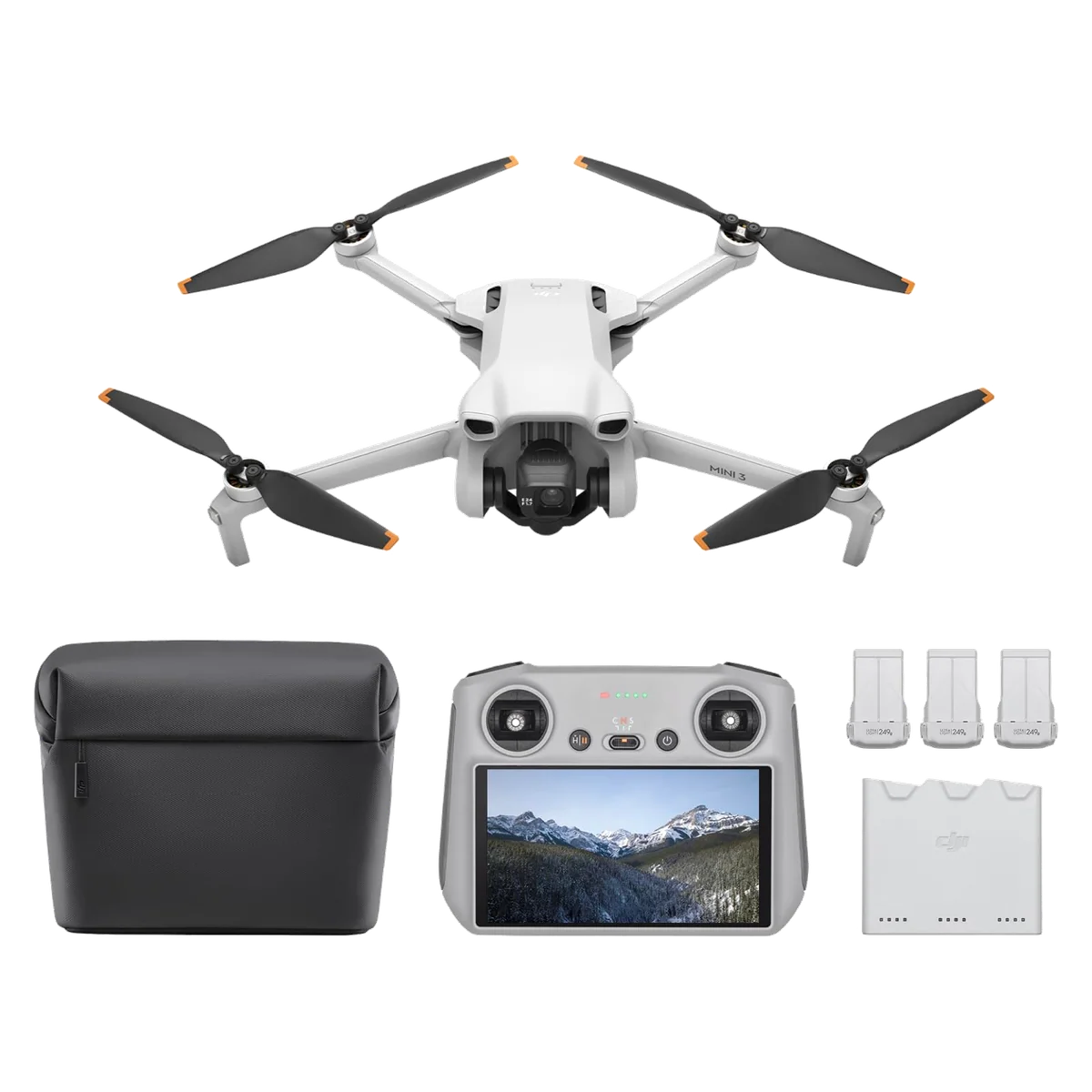
DJI Mini 3 Fly More Combo
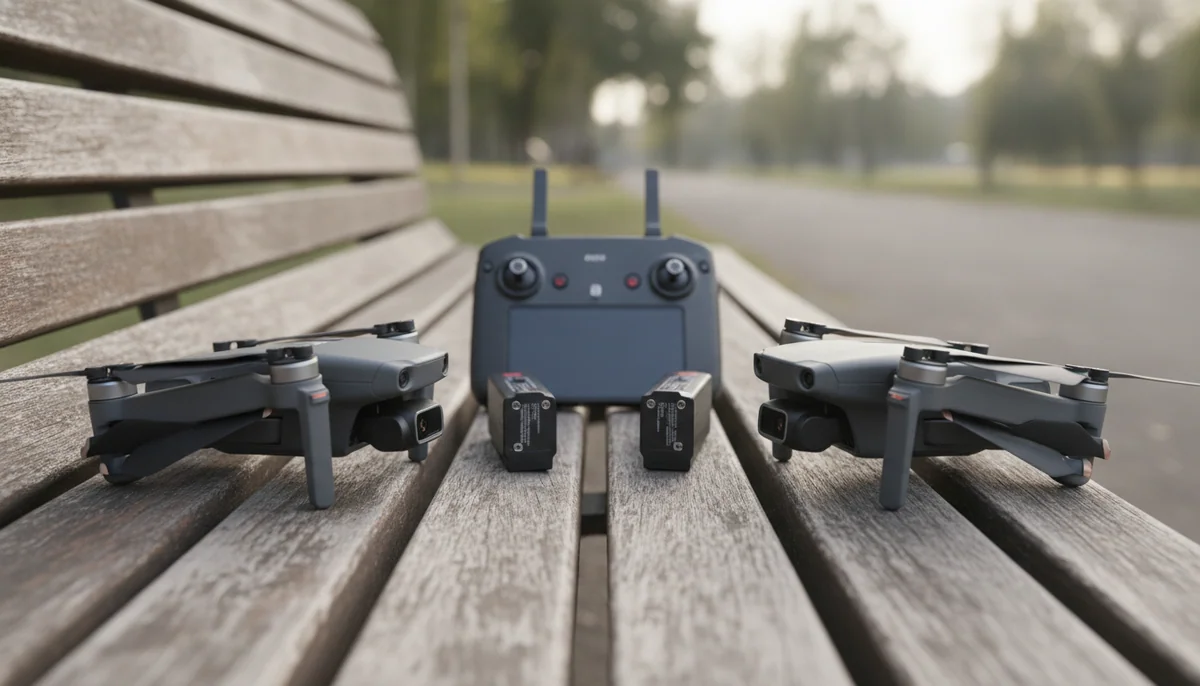
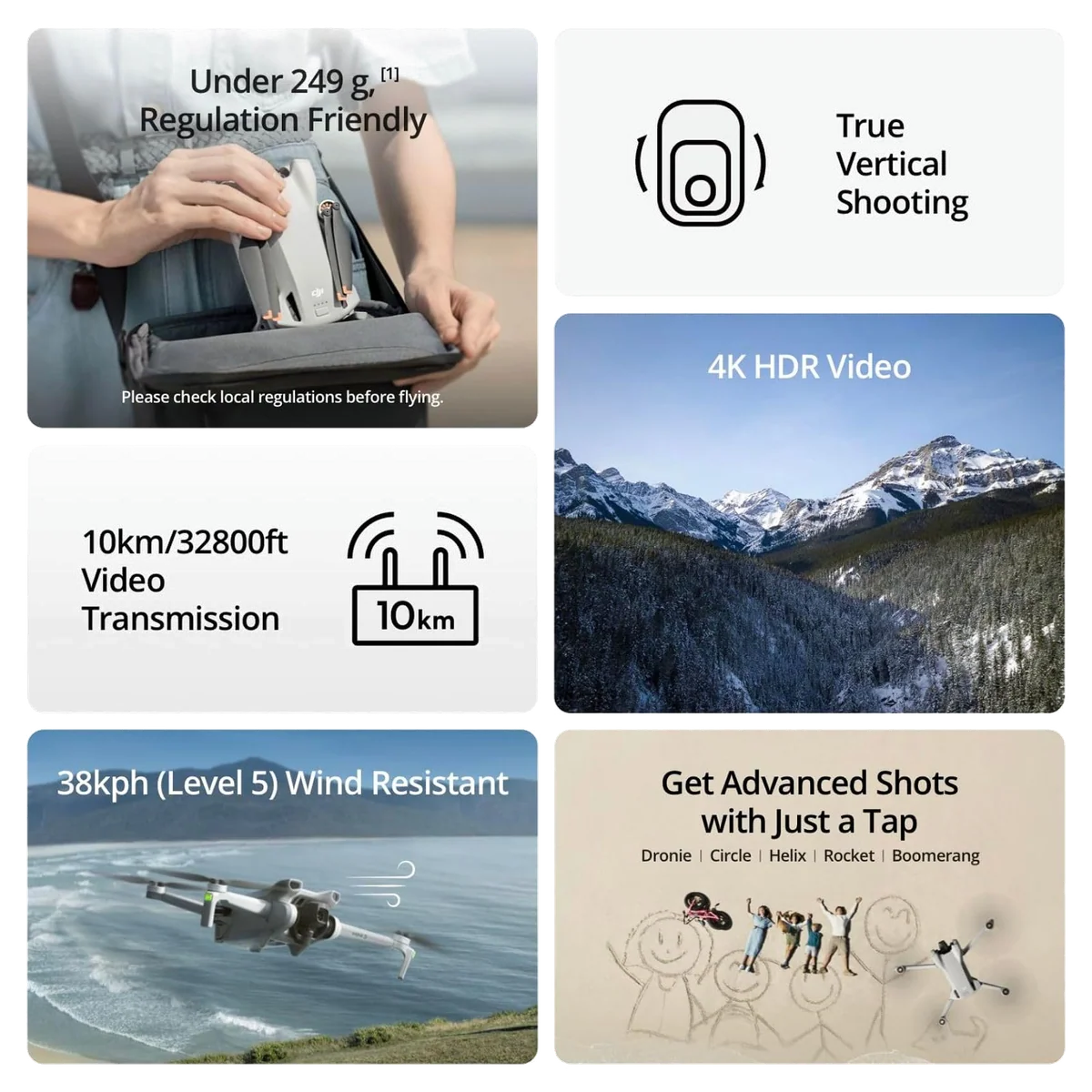
Start with how much of this comparison is not a comparison at all. Both drones fold into a shoulder bag, both weigh in under the registration threshold, both bundles here ship three batteries, a charging hub and a controller with its own screen, and both cameras hit 4K at thirty frames per second and stop dead. Neither has a forward, sideways or upward obstacle sensor. Neither shoots 10-bit. Both gimbals tilt above the horizon, both do true vertical framing, both claim a transmission range you will never legally use. The brand argument is loud and the hardware argument is narrow.
Where they genuinely part company is in three places, and only three. The Mini 3 has the larger sensor and the longer battery. The Atom 2 can lock onto a moving subject and the Mini 3 cannot do it in any mode, at any price, ever. And the Atom 2 broadcasts Remote ID at its shipping weight, where getting Remote ID out of a Mini 3 means buying a battery that pushes it past the weight exemption you bought it for. That last one decides more purchases than it gets credit for, and nobody puts it on a box.
The record on this exact pairing includes a proper fight, which is worth staging rather than smoothing over. An owner who tests drones seriously, and who has a Mini 3, a Mini 4K and an Atom 2 in the same cupboard, wrote that the Atom 2 does not come close to either DJI. In the same review set sit a long-time Phantom pilot calling the Atom 2 an unqualified recommendation and a buyer who says he has zero regrets choosing it over a much more expensive DJI. They are all telling the truth. The tester was grading the software, the telemetry and the polish, and by that measure it is not close. The others were grading what the drone does in the air for the money, and by that measure it is very close indeed. Quadcopter Bench thinks the tester is right about which is the better product and the owners are right about which is the better buy for a specific person, which is why this page spends its time on who that person is.
Potensic Atom 2
DJI Mini 3 Fly More Combo
At a Glance
| Feature | Potensic Atom 2 | Editor's Pick DJI Mini 3 Fly More Combo |
|---|---|---|
| Price Range | $500–$1,000 | $500–$1,000 |
| Finish | Gray | gray |
| Configuration | ATOM 2 (RC with Three Batteries) | — |
| Check Price on Amazon | Check Price on Amazon |
The parts where these are the same drone wearing different badges
Both of these aircraft are blind. The Mini 3 has downward vision for landing and nothing else, which DJI never claims otherwise because DJI never claims it at all; the Atom 2 has a downward system so nominal that a reviewer flying low over uneven ground could not detect it doing anything. The practical consequence is identical for both: small drones are crashed sideways, and sideways is where neither of these is looking. If you are choosing between them partly on safety, stop, because there is nothing to choose. Our piece on what avoidance actually catches and what it flies through is the more useful read, and the honest conclusion for both machines is that your first month belongs over open grass.
The video ceiling is also shared. Both top out at 4K30 with HDR, both drop to 2.7K if you want sixty frames, both hand you 8-bit files. The Atom 2 gained a flat P-Log profile by firmware after launch, which is genuinely unusual at this level and which the Mini 3 has no equivalent of. Read the fine print before you get excited: that log is 8-bit, and 8-bit log is a thin base to grade from. One buyer worked that out before delivery and cancelled the order over it. If colour grading is the reason you are buying either drone, neither of them is the answer.
The sensor gap is real, and smaller than the numbers suggest
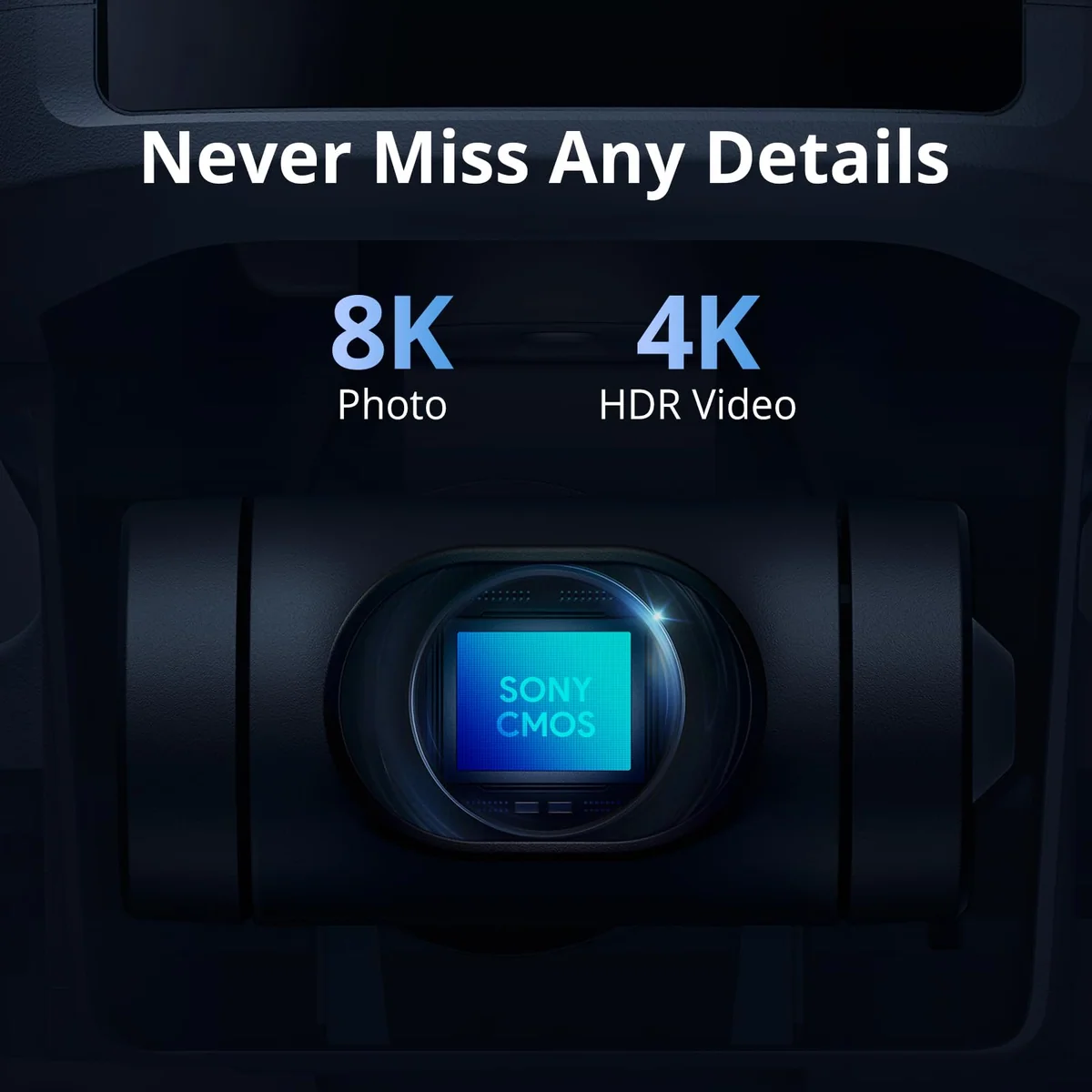
The Mini 3's 1/1.3-inch chip is meaningfully bigger than the Atom 2's 1/2-inch, and it has dual native ISO behind it. That shows up where you would expect: shadows, highlight retention, and the general sense that the file has something left in it. The Atom 2 counters with an f/1.8 lens and four-in-one pixel binning, which narrows the gap in poor light without closing it, and the only careful assessment of its AI Night Shot mode called the results questionable.
Now the part that surprises people: the high-resolution stills mode is a disappointment on both. The Atom 2's 48MP files, which the listing prints as 8K, are JPEG only and arrive heavily sharpened, so the biggest number in the marketing lands you in the worst file format. The Mini 3's 48MP mode looks to a photographer who filled a gallery with graded raw files from that drone like an upscale of the 12MP capture rather than a genuine gain in detail, and he also found the drone missing focus in something like five to ten percent of frames in a way the app preview will not show you until you are home. Shoot both of these at 12MP raw, shoot a second frame of anything you care about, and treat the headline resolution as marketing on either side.
Flight time is the Mini 3's quietest and most decisive win
Neither box tells the truth, and they lie in the same direction, which we have written about at length in why the advertised figure is several flights added together. What matters is the real number. Mini 3 owners consistently land in the low thirties per pack. Atom 2 owners and measured tests land at roughly 20 to 23.
Three batteries each turns that into about an hour for the Atom 2 against something closer to an hour and a half for the Mini 3, and the difference is not the minutes. It is that a Mini 3 pack lets you get to altitude, look around, change your mind, reframe and still come home with margin, where an Atom 2 pack asks you to know what you want before you take off. On a location you drove an hour to reach, that is the gap between two usable sequences and four.
Tracking is the one argument the Mini 3 cannot answer
DJI withheld FocusTrack, ActiveTrack and the automated tracking modes from the non-Pro Mini 3 entirely. There is no firmware that fixes this and there never will be. Every shot of a person moving has to be hand-flown, one stick input at a time, which is difficult, and which is the reason the most instructive owner thread about this drone features a buyer talking himself out of active tracking a week before a surf trip and then conceding it is the only feature he will miss.
The Atom 2 tracks, and it tracks properly. Spotlight, Follow and Parallel all engage on people, cars and boats, and they hold. Then comes the fine print, and it is substantial. The gimbal has to sit somewhere between roughly 25 and 75 degrees of tilt for tracking to engage, which quietly removes a large slice of the shots people picture when they buy a tracking drone, and Follow silently declines to work if the aircraft is flying too low. Put that beside the absent sensors and the risk picture is unambiguous: the feature that most tempts a new pilot is precisely the feature that sends the aircraft chasing a subject past trees nothing on board is watching. If following a moving person is the actual job rather than a nice extra, the DJI Neo 2 and the rest of our follow-me shortlist are built for it in a way that neither drone on this page is.
| The thing that decides it | Potensic Atom 2 | DJI Mini 3 |
|---|---|---|
| Obstacle sensing | Downward only, and barely | Downward only, for landing |
| Subject tracking | Yes, within a 25 to 75 degree gimbal window | None, in any mode |
| Video ceiling | 4K30 HDR, 8-bit, with P-Log | 4K30 HDR, 8-bit, no log |
| Sensor | 1/2-inch, f/1.8, binning for low light | 1/1.3-inch, f/1.7, dual native ISO |
| Real minutes per battery | Around 20 to 23 | Low thirties |
| Remote ID under 249g | Built in, as a toggle | Needs a battery that breaks 249g |
| Controller | PTD 1, 700 nits, works with this drone alone | DJI RC, bright, not the newer RC 2 |
| App | Potensic Eve, the weakest part of the package | DJI Fly, polished, not on Google Play |
The Remote ID trapdoor nobody prices in
Flown recreationally, both drones sit under the threshold and neither needs registration or a Remote ID broadcast. The moment you fly for someone else, paid or not, the exemption evaporates and you need registration and a Part 107 certificate no matter what the aircraft weighs, at which point the drone has to broadcast.
The Atom 2 does that at its shipping weight, with the broadcast sitting in the settings as a toggle. The Mini 3 does not. Reaching its Remote ID means fitting the extended Intelligent Flight Battery Plus, which is sold separately, only in some countries, and which DJI itself states takes the aircraft over 249g. So the professional path on the DJI costs an extra purchase and forfeits the weight advantage in the same movement, while the Potensic just does it. For a property photographer, a wedding second-shooter or anyone invoicing for a single aerial establishing shot, that is not a footnote, it is the whole comparison inverted. Work out which rules apply to you in our guide to registration and Remote ID under 249g before you spend anything.
What happens after the money changes hands
The two companies fail you in opposite ways, and you should pick the failure you can live with.
Potensic ships fast and patches afterwards. That cuts both ways with real force: waypoints and the P-Log profile both arrived by firmware after the company had publicly denied ever promising the first of them, while a firmware update to the previous-generation Atom degraded its range and was never reversed, and multiple owners reported image quality regressions after an Atom 2 update. The Potensic Eve app is the weakest component in the box, with small white telemetry that vanishes against bright sky and a battery percentage rendered in red you cannot read in sun. Set against that, the transactional support is the most consistently praised thing about the brand anywhere in the record, including a replacement drone sent to an owner who broke his own aircraft. Potensic is excellent at fixing your individual problem and poor at admitting one that affects everybody.
DJI's failure is structural rather than behavioural. The software is better, the app is more polished and the flight experience is more finished, but new DJI models are not getting US authorisation, older approved ones are what remains available, and the knock-on effects land on service, spares and coverage rather than on the flying. Care Refresh is gone in the US, which changes the real cost of a crash on a drone with no forward sensors, and we cover the alternatives in insuring a drone now that Care Refresh has gone. The wider picture lives at whether you can still buy and fly a DJI in the US. Anyone on Android should also know that DJI Fly is not distributed through Google Play and has to come from DJI's own site, which is a thing to sort out at home rather than at a trailhead.
Both controllers are good, and neither one carries forward
The screen is the single biggest quality-of-life upgrade in either bundle, and owners of both say the same thing: no cable, no phone battery, no app launch, and a display you can actually read outdoors. The friction is in what happens next. The PTD 1 is rated at 700 nits, which is mid-pack, and Potensic states plainly that it works with the Atom 2 and nothing else, including the company's own successor. Its supplied cable is proprietary and about an inch too short for tablet use, and the sticks are fiddly to unscrew and stow. The DJI RC in this bundle is the original, not the RC 2, and the two are not interchangeable across DJI's current line, so if the plan was to buy one controller and change aircraft later, read which drones actually work with the RC 2 first. Buy either of these for the flying you will do this year, not as an investment in a system.
One more piece of timing worth holding in mind. Potensic has already launched the Atom 3, with a larger sensor, higher frame rates and a brighter controller, which makes the Atom 2 the previous generation. Its larger battery option breaks the 249g line, which is the entire legal advantage of this class, and we work that trade through at Atom 2 vs Atom 3. The Mini 3, meanwhile, launched at the end of 2022 and is still near the top of its category, which is the strangest compliment you can pay a drone and a fair one.

Potensic Atom 2
DJI Mini 3 Fly More Combo
Which of these is actually yours
If you photograph things that stay put, coastlines, ridgelines, buildings, a property listing, a village from four hundred feet, buy the Mini 3 and do not think about it again. Better sensor, better files, better app, half again as much air time per battery, and the tracking you are giving up is tracking you were never going to use.
If the thing you want to film moves, or if you will ever be paid for a frame and need Remote ID without carrying a heavier aircraft, buy the Atom 2 and fly it somewhere with nothing to hit. You are choosing it for capability the DJI does not have and paying for that with shorter flights, softer stills, a rougher app and a company whose firmware has a documented history of taking things away.
If neither description fits and you are simply deciding whether you enjoy flying, both of these are more drone than that question needs, and the cheaper end of the class is the sensible place to find out. Our roundup of camera drones that stay under 249g sorts that out, and the Atom 2's other close fight is at Atom 2 vs Mini 4K, with the DJI-only version of the same question at Mini 4K vs Mini 3.
The one to buy when your subject moves, or when you need Remote ID at the minimum legal weight.
It is the only drone here that will lock onto a person and hold them, it broadcasts Remote ID without a weight penalty, and it stacks vertical shooting, night mode, waypoints and a flat log profile at a level DJI does not offer in this bracket.
You get roughly 20 to 23 minutes per battery, 48MP stills that are JPEG only, an app that is the weakest thing in the box, and a firmware record that includes a range cut to the previous Atom that was never put back.
The better drone, for anything that stays where you point it.
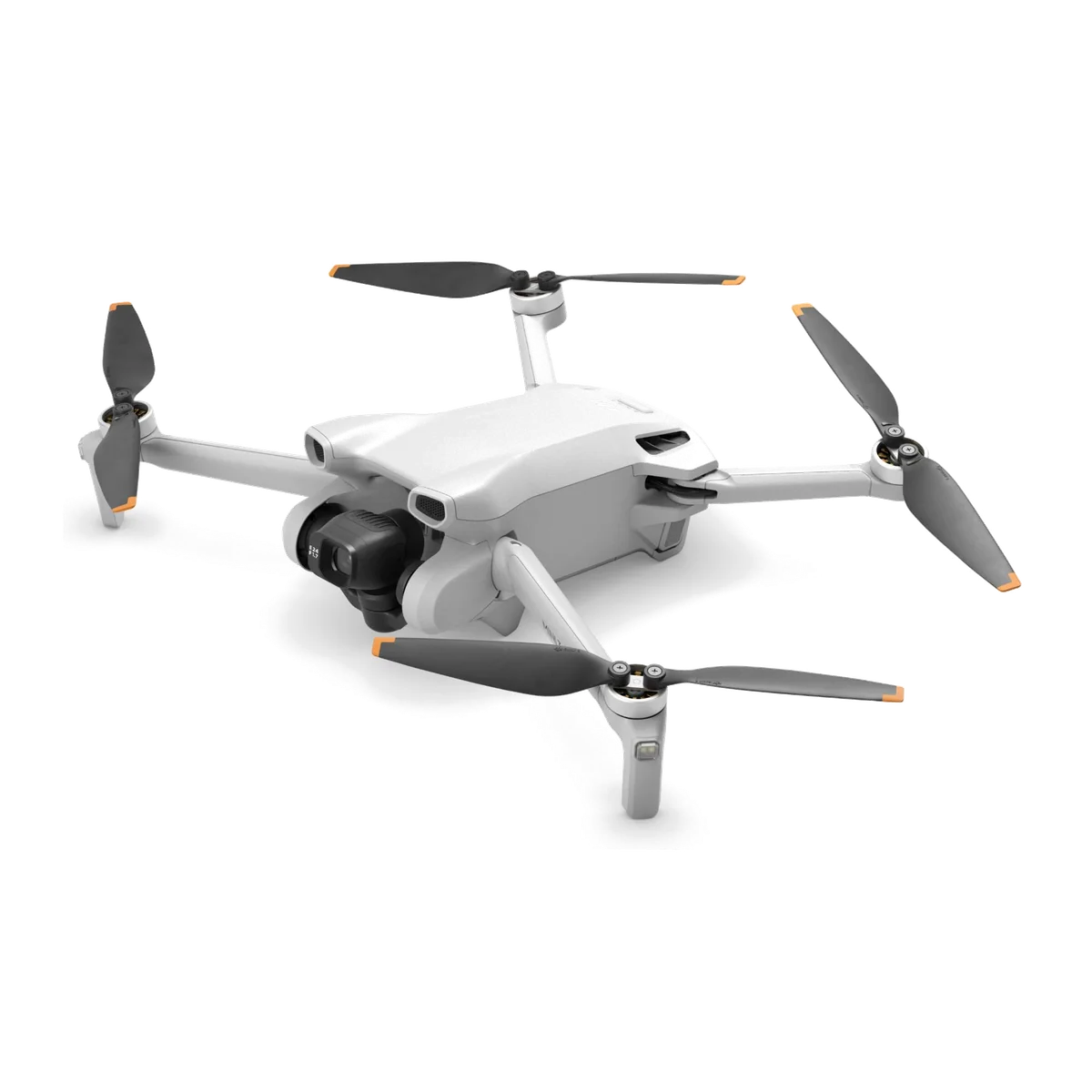
The larger sensor, the low-thirties real flight time and DJI's far more finished app make this the safer, more capable machine for landscape, travel and property work, and the built-in screen on the RC is legible in sun where a clamped phone is not.
It cannot track a moving subject in any mode, it has no obstacle sensing beyond the downward pair, and reaching its Remote ID means buying an extended battery that takes it over 249g and out of the exemption you bought it for.
Frequently Asked Questions
Does either of these have obstacle avoidance?
No, both are limited to downward sensing for landing, with nothing watching forward, sideways or up on either aircraft.
Which one has the better camera?
The Mini 3, on sensor size, low light and file quality, though both are capped at 4K30 in 8-bit and both disappoint in their high-resolution stills modes.
Can the DJI Mini 3 follow me while I ride or run?
No, the tracking modes were withheld from this non-Pro model entirely, so every shot of a moving subject has to be hand-flown.
How long does each one really fly on one battery?
Plan on the low thirties for the Mini 3 and roughly 20 to 23 minutes for the Atom 2, which makes the three-battery bundles about ninety minutes and about an hour respectively.
Is Potensic as good as DJI now?
On flying and on features per pound it is closer than the brand gap suggests, but on software polish, image quality and the way the company handles a fault affecting everyone it is not, and we go further into that at whether Potensic drones are as good as DJI .
Which one should I buy if I want to fly commercially?
The Atom 2, because it broadcasts Remote ID at its shipping weight while the Mini 3 needs an extended battery that pushes it past 249g to do the same job.
Do I need to buy a memory card for either of them?
Yes for both, and buy a fast, reputable one, because a slow card will trigger a warning on the Atom 2 and force you down from 4K to 2.7K.
Is the Fly More version worth it over the drone alone?
It is if you drive or hike to your locations and cannot recharge in the field, and less so if you fly close to home with a power bank in your pocket, which is the argument we work through at whether the Fly More Combo earns its money .
Ready to Choose?
Sources (7)
- Amazon listings and customer reviews — Potensic Atom 2 and Dji Mini 3 Fly
- Owner reports across r/drones threads
- Owner and reviewer video, 3 channels
- Techradar — Article — www.techradar.com
- DJI — Article — www.dji.com
- Pcmag — Article — www.pcmag.com
- Digitalcameraworld — Article — www.digitalcameraworld.com