The 360 drone argument is settled by the controller, not the camera
Buy the DJI Avata 360 with the RC 2 unless you specifically need the lighter, quieter, longer-flying aircraft and are content to fly it in goggles, because the DJI is the cheaper of the two, the one wearing prop guards, and the only one of the pair a solo pilot can fly line of sight without a spotter standing next to them.
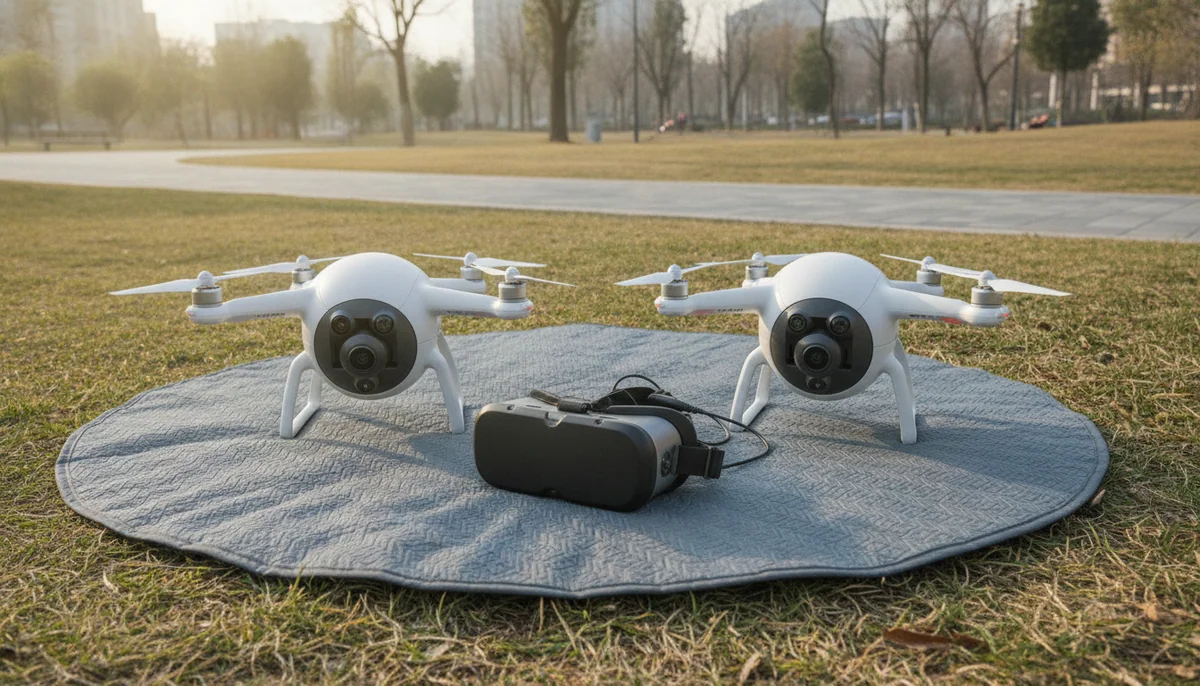
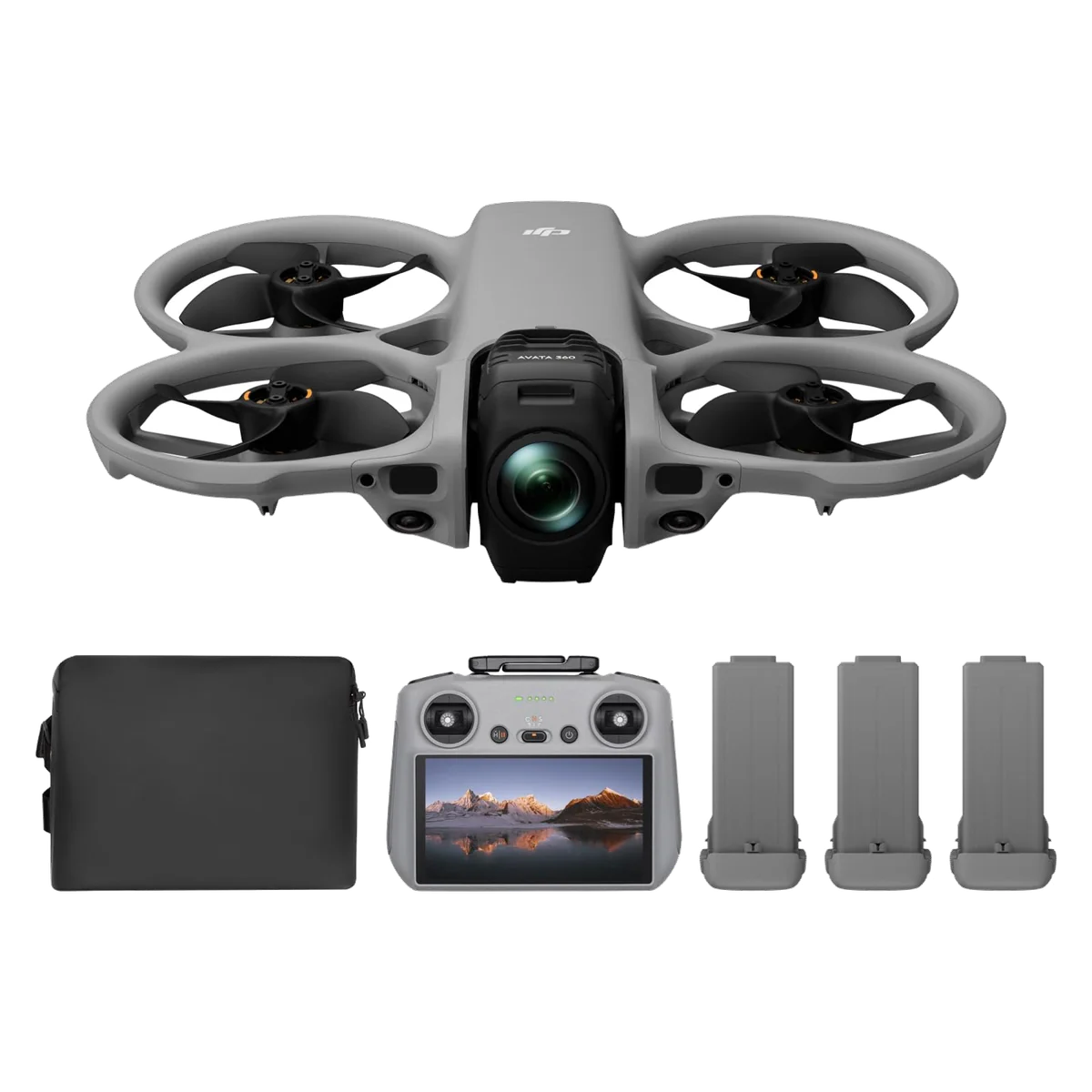
DJI Avata 360
Antigravity A1
These two aircraft are trying to solve the same problem, which is that you cannot frame a shot and ride a bike at the same time. Both answer it by refusing to frame anything: they record the entire sphere and let you decide afterwards where the camera was pointing. That shared idea is why they get compared, and it is also why the comparison is not really about image quality. Two 360 cameras of roughly the same generation produce roughly the same compromise. What differs is everything around the camera.
Quadcopter Bench has not flown either machine, and it is worth being blunt about the asymmetry in the evidence: the public record on the Avata 360 runs to measured range tests, timed flights and owners several months in, while the record on the Antigravity A1 is thin enough that the honest head-to-head rests on one reviewer's summary of the trade. That summary gives the DJI four wins, on price, on being flyable with an ordinary screen controller rather than goggles only, on having a single-lens 4K mode at all, and on carrying integrated prop guards for indoor work; and it gives the A1 three, on weight, on flight time and on noise. Everything below is an attempt to say which of those seven lines will actually change your week.
One thing neither of them escapes, so get it out of the way before you start weighing anything else. An 8K sphere sounds enormous until you take a normal-looking shot out of it, at which point you are using perhaps a third of that width and landing somewhere near 2,560 pixels across, which is short of 4K and a long way short of what a conventional camera drone puts on the same screen. Pilots who have reframed hard describe the result behaving like 2.7K footage rather than 8K. If sharpness is what you are shopping for, the answer to this comparison is neither of them, and our camera drone shortlist is the page you actually want.
At a Glance
| Feature | Editor's Pick DJI Avata 360 | Antigravity A1 |
|---|---|---|
| Price Range | $500–$1,000 | $3,000+ |
| Finish | Black | — |
| Check Price on Amazon |
The ledger, line by line, and what each line costs you in a field
Written out as a table, the trade looks even. Lived out on a Saturday morning, it is not even at all, because two of these lines change what you are allowed to do and the rest only change how pleasant it is.
| The line | Winner | What it means when you are standing in a field |
|---|---|---|
| How you fly it | Avata 360 | A screen controller means one person, no spotter, no headset; goggles in most places mean a second human whose whole job is watching the sky. |
| Prop guards | Avata 360 | Ducted airframe, so it takes off from a table indoors and survives contact that folds a folding drone. |
| Single-lens mode | Avata 360 | A conventional 4K/60 shot without packing a second aircraft. |
| Price | Avata 360 | The cheaper machine on every account we have read, and by a clear margin rather than a rounding error. |
| Weight | Antigravity A1 | The lighter aircraft, though nothing in the record tells you which side of the 249 g line it lands on. |
| Flight time | Antigravity A1 | Longer in the air per pack, against a DJI that is rated at twenty-three minutes and delivers around nineteen with the camera running. |
| Noise | Antigravity A1 | Quieter, against a DJI you can hear from roughly five hundred metres. |
The controller is the whole argument
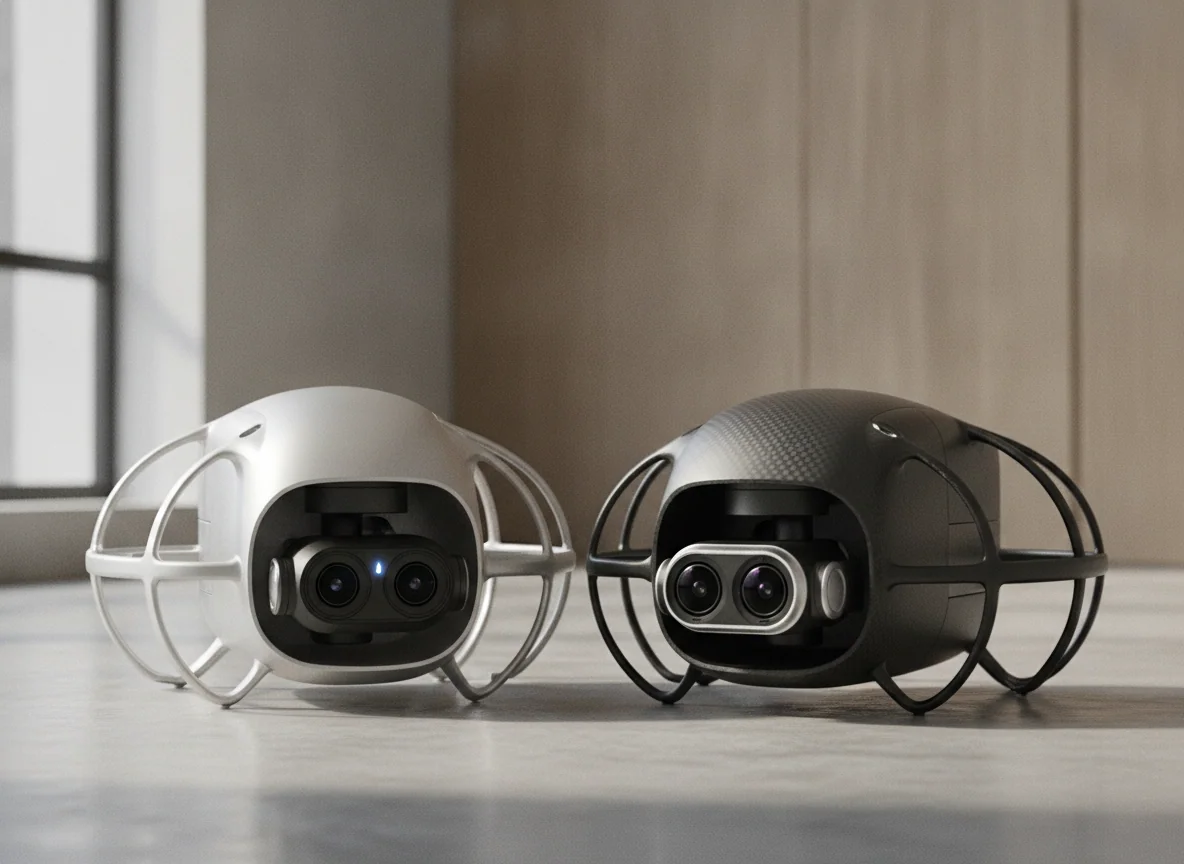
Goggles are the better experience and the worse tool, and anyone who has flown both will tell you so. The RC 2 in this DJI box has its own screen, which means you fly line of sight, on your own, without recruiting a friend to stand in a car park for twenty minutes. If you shoot alone, and most people buying a 360 drone are shooting themselves doing something, that is not a spec difference. It is the difference between a drone you use and a drone you plan an outing around.
There is a trap in the DJI box worth naming, because it cuts the other way. An RC 2 cannot be paired with DJI's goggles, so if you buy this bundle and later decide you want the immersive version after all, you are buying a motion or FPV controller as well as the headset. The RC Pro 2 is not on the compatible list for this aircraft either, so an existing high-end controller in your bag may not help. Our page on which drones the RC 2 actually works with is the faster way to check what you can reuse.
Weight is the line that has legal teeth, and the record will not resolve it
The Avata 360 comes in around 455 g, which is nowhere near the 249 g threshold, so registration and Remote ID apply even for recreational flying. That is a chore, and it is also the thing that makes the aircraft usable by licensed pilots, which the featherweight DJI models are not. The A1 is the lighter machine on the record we have, but "lighter" and "under the registration line" are different claims and only the first one is supported here. Do not buy it on the assumption that the paperwork disappears; check the published take-off weight for the exact configuration you are ordering before you decide that line matters to you.
Flight time reads worse than it flies
Nineteen usable minutes per pack sounds thin next to a rival that goes longer, and in a normal drone it would be a real defeat. In a 360 drone it is softened by the format itself, because a sphere means you are not flying three passes to get three angles. One owner with years of home-built quads behind him described cutting a finished video out of roughly thirty minutes of total flight, and said it had become the drone he grabs on the way out of the door. Longer batteries are still better than shorter ones, and an independent reviewer naming battery life as this drone's weakest point is not wrong. But the DJI's answer is three packs and a hub in the box, which makes the usual Fly More upsell question unusually easy here.
Noise is the one line where the A1's win is unambiguous and the DJI has no comeback. Audible from about five hundred metres rules out anything discreet: a quiet park, a street with houses on it, a wedding you were not loudly invited to film. If most of your flying happens near other people, weigh that heavily, because it is the constraint you will hit every single time rather than occasionally.
Neither of them is the FPV drone you might be picturing
The Avata badge is doing damage here. There is no true manual mode on the Avata 360, only an assisted acro where the aircraft performs the trick for you, and some of the wildest 360 footage in circulation is reframing rather than flying: rotate the virtual camera hard enough in post and straight-and-level becomes a roll. The clearest published advice on this fork is that you take the Avata 2 if you want a simple workflow and footage you can use straight away, and the 360 if you enjoy editing and want maximum control over the result. We work that split through properly in the two-Avata comparison, and if you came here wanting to throw a quad around, the FPV shortlist is where you should be.
The tax you pay twice, whichever one you choose
Spherical footage is not footage until you have reframed it. Clips arrive in a proprietary format, go through the maker's own studio software to be levelled, reframed and given a field of view, and only then open in an ordinary editor. Once you know the shot you want that is quick; the danger is a file that contains every possible shot and therefore no decision. The owner who loves this drone still lists storage as a complaint, because 360 files fill cards fast and need a capable machine to process. A single five-minute clip can pass six gigabytes, and a memory card is not optional. If you have not decided whether the format suits you at all, read what 360 capture really buys you before you pick a brand, because that question outranks this one.
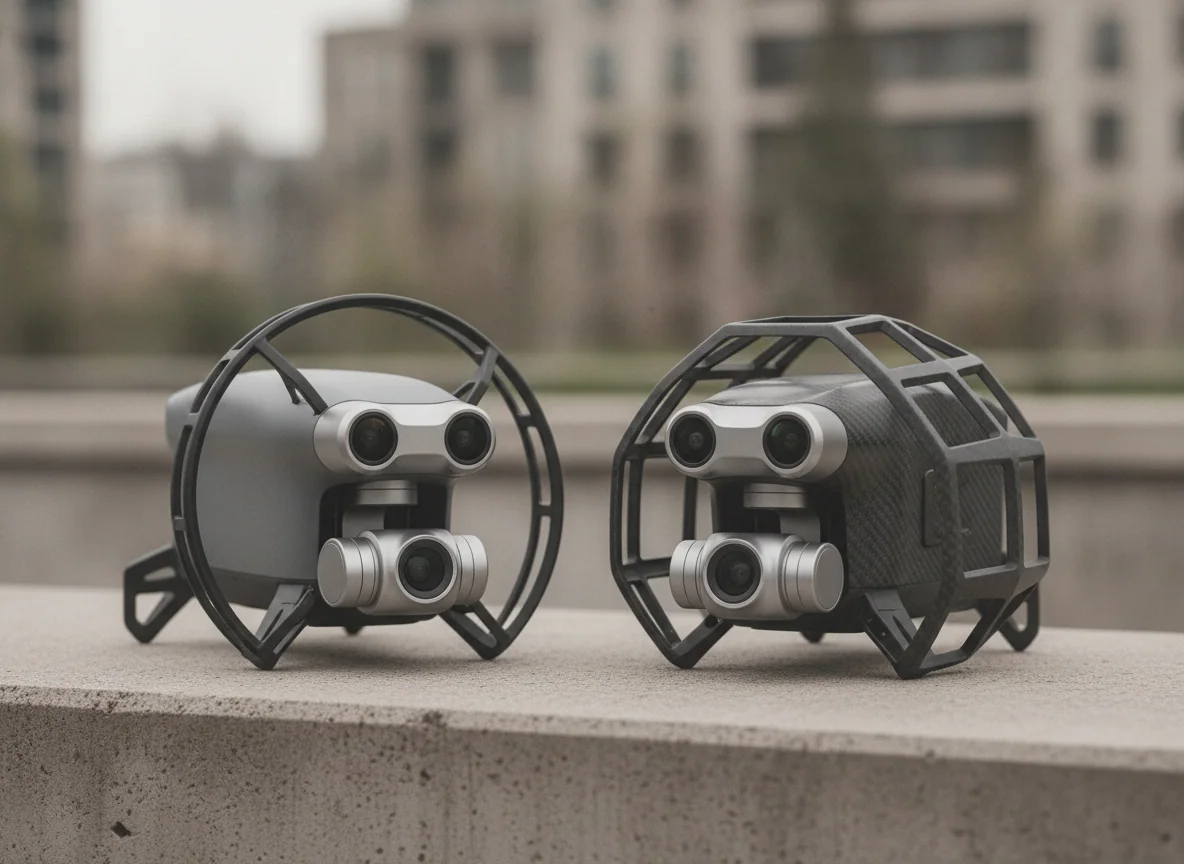
Two more things the record supports about the DJI that you should price in before committing. The lenses protrude by design, are meant to be swapped by the owner with a kit, and one reviewer advises buying a spare kit or two on the basis that service on a grey-market unit could be awkward. And on an aircraft built to be flown close to things, cover of some kind is a running cost rather than an upsell.
Who each one is actually for
Take the Antigravity A1 if you fly in places where noise gets you noticed, if you want the longest single flight you can get out of a 360 aircraft, and if flying in goggles is the point rather than the obstacle. That is a real buyer and not a strawman. Anyone whose flying is mostly solo, mostly near people, and mostly about coming home with a usable clip of themselves moving fast is describing the other drone.
Take the DJI if you shoot alone, if you want to launch off a table indoors without a spare set of props on standby, and if you would rather spend the difference on batteries than on a headset. The single-lens 4K mode matters more than it looks on paper too, because it means the one drone in your bag can also take an ordinary shot when the client, or your own edit, wants one.
And take neither if what you actually want is a clean, sharp establishing shot. A DJI Air 3S will make that image look better than either of these with a fraction of the post-production, and it will do it on a longer battery. The 360 pitch is a guarantee that the shot exists, not a promise that it is the best-looking shot on the timeline.
This is the 360 drone you can fly on your own, with a screen in your hands.
It gives you every angle of a moving subject out of a short flight, and the RC 2 in the box means you can capture that alone, line of sight, with no spotter and no headset.
Crop that 8K sphere down to a normal-looking shot and it resolves closer to 2.5K, so any conventional camera drone at this money will out-sharpen it on every static frame.
Our full findings on the aircraft, including the range test that ended just under four kilometres against a listed twenty, are in the Avata 360 review.
Frequently Asked Questions
Do I need goggles to fly the Antigravity A1?
On the record available to us the A1 is flown in goggles rather than with a screen controller, which is the single biggest practical difference between the two and the reason a solo pilot usually needs a second person present.
Is the A1 light enough to skip registration?
The record says it is the lighter of the two aircraft but does not tell us which side of the 249 g line it falls on, so check the published take-off weight for your exact configuration rather than assuming the paperwork goes away.
Does the reframing problem apply to both of them?
Yes in principle, because any spherical capture spends its pixels on the whole sphere, so a normal-looking crop out of an 8K sphere uses only a fraction of that width no matter whose badge is on the aircraft.
Can I add DJI goggles later if I buy the Avata 360 with the RC 2?
Not with the RC 2 alone, because that controller cannot pair with the goggles, so going immersive later means buying a motion or FPV controller as well as the headset.
Is either of these a freestyle FPV drone?
No, the DJI has no true manual mode and performs its acro for you, so anyone shopping for a quad to throw around should be looking at a different category entirely.
Which one is quieter for filming near people?
The A1, clearly, because the Avata 360 is audible from around five hundred metres and that rules out discreet flying anywhere with an audience.
Why does Quadcopter Bench recommend the DJI when the A1 wins three lines?
Because the DJI's four wins include the two that change what you can do at all, flying solo and flying with guards on, while the A1's wins mostly change how pleasant the same flight is.